News
This constantly updated list features the latest and most important news articles, ranked in order of significance. The top stories highlight major developments, breaking news, and critical updates across various topics, ensuring you stay informed about the most pressing issues. As new articles are added, the list adapts to reflect the latest priorities, keeping the most impactful stories at the forefront. Whether it’s global events, technology breakthroughs, or industry trends, this dynamic list ensures you always have access to the most relevant and timely information.
-

Picture from ichef.bbci.co.uk
Rank 10151 -
Picture from cdn.mos.cms.futurecdn.net
Rank 10152TDK’s Spin Photo Detector pushes AI data speeds ten times beyond today’s techAI bottlenecks may vanish as TDK shifts focus from GPU to data transferSpin Photo Detector uses laser-induced magnetism for ultrafast photoelectric conversion
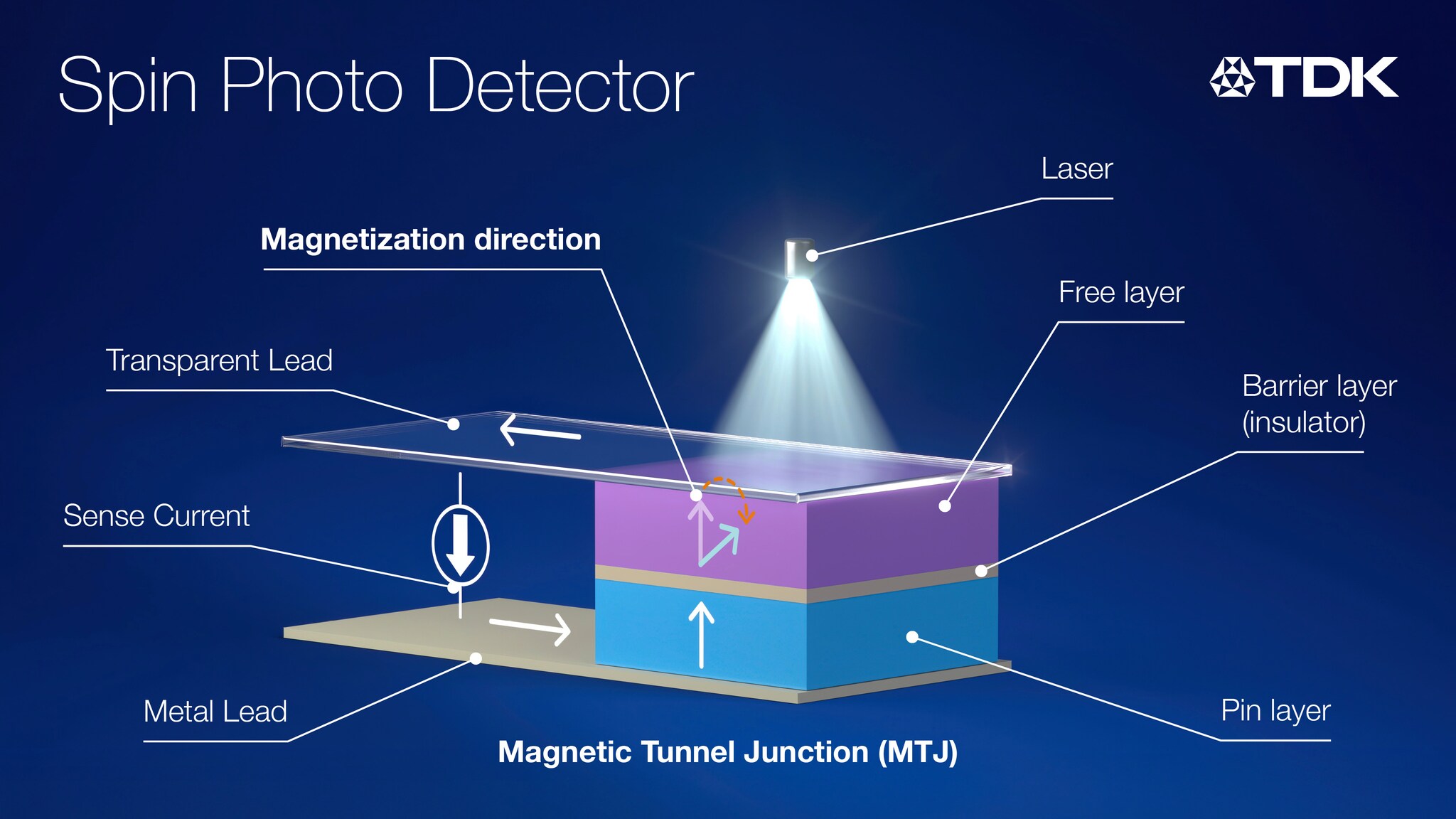
Japanese manufacturer TDK has claimed it has achieved a major breakthrough in solving one of the most pressing problems in artificial intelligence. No, not GPU performance, but rather data transfer.Its innovation, called the Spin Photo Detector, combines magnetic, optical, and electronic technologies to move data at speeds up to ten times faster than existing semiconductor-based photodetectors can offer.TDK’s device reaches response speeds of just 20 picoseconds - or 20 trillionths of a second - using light at a wavelength of 800 nanometers.
TDK’s Spin Photo Detector
“This data transfer is the biggest bottleneck for AI rather than the semiconductor GPU performance,” said Hideaki Fukuzawa, senior manager of the company’s next-generation product development center.“Since we can break through many of the current bottlenecks, we think this technology will be a game-changer for the AI and data center industry."To achieve this, TDK re-engineered its magnetic tunnel junction (MTJ) technology, previously used in billions of hard disk drive heads.The MTJ structure is only 200 nanometers wide and integrates a single CoFeB free layer that responds to laser pulses. It allows switching from parallel to antiparallel magnetic states with 100% reliability under defined conditions.Unlike semiconductors that rely on carrier generation and face limitations at short wavelengths, Spin Photo Detectors use electron heating, enabling faster speeds and broader spectral coverage. The MTJ elements are also resistant to cosmic rays, making them ideal for aerospace applications.“The Spin Photo Detector holds remarkable promise, both from a scientific and technological perspective,” said Arata Tsukamoto, a professor of electrical engineering at Nihon University who collaborated with TDK on validation.TDK’s device demonstrated effective operation across a wide range of wavelengths, from 300 nm to 1.6 µm. Its ultrafast analog light detection capability, energy efficiency, and compact size open up potential applications in AR/VR smart glasses, high-speed imaging, and space systems. This development could also help address power consumption issues in AI deployment.The technology could serve markets where fast, low-latency data transfer is crucial for AI workloads and graphics-heavy tasks.TDK expects to supply samples by March 2026 and is aiming for mass production within five years. Thanks to the few processing steps required, it expects to maintain a cost advantage and challenge major chipmakers like TSMC and Nvidia, who are investing heavily in silicon photonics.Via Financial Times
You may also like
Check out the best AI phones in the marketHere is our list of the best AI website builders on the webIntel sells majority of its FPGA business to Silver Lake
-

Picture from cdn.mos.cms.futurecdn.net
Rank 10153Huawei launches CloudMatrix 384 Supernode to rival Nvidia’s NVL72 AI CloudMatrix 384 delivers nearly double the compute power with superior memory and bandwidthConsumes almost four times the power but system efficiency is less critical in China
Huawei has been positioning itself as the Chinese Nvidia for some time, and now, the South China Morning Post reports the company has launched a new AI infrastructure architecture set to rival the US chip giant’s NVL72 system.Nvidia’s NVL72 links 72 GPUs using NVLink technology, allowing them to function as a single, powerful GPU. Built for trillion-parameter AI models, it delivers real-time inference at speeds up to 30 times faster than previous systems by avoiding traditional data transfer bottlenecks.SCMP said Huawei’s rival to this, the CloudMatrix 384 Supernode, has been described as a "nuclear-level product" by unnamed Huawei sources. According to reports, it uses 384 Ascend 910C chips to deliver 300 petaflops of dense BF16 compute, that's almost double the 180 petaflops offered by Nvidia’s NVL72.
Power hungry
The CloudMatrix 384 Supernode has so far been deployed at Huawei’s data centers in Wuhu, a city in central Anhui province, the report says.Writing about the new product, SemiAnalysis confirms this rack-scale solution competes directly with Nvidia’s GB200 NVL72 and, in some metrics, outperforms it. The site says that despite sanctions, China’s domestic semiconductor capabilities are growing and Huawei’s strength lies in system-level engineering, including networking, optics, and software.While the Ascend chips rely heavily on foreign supply chains, such as HBM from Samsung and wafers from TSMC, Huawei has managed to skirt export controls through complex sourcing strategies.The CloudMatrix 384 doesn’t only outperform the NVL72 in terms of compute, it also offers 3.6x aggregate memory capacity and 2.1x more memory bandwidth. However, something Huawei is likely less keen to shout about is that it consumes nearly four times the power.SemiAnalysis points out that in China this is less of an issue than you might think. Abundant power generation means efficiency is less of a constraint compared to in the West, and China is expanding its energy grid rapidly, supporting such power-hungry AI infrastructure, even when supply outstrips demand.
You might also like
US sanctions allow Huawei 'case-by-case' access to chip-making equipmentHuawei is pairing its supercharged SSD with a 60-year old technologyHuawei's blueprint for a post-Trump, non-US centric technology world
-

Picture from ichef.bbci.co.uk
Rank 10154 -
Picture from cdn.mos.cms.futurecdn.net
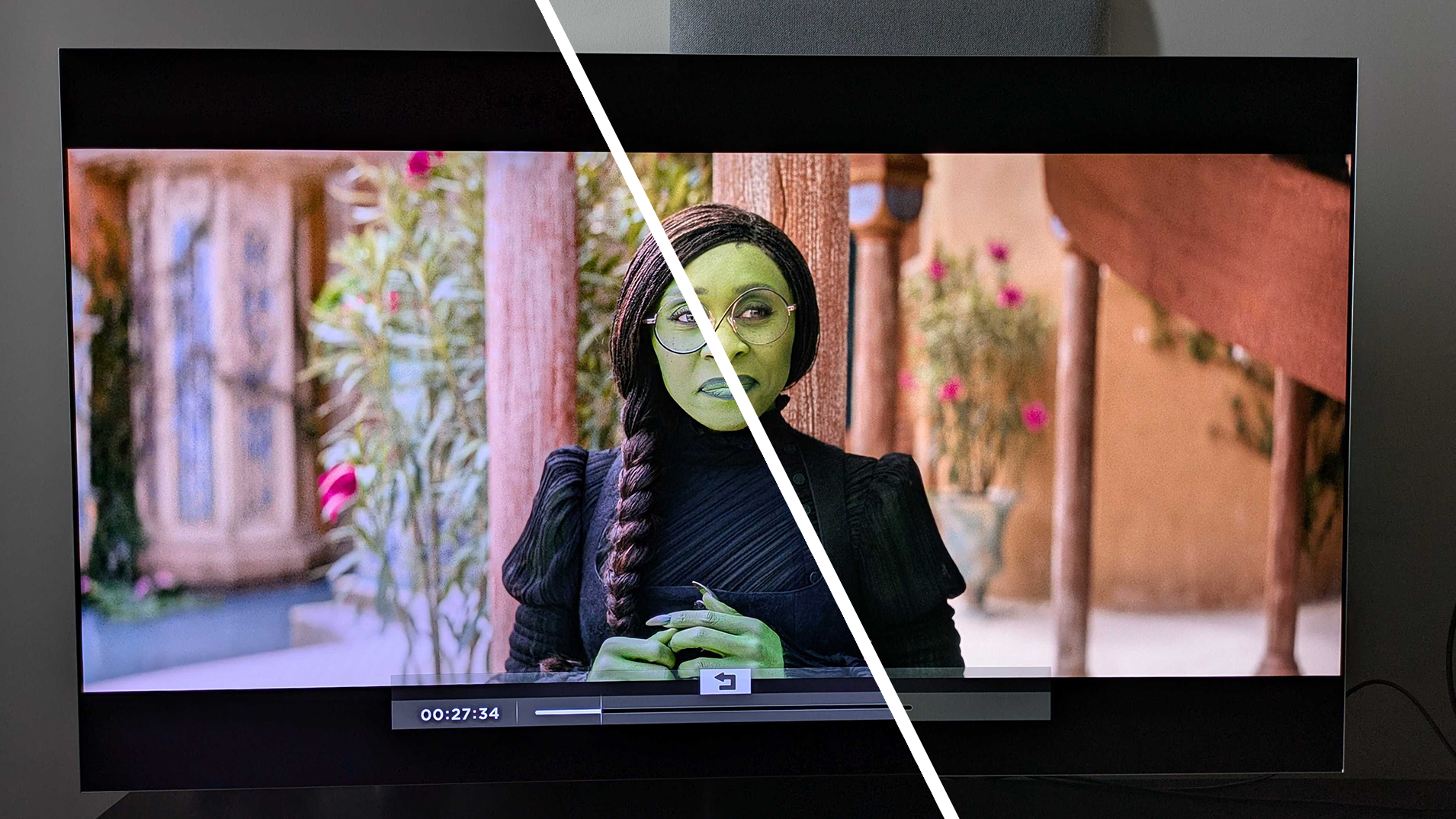
Rank 10155It’s no secret that we here at TechRadar use Filmmaker or Movie picture mode, depending on the TV, during our testing when we’re reviewing TVs – we've written about why in our explanation of how we test TVs. As one of TechRadar’s TV reviewers, I find that these modes generally give the most accurate colors, contrast and textures when compared with most other picture modes, even on the best TVs.That said, some TVs actually have a very good Standard mode, which can be useful for daytime, broadcast TV or brighter, more colorful movies. And of course, picture mode choice is subjective; not everyone will like the dimmer, warm-favoring Filmmaker Mode.One thing that all of us here at TechRadar will stand by, however, is our feelings on Vivid modes; they're bad. Or at least they're the worst of the picture modes. Colors are often oversaturated, textures are too sharp and brightness is dialled up way too high, overblowing bright sections of the picture.To demonstrate, I put the LG G5 OLED TV (one of the best OLED TVs of 2025 which earned five-out-of-five in our LG G5 review) next to the Panasonic MZ1500 (one of the best mid-range OLEDs of the last few years) playing the same scene from Wicked.In the below pictures, you’ll see I cycle through the G5’s different Dolby Vision picture modes, while the MZ1500 stays in the most accurate Dolby Vision Dark mode as a point of reference – we love the MZ1500 for its natural picture and accuracy, so this provides a great baseline.The LG G5 is on the left and the Panasonic MZ1500 is on the right for all images.
Dolby Vision Filmmaker
(Image credit: Future)
In Dolby Vision Filmmaker Mode, the G5 demonstrates natural-looking colors that also still deliver the vibrant, dynamic punch you’d want when viewing a colorful movie like Wicked. Textures are also true-to-life, with both Elphaba’s skin and the surrounding stone walls displayed with real accuracy.There’s also good contrast on display here, with the blue inlays balancing well with the beige stone, and Elphaba’s black dress also contrasting well with the brighter surroundings, including the glossy pink flowers.
Dolby Vision Cinema
(Image credit: Future)
Compared with Dolby Vision Filmmaker, Dolby Vision Cinema shows a boost in brightness, which means colors have a bit more punch and the brighter tones of the picture (the beige, stone walls) appear that little bit lighter.Crucially however, textures and details are still accurate and natural, as are colors, and contrast between light and dark tones (the walls with Elphaba’s dress) are still balanced. Although I still prefer Filmmaker Mode, this is a very close second.
Dolby Vision Standard
(Image credit: Future)
Dolby Vision Standard goes even brighter than Dolby Vision Cinema mode and favors a cooler color palette than both Filmmaker Mode and Cinema mode. The beige walls take on a slighter whiter hue, but again colors get that injection of higher brightness.This is where textures and colors straddle the line between accurate and oversaturated, with the pink flowers now starting to take on a glossier, shinier look (which isn’t always better). Elphaba’s green skin remains mostly true-to-life however and contrast is still solid enough.
Dolby Vision Vivid
(Image credit: Future)
And then there’s Dolby Vision Vivid. Yes, there’s a significant brightness boost, which in this instance shows just how bright the LG G5’s new Primary Tandem RGB, or ‘four-stack’, OLED panel can go. While some may like the increase in brightness, this is where accuracy takes a real hit.The pink flowers now take on an oversaturated, ‘neon’ pink color and as a result, definition between each flower is lost. Textures start to lose their true-to-life look as well, with the cracks in the walls all too well-defined, taking on an unnatural, over-sharpened appearance.Even the blue details on the walls, which were more subtle in other picture modes, stand out too much and again take on this unrealistic tone. The details on Elphaba’s dress, such as the creases and buttons, also stick out like a sore thumb, taking on the horrible ‘uncanny valley’ effect.Browse all the above images:
Image 1 of 4Dolby Vision Filmmaker on the G5 (Image credit: Future)Image 2 of 4Dolby Vision Cinema on the G5 (Image credit: Future)Image 3 of 4Dolby Vision Standard on the G5 (Image credit: Future)Image 4 of 4Dolby Vision Vivid on the G5 (Image credit: Future)
Avoid Vivid
Interestingly, the LG G5 is actually one of the better examples of Vivid I’ve come across in my time testing TVs. But that’s because it’s an elite OLED! Even then, I’d still avoid its Vivid mode like the plague. If Filmmaker Mode isn’t for you, Cinema or Standard should offer more than sufficient enough brightness without sacrificing accuracy or true-to-life colors and textures.Yes, Wicked is a naturally bold and dynamic movie with an exaggerated color palette (green is a pretty central theme after all) but even then, it shouldn’t look as overexaggerated as Vivid would suggest.
You might also like
I went deep with the LG G5 OLED TV, and these 5 viewing experiences show how awesome its picture isI tested a ‘cheap’ LG OLED TV – here’s how it compares to a more expensive OLED TVLG C5 review - LG's latest mid-range OLED is a marvel once again
-

Picture from ichef.bbci.co.uk
Rank 10156 -

Picture from ichef.bbci.co.uk
Rank 10157 -

Picture from cdn.mos.cms.futurecdn.net
Rank 10158Ryan Gosling is officially joining the Star Wars universeHe'll play an all-new character in Star Wars: Starfighter, which hit theaters in May of 2026The casting and film were announced at Star Wars Celebration in Japan
While we’ve known there are some feature-length Star Wars films in the works, up until late last night – April 17, 2025 – we only knew that the Mandalorian and Grogu would make the jump to the big screen next Memorial Day, May 26, 2026.But hold your blue milk – there’s another brand-new Star Wars film set for May 2027, and it starts production this Fall. Even better, it’s directed by Shawn Levy, the man behind the incredibly excellent Deadpool & Wolverine, but maybe even better is the fact that Ryan Gosling is joining the Star Wars universe.Yes, the actor with his roots in the Mickey Mouse Club and the person who played Ken in Barbie, will be playing an all-new character in Star Wars: Starfighter. The title of the forthcoming film certainly has intrigue, but not a whole lot else about the plot or the storyline is known.
Star Wars: Starfighter comes to theaters on May 28, 2027. #StarWarsCelebration pic.twitter.com/dsbVb3VdBYApril 18, 2025
The casting was announced on stage at Star Wars Celebration 2025 in Japan. Starfighter will be a stand-alone film that is set five years after The Rise of Skywalker. Gosling was wearing a hat with the phrase, “Never tell me the odds.” on it, a Han Solo quote which might hint that this will be an action-packed adventure film. And it will be turning a new page as the Skywalker saga will be concluded by this point.Star Wars: Starfighter is slated to begin production this fall and will be released on Memorial Day 2027, which means May 28. After a year, Star Wars is set to return to big screen with The Mandalorian & Grogu.While we have footage of both Gosling and Levy on stage at Celebration 2025, the only other piece of media is a logo, title teaser for the Starfighter film. It’s a journey we’ll be following closely on TechRadar, though.
Sam Witwer has surprised fans at the Lucasfilm Animation 20th anniversary #StarWarsCelebration panel. https://t.co/l7Y4C7Zr3M pic.twitter.com/M76x28yJFSApril 18, 2025
Also announced at Star Wars Celebration 2025 is a new animated series titled, Maul: Shadow Lord. And this will be excellent news for fans of The Clone Wars, among other animated shows in the Star Wars universe. Better yet, Sam Witwer will be reprising his role to voice Maul in this show. Maul: Shadow Lord will be exclusive to one of the best streaming services, Disney+, when it arrives in 2026.If you’re looking for more of the latest news from Star Wars Celebration 2025, stick with TechRadar. We’ve already gotten a closer look at Lucasfilm’s Beyond Victory title for the Meta Quest 3S and 3, a slew of new Lego sets, and a bunch more Celebration-exclusive products that are appearing on Amazon.That helps with the fomo a bit, but I do hope Star Wars continues the trend of the Mandalorian movie and puts the BDX Droids in Starfighter.
You might also like
This Tie Fighter stand for the Echo Dot lets your Alexa smart speaker join the dark sideHere’s your first hands-on look at the Star Wars: Grogu, Mandalorian, R2-D2, and Darth Vader earbudsStar Wars Celebration is in full swing, and Lucasfilm just dropped more details on its Beyond Victory experience for Meta Quest, and I couldn't be more stoked
-
Picture from o.aolcdn.com
Rank 10159As part of their ongoing celebration of the Hubble Space Telescope's 35th anniversary, NASA and ESA have shared a new image of the Eagle Nebula, specifically a "spire of cosmic gas and dust" that's in a region last captured by the telescope two decades ago.
The tower in the image is 9.5 light years tall, according to NASA and ESA, and only a portion of the larger Eagle Nebula, which is considered a "nursery" for young stars. The tower's unique mix of oranges and dark blues is thanks to a combination of swirling hydrogen gas and space dust. The nebula's "Eagle" name comes from how it looks when you pan across it, where edge clouds like the one in the image look like the wings of a giant bird of prey.
ESA/Hubble & NASA, K. Noll
As of late, the James Webb Telescope has become the designated source for spectacular images of space, but clearly Hubble still has some juice in it, too. Some of that is thanks to "new data processing techniques" that are being applied to the images captured by the telescope.
The Eagle Nebula is just one of several celestial targets Hubble is revisiting for its 35th anniversary. By capturing different angles and using data differently, the telescope is able to produce more spectacularly colored images. There's no major discoveries made with these "reruns," but they are, without a doubt, even cooler than before. This article originally appeared on Engadget at https://www.engadget.com/science/space/celebrate-the-35th-anniversary-of-the-hubble-space-telescope-with-a-gigantic-tower-of-gas-and-dust-184340147.html?src=rss
-
Picture from o.aolcdn.com
Rank 10160The Apple Sports app just introduced a new feature called Game Card Sharing. This lets users generate digital game cards that carry information about a specific match. The cards can be generated for upcoming, live and completed games. In the latter two cases, the score will be displayed.
The cool part about these cards is that they are shareable across iMessage or via social media platforms. I could see this being useful in a group chat with friends, as a handy way to keep track of an ongoing match. Just look for the share button on the upper-right side of each card.
There is one caveat. It requires the latest version of iOS, so it might be time to finally strap in for an update. These cards work with a whole bunch of sports leagues, including the NBA, MLB, NHL and even stuff like the Saudi Arabian Grand Prix.
For the uninitiated, Apple Sports is a free iPhone app that delivers real-time scores and various stats. It also displays useful stuff like broadcast information. It even lets users pin real-time scores to the lock screen.This article originally appeared on Engadget at https://www.engadget.com/apps/the-apple-sports-app-now-lets-users-create-and-share-game-cards-184235076.html?src=rss
-

Picture from ichef.bbci.co.uk
Rank 10161 -

Picture from ichef.bbci.co.uk
Rank 10162 -
Picture from o.aolcdn.com
Rank 10163In the latest evidence that indie games are often where you find the boldest creative choices, look no further than Unbeatable. The hand‑drawn rhythm adventure title — announced in 2020 and crowdfunded the following year — oozes style and attitude. For example, look no further than its tagline: "a game where music is illegal and you do crimes." (Nice.) Developer D‑Cell Games launched a new trailer and a much more robust demo on Thursday, letting you sample a slice of the full game.
One part of the "anime‑juiced" Unbeatable follows the protagonist, Beat, and her "band on the run." (Nice to see that a Wings reference can still fly in 2025.) The game's narrative‑driven segment includes dialogue around town with various people, baseball (played "the wrong way" with sledgehammers and katanas), graffiti tagging and bare‑knuckle brawls with the cops who enforce the draconian anti‑music laws. (Dicks!) And don't forget some alone time to "think and write new songs."
D-Cell
Another part of Unbeatable's gameplay involves rhythm mini‑games that only require two buttons: up and down. Although that mode is woven into the story, old‑school rhythm game fans can enjoy a separate arcade mode that stands as a "complete game experience," including challenges and modifiers. (PaRappa the Rapper fans, rejoice.)
There's no release date yet, but the trailer below shows that D‑Cell has put those five years of development time to good use. If it looks like your jam, you can take the demo for a spin on Steam and PS5. (The final version will also be available on Xbox.)
This article originally appeared on Engadget at https://www.engadget.com/gaming/the-rhythm-infused-adventure-unbeatable-has-a-new-demo-for-pc-and-ps5-185618354.html?src=rss
-
Picture from cdn.mos.cms.futurecdn.net
Rank 10164Opera has added its AI assistant Aria to the Opera Mini browser for AndroidUsers can access real-time information, summarize text, and generate images in the lightweight Android browserThe Opera Mini version of Aria is optimized for low data usage and older devices
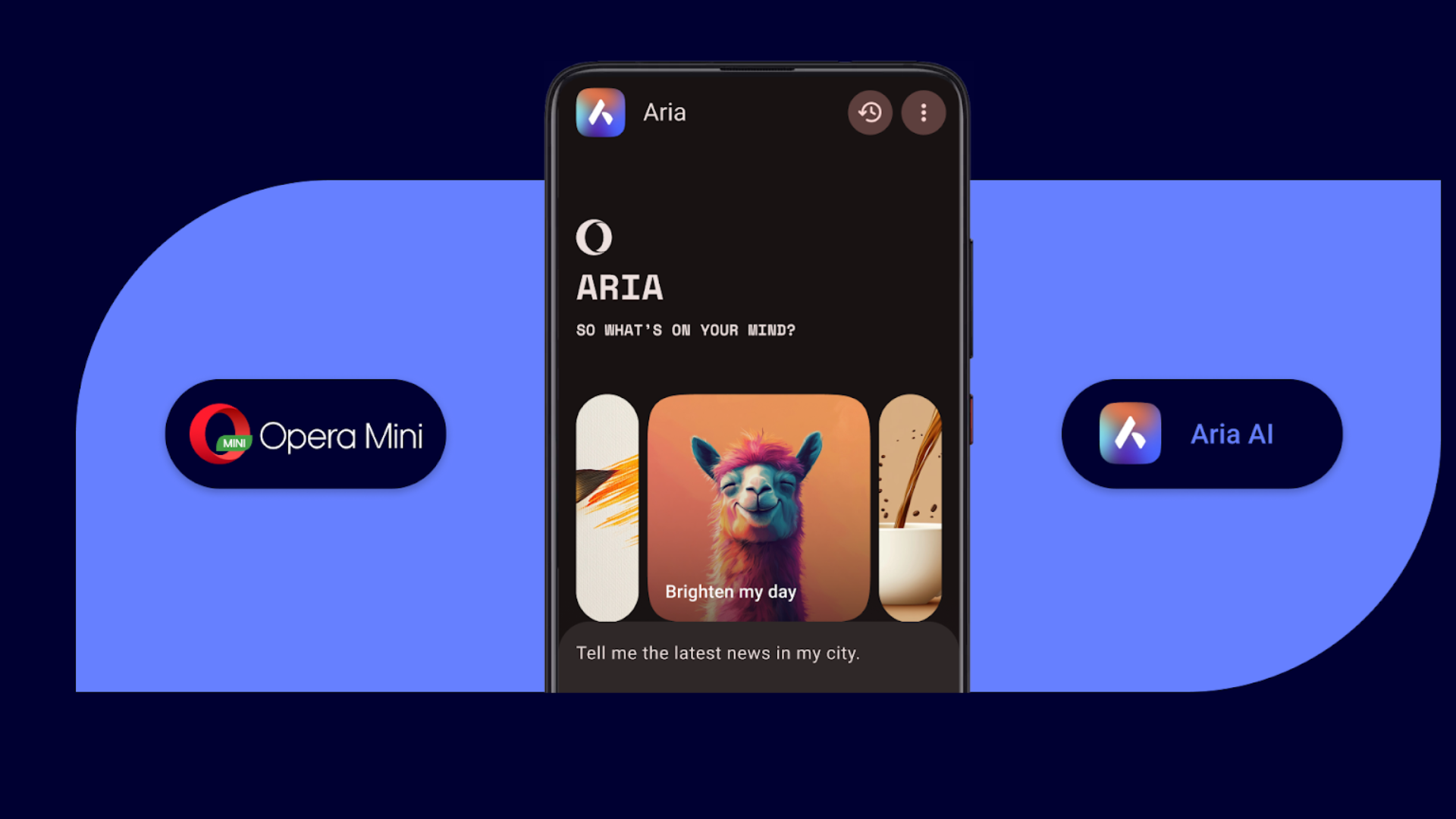
Opera is giving a major AI upgrade to its Opera Mini mobile web browser. The company is embedding its Aria AI assistant into the Android version of Opera Mini, whose low-cost, data-saving approach to browsing is used by more than a hundred million people globally.Aria will aid Opera Mini users by answering questions, generating text or software code, creating images, summarizing webpages, and pulling real-time info from the internet. Aria relies on Composer, Opera’s own AI engine, which stitches together tools and models from both OpenAI and Google, including making images with Google’s Imagen 3 model."AI is rapidly becoming an integral part of the daily internet experience – bringing Aria to Opera Mini is a natural addition to our most-downloaded browser," Opera executive vice president Jørgen Arnesen explained in a statement. "With the addition of our built-in AI, Aria, we’re excited to explore how AI can further enhance the feature set our users rely on every day.”
Pianissimo Opera AI
Opera Mini is popular because it can provide a web browser that doesn't use too much bandwidth. AI assistants like ChatGPT or Google Gemini tend to rely on a significant amount of energy and computational power. In many parts of the world, AI features are only available to people with the latest flagship phones, massive storage, or expensive subscriptions.What Opera Mini is doing with Aria offers an alternative, one built to fit a browser already designed for places with unreliable connections, slow speeds, and high data costs. If you have an Android device, you can simply update the Opera Mini browser and start using Aria.The release sets an interesting precedent. As AI becomes a staple in digital tools, developers have to consider not only how to make AI smarter and more powerful but also more flexible and accessible to people in different circumstances. Opera Mini's addition of Aria could end up being the example developers refer to when creating an AI assistant that won't eat up all your storage space or data budget.Opera has teased that other new Mini features are in the pipeline, though it hasn’t said exactly what they will be. If the new features blend with the browser like Aria, it could end up as a semi-independent path toward AI adoption, one very different from its flashier cousins.
You might also like...
Opera One is a new AI-powered browser that aims to beat Chrome and EdgeOpera is drafting in Google Gemini to help supercharge the browser’s Aria AI assistantOpera’s new AI bot might tempt me away from Google Chrome
-
Picture from cdn.mos.cms.futurecdn.net
Rank 10165Samsung Galaxy XCover7 Pro revives the removable battery for power in rugged environmentsDual programmable keys allow instant access to essential features and field appsBuilt tough with IP68, MIL-STD-810H and Gorilla Glass Victus+ protection
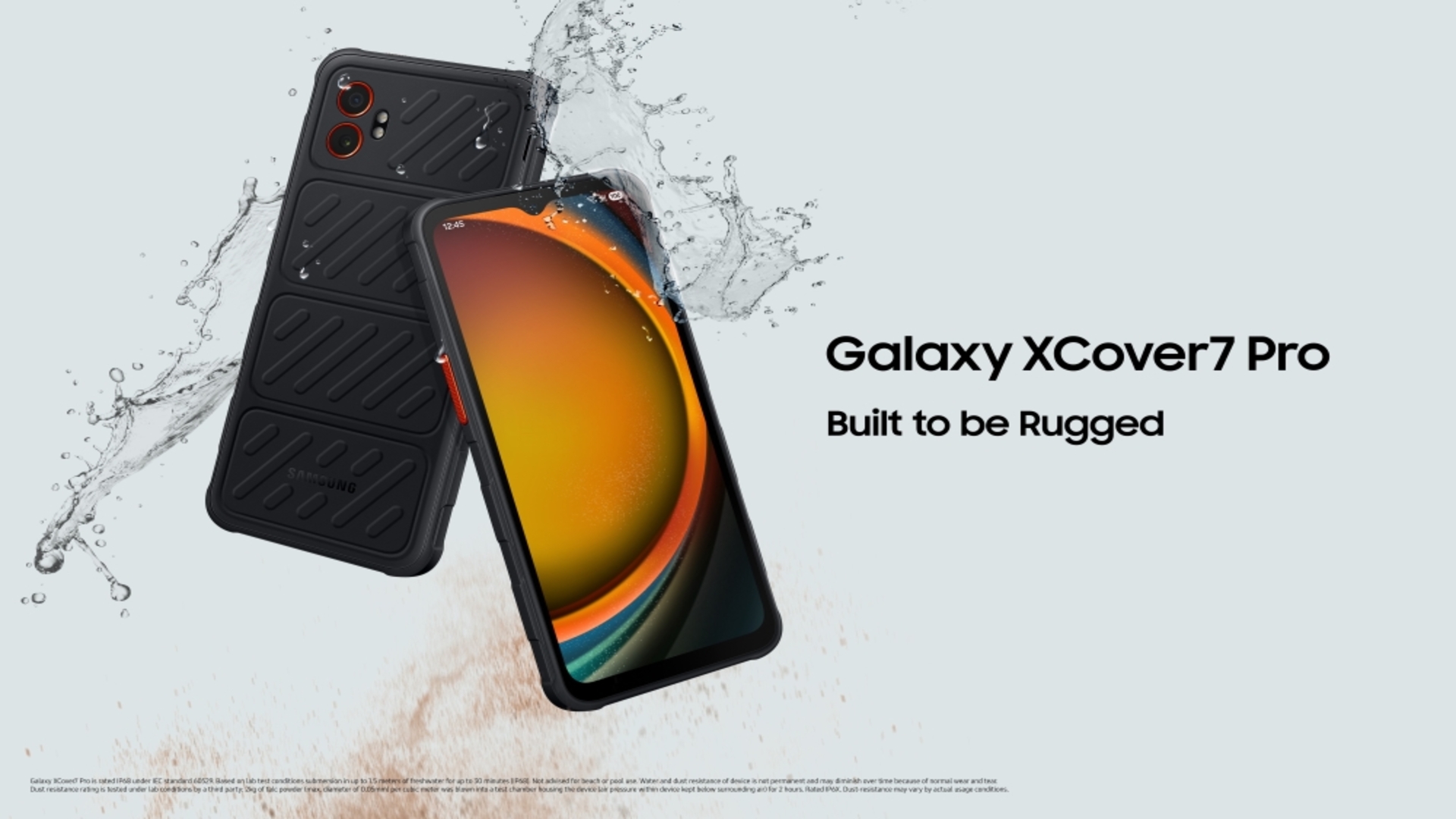
Samsung has officially introduced the Galaxy XCover7 Pro, a rugged smartphone that offers a rare return to basics with a standout feature missing from most modern devices – a 4,350mAh removable battery.Powering the new smartphone is the mid-range 4nm Snapdragon 7s Gen 3 chipset, paired with 6GB of RAM and 128GB of internal storage, expandable via microSD card up to 2TB.The XCover7 Pro features a 6.6-inch FHD+ TFT LCD with a 120Hz refresh rate, 20:9 aspect ratio, glove-friendly touch sensitivity, and Vision Booster for improved visibility. It is protected by Corning Gorilla Glass Victus+, offering resistance to drops, scratches, and disinfectants like ethanol and chlorine-based solutions.
A rugged smartphone built for real-world demands
Designed for frontline professionals, the Galaxy XCover7 Pro is IP68-rated for water and dust resistance and MIL-STD-810H certified for environmental durability, a benchmark for top-tier rugged phones and rugged tablets.“At Samsung, we understand that frontline professionals need technology that adapts to their fast-paced and demanding work environments,” said Jerry Park, EVP and Head of Global Mobile B2B Team, MX Business at Samsung Electronics.Although this device focuses on durability, it includes a 50MP wide main sensor and an 8MP ultra-wide lens on the rear. For selfies, there's a 13MP front camera with an f/2.2 aperture.The business smartphone supports both physical SIM and eSIM. Connectivity options include 5G Sub-6, LTE, Wi-Fi 6E, Wi-Fi Direct, Bluetooth 5.4, and NFC. For navigation, the device supports GPS, GLONASS, Galileo, BeiDou, and QZSS, though availability may vary by region.Weighing 240g, the XCover7 Pro includes a POGO pin interface for use with dedicated charging docks (sold separately), and two programmable hardware keys - the Top Key and XCover Key - which can be programmed to specific apps or features.“The Galaxy XCover7 Pro combines ruggedized durability, enterprise-grade security, seamless connectivity and intuitive AI-driven features to help businesses operate efficiently in harsh conditions while maximizing productivity and minimizing downtime,” Park addedThe device is priced at £559 in the UK and will be available starting April 2025. There's no word on US pricing at the moment.
You may also like
These are the best rugged laptops around todayAnd these are the best rugged smartphones you can buyAmazon paid out more to Jeff Bezos than its actual CEO in 2024
-
Picture from cdn.mos.cms.futurecdn.net
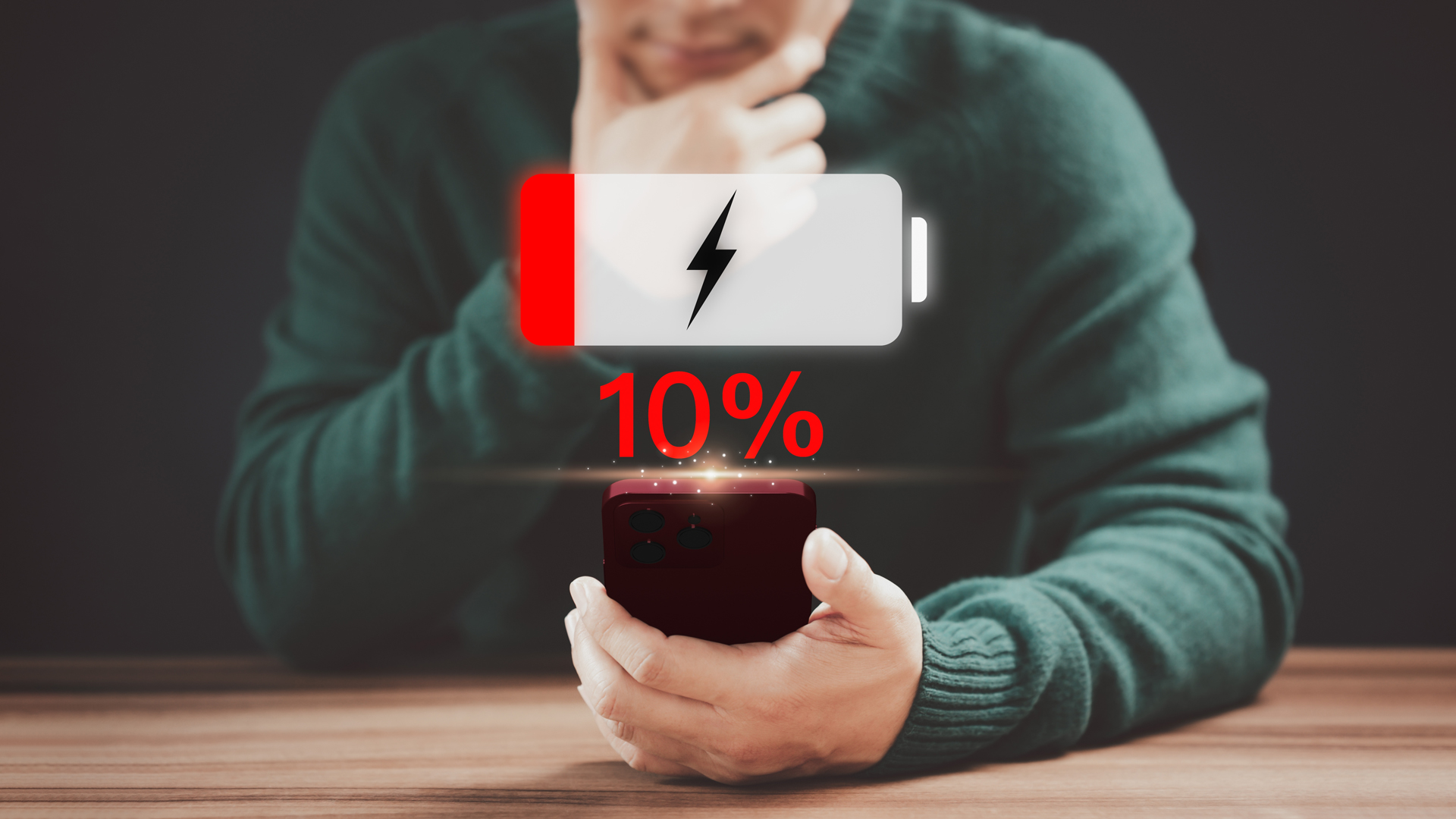
Rank 10166The moment when you think it's time to start charging your smartphone is probably as personal as your hairstyle. I doubt anyone fully agrees on when to plug back in, except when you're completely out of juice. While some might be fine with 50% in the middle of the day, others might panic, just a little, when they hit 38%. At least that's what a new study from Talker Research says.In a survey of 2000 people in the US, researchers found that 38% is when the concern creeps in, and the majority of smartphone owners start searching for a charging option.A third of the respondents wait until, for instance, their iPhone warns them the battery is running low (20% or less), and 13% are willing to wait until the power drops below 10%.I've seen people take far riskier approaches, with as little as 1% left on their phone, and, somehow, they seem unconcerned. Perhaps they always have an extra battery backup in their back pocket.The research, though, indicates there may be some generational differences in our battery approach. Gen Zers reach for a charging cable far sooner than their Millennial, Gen X, and Boomer counterparts, plugging in as soon as 44%.
When do you start panicking about a low phone battery life?April 18, 2025
In my own anecdotal survey on X, I found the majority start worrying about battery life when it reaches 20%. That's even more than those who seem concerned at 10%.This makes sense to me. 20% has long been my trigger, which means I plug and rarely see 10% or less. There is, by the way, a small contingent who charge up when the battery life hits 60%. They are, I bet, part of the "ABC" (Always Be Charging) crowd.I got a few comments on X telling me there was no need to "panic" and that they found that some phones, like the Samsung Galaxy series, had good enough battery life that they rarely worry.
What you can do
The thing is, you have far more control over the life and longevity of your smartphone battery than you might think.First of all, Android and iOS, along with hardware-based AI and machine learning, do their fair share to manage battery life, especially the longevity of the battery. That's why your battery doesn't always charge to 100%. The system has to manage the battery's health so that the 100% battery life you experience when you first buy the phone is not radically different from the 100% battery life you get six months later.Under Settings/Battery, you can see the health of your battery and the percentage it can actually charge to (95% capacity, 80% capacity, etc.)For day-to-day battery life, there are a handful of well-worn tips for both iOS and Android that can significantly extend your charge while having minimal impact on the phone's operation.So, instead of panicking about 38% battery life, you can take charge, and maybe show friends who let the battery life drop to 10% what to do so they can make it through the rest of the night without being tethered to a wall outlet.
iPhone battery tips
Dim your brightness (under Control Center)Turn on Auto Brightness (Under Settings/Accessibility)In WiFi settings, turn off cell serviceEnable Low Power Mode (Under Settings/Battery)Turn off background activity (Settings/General/Background App Refresh)Adjust mail fetch intervals (Settings/Accounts and Passwords/Fetch new data)Turn off location services on an app-by-app basis (Settings/Privacy/Location Services)Tamp down notifications (Settings/Notifications)
Android battery tips
Reduce screen brightness (swiped down from the top to access control)Adjust your screen timeout setting (usually under Settings/Display)Use Dark Mode (usually under Settings/Display)Turn off keyboard vibrations and sounds (Settings/sounds and vibration)Turn on Power Saving (Settings/Battery)Turn on Put unused apps to sleep (Settings/Battery/Background Usage Limits)Turn off cell service in WiFi situations (Settings/Connections)
There are more ways to manage battery life and, especially in Android phones, battery-saving features specific to each manufacturer. I suggest you dig into your settings to see what you can adjust.If all else fails, it's always a good idea to travel with a cable and charge adapter, and also a portable charger.ABC folks, A...B...C.
You might also like
7 tips to keep your phone safe5 tips to save money when buying a phoneThe best phone 2025: top smartphones in the US right now
-

Picture from techcrunch.com
Rank 10167 -
Picture from o.aolcdn.com
Rank 10168This year marks the 125th anniversary of the New York International Auto Show (NYIAS), and despite concerns over tariffs, there are still a lot of manufacturers here showing off new models including a handful of US and global debuts. So without further ado, here are some of the most intriguing cars on display at the 2025 NYIAS. If you are in the area and want to see some of these for yourself, the event is open to the public from April 18 to April 27 and held at the Javits Center. Tickets cost $22 per adult and $8 for children aged 3 to 12.
The 2026 Subaru Trailseeker
First up on the docket is Subaru, which is here today with an early look at its second-ever EV: the Trailseeker. Now I admit that the followup to the Solterra might not be the most exciting announcement, as this model will once again be based the e-TNGA platform, which is shared with Toyota's bZ4x. That said, while the Trailseeker doesn't have the most impressive range (around 260 miles), its updated styling, larger body and improved off-roading capabilities feel more suited to an outdoor lifestyle.
Sam Rutherford for Engadget
Sam Rutherford for Engadget
Sam Rutherford for Engadget
The 2026 Kia EV4
Kia has been on a roll when it comes to EVs thanks to existing cars like the EV6 and EV9. At the 2025 NYIAS, the company is looking to keep that momentum rolling with the US debut of the EV4, which incorporates many of the headline features from its previous battery-powered offerings, but with an even more affordable expected starting price of between $35,000 and $40,000. It also features Kia's improved i-PEDAL 3.0 regenerative braking tech which now works even in reverse.
Sam Rutherford for Engadget
Sam Rutherford for Engadget
Sam Rutherford for Engadget
Kia EV9 Nightfall edition
Speaking of the EV9, while there aren't a ton of updates for 2025, Kia did roll out a new Nightfall edition for its flagship electric SUV. It features blacked-out accents throughout the vehicle including dark wheels, trim and badging. That color scheme even continues inside the vehicle with exclusive all-black upholstery. And when you consider that this remains one of the most affordable three-row electric cars, I think this is a pretty nice way to freshen up the look of the EV9.
Sam Rutherford for Engadget
Sam Rutherford for Engadget
Sam Rutherford for Engadget
Genesis X Gran Equator concept
Billed as a luxury overlander, the Genesis X Gran Equator concept is easily one of the most striking cars at the 2025 New York Auto Show. It features an extremely long hood and LED light strips that wrap all the way around to the side of the vehicle along with matching tail lights in back. Inside, while it has fancy diamond-stitched upholstery, there are also dedicated holders for resuable waterbottles, which hint at its role as a potential camping vehicle. And while Genesis has not said what kind of powertrain it will have if the X Gran Equator reaches official production, the lack of a distinct grille up front means there's hope it will be an EV.
Sam Rutherford for Engadget
Sam Rutherford for Engadget
Sam Rutherford for Engadget
Lucid Gravity
While the Gravity was officially announced late last year, it's largely only been available for purchase by friends and family of the company up until now, which has made it a relatively rare site both at trade shows and on the road. But the at NYIAS, it was on display in all of its three-row electric glory. Not only is the Gravity the fastest charging EV outside of China capable of sucking down up to 400 kW, it also boasts a top range of up to 450 miles. Plus, thanks its ability to add 200 miles of range in less than 11 minutes, it pretty much upends the belief that EVs aren't good for longer road trips. And while it's a niche feature, Lucid even created a special cushion that goes in its frunk that instantly converts it into a cozy little love seat. It's the kind of thing that makes me wish drive-in movie theaters weren't so hard to find nowadays.
Sam Rutherford for Engadget
Sam Rutherford for Engadget
Sam Rutherford for Engadget
Hyundai Ioniq 5 N TA spec
The TA in the Hyundai Ioniq 5 N TA spec's name stands for time attack. And last year, it did just that when it set the record at Pike's Peak for the electric modified SUV/crossover class with a time of 9 minutes and 32 seconds. But what might be the most impressive thing about the car is that despite some obvious changes to its body (just look at the size of that rear wing), Hyundai says the TA was also built to showcase the strength of the regualar Ioniq 5 N's power electric system. So instead of swapping in some one-off motors, this car has the same basic setup as the standard model (601 hp) with a small boost in output of just 37 horsepower.
Sam Rutherford for Engadget
Sam Rutherford for Engadget
Sam Rutherford for Engadget
Maserati GT2 Stradale
Even though we here at Engadget prefer EVs, we'd be remiss not to mention at least one gas-powered car at the New York Auto Show. Announced back in February, the Maserati GT2 Stradale is basically a road-legal version of the GT2 race car, which itself is based on the truly outrageous MC20 supercar. And as you'd expect, it has some pretty impressive specs with a blistering 0-60 time of 2.8 seconds despite it only having rear-wheel drive. It also features a carbon monocoque design just like its track-focused sibling and if you want, you can order one with semi-slick racing tires. So if you've ever had dreams of driving a race car on the street, this might be your ride. That said, Maserati hasn't announced official pricing for the GT2 Stradale. But as the saying goes, if you have to ask, you probably can't afford it.
Sam Rutherford for Engadget
Sam Rutherford for Engadget
1924 Chrysler 6 prototype
Finally, capping off this list is the Chrysler 6 prototype which made its debut way back at the 1924 New York Auto Show. Granted, this thing is ancient, but at the time it was state-of-the-art boasting the industry's first four-wheel hydraulic brakes along with a six-cylinder engine that produced a whopping 68 horsepower. When it eventually hit the market later that year, the Chrysler 6 cost $1,565. After factoring for inflation, that translates to a sticker price around $29,000, which actually doesn't seem too bad.
Sam Rutherford for Engadget
Sam Rutherford for Engadget
Sam Rutherford for Engadget
Update, April 17 2025, 1:11PM ET: This story has been updated to add information to the intro on public admission days and ticket prices.This article originally appeared on Engadget at https://www.engadget.com/transportation/evs/here-are-the-coolest-cars-at-new-york-international-auto-show-2025-144832024.html?src=rss
-

Picture from ichef.bbci.co.uk
Rank 10169 -
Picture from o.aolcdn.com
Rank 10170Under no circumstances should you let AI do your schoolwork for you, but Google has decided to make that option a little bit easier for the next year. The company is offering a free year of it's Google One AI Premium plan, which includes Gemini Advanced, access to the AI assistant in the Google Workspace and things like Gemini Live, to any college student willing to sign up.
The offer gives you a sample platter of Google's latest AI features, which normally costs $20 per month, and is primarily focused on things you can do with Gemini. That includes experimental products like NotebookLM for analyzing documents, and Whisk for remixing images and videos. Because this is a Google One plan, you'll also get 2TB of Google Drive storage for the parade of PDFs that make up college life.
You can sign-up for the free offer on Google's website. You need to be 18 years or older, have a ".edu" email address and join before June 30, 2025, but once you do, you'll have the Google One AI Premium plan through July 2026. Google says you'll need to verify you're still a student in 2026, but otherwise, the whole thing is a light lift. Even if you don't care about AI, signing up is worth it for the free extra storage.
Google's intentions here obviously aren't pure. Free storage is nice, but If the company can normalize using AI for a generation of young minds, it can change what's an occasionally useful novelty into an essential. That's not likely to be good for critical thinking or test scores, even if it justifies the money the company is spending on AI research and development.This article originally appeared on Engadget at https://www.engadget.com/ai/google-is-trying-to-get-college-students-hooked-on-ai-with-a-free-year-of-gemini-advanced-195706467.html?src=rss
-

Picture from techcrunch.com
Rank 10171 -

Picture from ichef.bbci.co.uk
Rank 10172 -

Picture from ichef.bbci.co.uk
Rank 10173 -

Picture from techcrunch.com
Rank 10174 -

Picture from ichef.bbci.co.uk
Rank 10175 -

Picture from techcrunch.com
Rank 10176 -

Picture from techcrunch.com
Rank 10177 -
Picture from o.aolcdn.com
Rank 10178Blizzard has finally shared how hero bans will work in competitive Overwatch 2. The new step will let teams ban heroes they think are overpowered or annoying to play against, without letting them game out who their opposing team might want to play. The feature is a common part of other competitive games like League of Legends, and is a meta-game in its own right.
For Overwatch 2, Blizzard hopes to use the "Ban Phase" mostly to let players remove heroes they find frustrating, and gather data to use when the game is rebalanced. When you first launch into a competitive match, you'll get the option to select your "Preferred Hero," which signals to your team who you don't want to ban. Then you'll rank three heroes you want to remove from the match, with your first choice given the most weight, and your last choice, the least. Blizzard says all teams and players vote simultaneously, but chat will be blocked off between opposing teams until voting ends.
Blizzard
Once all the votes are in, they get tallied using the following guidelines:
The team with the most votes for a specific hero will be considered the “first” team, and will guarantee that their chosen hero is banned. In the case of a tie, the first team is decided randomly.
Then, the other team becomes the “second" team. If the heroes they voted to ban were not the first team's banned hero, then their most and second most voted heroes are banned.
If the second team's most or second most voted pick was also the first team's, then the second team's third most voted hero is removed instead.
And finally, the second most voted hero on the first team is banned, with the same caveat the second team had.
When the number of votes for a hero is tied, the game picks the hero voted by the most players in the lobby (and not the total amount of votes). Ties beyond that are broken randomly, and regardless of how the votes shake out, there's a limit of two bans per role. If you don't want to ban any heroes or don't know who to ban, you can also skip voting and let your teammates decide for you.
Blizzard first announced it would add hero bans to Overwatch 2 with its Season 15 announcement, which introduced a perks system to the game. Hero bans are set to arrive with Season 16 on April 22, which will also include the new Stadium mode, five-on-five matches where players earn currency to spend on upgrades between rounds, and have the option to play in third-person.
This article originally appeared on Engadget at https://www.engadget.com/gaming/blizzard-explains-hero-bans-ahead-of-their-introduction-in-competitive-overwatch-210319297.html?src=rss
-

Picture from ichef.bbci.co.uk
Rank 10179 -

Picture from techcrunch.com
Rank 10180 -

Picture from techcrunch.com
Rank 10181 -

Picture from ichef.bbci.co.uk
Rank 10182 -

Picture from ichef.bbci.co.uk
Rank 10183 -

Picture from techcrunch.com
Rank 10184 -

Picture from cdn.mos.cms.futurecdn.net
Rank 10185Music has always had a love-hate relationship with technology. Every time a new tool shows up, there are some who are concerned that it will be the end of real music.The same questions arose when the synthesizer appeared, when the drum machine became popular, and any time auto-tune is used on a popular song. But Cher proved that there was music after auto-tune, just as there is life after love.Claims about the death of authenticity are almost always exaggerated, and accusations of 'cheating' sound absurd in retrospect. Eventually, people learn to sing along to the new tune, or at least admit that electric guitars didn't go around smashing up every acoustic version.All that is overture for people playing the theme from Psycho over AI's presence in music. I'm not discounting the seriousness of a report by French streaming platform Deezer that 18% of songs being uploaded these days are entirely AI-generated. That’s over 20,000 robot-made tracks per day. Twice the number from just a few months ago. Cue the dramatic sting (you know the one, Dun, Dun, Dun!)It’s easy to look at numbers like that and feel a little nervous. After all, the music industry already runs on razor-thin margins for most artists, and now the meager streaming revenue is going to go to robots? Add in the fact that major players like Universal, Sony, and Warner are actively suing AI music platforms like Suno and Udio for allegedly training on copyrighted songs, and you can see how high the stakes are.The music industry is not the entirety of music, however. I firmly believe in robust protection for artists who face AI stealing their work or training on it to mimic them. But that's a business battle, not a war for the fate of human creativity.AI has a place in the recording studio. Once upon a time, many people proclaimed that sampling portended the end of music, with a future of nothing but artists stealing other artists’ work. Now it’s the backbone of entire genres of music. Auto-tune has evolved from a gimmick to a legitimate tool across many music styles. And the aforementioned electric guitar was dismissed for being too loud within many people's lifetimes.Nonetheless, here we are enjoying music made by people pushing buttons, twisting knobs, and bending sound in new ways. AI is just the latest tool. And like any tool, it’s only as good or bad as the person using it.
Allegro AI
(Image credit: Shutterstock)
What worries me isn’t the existence of AI music. It’s the idea that we might start mistaking it for a replacement instead of a collaborator. Left to its own devices, AI doesn’t make bad music, but it can feel empty or just a warmed-over imitation of real music. It’s elevator music, but more expensive.That’s not to say it’s useless, far from it. AI can be a brilliant creative assistant. Stuck on a chord progression? It can help. Need to experiment with a new genre you’ve never written in? Fire it up. Want to turn a poem into a melody just to see what happens? Absolutely. AI can help bring the song in your head to life, but it won't do so without you as the source of the ideas.The real debate should be about how to use AI in music, not whether to ban it outright. I'd be worried about the sheer number of AI songs appearing on streaming services if I were a musician, but not because AI created them. I'd be more concerned about where they are coming from, who's profiting from them, and if any artists' work was illicitly used to train the AI behind the songs.And it's not like every human track is a unique snowflake. A lot of music shares DNA, and the most popular songs sometimes come across as only slightly tweaked versions of each other. Trends are trends, and algorithms have already been shaping what we listen to, nudging us toward the familiar, the market-tested, the sonically safe. AI isn’t creating that dystopia, though it may be speeding up the process.Still, AI could be a boon to music as a whole. Imagine a rural teenager with few resources who can't hire a band, a piano teacher, or a recording studio. With a phone and some imagination, they could use free AI music tools to experiment and share the music in their minds.AI music isn’t the death of music as a concept. It’s a powerful tool that should be handled carefully. It can be a shortcut, but it shouldn't be a thief, and it can't give a song any soul.
You might also like
I tried using AI to create the background music for a podcast, but I may stick to music libraries for nowPaul McCartney cautions against AI in music despite success of AI-enhanced Beatles songWill Adobe's AI agents cause the death of creativity?
-

Picture from ichef.bbci.co.uk
Rank 10186 -

Picture from ichef.bbci.co.uk
Rank 10187 -

Picture from cdn.mos.cms.futurecdn.net
Rank 10188IPVanish's malware and tracker blocking technology has been confirmed as one of the best on the marketVIPRE Advanced Security received the highest rating in the latest AV-Comparatives' Malware Protection TestThis achievement follows a successful independent audit confirming that IPVanish's no-log policy
Independent auditors have just confirmed that the technology behind IPVanish's malware and tracker-blocker tools is one of the best on the market.VIPRE Advanced Security received the highest rating in the latest Malware Protection Test carried on by AV-Comparatives in March 2025. The antivirus bundle service stood out for its strong performance across several potential attack scenarios.The results come about a week after an independent audit also confirmed that IPVanish never logs users' data, in line with what is stated in its no-log VPN policy.
A win for IPVanish users' security
In its latest Malware Protection Test, experts at AV-Comparatives checked the ability of 19 security products to detect and prevent infections from a wide range of malware threats. These include some of the best antivirus services like Avast, Bitdefender, McAfee, Norton, and more.More than 10,000 of the most recent malware samples were tested on a fully updated Windows 11 machine, with the evaluation including offline and online scanning as well as live execution and mirroring real-world conditions.VIPRE Advanced Security was among 10 providers to earn an Advanced+ rating from AV-Comparatives after excelling in all key metrics. Specifically, the tool detected 98.7% of threats consistently both online and offline, gaining a 99.93% protection score during live execution evaluations. It did all that while producing a minimum amount of false positives, too."This award is a win for all IPVanish users because the same cloud-based threat intelligence that earned VIPRE top marks is already working behind the scenes in IPVanish’s Threat Protection feature, along with our QR Code Checker and Link Checker security tools," the provider told TechRadar.
Our security just got a gold star. ⭐VIPRE, the engine behind IPVanish Threat Protection, earned AV-Comparatives’ top malware protection rating! That same power is built into your VPN. #IPVanish #CyberSecurity #AVComparatives #VPN #MalwareProtection https://t.co/k3LqbEoksTApril 16, 2025
IPVanish released its Threat Protection feature in March last year across all its apps, placing the provider alongside some of the best VPN services already offering a similar tool.IPVanish Threat Protection works by filtering out third-party content before loading to preserve data usage while blocking third-party cookies and tracking scripts as well. At the same time, it prevents you from accessing known malicious websites, including phishing schemes and malware-embedded sites, to further protect users and their data.Last June, IPVanish also launched a Link Checker service built on VIPRE's tech. The tool comes as a standalone website and is free to use for everyone, whether or not you're an IPVanish subscriber, to verify the safety of URLs before clicking and protect against phishing scams.The provider has recently integrated a similar tool on its iOS and Android VPN apps. This is a QR Code Checker that allows users to scan QR codes to detect malicious links and phishing traps.
You might also like
Millions of free VPN users have inadvertently sent their data to ChinaGoogle warns of legit VPN apps being used to infect devices with malwareNymVPN officially launches and claims to be "the world’s most secure VPN"
-

Picture from ichef.bbci.co.uk
Rank 10189 -

Picture from ichef.bbci.co.uk
Rank 10190 -
Rank 10191
-

Picture from ichef.bbci.co.uk
Rank 10192 -

Picture from ichef.bbci.co.uk
Rank 10193 -

Picture from ichef.bbci.co.uk
Rank 10194 -
Picture from a1.api.bbc.co.uk
Rank 10195 -

Picture from ichef.bbci.co.uk
Rank 10196 -

Picture from ichef.bbci.co.uk
Rank 10197 -

Picture from ichef.bbci.co.uk
Rank 10198 -

Picture from ichef.bbci.co.uk
Rank 10199 -

Picture from ichef.bbci.co.uk
Rank 10200


