News
This constantly updated list features the latest and most important news articles, ranked in order of significance. The top stories highlight major developments, breaking news, and critical updates across various topics, ensuring you stay informed about the most pressing issues. As new articles are added, the list adapts to reflect the latest priorities, keeping the most impactful stories at the forefront. Whether it’s global events, technology breakthroughs, or industry trends, this dynamic list ensures you always have access to the most relevant and timely information.
-
Picture from cdn.mos.cms.futurecdn.net
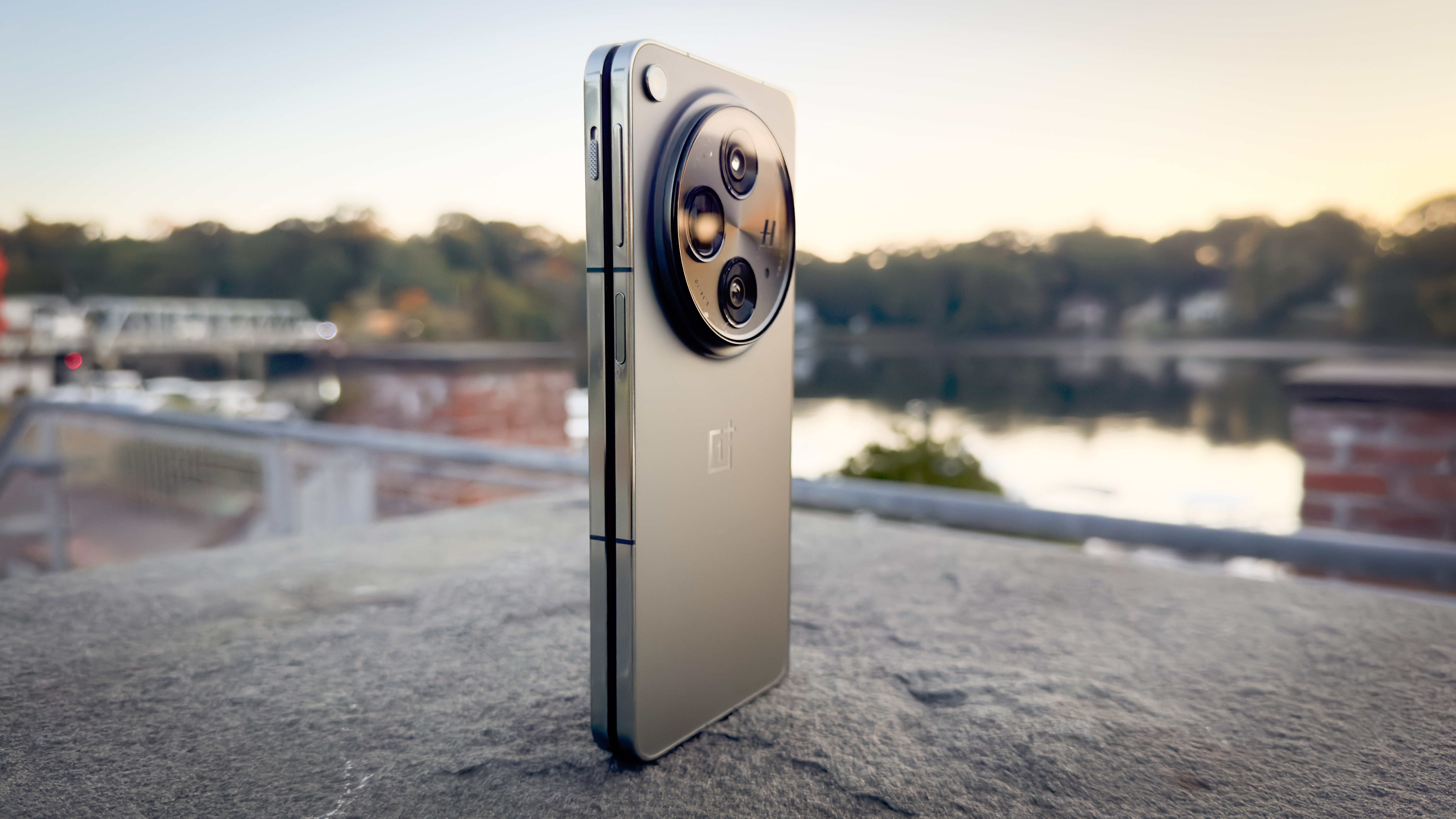
Rank 8951The OnePlus Open was well-received on its release in October 2023 (we described it as “the only foldable phone that doesn't compromise” in our OnePlus Open review), so it was more than a little disappointing to hear that a much-rumored OnePlus Open 2 won’t be hitting shelves any time soon.In a statement posted to the OnePlus Community forum in February, OnePlus announced that it had “made the decision not to release a foldable” in 2025, noting that Oppo – OnePlus’ sister company – is now “taking the lead in the foldable segment” with the Oppo Find N5 (which, incidentally, is still not available outside of China at the time of writing)."This is not a step back, it’s a recalibration," OnePlus explained at the time – but what does that mean, exactly? We asked the company to elaborate on its reasoning during a recent sponsored visit to OnePlus HQ in Guangdong, China. Rudolf Xu, Senior Product Marketing Manager for OnePlus, had this to say:“In the foldable industry, the common challenge for every smartphone maker is [working out] how to make the phone slimmer, lighter, and the crease less visible, while also, at the same time, not sacrificing other key specs when you are trying to solve those challenges,” Xu told TechRadar.“At OnePlus, we want to bring the best possible experience [to the user]. If you look back at the OnePlus Open, even up until today, it still has very competitive specs, honestly. It’s more about a timing situation. We are thinking about how we want to solve those [aforementioned] challenges in a better way. That’s why we decided not to launch a foldable this year.”
The OnePlus Open, even up until today, still has very competitive specs.Rudolf Xu, OnePlus
It’s clear, then, that a desire to bring meaningful (i.e. not iterative) innovation to the foldable market lies at the heart of OnePlus’ decision to delay its foldable plans – but there are economic factors at play here, too.Xu explained: “There's also a figure I can share [that will help justify our decision]. If you check the latest Counterpoint research, foldable shipments increased by 2.9% year-over-year in 2024, which was actually lower than expected. The foldable market is increasing, for sure, but it will still take time for foldables to become mainstream and to really, let's say, cross the chasm and become a product for the majority [of people].”
The OnePlus Open is still among the best foldable phones in 2025 (Image credit: Future / Philip Berne)
In other words, the foldable market simply isn’t yet big enough to make regular product launches economically viable – at least for OnePlus.Samsung continues to release book- and flip-style foldables on an annual basis (the Galaxy Z Fold 7 and Galaxy Z Flip 7 are next on the agenda), but it’s true that the South Korean giant has more resources at its disposal, not to mention a much larger user base.The good news is that the OnePlus Open 2 isn’t just a pipe dream. OnePlus confirmed in its aforementioned statement that it’s not withdrawing from the foldable market entirely – “our decision to pause on foldables for this generation does not signify a departure from the category,” the brand explained. And given that we’re not expecting a new model in 2025, it’s safe to assume that the OnePlus Open 2, when it does eventually arrive, won’t just be a rebadged Oppo Find N5 (though we are huge fans of that particular device).What do you think about OnePlus' decision, and the state of foldable phones in 2025 more generally? Let us know in the comments.
You might also like
OnePlus Open 2 rumors are heating up – here are 5 things I want to see from the foldable follow-upBest OnePlus phones: top flagship and budget modelsOnePlus Watch 3 review: the Android smartwatch of 2025 so far
-

Picture from techcrunch.com
Rank 8952 -

Picture from ichef.bbci.co.uk
Rank 8953 -

Picture from ichef.bbci.co.uk
Rank 8954 -

Picture from ichef.bbci.co.uk
Rank 8955 -

Picture from ichef.bbci.co.uk
Rank 8956 -
Picture from o.aolcdn.com
Rank 8957This installment of our reviews roundup goes in several different directions. We've got an excellent Android phone, some smart glasses and a powerful CPU. Plus, we revisited our old pal the iPhone 16 Pro and offer up a spoiler-free review of The Last of Us season two. There's plenty to catch up on, so keep scrolling to see what our reviews team has been up to over the last few weeks.
Google Pixel 9a
There's a lot to like about the Pixel 9a. In fact, senior reviews writer Sam Rutherford argues it's the best Android phone you can buy right now in terms of pure value. "I would love to see Google add a true telephoto lens and its charging speeds (both wired and wireless) could be better," he writes. "But for $500, Google's most budget-friendly phone covers all the bases and then some."
Even Realities G1
If you're looking for a pair of smart glasses that are more practical instead of being a content capture device, Even Realities' G1 might be for you. The device impressed senior editor Daniel Cooper, but the caveats will be dealbreakers for some people. "I really like Even Realities’ G1 for what they can do right now, but I’m also hopeful that it’ll get far more useful in the future," he explains. "It seems to me there are so many things that could be tweaked, primped and plumped to make these far more appealing."
AMD Ryzen 9 9950X3D
The latest AMD Ryzen CPU is a powerhouse, but it comes with a steep price tag. "After releasing a pair of excellent midrange GPUs, which showed that the company can genuinely go toe-to-toe with NVIDIA, this CPU and its accompanying 3D V-Cache technology is a reminder of how AMD is far ahead of Intel in many ways," senior editor Devindra Hardawar says. "While it’s certainly not the best deal around, if you can afford it, the 9950X3D is the best desktop CPU you can buy today."
An iPhone 16 Pro check-in and S2 of The Last of Us
We're revisiting big devices about six months after their initial release to see how things are progressing. UK bureau chief Mat Smith recently put the iPhone 16 Pro through its paces again, noting that Apple Intelligence remains a disappointment. Deputy news editor Nathan Ingraham got early access to The Last of Us ahead of the season two premiere this weekend. He explains that the show navigates a rough patch in the source material with relative ease, and his review won't spoil the new episodes. This article originally appeared on Engadget at https://www.engadget.com/engadget-review-recap-the-pixel-9a-smart-glasses-and-amds-latest-cpu-141825552.html?src=rss
-

Picture from ichef.bbci.co.uk
Rank 8958 -

Picture from ichef.bbci.co.uk
Rank 8959 -

Picture from cdn.mos.cms.futurecdn.net
Rank 8960Netflix is testing new AI-powered recommendationsIt's live now for iOS users in Australia and New ZealandYou'll be able to ask for recommendations based on mood
Netflix has long used AI algorithms to recommend new movies and shows to its users, but it's now testing an enhanced experience that can suggest titles to watch based on your mood or whatever criteria you choose.As reported by Bloomberg, and confirmed by Netflix to The Verge, the test is live now for iPhone users in Australia and New Zealand. For now, it seems the focus is on iOS, but US subscribers are apparently getting this "in the coming weeks and months".The feature is going to be opt-in for users, at least to begin with, and will be powered by technology from ChatGPT developer OpenAI. As yet we haven't had any official announcement from either Netflix or OpenAI.It's perhaps understandable that Netflix is taking a low-key approach to the new recommendation feature: the use of AI in movies and shows is under an increasing amount of scrutiny, with serious questions being raised about the creative industry.
How will this work?
Expect a ChatGPT-like experience – though Android users will have to wait (Image credit: Shutterstock / trickyaamir)
We haven't been able to test this out for ourselves at TechRadar, and there's not much to go off in the reports as yet. Being able to get recommendations based on your mood is really the only detail that's emerged so far.However, given the way movie and show recommendations already work in generative AI bots such as ChatGPT, it's not difficult to imagine the sort of functionality that's heading to Netflix: a more personal, more detailed recommendation experience.You can already ask ChatGPT to recommend movies similar to classic 90s action thrillers, less than two hours in length, and without excessive violence in them and get some decent answers back. Netflix's own version is likely to work in a similar way.In other words, you'll be able to make all kinds of requests in terms of recommendations, from genre to setting, and you'll get a bunch of AI-picked movies and shows back – all available in the Netflix catalog, of course.
You might also like
Netflix tried to fix 80s sitcom A Different World with AIAI-created trailers could be heading to NetflixNetflix removes AI art poster for Arcane after creator outcry
-

Picture from ichef.bbci.co.uk
Rank 8961 -

Picture from ichef.bbci.co.uk
Rank 8962 -

Picture from ichef.bbci.co.uk
Rank 8963 -
Picture from ichef.bbci.co.uk
Rank 8964 -
Picture from o.aolcdn.com
Rank 8965US Customs and Border Protection has published a list of products that will be excluded from Trump’s reciprocal tariffs, including smartphones, computers, semiconductors and memory cards, along with other electronic devices and components. The move comes shortly after Trump imposed a 125 percent tariff on goods from China, which the administration confirmed to CNBC and other outlets is in addition to the 20 percent tariff put in place earlier this year, bringing it to a total of 145 percent.
Trump had previously announced higher reciprocal tariffs for other countries, too, but walked this back with a 90-day “pause” earlier this week. The pause does not apply to China, though, and there’s still a 10 percent tariff on imports from almost all countries. Electronics imports in particular are expected to be hit hard by the new rules, and we’ve already seen companies like Nintendo and Razer changing up their plans around upcoming product launches in the US.
The newly published exclusions would exempt many devices and parts from both the 10 percent global tariff and the steeper tariff on China, according to the notice published on Friday. But at the rate this has all been going, who knows how long that will last. This article originally appeared on Engadget at https://www.engadget.com/big-tech/smartphones-computers-and-other-electronics-are-exempt-from-trumps-reciprocal-tariffs-for-now-153139830.html?src=rss
-

Picture from ichef.bbci.co.uk
Rank 8966 -

Picture from ichef.bbci.co.uk
Rank 8967 -

Picture from ichef.bbci.co.uk
Rank 8968 -
Picture from o.aolcdn.com
Rank 8969On April 14, Waymo will start testing its robotaxi technology outside the US for the first time. As Yomiuri Shimbun reports, the company will deploy 25 of its electric Jaguar I-PACE vehicles in Tokyo for the initial phase of its testing program. Waymo is taking it slow and will not be operating them without a driver behind the wheel yet, however. Drivers from Tokyo taxi company Nihon Kotsu Co. will be driving the cars around Chiyoda, Minato, Shinjuku and four other wards in the Japanese capital.
The cameras and radars equipped on the I-PACE vehicles will collect data on Tokyo's roads, which are typically narrower than roads in the US. They'll provide the company with information on local infrastructure, road conditions and the driving patterns of locals. "It's important for us to understand the difference in driving environment, what makes the driving here unique," said Nicole Gavel, Waymo Senior Director, during an event in the city. Waymo will have to adjust its software according to the driving conditions and the capital's rules, after all. Gavel said that Waymo is focused on the testing for now but "would love to have a business" in Tokyo in the future.
But that's probably a long ways away: After the initial mapping phase, Waymo will still have to conduct autonomous driving tests with a driver behind the wheel, and then tests without a driver on board. This article originally appeared on Engadget at https://www.engadget.com/transportation/waymo-will-start-testing-its-self-driving-taxis-in-tokyo-next-week-163016736.html?src=rss
-

Picture from ichef.bbci.co.uk
Rank 8970 -

Picture from ichef.bbci.co.uk
Rank 8971 -

Picture from ichef.bbci.co.uk
Rank 8972 -

Picture from techcrunch.com
Rank 8973 -

Picture from techcrunch.com
Rank 8974 -
Picture from cdn.mos.cms.futurecdn.net
Rank 8975Broadband Optical SSDs may be key to development of town-sized mega data centers Opting for optical SSDs allow distance between compute and storage to grow far more The other advantage of going optical is the energy savings associated with moving petabytes of data around
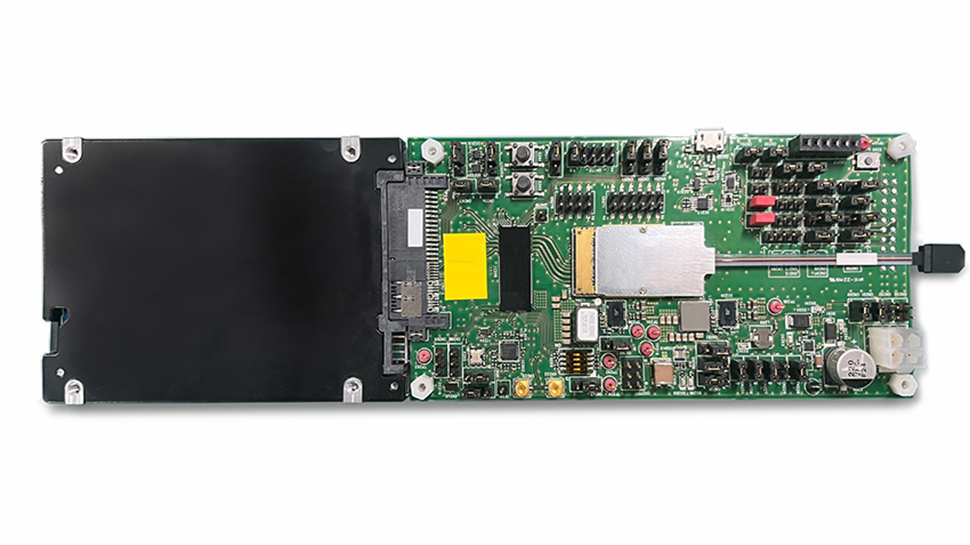
A trio of Japanese tech giants, Kioxia, AIO Core, and Kyocera, have announced the development of a prototype broadband SSD with an optical interface that works with the PCIe 5.0 standard.The optical SSD prototype has reportedly achieved "functional operation" using PCIe 5.0, which offers double the bandwidth of PCIe 4.0.This was made possible through a combination of AIO Core’s IOCore optical transceiver and Kyocera’s OPTINITY optoelectronic integration module.
Going optical
This optical SSD was created to handle the demands of modern applications like generative AI, which rely on moving large amounts of data quickly.The use of optical connections in SSDs could help reduce the physical limitations tied to traditional electrical interfaces, especially in large-scale data center environments.The three firms say they plan to continue developing the technology and apply it to proof-of-concept testing aimed at future real-world use.One of the major benefits of going optical is the ability to increase the physical distance between compute and storage without losing performance or energy efficiency. This is expected to be especially useful for data centers that span wider areas.There's also the added advantage of reduced energy use when shifting petabytes of data, which could help meet growing environmental goals in the tech industry.The project's aim is to ultimately create new digital infrastructure technologies that cut energy use in data centers by over 40% compared to current systems.This work is part of Japan’s “Next Generation Green Data Center Technology Development” project, JPNP21029, which receives funding from the New Energy and Industrial Technology Development Organization (NEDO) through the Green Innovation Fund Project.Each company brings specific expertise to support the shared goal of building more efficient and capable data infrastructure for the future. Kioxia is focusing on broadband optical SSD development, AIO Core is working on optoelectronic fusion devices, and Kyocera is creating optoelectronic packaging.
You might also like
New research leads the way to creating cheaper, more practical optical storageIntel debuts crucial optical tech that will boost AI performance'A single optical fiber': Scientists build a silicon-less computer that use light waves
-

Picture from ichef.bbci.co.uk
Rank 8976 -

Picture from ichef.bbci.co.uk
Rank 8977 -

Picture from ichef.bbci.co.uk
Rank 8978 -

Picture from ichef.bbci.co.uk
Rank 8979 -
Picture from cdn.mos.cms.futurecdn.net
Rank 8980Certain electronics gadgets are now exempt from certain tariffsPhones, laptops, and processors all get a reprieve – which includes ChinaIt's still not clear what will happen next with electronics pricing
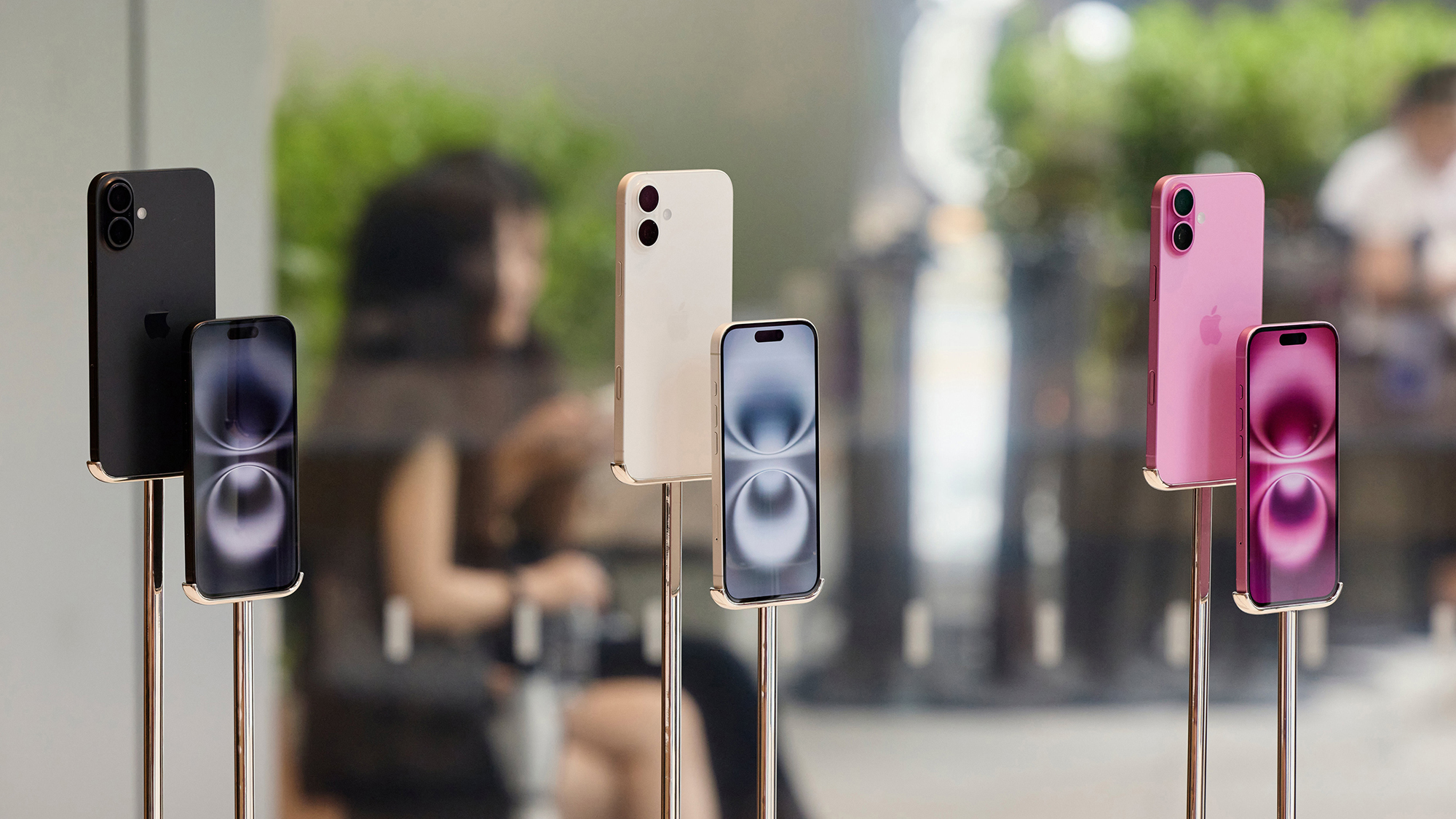
There's a new twist in the US tariff trade war: Phones, computers, semiconductors and various other electronics are now exempt from punishing import tariffs, which have shot up to 145% for China and are typically now 10% as a baseline for other countries.The news was reported by the Associated Press and others, and while it's still early to say what the full impact will be, it does ease the pressure on companies who mostly manufacture their gadgets outside of the US – including Apple, Dell, Nvidia, and Samsung.US President Donald Trump introduced a raft of tariffs for goods imported to the US at the start of the month, and markets have been in chaos ever since. Earlier this week, a lot of those tariff hikes above the 10% baseline were paused – but not for China, which raised its own tariffs in turn.This new exclusion policy does cover China, and mentions smartphones, laptops, hard drives, computer processors, memory chips, and machines used to make semiconductors. Most companies that deal in electronics will be breathing a sigh of relief, though some device categories apparently aren't covered, including video games consoles.
What happens next?
The move might not be enough to open up Switch 2 pre-orders in the US (Image credit: Future/Nintendo)
It's been difficult to predict the moves the US government has made in respect to tariffs in recent days, and that hasn't changed. This latest move should mean gadget pricing settles down for consumers, but it's impossible to be certain.Bloomberg reports that the new exclusion policy could be a precursor to a whole separate tariff focused specifically on electronics. For now, the world is waiting to see how the 90-day pause on many of Trump's tariffs plays out.As a US company which assembles almost all of its goods overseas, including in China, Apple has been in the spotlight during all of this tariff uncertainty: there have even been suggestions of Apple factories in the US and reports of iPhone panic-buying ahead of potential price rises.Apple is one of the companies that it seems will benefit the most, though the move may not be enough to open up Nintendo Switch 2 pre-orders in the US, which have been delayed. Consoles like the Switch 2 aren't mentioned in the new exemptions, though the previous 90-day pause should mean more stock can be moved to the United States.
You might also like
Framework and Razer are halting laptop sales due to tariffsTariffs 'not factored into the price' of the Switch 2Microsoft shelves another $1bn data center project as tariff fears rise
-

Picture from ichef.bbci.co.uk
Rank 8981 -

Picture from ichef.bbci.co.uk
Rank 8982 -

Picture from ichef.bbci.co.uk
Rank 8983 -
Picture from o.aolcdn.com
Rank 8984Spoilers for “The Robot Revolution.”
The start of any season of Doctor Who is important, doubly so when there’s a new co-star to introduce. “The Robot Revolution” has to get us to fall in love with Belinda Chandra (Varada Sethu), ensnare new fans and keep existing ones hooked. Especially since it’s the second of two series that Disney paid for, meaning it’s got to do well enough to keep the money flowing.
We open “17 years ago” with Belinda Chandra staring at the stars next to her boyfriend, Alan Budd (Jonny Green). It’s an awkward teenage date, with Alan clearly trying to win the heart of his beau by buying her one of those star adoption certificates. In 2025, Belinda is now a nurse at a busy London hospital where, in the background, the Doctor is searching for her.
Belinda goes home to bed, and we see that she’s got the star ownership certificate framed on her wall. But she’s rudely awoken by a squad of retro-futuristic ‘50s robots in a Tintin rocket who have come to abduct both her and the certificate. The Doctor reaches her home just in time to see the rocket take off, and cue the opening credits.
The certificate wasn’t a gag present, and she is actually queen of the planet BelindaChandra, populated by BelindaChandrians (I’m calling them humans from now on). The Doctor gives chase in the TARDIS but both the rocket and TARDIS get caught in a vaguely-defined time fissure. When Belinda arrives, she’s greeted by the human Sasha55, who tells her the robots are in charge, having overthrown and subjugated the people in a bloody uprising a decade prior.
“Oh, this is a bit like Jupiter Ascending,” I wrote in my notes.
Belinda is taken to a throne room where she’s told that she must merge with the planet’s evil ruling supercomputer, the AI Generator. AI Generator, all skull shapes and Tesla coils, intends to bond with Belinda. She is shown an animated demonstration of her fate, as she is wrapped in machine parts and made into an unthinking cyborg.
“Oh, that's like the scary bit from Superman III,” I wrote in my notes.
Who’s been lurking in the background of the scene all along? The Doctor, who has adopted the title of Planetary Historian. (Thanks to the time fissure, he arrived here six months ahead of the rocket, the Robots seized the TARDIS and he’s been working with the rebellion. He’s even got a new companion, Sasha55, who he’s promised to take to the stars when this is all over.) He tells Belinda the robots can’t, for some reason, hear every ninth word spoken, and gives her a coded message telling her he, and the rebellion, are here to rescue her. In the ensuing fight, Sasha55 is vaporized, much to the Doctor’s admittedly brief horror and grief.
The surviving rebels, along with a little Roomba bot assigned to clean Queen Belinda’s pathway…
“Oh, like the floor-cleaning robot M-O from Wall-E,” I wrote in my notes.
… escape to a teleporter, after which the Doctor disables the Roomba to ensure the robots can’t track them down, then kisses the ‘bot by way of apology. Then comes time for the episode to stop while we see the Doctor and Belinda interact properly for the first time. The Doctor was told about Belinda’s plight by someone from their future, and he can’t say more lest he muddle the timelines.
Alistair Heap / BBC Studios / Disney / Bad Wolf
The time fracture both vessels passed through has caused plenty of time-bending issues, like the fact the robots have their own copy of Belinda’s star certificate. But it’s not a copy, it’s the same object from another point in time, and nobody knows how or why they have it. Belinda, like Ruby Sunday before her, is trope-aware enough to know that two of the same object from different points in time cannot occupy the same space, lest it cause an explosion.
“Oh, like in Timecop!,” I wrote in my notes.
There are wounded at the base, and Belinda instantly kicks into nurse mode, grabbing IVs and treating patients. She’s quick to take charge and has no patience for nonsense, quick to defend herself from any hint of condescension when the Doctor suggests something “timey-wimey” is going on. She refuses to allow anyone to fight her battles for her and is determined to grab the narrative and shape it her way, no matter the cost. So, she sneaks off, reactivates the Roomba and offers herself to the robots in exchange for them sparing the lives of the rebels.
Belinda and the Doctor are taken to meet the AI Generator which turns out to be… the AL Generator. When Belinda was kidnapped by the robots, she mentioned her ex Alan had bought the certificate, and so they went to kidnap him as well. But the time fracture meant Alan arrived a decade earlier, fused with the machine (becoming a creepy cyborg) and started the robot uprising.
Even so, Belinda’s happy to sacrifice herself to him until she spots Alan holding his copy of the star certificate. She opts to Timecop the two pieces of paper together, causing a big timey-wimey explosion that only the Doctor can pull her out of. Belinda is safe, but the Doctor mentions that he’s now intertwined with Belinda’s timestream. Alan, meanwhile, has been regressed to a sperm on the floor that the Roomba bot quickly mops away.
Reunited with the TARDIS, the Doctor scans Belinda and reveals he’s already met her descendant — Mundy Flynn (also Varada Sethu) from last season’s “Boom.” Belinda may be curious as to how someone that far removed from her may be identical, but she’s not embracing the mystery. She’s angry with the Doctor for scanning her without consent and that he’s treating her like a puzzle to be solved.
Having seen Sasha55 die, she knows trekking around with the Doctor is dangerous, and wants to get back to May 24, 2025. But the TARDIS won’t land on present-day Earth, and even the Cloister Bell begins ringing a warning. They open the TARDIS doors to see empty space before the Doctor decides to take her back home “the long way round.”
Once the ship disappears, a series of objects start to float in front of the camera: A smashed up black cab, the twisted wreckage of the Eiffel Tower, Belinda’s star adoption certificate and a calendar with all the days in May but the 25th ticked off. Uh-oh.
It's a lot to get through in such a short episode
Alistair Heap / BBC Studios / Bad Wolf
Like a lot of Disney-era Who, “The Robot Revolution” feels overstuffed to the point of bursting. On one hand, nothing overstays its welcome. On the other, it feels like the show is burning through a movie’s worth of plot on fast-forward. It’s hard to get a tangible sense of the stakes given how rushed everything is, and there’s a lot of telling, rather than showing. We’re told the planet is under the brutal thumb of an evil overlord but it plays out as little red ships firing at buildings in the digital matte paintings. We’re told Alan is a creep but we never really get any sense of that until after he’s revealed as the villain. We’re told the Doctor is operating on instructions from a figure from his own future, but it’d be nice if some of this was depicted.
Davies was pivotal in reviving Doctor Who and building the cultural juggernaut it became under his leadership. His role in the show’s history is secure but, even so, his Disney-era series seem to be in thrall to the work of his own successor, Steven Moffat. “The Robot Revolution” features a macguffin found inside a mundane trinket, a split narrative and time-bending shenanigans. It’s not that Moffat owns these ideas but you can almost feel Davies trying to bend his less formal, more character-driven style into something else. A cynic might suggest Davies is reacting to the slight of not having a single credited episode in Doctor Who Magazine’s most recent poll of the series’ greatest, while Moffat has five.
In fact, I wouldn’t be surprised if the slightly frantic, gappy nature of this script is a deliberate ploy to lay the framework for the rest of the season. But, even so, you can feel a degree of straining for a storytelling model that doesn’t quite work.
If the script is the weakest part of the episode, then the production design has to take the crown for strongest. The retro-futuristic robots call to mind a bright red Ford Thunderbird or Chevy Bel Air while the cleaning robot is clearly styled on a VW Beetle. It’s a rather humanistic design I wish the robovac makers of today would emulate.
Behind the scenes
James Pardon / BBC Studios / Disney / Bad Wolf
Doctor Who is a regular source of gossip, especially given the permanently tenuous nature of the star role. It’s easy to say the lead is about to quit and for that to sound true, given they leave after three or four years in the role anyway. There are a number of recent reports suggesting Ncuti Gatwa has already quit the show, or is about to. Many of them also suggest the BBC and Disney are refusing to greenlight new episodes until they see how successful this season is. In addition, the BBC says funding cuts and inflation has seen its budget fall by £1 billion (around $1.3 billion) in real terms since 2010. It doesn't help that, when asked directly about the future of the series in an interview with (the BBC's youth-orientated news show) Newsround, Russell T. Davies opted to equivocate in a way that suggests the show is about to back on ice.
I mention this because of the sequence where Belinda defeats Alan with the certificate, and the Doctor pulls her out. He says she needed a Time Lord to absorb the enormous amount of energy kicked out when she touched the paper together. The Doctor then clutched at his back as if he was in a lot of pain, but shrugged it off and was fine for the rest of the episode. Fans with long memories, however, know that absorbing a lot of energy from the time vortex is what killed Christopher Eccleston’s Doctor back in 2005. Well, that and Eccleston’s decision to leave.
Mrs. Flood Corner
Lara Cornell / BBC Studios / Disney / Bad Wolf
It seems Mrs. Flood enjoys moving in next door to whoever is winding up as this year’s companion. While being abducted, she calls to her neighbor to call the police and tell her parents she loves them. As the rocket lifts off, she tells the audience that we haven’t seen her, and goes back indoors to avoid encountering the Doctor, who sprints out in pursuit.This article originally appeared on Engadget at https://www.engadget.com/entertainment/tv-movies/doctor-who-the-robot-revolution-review-meet-belinda-chandra-190054697.html?src=rss
-
Picture from o.aolcdn.com
Rank 8985Netflix has started testing a new search feature powered by OpenAI that can help customers find movies and shows to watch, according to Bloomberg. The streaming service has reportedly given select users in Australia and New Zealand the option to use the tool. It will allow users to search for terms other than a specific show's title, an actor's name or the genre they want to watch. Bloomberg says it will give them a way to search for content using more specific terms, like their mood. Presumably, that means the service can surface dramatic shows for a search query that says "sad," and seeing as it's powered by generative AI, users will most likely be able to use natural language in their search terms.
As the news organization notes, Netflix already uses artificial intelligence for some of its existing features, such as learning user's preferences based on their viewing history to recommend titles they're more likely to watch. And it's looking for more ways to use the technology. At the moment, OpenAI-powered searches are only being tested in the two countries, but Netflix reportedly has plans to expand its testing to more markets, including the United States. The company has history of rolling out features to Android users first before making them available on iOS. This time, however, the feature is currently accessible on iOS devices only, and it's unclear if the next test markets will be able to access it on Android.
This article originally appeared on Engadget at https://www.engadget.com/apps/netflix-is-reportedly-testing-a-search-function-powered-by-openai-190025983.html?src=rss
-

Picture from ichef.bbci.co.uk
Rank 8986 -

Picture from ichef.bbci.co.uk
Rank 8987 -

Picture from techcrunch.com
Rank 8988 -

Picture from techcrunch.com
Rank 8989 -
Picture from ichef.bbci.co.uk
Rank 8990 -
Picture from techcrunch.com
Rank 8991 -

Picture from ichef.bbci.co.uk
Rank 8992 -

Picture from ichef.bbci.co.uk
Rank 8993 -

Picture from ichef.bbci.co.uk
Rank 8994 -

Picture from ichef.bbci.co.uk
Rank 8995 -

Picture from ichef.bbci.co.uk
Rank 8996 -

Picture from ichef.bbci.co.uk
Rank 8997 -
Rank 8998
-

Picture from ichef.bbci.co.uk
Rank 8999 -
Picture from ichef.bbci.co.uk
Rank 9000


