News
This constantly updated list features the latest and most important news articles, ranked in order of significance. The top stories highlight major developments, breaking news, and critical updates across various topics, ensuring you stay informed about the most pressing issues. As new articles are added, the list adapts to reflect the latest priorities, keeping the most impactful stories at the forefront. Whether it’s global events, technology breakthroughs, or industry trends, this dynamic list ensures you always have access to the most relevant and timely information.
-

Picture from ichef.bbci.co.uk
Rank 84401 -

Picture from assets3.cbsnewsstatic.com
Rank 84402 -

Picture from static.independent.co.uk
Rank 84403 -

Picture from assets1.cbsnewsstatic.com
Rank 84404 -

Picture from assets3.cbsnewsstatic.com
Rank 84405 -

Picture from static.independent.co.uk
Rank 84406 -

Picture from assets3.cbsnewsstatic.com
Rank 84407 -

Picture from static.independent.co.uk
Rank 84408 -
Picture from cdn.mos.cms.futurecdn.net
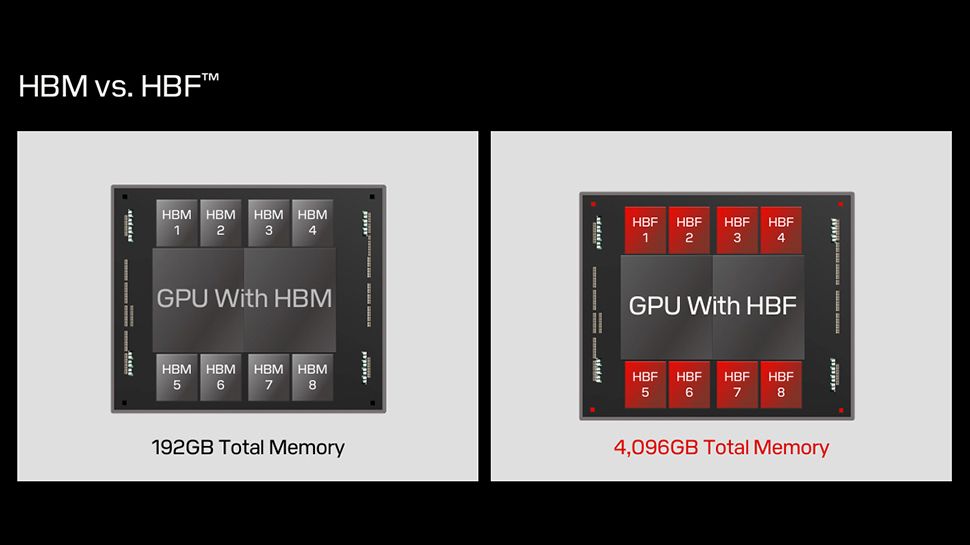
Rank 84409Sandisk enlists top computing minds to shape flash-based memory alternative for AIHBF memory backed by RISC and GPU leaders promises high bandwidth and massive capacityPatterson and Koduri join Sandisk to guide flash memory expansion beyond HBM limitsSandisk has appointed two leading figures in computing to help shape the direction of its high-capacity memory tech for AI workloads.Professor David Patterson and Raja Koduri have joined Sandisk’s new Technical Advisory Board to provide strategic and technical input on High Bandwidth Flash (HBF), a flash-based alternative to High Bandwidth Memory (HBM).Patterson is credited for co-developing Reduced Instruction Set Computing (RISC) and Redundant Array of Inexpensive Disks (RAID), and will lead the advisory board. Koduri is known for his leadership in graphics architecture, having overseen GPU designs at AMD and Intel.Decades of experienceTogether, they bring decades of experience across computing, memory systems, and large-scale architecture.“We’re honored to have two distinguished computer architecture experts join our Technical Advisory Board,” said Alper Ilkbahar, Executive Vice President and Chief Technology Officer at Sandisk.“Their collective experience and strategic counsel will be instrumental in shaping HBF as the future memory standard for the AI industry, and affirming we not only meet but exceed the expectations of our customers and partners.”Patterson said, “HBF shows the promise of playing an important role in datacenter AI by delivering unprecedented memory capacity at high bandwidth, enabling inference workloads to scale far beyond today’s constraints. It could drive down costs of new AI applications that are currently unaffordable.”Koduri added, “HBF is set to revolutionize edge AI by equipping devices with memory capacity and bandwidth capabilities that will support sophisticated models running locally in real time. This advancement will unlock a new era of intelligent edge applications, fundamentally changing how and where AI inference is performed.”HBF is designed to match the bandwidth of HBM while offering up to 8 times the capacity at a similar cost.Built with BiCS flash, CBA wafer bonding, and proprietary stacking that allows 16 dies per package, HBF offers a new way to expand GPU memory without relying entirely on expensive DRAM.While not a direct replacement for HBM, HBF shares the same electrical interface and only requires minimal protocol changes.Sandisk previously demonstrated how an AI GPU using only HBM might support 192GB of memory, but by combining it with HBF, that figure could reach 3TB.In a configuration using only HBF, memory capacity could scale up to 4TB.The technology was first revealed at Sandisk’s Future FWD 2025 investor event back in February 2025, alongside its roadmap for future HBF generations.These updates show increases in capacity and bandwidth over time, with some tradeoffs in energy efficiency.By forming an advisory board and seeking open standard development, Sandisk is trying to avoid locking the market into proprietary solutions.This may help it gain traction against rivals like Samsung and SK Hynix which are both heavily invested in the HBM space.(Image credit: Sandisk)You might also likeSandisk could use architecture called Stargate to power its 256TB and 512TB SSDsSamsung HBM roadmap shows Google will be Nvidia's fiercest competitor in AISandisk quietly puts 2TB SD card on sale - Extreme Pro is as fast as a hard drive
-

Picture from static.independent.co.uk
Rank 84410 -

Picture from static.independent.co.uk
Rank 84411 -

Picture from ichef.bbci.co.uk
Rank 84412 -
Picture from ichef.bbci.co.uk
Rank 84413 -

Picture from static.independent.co.uk
Rank 84414 -

Picture from static.independent.co.uk
Rank 84415 -

Picture from static.independent.co.uk
Rank 84416 -

Picture from assets2.cbsnewsstatic.com
Rank 84417 -

Picture from static.independent.co.uk
Rank 84418 -

Picture from static.independent.co.uk
Rank 84419 -

Picture from static.independent.co.uk
Rank 84420 -

Picture from static.independent.co.uk
Rank 84421 -
Picture from cdn.mos.cms.futurecdn.net
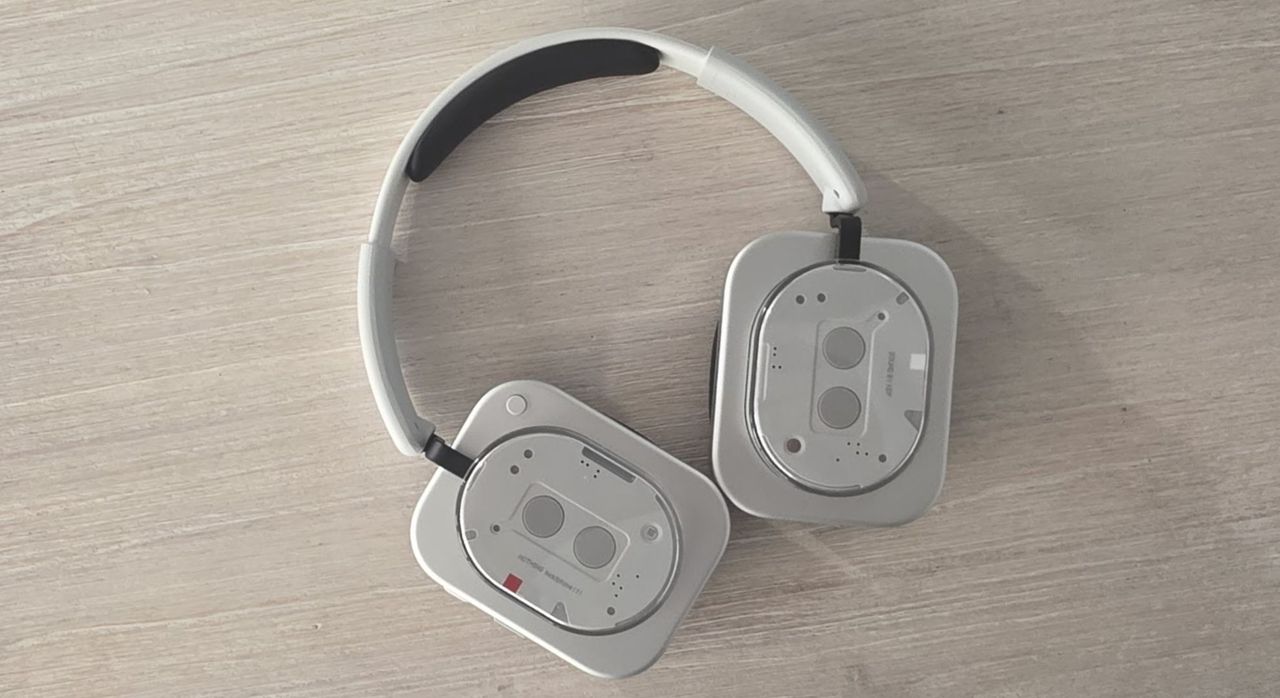
Rank 84422Can anyone look at the Nothing Headphone 1 for the first time without cracking a smile? It was the talk of TechRadar's Sydney office when I unboxed it for the first time and has practically everyone else I've shown cooed over. And that's because it wears its best aspects on the outside.The Nothing Headphone 1 is a breath of fresh air among otherwise well-tuned but very same-same headphones. I'm sure I'll have stirred some strong reactions with that statement, but hear me out, please.I might be focused on covering smartphones at TechRadar (having just gone hands-on with the Nothing Phone 3), but it's still pretty obvious in my opinion that the overwhelming majority of over-ear headphones feature neutral, uninspired aesthetics, incorporating ovular cups and typically single-tone colorways without much style to speak of. Touch buttons are common, as are limited color options.In protest, the Headphone 1’s cups are squared, with the exterior sporting an aesthetic evoking retro sci-fi hits like Blade Runner and Akira. A combination of metals and plastics have been employed to make the Headphone 1 feel unique wherever your fingers may land, and unlike the company's phones – which you'd be inclined to put in a case – the aesthetic of these headphones are on full display at all times.And, best of all, there are no touch controls – a feature I’m growing increasingly tired of across all the tech that I review, from wearables to electric cars. This is the bit I’m most head over heels for, and when mixed with a fairly modest price point, I believe the Headphone 1 represents the best realization of Nothing’s vision yet.The Nothing Headphone 1 is iconic and, by my estimation, it's the tech of the moment.Nothing’s cooking(Image credit: Zachariah Kelly / TechRadar)I don’t believe Nothing needs its headphones to offer the best sound quality among its close competition. Indeed as you would have read in our Nothing Headphone 1 review, sound can come across as compressed from these cans – but I’m smitten by all the aspects that the company aces to place too much weight on its soundscape – after all, sound is a personal preference.Nothing’s distinctive aesthetic will no doubt weed out many potential customers, but as with Nothing’s phones, the style has its fans. This is exactly the kind of aesthetic that appeals to me, harking back to retro designs while also feeling fresh and unique in its own regard. It’s bold, different and to some extent underscores the design chops that companies like Apple were known for years ago (think the iMac G3).And I could harp on about the aesthetics for an entire article, but I’ll save you the boredom by moving onto Nothing’s silver bullet – real buttons. The tech industry at large, so dedicated to efficiency and maximized savings, forgot that tactile buttons actually feel really great to use, and give the user much more confidence over their product (in that they’ll be better informed about what buttons have been pressed, ergo what functions are activated).(Image credit: Zachariah Kelly / TechRadar)The volume is controlled by what Nothing calls the Roller, a horizontally moved cylinder on the edge of the headphones, which can also be pressed to pause, play, and switch between ANC and transparency (more on that later). It’s a button of all trades, in effect, and something rarely seen in the headphone industry these days. The Sonos Ace and the Bose QuietComfort Ultra Headphones have multi-function buttons, but I’m not aware of many sets that give one button so many functions.Meanwhile, a ‘paddle’ below the Roller selects the next or previous track, while also offering answering and rejecting calls. An additional button to the top right of the right cup then activates your voice assistant on Android and iOS platforms, but can also be bound to several other functions on Nothing OS (or if you use a Nothing Phone). There's one more button on the inside of the right cup, but that's only used for Bluetooth pairing.This just makes me so happy! So long and farewell to the annoyance of not activating a function like skip or pause because a touch control failed to notice the delicacy of your finger press.Better yet, with most of the headphones’ exterior left without any buttons in the way, the headphones are showing off quite a lot of free space. On the one hand, that’s space I’m happy to leave exposed as they look great. On the other, I want to cover these bad boys in stickers, and that’s the kind of thought Nothing’s fun philosophy feeds into.Wrapping up the things I really love about these headphones, the active noise cancellation is extremely impressive – on par with Sony headphones I've used in the past – and powerful enough to sufficiently remove the audio from a room with a live DJ standing right beside me. I like getting work done with noise cancellation turned all the way up, so this is super satisfying for me.Nothing’s perfect(Image credit: Zachariah Kelly / TechRadar)There are only a couple of things that I’m hoping Nothing will change with either software updates or upcoming product releases.The first might seem kind of strange, but believe me when I tell you it’s unnerving. Nothing’s sound effects with the Headphone 1 are uncomfortable. Switching to transparency mode gives an effect that sounds like someone’s breathing in your ear, while other sound effects feel aggressive and way too tight – such as a bass thud when switching on noise cancellation, or a sci-fi computer beep when switching off ANC or transparency.I get it, Nothing has a very deliberate approach to aesthetics and design, and that extends to its sound effects, but this is just too much – you can be unique without being weird.Another is that the headphones are quite tight on my head – and I have a fairly average-sized head! After a while of use, the Headphone 1 starts to feel uncomfortable, so I’m hoping the company releases an upsized model or makes an adjustable band for the second-gen model.(Image credit: Zachariah Kelly / TechRadar)There’s also obviously the issues reviewers have raised with sound. Indeed my Sony WH-1000XM5 headphones produce more balanced sound despite being a slightly older set of cans, with deeper bass and richer audio. For a pair of headphones as expensive as they are, you’d certainly expect the Headphone 1 to be up to scratch – especially as they’ve been tuned in collaboration with British hi-fi stalwart KEF.Now, don't get me wrong: the sound is great and passable, but I’d certainly like it to be better. Unfortunately, while you’re given a decent amount of audio profile tweaking via the Nothing X app, you can’t make the headphones produce sound that just sounds more dynamic.I would still encourage anyone who appreciates the design to audition the Headphone 1, of course, as what may not sound quite right for me may sound fantastic to you – as I've already alluded, sound is personal. Reviews can only provide so much information, if you like the sound a product produces, then that’s the right one for you.Apart from that, I genuinely don’t think there’s anything else wrong with the Nothing Headphone 1: it’s well weighted, can go flatly compact and has some of the best ANC I’ve ever heard.Nothing’s on the rise(Image credit: Zachariah Kelly / TechRadar)Four years after releasing its first product, the Ear 1 earbuds in 2021, followed by a competitive portfolio of aesthetically interesting tech, Nothing has finally tipped its hand to reveal its most impressive product yet – a device that genuinely one-ups the competition with an exceptional user interface.It’s really that simple. The Nothing Headphone 1 might not have the best sound quality of all the headphones on the market, but it’s certainly one of the most exciting options. The aesthetic rocks, it has a great feature set and ultimately it’s not priced inaccessibly (and chances are you might find it getting a good discount when Black Friday 2025 comes calling later in the year).I’m really excited to see what a next-generation set of Headphones from Nothing shapes up to be like. For now, I think I’ll be using the Nothing Headphone 1 as my daily audio device instead of my Sonys or my Samsung buds, and that is saying something.You might also like...The Nothing Phone 3 might be the most distinctive smartphone of 2025 – but is it enough to lure in Apple and Samsung fans?The best wireless headphones, chosen by our experts for all budgetsI tested the Sony WH-1000XM6 against 5 top-tier rivals – here’s which wireless headphones I’d recommend
-

Picture from ichef.bbci.co.uk
Rank 84423 -

Picture from ichef.bbci.co.uk
Rank 84424 -

Picture from assets3.cbsnewsstatic.com
Rank 84425 -

Picture from assets1.cbsnewsstatic.com
Rank 84426 -

Picture from assets2.cbsnewsstatic.com
Rank 84427 -

Picture from ichef.bbci.co.uk
Rank 84428 -

Picture from assets3.cbsnewsstatic.com
Rank 84429 -

Picture from assets1.cbsnewsstatic.com
Rank 84430 -

Picture from ichef.bbci.co.uk
Rank 84431 -

Picture from assets2.cbsnewsstatic.com
Rank 84432 -

Picture from ichef.bbci.co.uk
Rank 84433 -

Picture from ichef.bbci.co.uk
Rank 84434 -

Picture from assets2.cbsnewsstatic.com
Rank 84435 -

Picture from static.independent.co.uk
Rank 84436 -

Picture from assets2.cbsnewsstatic.com
Rank 84437 -
Picture from assets2.cbsnewsstatic.com
Rank 84438 -

Picture from ichef.bbci.co.uk
Rank 84439 -

Picture from ichef.bbci.co.uk
Rank 84440 -

Picture from static.independent.co.uk
Rank 84441 -

Picture from assets3.cbsnewsstatic.com
Rank 84442 -

Picture from ichef.bbci.co.uk
Rank 84443 -

Picture from ichef.bbci.co.uk
Rank 84444 -

Picture from ichef.bbci.co.uk
Rank 84445 -

Picture from assets1.cbsnewsstatic.com
Rank 84446 -

Picture from static.independent.co.uk
Rank 84447 -

Picture from ichef.bbci.co.uk
Rank 84448 -

Picture from static.independent.co.uk
Rank 84449 -

Picture from ichef.bbci.co.uk
Rank 84450