News
This constantly updated list features the latest and most important news articles, ranked in order of significance. The top stories highlight major developments, breaking news, and critical updates across various topics, ensuring you stay informed about the most pressing issues. As new articles are added, the list adapts to reflect the latest priorities, keeping the most impactful stories at the forefront. Whether it’s global events, technology breakthroughs, or industry trends, this dynamic list ensures you always have access to the most relevant and timely information.
-

Picture from image.cnbcfm.com
Rank 77351 -

Picture from ichef.bbci.co.uk
Rank 77352 -

Picture from static.independent.co.uk
Rank 77353 -

Picture from static.independent.co.uk
Rank 77354 -

Picture from static.independent.co.uk
Rank 77355 -

Picture from assets2.cbsnewsstatic.com
Rank 77356 -

Picture from static.independent.co.uk
Rank 77357 -

Picture from static.independent.co.uk
Rank 77358 -

Picture from assets2.cbsnewsstatic.com
Rank 77359 -

Picture from ichef.bbci.co.uk
Rank 77360 -

Picture from image.cnbcfm.com
Rank 77361 -
Picture from cdn.mos.cms.futurecdn.net
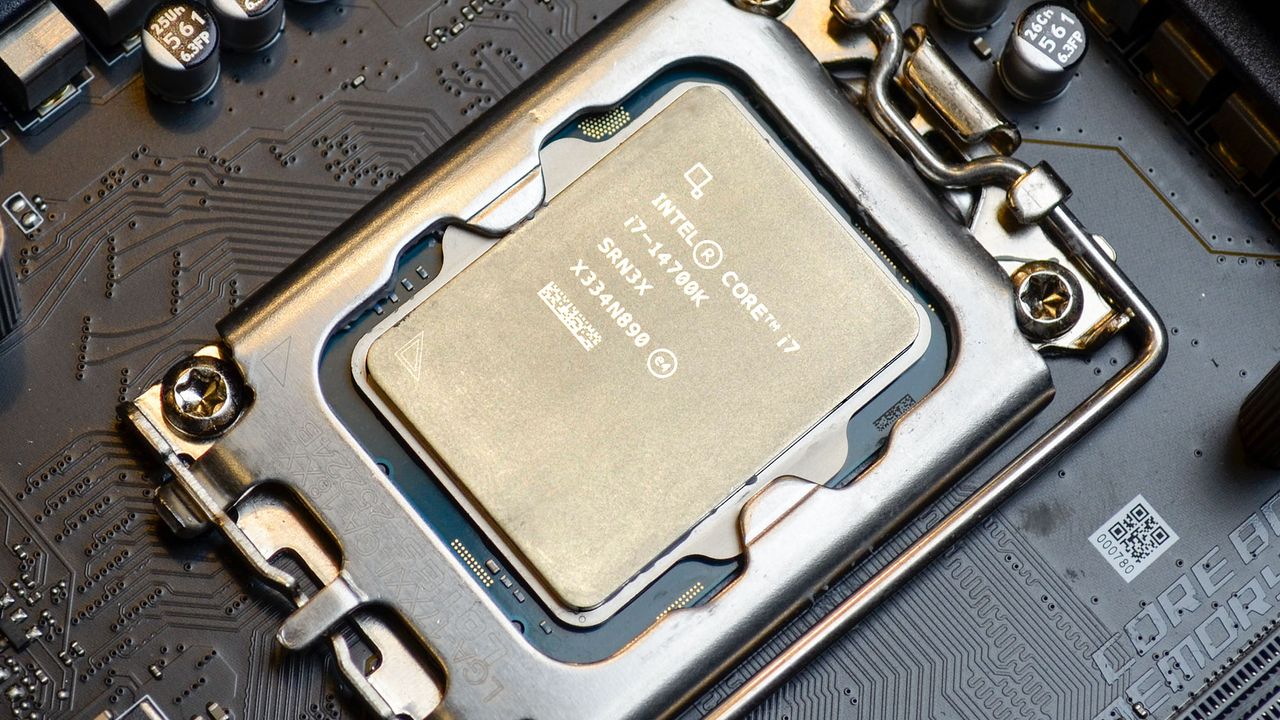
Rank 77362A Firefox engineer has flagged up an apparent issue with Intel Raptor LakeThese CPUs are reportedly crashing more in the summer heat in EuropeThere's a greater prevalence of crashes in places where temperatures have spiked due to heatwaves, and the 14700K CPU is suffering in particularIntel's Raptor Lake (and Raptor Lake Refresh) 13th and 14th-gen processors are struggling with the heatwave in Europe, which is seemingly causing these CPUs to crash more frequently with a popular web browser.Tom's Hardware reports that Gabriele Svelto, a senior staff engineer on Mozilla's Firefox browser, flagged up the issue on Mastodon, observing that: "If you have an Intel Raptor Lake system and you're in the northern hemisphere, chances are that your machine is crashing more often because of the summer heat."To clarify, these are browser crashes - as opposed to full system lock-ups - and Svelto adds that he's obtained this info thanks to Firefox crash reports coming from Raptor Lake PCs, which are tied to specific countries in the EU. There's a greater prevalence of crashes in places where temperatures have markedly spiked during the summer.The issue is so bad that we're told that the level of crashes has become overwhelming, meaning Mozilla had to take action to disable the bot filing these reports.Svelto notes: "Raptor Lake systems have known timing/voltage issues that get worse with temperature. Things are so bad at this time that we had to disable a bot that was filing crash reports automatically because it was almost only finding crashes from people with affected systems."Another Mastodon user makes the assumption that this is related to the known degradation issues that hit 13th and 14th-gen Intel CPUs, with the heat exacerbating the problem. Svelto replies to agree that yes, this is true, while adding a caveat, saying: "Yes, though some of these bugs are very repeatable and predictable which is puzzling. They might be timing-related or even genuine consistent CPU bugs (we've seen a fair bit of those too)."As the Mastodon thread progresses, the engineer suggests that Intel's most recent microcode update, codenamed '0x12F' for Raptor Lake (and Raptor Lake Refresh), actually made things worse, at least in terms of what Firefox is seeing here.Svelto notes: "In particular microcode 0x12C had reduced the incidence of a number of bugs, but they've come back in full force when Intel released version 0x12F."The 0x12F patch was pushed out in May 2025, a good while after the previous updates, as a fix for a more niche scenario where issues occurred with PCs that were left on continuously (for days at a time, running light workloads). Svelto is therefore suggesting that while this patch improved matters for those outlying scenarios, it made things worse for other folks.According to the engineer, these crashing issues with Raptor Lake chips are happening the most with Intel Core i7-14700K models.Analysis: Hot hot heat(Image credit: Phuwadach Pattanatmon / Shutterstock)Clearly, we need to be careful around pinning the blame here, though. Seemingly, something has gone substantially awry if Mozilla needed to disable a system because it was becoming overloaded with crash reports.This certainly suggests Firefox is pointing to a chip-related problem - even if the cause could be (theoretically) partly down to buggy behavior with the browser, it's still only manifesting with certain Intel silicon (to an apparently profound level, correlating with hotter locations in Europe).Cooling may play a role here, too, of course, in terms of the CPU coolers being used. The reason the 14700K may be showing up a lot more in these crashes could be because it's a more mainstream speedy chip, possibly coupled with a less effective cooling solution as a result. Whereas those running the even faster top dog 14900K (or indeed 13900K) have probably invested in an expensive cooler to go with the processor, and thus it may be less prone to overheating issues as temperatures climb, so there aren't as many crashes recorded. There won't be nearly as many 14900K chips out there, either, due to their more pricey nature.What will be interesting to see is if other software developers are noticing a similar kind of pattern with their products crashing (browsers, or otherwise) - and now this report has been aired, others may have cause to investigate crash logs further, perhaps.Of course, another factor to watch will be the performance of Raptor Lake CPUs if temperatures continue to rise (over the summer in Europe, or elsewhere - or indeed more broadly as the next couple of years roll on).Even before this, my worry has always been what underlying degradation the instability issues may have caused with 13th and 14th-gen processors. As we know, these chips were running in PCs for some time in a problematic state, with the microcode fixes applied being preventative in nature - not a cure, meaning they don't reverse any damage that was already done. So, there could be undetectable deterioration under the hood of the chip that only manifests much later in its lifespan - a process possibly sped up by the processor running too hot, perhaps?Now, the good news - as those affected no doubt recall - is that Intel did up the warranty coverage for these CPUs to five years. However, as I've pointed out in the past, what if in the sixth year, your Raptor Lake CPU starts going down the plughole in terms of recurring instability issues? You're out of luck in that case, which doesn't seem very fair - it's not unreasonable to expect a processor, the engine of a PC, to last longer than half a decade.Of course, we can't go jumping to any negative conclusions yet, but this situation is certainly worth monitoring.You might also likeNo, Windows 11 PCs aren't 'up to 2.3x faster' than Windows 10 devices, as Microsoft suggests – here's why that's an outlandish claimmacOS Tahoe 26: here's everything you need to know about all the new featuresCan’t upgrade to Windows 11? This Linux project wants to save your old PC from the scrapheap when Windows 10 support ends
-

Picture from ichef.bbci.co.uk
Rank 77363 -

Picture from static.independent.co.uk
Rank 77364 -

Picture from static.independent.co.uk
Rank 77365 -

Picture from image.cnbcfm.com
Rank 77366 -

Picture from image.cnbcfm.com
Rank 77367 -

Picture from image.cnbcfm.com
Rank 77368 -

Picture from cdn.mos.cms.futurecdn.net
Rank 77369The Department of Homeland Security says Salt Typhoon accessed National Guard systemsHackers were present between March and December 2024The group stole vital intelligence and personally identifiable informationA Chinese state-sponsored threat actor known as Salt Typhoon was lurking in the network of the US Army National Guard for nine months, the US Government has confirmed.TheDepartment of Homeland Security (DHS) said the attackers were present in the networks between March and December 2024.During this time, the group stole sensitive data from its victims, including administrator credentials, network traffic diagrams, geographical maps, and personally identifiable information (PII) of service members. Furthermore, the attackers accessed data traffic between the state’s network and every other US state, and at least four additional territories. This means that they could have pivoted to other networks as well, compromising even more government and military targets.Typhoon over AmericaIt was not discussed how the breach happened, but DHS did say the group was known for exploiting existing vulnerabilities (CVEs) in Cisco’s routers and similar hardware.Salt Typhoon is a known Chinese state-sponsored threat actor, part of the wider “typhoon” organization that includes groups such as Brass Typhoon, Volt Typhoon, and others.These organizations were tasked with infiltrating different core organizations within the US, such as critical infrastructure organizations, communications firms, government, military, and defense organizations, and similar.The goal of the campaign was to be present inside the networks should tensions between the US and China over Taiwan escalate into a full-blown war, giving it the ability to disrupt networks, and steal key intelligence.Salt Typhoon is often in the media - with recent attacks against the likes of AT&T, Verizon, Lumen, Charter, Windstream, and Viasat, to name a few, often abusing unpatched Cisco routers to gain access, before deploying custom malware such as JumblePath and GhostSpider.Via BleepingComputerYou might also likeTop satellite communications company Viasat was also hit by Salt Typhoon – which shows just how widespread this massive attack wasTake a look at our guide to the best authenticator appWe've rounded up the best password managers
-

Picture from assets2.cbsnewsstatic.com
Rank 77370 -

Picture from assets1.cbsnewsstatic.com
Rank 77371 -

Picture from assets1.cbsnewsstatic.com
Rank 77372 -

Picture from static.independent.co.uk
Rank 77373 -

Picture from static.independent.co.uk
Rank 77374 -

Picture from static.independent.co.uk
Rank 77375 -

Picture from static.independent.co.uk
Rank 77376 -

Picture from assets2.cbsnewsstatic.com
Rank 77377 -

Picture from assets1.cbsnewsstatic.com
Rank 77378 -

Picture from image.cnbcfm.com
Rank 77379 -
Picture from o.aolcdn.com
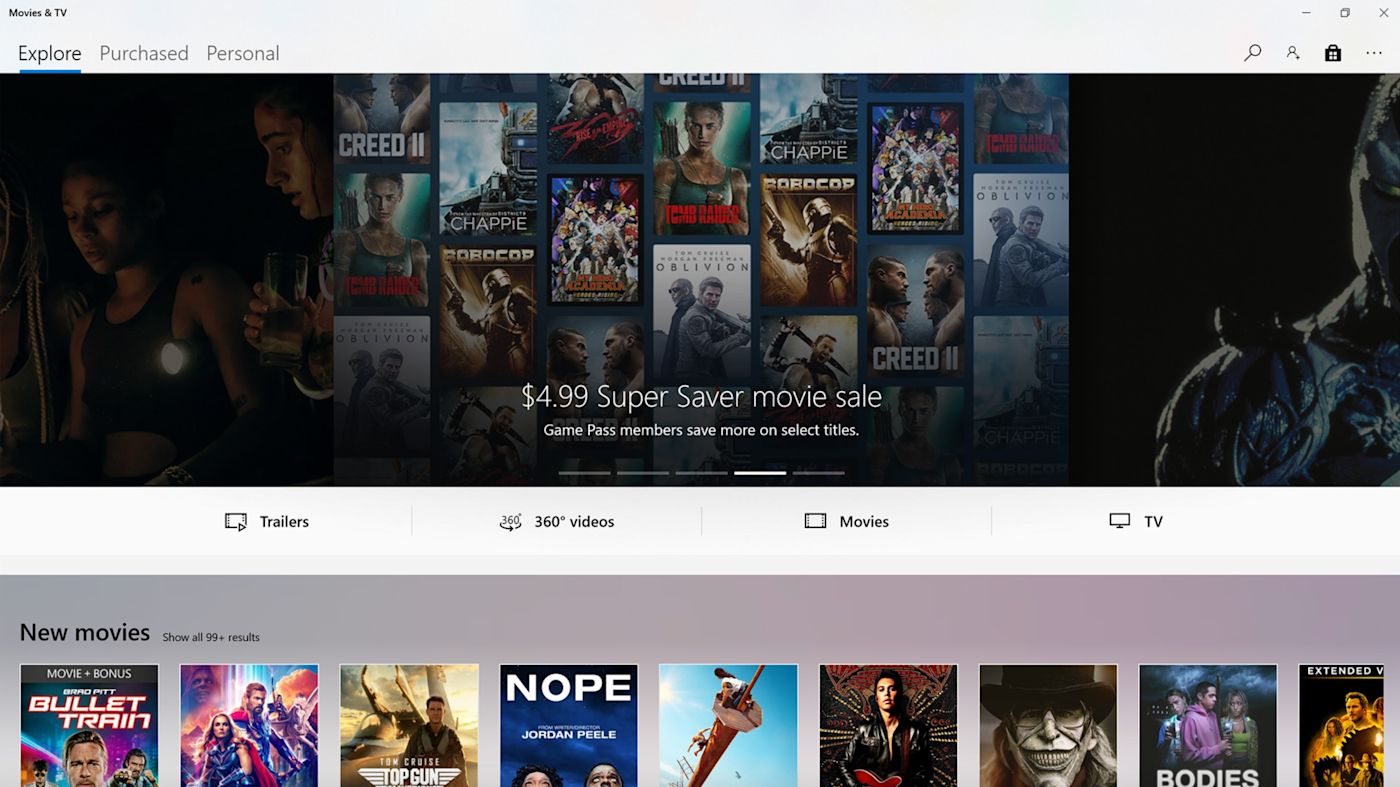
Rank 77380Microsoft has rather abruptly closed down its Movies & TV app, which is accessible on Xbox and Windows PCs via the Microsoft Store. This allowed people to rent or buy movies or TV shows natively through their console or computer’s storefront, but in a newly updated support page Microsoft said the service has ended.
"Microsoft no longer offers new entertainment content for purchase, including movies and TV shows, on Microsoft.com, Microsoft Store on Windows, and the Microsoft Store on Xbox" the statement reads. "However, you can continue to access your purchased content in the Movies & TV app on Xbox or Windows device."
Microsoft added that downloaded movies and shows will remain in your account and continue to play in their maximum supported resolution, but there’s no way of moving your purchased content to another service. However, you can sign up for Movies Anywhere, a service that lets you register movies that you purchased on different storefronts and sync them to other ones so you aren’t locked into one platform. According to the Microsoft support page, it’s still possible to do this with your Movies & TV purchases if you’re in the US.
You can also continue to install other third-party video streaming and purchasing apps on both the Xbox and Windows stores, including Prime Video and Apple TV, and right now nothing is changing with those. The company does not offer refunds on previous purchases.
Microsoft Movies & TV was first introduced as Xbox Video in 2012, which replaced the Zune Video Marketplace it had been operating since 2006. It was Microsoft’s answer to the likes of Apple’s iTunes Store and Amazon’s various on-demand offerings. Microsoft also made a concerted effort to position the ill-fated Xbox One, which first launched in 2013, as an all-in-one multimedia box, but today’s closure of the Movies & TV app is yet another sign that it has now completely moved on from that era.This article originally appeared on Engadget at https://www.engadget.com/entertainment/tv-movies/microsoft-unceremoniously-kills-off-the-xbox-movies-tv-store-171554115.html?src=rss
-

Picture from static.independent.co.uk
Rank 77381 -

Picture from assets2.cbsnewsstatic.com
Rank 77382 -

Picture from image.cnbcfm.com
Rank 77383 -

Picture from ichef.bbci.co.uk
Rank 77384 -

Picture from static.independent.co.uk
Rank 77385 -

Picture from static.independent.co.uk
Rank 77386 -

Picture from static.independent.co.uk
Rank 77387 -

Picture from static.independent.co.uk
Rank 77388 -

Picture from assets1.cbsnewsstatic.com
Rank 77389 -

Picture from static.independent.co.uk
Rank 77390 -

Picture from static.independent.co.uk
Rank 77391 -

Picture from ichef.bbci.co.uk
Rank 77392 -

Picture from static.independent.co.uk
Rank 77393 -

Picture from static.independent.co.uk
Rank 77394 -

Picture from ichef.bbci.co.uk
Rank 77395 -

Picture from static.independent.co.uk
Rank 77396 -

Picture from assets3.cbsnewsstatic.com
Rank 77397 -

Picture from assets3.cbsnewsstatic.com
Rank 77398 -

Picture from ichef.bbci.co.uk
Rank 77399 -

Picture from static.independent.co.uk
Rank 77400