News
This constantly updated list features the latest and most important news articles, ranked in order of significance. The top stories highlight major developments, breaking news, and critical updates across various topics, ensuring you stay informed about the most pressing issues. As new articles are added, the list adapts to reflect the latest priorities, keeping the most impactful stories at the forefront. Whether it’s global events, technology breakthroughs, or industry trends, this dynamic list ensures you always have access to the most relevant and timely information.
-
Picture from static.independent.co.uk
Rank 77251 -

Picture from static.independent.co.uk
Rank 77252 -

Picture from static.independent.co.uk
Rank 77253 -

Picture from assets3.cbsnewsstatic.com
Rank 77254 -
Picture from assets1.cbsnewsstatic.com
Rank 77255 -
Picture from assets1.cbsnewsstatic.com
Rank 77256 -

Picture from assets3.cbsnewsstatic.com
Rank 77257 -

Picture from assets1.cbsnewsstatic.com
Rank 77258 -

Picture from assets3.cbsnewsstatic.com
Rank 77259 -
Picture from assets2.cbsnewsstatic.com
Rank 77260 -

Picture from static.independent.co.uk
Rank 77261 -
Picture from static.independent.co.uk
Rank 77262 -
Picture from static.independent.co.uk
Rank 77263 -

Picture from static.independent.co.uk
Rank 77264 -

Picture from static.independent.co.uk
Rank 77265 -

Picture from assets2.cbsnewsstatic.com
Rank 77266 -

Picture from assets2.cbsnewsstatic.com
Rank 77267 -
Picture from cdn.mos.cms.futurecdn.net
Rank 77268New proposals look to secure subsea cables against foreign adversariesThis includes a default denial of contracts to Chinese firmsSubsea cables carry 99% of internet trafficA recent proposal by the FCC outlines plans to ‘unleash submarine cable investment’ in order to ‘accelerate the buildout of AI infrastructure’ across the US, whilst also making efforts to, ‘secure cables against foreign adversaries, like China’.If adopted, this could mean a range of measures would be implemented to protect submarine cables, applying a ‘presumption of denial’ for adversarial state applicants for controlled licenses, and establishing physical and cybersecurity requirements, as well as restricting leasing agreements to these organizations.Alongside this, the report proposes a ban on the use of ‘covered equipment’ in undersea cable infrastructure - although the report doesn’t give a definition of the term.Unsung heroesSabotage to submarine cables would be undoubtedly catastrophic, not just to the US, but to pretty much every part of the world.The cables carry 99% of all internet traffic, handling roughly $10 trillion of daily financial transactions.Satellite technology, though active, is not yet capable of handling the same volume of traffic. As FCC Chairman Brendan Carr described, undersea cables are the ‘unsung heroes of global communications’.There is precedent for this type of order, with Huawei and ZTE facing ‘rip and replace’ campaigns back in 2020 in a bid to remove Chinese tech from the infrastructure of rural operators, as part of a larger effort to exclude Chinese vendors from the US market.“As the U.S. builds out the data centers and other infrastructure necessary to lead the world in AI and next-gen technologies, these cables are more important than ever. At the same time, as President Trump has long recognized: ‘economic security is national security,’ says Chairman Carr.“We have seen submarine cable infrastructure threatened in recent years by foreign adversaries, like China. We are therefore taking action here to guard our submarine cables against foreign adversary ownership, and access as well as cyber and physical threats.”You might also likeTake a look at our picks for the best malware removal software aroundCheck out our choice for best antivirus softwareUndersea cable board launched to combat damage and sabotage
-
Picture from ichef.bbci.co.uk
Rank 77269 -

Picture from static.independent.co.uk
Rank 77270 -

Picture from static.independent.co.uk
Rank 77271 -
Picture from static.independent.co.uk
Rank 77272 -
Picture from static.independent.co.uk
Rank 77273 -
Picture from assets2.cbsnewsstatic.com
Rank 77274 -
Picture from assets2.cbsnewsstatic.com
Rank 77275 -

Picture from image.cnbcfm.com
Rank 77276 -

Picture from ichef.bbci.co.uk
Rank 77277 -

Picture from static.independent.co.uk
Rank 77278 -
Picture from assets1.cbsnewsstatic.com
Rank 77279 -

Picture from image.cnbcfm.com
Rank 77280 -

Picture from image.cnbcfm.com
Rank 77281 -
Picture from o.aolcdn.com
Rank 77282Chinese President Xi Jinping has bluntly questioned a nationwide rush of investment into the AI and EV industries. As deflation anxiety grows and Trump’s trade war with China ramps up, the world’s second largest economy is turning to fast-growth tech industries to remain competitive.
But Xi appears to think that the strategy is flawed. As reported by the Financial Times, China's President sent out a pointed message about over-investment at the two-day Central Urban Work Conference in Beijing.
"When it comes to projects, there are a few things — artificial intelligence, computing power and new energy vehicles," he said in a speech that made the front page of the People’s Daily, the official newspaper of the Communist Party. "Do all provinces in the country have to develop industries in these directions?"
The Financial Times reports that Xi went on to criticise officials who encourage hasty development but don’t hang around to face the consequences. “We should not only focus on how much GDP has grown and how many major projects have been built, but also on how much debt is owed,” Xi told conference attendees. "We should not let some people pass the buck and leave problems to future generations."
For now though, there’s no suggestion that China is shifting its focus away from the sectors Xi directly referenced. This week, NVIDIA was granted permission by the US government to resume selling its AI chips to China, with the company reportedly holding $8 billion in unshipped orders. It was initially blocked from selling the H20 AI GPU to China over concerns it could aid the nation’s military.
China is the global leader of the EV industry, and the country is taking on the US in the robotaxi race too. It was announced this week that Uber is partnering with Baidu to bring thousands of the Chinese company’s Apollo Go autonomous vehicles onto the Uber network in mainland China and other non-US markets.This article originally appeared on Engadget at https://www.engadget.com/big-tech/xi-jinping-warns-against-chinas-overinvestment-in-evs-and-ai-154054773.html?src=rss
-
Picture from ichef.bbci.co.uk
Rank 77283 -

Picture from static.independent.co.uk
Rank 77284 -

Picture from static.independent.co.uk
Rank 77285 -

Picture from assets1.cbsnewsstatic.com
Rank 77286 -

Picture from image.cnbcfm.com
Rank 77287 -
Picture from ichef.bbci.co.uk
Rank 77288 -
Picture from static.independent.co.uk
Rank 77289 -
Picture from static.independent.co.uk
Rank 77290 -
Picture from static.independent.co.uk
Rank 77291 -
Picture from o.aolcdn.com
Rank 77292Samsung announced its newest devices during its Galaxy Unpacked event on July 9. That happened to fall on the second day of Amazon’s Prime Day event. Do big tech companies not know what the others are doing? Do they care? Do they like making the lives of tech reporters difficult? I didn’t have time to consider. Only when I was done covering Amazon did I have time to begin properly testing Samsung’s latest wearable. That means I’ve been living with the Galaxy Watch 8 for four days now.
While that’s not enough time to complete a comprehensive review and tally a fair score, I was able to gather a good amount of first impressions — and let me tell you, they are nearly all positive. I’ll continue to evaluate the watch over the next few weeks or so and return for a final assessment. In the meantime, there’s a lot to say about the experience so far.
Samsung packed a lot of updates into its latest smartwatch, in terms of both hardware and software. But I put extra effort into testing one feature in particular — and it’s one of the more interesting.
Antioxidant tests and my persimmon intake
The Galaxy Watch 8 has the same processor and sensors as the previous generation, but it’s using those to detect a new metric: antioxidant levels. You have to take the watch off and hold your thumb on the sensor node for five seconds to get a reading and you’ll need to refer to the Health app in your phone for detailed results. The first time I tested, I got a score of 60, which falls right in the middle of the “low” segment of the scale. The only other results are “very low” and “adequate,” which will surely be a disappointment to the over-achievers out there.
The Health app suggested I “try eating one (100g) persimmon today.” When my grandmother was alive, she made persimmon cookies every Christmas and the last time she did so was also the last time I thought about that fruit. Considering South Korea is one of the world’s largest persimmon producers, it might make sense that a Samsung device suggested them. The produce guy at my local grocery store said they only carry them around the holidays (no doubt because grandmas insist, plus that’s when they’re in season).
Turns out persimmons are high in antioxidants such as Vitamin C and beta-carotine (Vitamin A). Cantaloupe also has those nutrients — plus it’s orange like persimmons — so I bought one. In fact, I went hard on the antioxidants and did everything I could to see if I could get a better score. I ate a bunch of cherries and a little dark chocolate. For breakfast, I had half a cantaloupe instead of the very tasty-smelling breakfast hash my husband made, and I drank plain green tea instead of my usual oat matcha latte. I did yoga and went to my monthly medical massage appointment (stress is said to increase oxidant levels). I got eight hours of sleep and drank my weight in water. I felt ready.
So I took the test again and my antioxidant levels were… two points lower. Sigh. I wasn’t expecting overnight transformation, but I’d hoped for a little improvement. Next time, I’m eating the hash.
Finally, a new design!
Since its fourth generation, the Galaxy Watch has looked pretty much the same: a round glass screen set in a round metal case with large prongs popping out of the top and bottom to hold the band. While there was nothing wrong with sticking with a good design, giving a device a refreshed look lends the yearly update cycle some meaning — instead of feeling like an obligatory move to appease stockholders.
With 3,000 nits of peak brightness, the watch is easy to read even in the bright Albuquerque sun.
Amy Skorheim for Engadget
This time around, the Galaxy Watch 8 looks markedly different thanks to a shape borrowed from last year’s Ultra model. Samsung calls it a “cushion design” — a circular glass display set atop an aluminum case that looks like a roundish square (or squircle as our own Cherlynn Low calls it). The Sport band on my review model curves to meet the width of the case, creating a smooth arch that I think is more refined than the clunkier pronged configuration. In fact, the entire look is classy — much more so than the Apple Watch, which looks like a miniaturized iPhone 11 glued to a silicone strap.
The cushion design is great in one way, but also worrisome. Because the glass display stands proud of the case by at least two millimeters, my first thought was: “I’m going to trash this screen.” Immediately after taking the watch out of the box, I ordered screen shields and, during the short course of this review, managed to crack one. That’s possibly because I was cheap and ordered off-brand screen protectors, or perhaps the protruding glass cushion is simply begging for misfortune.
However, the raised glass solves one complaint I had with the Galaxy Watch 7. One way to scroll is by running your finger along the outer edge of the screen. In fact, on-screen cues suggest that gesture when there’s more content to view. On the Watch 7, my finger was always getting in the way of the text I wanted to read. Now that the display is elevated, there’s room for my finger to travel further out along the outer edge and stay out of the way.
Appearance aside, my favorite hardware update is how much more comfortable the watch is. The Watch 7’s underside had a sizable sensor node, and it took me a week to get used to the feel. Even then, I hated sleeping with it. The Watch 8, however, felt good the first time I put it on.
Gemini on your wrist and Wear OS 6
The Galaxy Watch 8 is the first smartwatch to ship with Google’s Wear OS 6, though Samsung overlays it with its own One UI interface. The headline feature for the new software is Gemini integration. Now, most things you can do with the Gemini app on your phone can be done through your watch. Just note that you’ll need to have your Gemini-compatible phone nearby to use it.
Amy Skorheim for Engadget
Google’s AI was pretty snappy at basic tasks like setting reminders and timers. Requests that required more “thought” took only marginally longer (and completed more quickly when I was using my home Wi-Fi versus relying on cell signals out in the world). I asked for the best record stores in my city and a good place to eat lunch. I was pleasantly surprised to hear of a new-to-me answer for each category. The record store turned out to be two bins of LPs inside a book shop, but still, I hadn’t heard of it before. I asked why my eight-year-old talked about lava chicken all the time and was correctly informed about Jack Black and A Minecraft Movie.
The assistant displays answers in text form on the watch screen and also reads out every word. That can turn into a lot of talking, but tapping the screen stops the chatter if you prefer to read. Gemini can handle follow-up questions and tasks, but since it doesn’t usually keep listening after it speaks, you have to tap the mic icon to make your next request. I've reached out to Samsung to see if there's a setting that will make Gemini keep listening and will update when I hear back. For now, after tapping, you can say stuff like, “Add that to my Google Keep” or “Remind me about that.” If it asks you a question, however, such as verifying a text it’s about to send, it does keep listening for the answer.
I requested some fairly specific tasks and didn’t hit any snags. I asked it to text the address of a local restaurant to my husband and it verified which location I wanted then sent the message. I asked when the Albuquerque Isotopes were playing the Sacramento River Cats and it gave me the upcoming dates. I tapped the mic and said, “add that to my calendar,” which it did.
It only let me down twice. When I asked whether it was going to rain, it just read me the general weather forecast instead of answering the question. All the other assistants in my life (Alexa and Siri) can answer those questions — though technically that’s a Gemini problem, not the watch's fault.
The other disappointment is a matter of proper integration. I was out on a walk and I asked for directions to a nearby grocery store. Gemini told me the address and the distance, but pointed me to look at my phone for the actual directions. When I asked Siri the same thing on the same walk, directions simply showed up on my Apple Watch. (Yes, I’ve been wearing two watches and carrying around two activated phones like a double agent, just much less cool.)
Tiles on the Galaxy Watch 8 Classic
Amy Skorheim for Engadget
In addition to Gemini, Wear OS 6 introduces updated and larger tiles which organize and display information on your watch. By default, the tiles are separated into categories: Health, Fitness and Basic (weather, media playback, calendar) with each box displaying a bit of pertinent info — activity metrics, current temp, your next event and so on. If the limited info isn’t enough, tapping a tile opens the respective app. You can categorize, rearrange, swap out and add as many pages of these cards as you want in the Wear app on your phone. I didn’t have time to get the defaults tweaked exactly how I wanted, but it already feels like a much smarter way of interacting with a watch. Now you can glean key information from the apps that are important to you just by browsing your tiles.
The running coach believes in you
The Galaxy Watch 8 now comes with built-in, AI-fueled running guidance. This sounds a bit like the upcoming Workout Buddy that Apple announced for watchOS 26, so it will be interesting to compare the two. Google Pixel watches and Fitbits currently have the option of an AI-powered running coach, but it’s limited to Premium subscribers. Garmin offers an adaptive training program called Run Coach as well, so this isn’t an entirely novel idea.
Samsung’s running coach begins with an assessment: Run as fast as you can maintain for twelve minutes. You’ll then be awarded a performance level ranging from one to ten. Each level comes with a tailored, four-week plan with four workouts per week intended to get you ready to complete a 5K, 10K, half or full marathon. My 12-minute, 22-second per-mile pace put me at a level three. My plan was geared towards getting me to run a 5K at the end of four weeks.
Samsung/Engadget
The first workout was low-intensity interval running with four segments of running hard, interspersed with cool-down walks. As I ran, the AI coach told me when and what to expect on the next segment and what my goals were for each. It spouted occasional words of encouragement and let me know when my pace started to lag. The guidance wasn’t intrusive and I appreciated the preview of and expectations for the next segment. I tried it relying just on the watch's speakers, and I could hear OK as long as the streets were quiet, but I definitely recommend using earbuds.
I found myself running faster than I would have without a “coach” and now I’m honestly wondering whether I, a person my athlete sister describes as “not an athlete,” could actually complete a 5K. Maybe there’s some value in this concept after all. In any case, I find myself looking forward to taking it further. My next workout is a straight up, 30-minute jog. I’ve never continuously run for a half an hour in my life, so we’ll see how that goes.
Vascular load, bedtime reminders and battery life
The quick turnaround on this article means I didn’t get to properly test some of the new features. Vascular load takes readings while you sleep to evaluate the health of your circulatory system, then tells you when your load is higher or lower than normal and offers recommendations. It requires three nights of data to set a baseline, but after the third night of wearing the watch to bed, it said I still needed one more. Three nights of sleep should also trigger a Bedtime Guidance feature, but I’m still waiting for a notification on that one as well. I've reached out to ask Samsung if there are more requirements around getting Bedtime Guidance to work and will update when I find out.
One of the prior model’s shortcomings was battery life. The always-on display (AOD) tanked the charge, so I kept it off. The Galaxy Watch 8 has a bigger 325mAh battery, compared to the 300mAh one on the Watch 7. Twenty-five milliamp hours isn’t a huge jump, but bigger is always better. Because I was testing every possible feature (sleeping, running, workouts, antioxidants, Gemini and more), I was constantly dropping the watch on the charger for partial refills in between tests. That meant I didn’t have the opportunity to methodically test the battery’s runtime just yet.
I did note what I could. The first day of testing, the battery was at 100 percent at 4PM. The next day at 4PM it still had 17 percent remaining. That 24-hour period included driving directions, three workouts, lots of Gemini requests, watch face changes and a full night of sleep. I’d toggled the AOD on and off throughout that time, but the results were still better than what I tracked on the Watch 7.
The Galaxy Watch 8 Classic is super swank
I didn’t have a ton of time to spend with the Classic version of the Watch 8, but it’s obviously aimed at the luxury watch-hound crowd. The knurled spinning bezel, inset diving bezel replica and the default chronograph watch face gives off serious Rolex Daytona/Omega Speedmaster wannabe vibes. It ships with a stitched leather-look band and the steel case has the heft and stature of an automatic mechanical timepiece. The always-on display and chunky buttons only add to the effect.
Amy Skorheim for Engadget
For me, the main advantage it has over the standard Galaxy Watch 8 is the protection the spinning bezel offers the raised display. The glass is shielded at the edges and it’s even inset slightly which will ward off scratches. It’s a bit chonky for my taste, but it’s surprisingly comfortable for its size and is extremely attractive. I could see this appealing to style enthusiasts who want a smartwatch but don’t want to look like they’re wearing a wrist gadget.
Pricing and the competition
Samsung added $50 to the price tag on the 40mm Galaxy Watch 8, bringing it to $350. The larger 44mm model is now $380 (versus $330 last year) and the Classic variant is $500 for the single 46mm size. For reference, there was no Galaxy Watch 7 Classic and the Galaxy Watch 6 Classic sold for $400 for the 43mm size and $430 for the 47mm.
At $350, the base model Galaxy Watch 8 costs the same as Google’s Pixel Watch 3 (though the Pixel Watch 4 is almost certainly on the way and could be more expensive.) The Apple Watch Series 10 starts at $399, but it went as low as $279 during Prime Day. And, of course, a new Apple wearable is likely coming this September with a potential price bump as well. So Samsung’s Galaxy Watch 8 could end up being the most affordable of the major smartwatch releases once the dust settles from 2025’s launches. And if you’re a Samsung smartphone user, it’s easily your best bet.
Amy Skorheim for Engadget
Everything else and an eventual score
The core functions of the Galaxy Watch 8 haven’t changed all that much. We went in-depth on the fitness and health features for our review of the Galaxy Watch 6 and covered the notable perks of Samsung’s wearable in our Galaxy Watch 7 review and our Galaxy Watch 5 review. So I’ll just point out that the workout tracking is still accurate — and it’s faster to suss out when I’m on a walk than my Apple Watch. The companion Health app, where you view all the data your watch gathers, is helpful and a delight to use with its common-sense suggestions and friendly animations. And the daily Energy Score is a useful indicator of how I’m doing with my sleep and movement goals.
The Watch 8 covers the basics well, acting as an industrious accessory for a Galaxy phone. Although, as with the Watch 7, I wish the notifications were more intrusive as they’re easy to miss. The double tap feature is great — a pinch gesture that dismisses or triggers actions without you having to touch the screen. I use it often and the watch almost always registers the motion. And finally, I love how customizable the watch faces are. When you combine all that with a substantially refreshed look, some capable Gemini integration, a few new health features and a more navigable interface, Samsung’s latest wearable becomes a very capable wrist companion. I still need to live with it a while longer (with a new screen protector firmly in place) to assign a review score, but so far, I’m impressed.
This article originally appeared on Engadget at https://www.engadget.com/wearables/galaxy-watch-8-my-first-days-with-samsungs-smartwatch-have-been-promising-155857718.html?src=rss
-

Picture from techcrunch.com
Rank 77293 -

Picture from static.independent.co.uk
Rank 77294 -

Picture from static.independent.co.uk
Rank 77295 -
Picture from assets3.cbsnewsstatic.com
Rank 77296 -
Picture from assets1.cbsnewsstatic.com
Rank 77297 -

Picture from assets1.cbsnewsstatic.com
Rank 77298 -

Picture from image.cnbcfm.com
Rank 77299 -
Picture from cdn.mos.cms.futurecdn.net
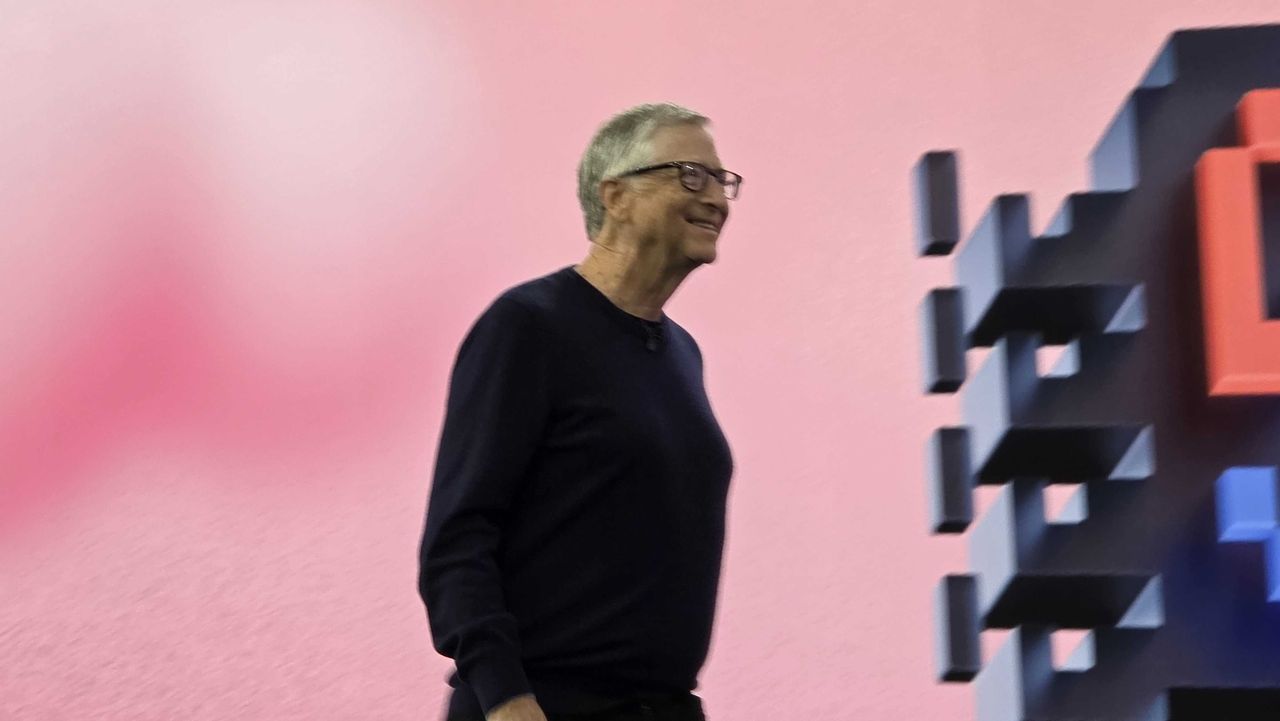
Rank 77300NextLadder Ventures is a 15-year, $1 billion initiative to help 90 million low-income AmericansGrants, equity and revenue-based financing will be on offer to eligible participantsAnthropic will offer Claude credits and support worth $1.5 million annuallyNextLadder Ventures has launched a $1 billion initiative to help support low-income Americans, arming them with AI skills for future employment opportunities.The initiative was founded by a coalition of major philanthropies, including Ballmer Group, Gates Foundation, Stand Together, Valhalla Foundation and John Overdeck.It's set to run for 15 years, providing grants, equity and revenue-based financing to nonprofits and for-profits to help support at-risk Americans, with Anthropic joining as its inaugural AI partner offering Claude credits and expert support.Gates Foundation backs $1 billion AI initiativeThe Gates Foundation described NextLadder Ventures as an "initiative grounded in the belief that every American has the potential to achieve economic prosperity.""While innovative ideas exist to help low-income Americans overcome obstacles and pursue prosperity, there is insufficient capital available to those serving these populations," its press release says.The initiative aims to expand economic opportunities for over 90 million low-income Americans, supporting entrepreneurs who want to address job loss, housing instability and health crises. As part of the deal, Anthropic will contribute about $1.5 million annually."The Gates Foundation is focused on lifting millions of people out of poverty and onto a path to prosperity," Gates Foundation CEO Mark Suzman commented.The coalition announced Ryan Rippel as the CEO of NextLadder Ventures. Rippel, who already has a history working with the Gates Foundation, challenged the notion of a one-size-fits-all approach, pledging new and practical pathways. His "design with, not for" stance comes from growing up in a single-parent household in Missouri, where he was able to experience some of the struggles NextLadder Ventures aims to solve.In a LinkedIn post, Rippel wrote: "Closing this divide means helping the helpers and the people they serve access new, practical pathways to opportunity."Further details on NextLadder Ventures are limited, but we expect to hear more in the coming weeks.You might also likeWhy Bill Gates is wrong about AI and 3 things he needs to realizeThese are the best AI tools and best AI writersCheck out our roundup of the best job sites

