News
This constantly updated list features the latest and most important news articles, ranked in order of significance. The top stories highlight major developments, breaking news, and critical updates across various topics, ensuring you stay informed about the most pressing issues. As new articles are added, the list adapts to reflect the latest priorities, keeping the most impactful stories at the forefront. Whether it’s global events, technology breakthroughs, or industry trends, this dynamic list ensures you always have access to the most relevant and timely information.
-

Picture from ichef.bbci.co.uk
Rank 77051 -

Picture from image.cnbcfm.com
Rank 77052 -

Picture from image.cnbcfm.com
Rank 77053 -

Picture from static.independent.co.uk
Rank 77054 -
Picture from techcrunch.com
Rank 77055 -

Picture from static.independent.co.uk
Rank 77056 -

Picture from static.independent.co.uk
Rank 77057 -
Picture from o.aolcdn.com
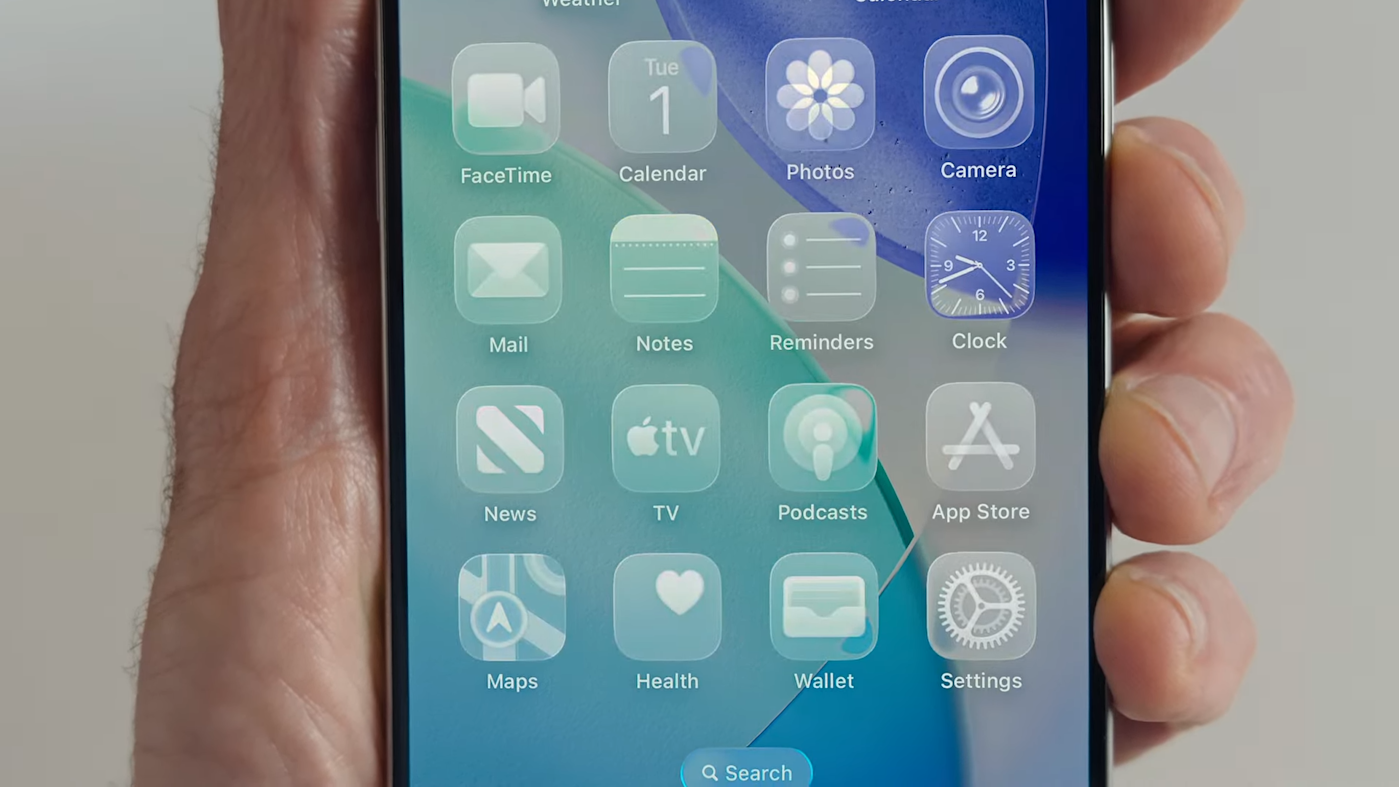
Rank 77058Apple is suing leaker Jon Prosser and a codefendant for misappropriation of trade secrets related to YouTube videos from earlier this year that depicted mockups of iOS 26 (which was, at the time, expected to be called iOS 19). In the suit, which Apple filed at a district court in the Northern District of California, the company claims Prosser and Michael Ramacciotti "conspired to break into an Apple employee’s development iPhone to take Apple’s trade secrets."
Per the filing, which was obtained by MacRumors, Prosser had promised to "find out a way for [Ramacciotti] to get payment" if his codefendant was able to access the development iPhone of his friend Ethan Lipnik, who worked on software designs at Apple. Apple claims Ramacciotti was staying with Lipnik and waited until he left for an extended period of time, using a location-tracking tool to make sure of that. Ramacciotti is said to have gained access to the iPhone and made a FaceTime call to Prosser to show features and designs from iOS 26.
Prosser allegedly used a screen capturing tool to record the video call and then shared the footage with others in order to create mockups he used in his videos (Prosser has said that Apple uses identifiers in in-development versions of its software to help it pinpoint leakers, and recreating the renders is intended to protect them). One of those people who saw the footage is said to have recognized Lipnik’s apartment and to have informed him of that.
In January, Prosser published a video on his Front Page Tech YouTube channel depicting a render of an iOS 26 Camera app redesign that looked relatively close to the real deal. He later showed off mockups of the redesigned Messages app and the Liquid Glass design language Apple is switching to this year.
Apple terminated Lipnik’s employment for failing to protect confidential information. Per the suit, Lipnik said that Ramacciotti "often spent time at his home, sometimes staying for the weekend, and observing his patterns and security protocols for his devices." Apple says it discovered the alleged trade secret theft from an anonymous tip and that it also has a voice note that Ramacciotti sent to Lipnik to apologize and claim that Prosser was behind the scheme.
The company claims the development iPhone in question hosted a "significant amount of additional Apple trade secret information that has not yet been publicly disclosed. It added that it does not know how much of this information Prosser and Ramacciotti obtained.
Apple is seeking an injunction directing Prosser and Ramacciotti "not to make use of or disclose Apple’s confidential, proprietary and trade secret information to third parties without its written consent" and to destroy any such material they possess. The company is also seeking damages and is requesting a jury trial.
Prosser responded to the lawsuit on X, claiming that "This is not how things went down on my end. Looking forward to being able to speak to Apple about it." Prosser followed up by saying, "For the record: I certainly did not 'plot' to access anyone’s phone and was unaware of the situation playing out."
For the record: I certainly did not “plot” to access anyone’s phone and was unaware of the situation playing out.— jon prosser (@jon_prosser) July 18, 2025
This article originally appeared on Engadget at https://www.engadget.com/big-tech/apple-sues-leaker-jon-prosser-for-allegedly-stealing-ios-26-info-from-an-employee-123019259.html?src=rss
-

Picture from image.cnbcfm.com
Rank 77059 -

Picture from image.cnbcfm.com
Rank 77060 -

Picture from ichef.bbci.co.uk
Rank 77061 -

Picture from static.independent.co.uk
Rank 77062 -

Picture from image.cnbcfm.com
Rank 77063 -

Picture from ichef.bbci.co.uk
Rank 77064 -

Picture from ichef.bbci.co.uk
Rank 77065 -

Picture from static.independent.co.uk
Rank 77066 -

Picture from static.independent.co.uk
Rank 77067 -

Picture from static.independent.co.uk
Rank 77068 -

Picture from static.independent.co.uk
Rank 77069 -

Picture from image.cnbcfm.com
Rank 77070 -
Picture from static.independent.co.uk
Rank 77071 -

Picture from cdn.mos.cms.futurecdn.net
Rank 77072It’s difficult to be shocked by entertainment news anymore, but waking up to Stephen Colbert’s announcement that his late night talk show was being canceled had me unable to go back to sleep in the middle of the night. The Paramount and CBS show has been on the air for 33 years, and while CBS has cited “financial reasons” for the decision, the internet is convinced there are alleged political undertones that might have fuelled the final fire.Speculation aside, what we know for certain is that we’re about to lose one of the greatest TV shows of all time, due to be drawn to a close in May 2026. As more and more networks and streaming services are being impacted by production costs, AI and a general lack of profit, the cancelation is another sorry reminder that the industry feels like it’s on a downward spiral it can’t properly control. But does it all have to be bad news? The more I had time to think about it, the more I remembered what Netflix said in the last few weeks about its plans to expand unscripted content. If The Late Show with Stephen Colbert is leaving a gap in the talk show market that audiences don’t want it to, the time is perfect for Netflix to fill up the space it already wants to.Could Netflix take the ultimate unscripted inspiration The Late Show with Stephen Colbert?Stephen Colbert on The Late Show with Stephen Colbert. (Image credit: CBS)In my mind, there’s two moves Netflix could potentially make in the aftermath of the cancelation news. The first is the likeliest scenario: the streamer creates its own ‘rival’ show that exists on a permanently weekly basis. It’s already experimented with Everybody’s Live With John Mulaney, though it was pre-recorded on a 12-week order. Reviews were generally favourable, and the TV show supposedly had a two-season order before its debut, so surely the best way to upscale what you’ve already started is to go the whole hog with a weekly live late show.According to a report from The Wall Street Journal, we know this is exactly the direction Netflix wants to head in. An increase in celebrity interviews seems likely, while a pilot with The Daily Beast is reportedly being developed, leaning into “buzzy, non-political” events rather than fully-fledged news programming. It’s probable that a Netflix late night talk show would shy away from the political content that network shows typically branch out into, and that’s got equal chance of being a help or a hindrance.The second move Netflix could make is to offer Colbert a brand-new show of his own on the platform. It’s a slum dunk choice in many respects, with audience demand and sympathy for Colbert now sky high. Netflix would quite literally be the hero of the hour, generating positive PR, natural intrigue and potentially a few new subscribers for good measure. The traditional structure for a TV talk show could also be ditched, meaning something much more creative could open us up to new ways of being entertained. Who doesn’t want that?No decisions have been made as of yet, but if Netflix makes any announcements about their unscripted plans in the not-too distant future, I won’t be surprised. Late night talk shows are in desperate need of a comeback (or at the very least, a refresh), and Colbert could now be an unexpected vehicle for change.You might also likeNetflix confirms Assassin's Creed live-action TV show is in the works, and I'm praying it doesn't silently kill the popular video game seriesStranger Things season 5: everything we know so far about the hit Netflix show's final entrySquid Game: The Challenge season 3 is a win for Netflix, but one unhinged game from the K-drama can’t be replicated
-

Picture from static.independent.co.uk
Rank 77073 -

Picture from static.independent.co.uk
Rank 77074 -

Picture from assets3.cbsnewsstatic.com
Rank 77075 -

Picture from image.cnbcfm.com
Rank 77076 -
Picture from cdn.mos.cms.futurecdn.net
Rank 77077Ensuring that your network and your computer are safe from cybercriminals is of paramount importance. To do this, the two most often used tools are the best antivirus software and a firewall.While they work great in combination, both have different roles and functionalities, often leading users to ponder which one is more important or whether both are needed. There are numerous technical definitions for both terms, but in a nutshell, a firewall represents a software and hardware-based system that tracks incoming and outgoing network activity on a machine.Conversely, an antivirus is a software product that removes threats from our system or recovers it from viruses.Looking for even more protection? Grab the best VPNWe've rounded up the best password managersSee why we rate Bitdefender so highly in our testingWhat is a firewall?Think of a firewall as a security barrier that stands between your computer (or network) and the wide expanses of the internet. It keeps an eye on all incoming and outgoing traffic, blocks unwanted traffic, as well as malicious attacks.Average users usually see a firewall in the form of a software program, however, there are hardware-based firewalls, which are more often seen in corporate surroundings and less among average home users.Firewalls operate on a set of rules that help them determine which packets (traffic) are allowed to pass through and which will be blocked. Here is a quick list of features you should look for in a good firewall:Packet filtering - Traffic is filtered based on IP addresses, protocols, and portsIntrusion prevention system (IPS) - Offers real-time protectionDeep packet inspection (DPI) - Each packet is analyzed for potential threatsVPN supportURL filteringEase of useCloud integrationReputationFirewall: the types of firewallThere are numerous types of firewalls, all used to protect networks. While for most users, a software firewall is usually enough, there are more complex variants that are usually found in enterprises or small businesses that need higher levels of protection.Packet filtering - each packet (in and out) is checked against a predetermined set of rules; if a packet meets the rules, it is allowed to pass through, otherwise it is blockedStateful - all connections that pass through it are loggedApplication-level gateway - an intermediary between a client and a server, inspecting traffic based on application-specific rulesHardware - a physical device installed between a network and the internetSoftware - installed on the user’s machine, the most common form of firewall, used both in the home and businessFirewall: LimitationsFirewalls are not perfect solutions and can only do a few things, so here is a quick list of their limitations:Cannot prevent internal attacksCannot identify authorized attacksCan slow down a system significantly if not optimized properlyCannot defend a system if you download a virusWhat is antivirus?Antivirus is a software solution that focuses on preventing malicious software (malware) from being executed on your PC.When talking about what an antivirus protects against, you will usually hear these terms: viruses, worms, trojans, ransomware, and spyware. An antivirus usually detects viruses via scans, either real-time ones or ones triggered by the user.When detected, viruses are either deleted or quarantined. Real-time protection ensures that threats are quarantined before they can do any real damage.Here is a quick list of features you should look for in a good antivirus:Strong threat detection validated by independent testing labsReal-time protectionPerformance - doesn’t slow down your PC and has minimal effect on your laptop battery durationConstant updatesEase of useReputationPackaged features - newer variants come packaged with a VPN, password managers, etc.Antivirus: Types of antivirusSimilar to firewalls, there are different types of antivirus’ as well. While most users just one an antivirus installed on their PC to stay protected, it is important to distinguish which types are out there, to be able to choose the best one for your needs.Malware signature - the antivirus compares patterns in programs that match those in malware; if found, programs are flagged and quarantinedHeuristic - monitors unusual behavior in apps, and if noticed, the apps are scanned for malwareMonitoring - the system is monitored for malware, any change in file size, or unusual file creation triggers the removal of potentially infected filesMachine learning (ML) - a newer type of antivirus, using AI to learn patterns used by malware and virus programsAntivirus: LimitationLike firewalls, antivirus solutions are not perfect, no matter how reputable or advertised it is. Here is a quick list of its limitations:Antivirus cannot be run on read-only filesSupports only the Common Interface File System (CIFS)No new virus or malware will be spotted unless updatedFiles that are being read and written simultaneously cannot be protected by an antivirus softwareNote that cybercriminals are constantly developing new malware and viruses.Cybersecurity experts are trying to keep up, so there are times when new viruses are causing havoc and no new virus definitions are available, so you need to rely on common sense and other methods of staying safe.Antivirus vs firewall: how do they differ?FirewallAntivirusCan be implemented as both a software and hardware solutionImplemented as a software-only solutionFirewall deals with external threatsAntivirus deals with external and internal threatsFirewalls allow for counterattacks (IP spoofing, routing attacks, etc.) There are no counterattacks via an antivirus (not counting virus removal)Firewalls monitor and filterAntivirus scans files and softwareFirewalls check incoming packets for threatsAntivirus checks threats from software and executables Firewalls, in theory, protect you from any type of threatAntivirus protects you from virusesA firewall's source code is more complex compared to an antivirus An antivirus's source code is more complex compared to a firewall'sIn essence, the differences between the two focus on three main areas:Focus - antivirus focuses on internal threats (virus, malware); firewall focuses on external threats through traffic managementLocation - an antivirus is installed locally on a PC; a firewall can be installed on a PC or at the network levelMethod - an antivirus scans for malicious code; a firewall creates a barrier to block accessFirewall vs antivirus: SimilaritiesWhile there are differences between the two, due to constant evolution of both of these tools, they’re increasingly becoming similar since companies now bundle their antivirus solutions with a firewall, VPN, password manager, etc. Here is a quick list of the similarities between the two:Goal - both have the goal of protecting you from threats, filtering malicious agents, and protecting dataAdaptation - firewalls can be adapted via the help of rules, while antiviruses can be customized with the help of lists, alerts, and scheduled activityCloud native - with the recent evolution of both tools, we can safely say that both are equally cloud nativeIntegral - they work well together, and both are considered essential tools for a proper cybersecurity strategyExample: Windows Defender AntivirusA larger portion of users are on Windows machines, and by default, they get a firewall and virus protection included in their OS called Windows Defender Antivirus (WDA). Since it's “free” and comes included, they may rightfully ask if WDA is enough to stay protected in 2025. If you’re a more advanced user who can spot phishing sites and emails easily, then we would say, yes, WDA is more than enough for your needs.Independent antivirus testing laboratories gave WDA the highest grades across all of their tests that focus on protection, performance, and usability. The tests used over 11,000 malware files, and WDA flagged each one correctly, and overall did not throw out any false positives. European Institute for Computer Antivirus Research (EICAR) also tested WDA and gave it a 2 out of 3, failing it in the area of phishing protection.(Image credit: Future / Sead Fadilpašić)WDA also comes with a built-in firewall, which is among the better options that you have on Windows machines. From the Firewall & network protection page, you can perform simple actions pertaining to your built-in firewall, but you can also access the advanced firewall configuration settings.It comes well-adjusted out of the box, and in conjunction with the SmartScreen filter, it will prevent you from venturing too far into the dangerous waters of the internet. If you understand exploit prevention technologies that are abbreviated under CFG, DEP, and ASLR, you can configure them under the advanced settings; if you don’t know what these mean, then we would recommend leaving everything at default and not touching anything.Finally, WDA comes with parental controls, and if you pay for a Microsoft 365 subscription, you get access to additional security features from Microsoft. It’s by no means perfect, but for the average user, it offers a great starting point.Firewall vs antivirus: Do I need both?The answer to this question will, first of all, depend on the machine you’re using. If you’re on a Mac, the answer would be no; if you’re running a Linux machine, the answer is a bit more complicated. Finally, if you’re on Windows, then the answer is probably yes.As you can see from the short overview of WDA, even Microsoft thinks you need both, as it comes built into the Windows OS itself.We would recommend getting a robust antivirus solution to complement WDA’s firewall component, as for most users, the firewall from Microsoft is good enough to keep most, if not all, threats at bay.If you’re considering what to get for a small or medium-sized business, then a recommendation would go more towards a bundled solution from one of the premium providers in the market. Such bundled solutions usually come with both antivirus and firewall, but also add a VPN, a password manager, and much more.Firewall vs antivirus: Best practicesConsidering that most users could fall under the umbrella term of “average users”, fine-tuning your firewall and antivirus settings can help you stay protected in more challenging situations. Here is a quick list of what you should do to keep your system running smoothly.Firewall best practices:Default settings - if you’re relying on WDA, leave everything at default; it's a great starting pointUpdate - regularly update your systemSift through the logs - watch for any suspicious activityAdvanced settings - block specific traffic (advertising, malicious links, etc.), but be cautious since adding your own rules can break featuresAntivirus best practices:Update - keep your antivirus software updated at all times, new threats are emerging by the hour, so never turn off automatic updates for your antivirusRegular scans - run or schedule regular scans to ensure no malware is residing on your systemBe mindful - watch your actions, check links, and don’t open suspicious emailsTo all of these, we would also add that you should use strong passwords that will be unique for all of your accounts. Education about safe computing practices and potential threats is always welcome, and if you’re worried or using your home PC for gig work, a hybrid approach of software and hardware firewalls should be considered to stay on the safe side.Firewall vs antivirus: ConclusionWhether a firewall or an antivirus is right for you is typically no longer a decision that needs to be pondered, mostly because they have distinct roles.Firewalls act as barriers, shielding networks from external threats. They check data, enforce rules, and prevent access. On the other hand, an antivirus detects and removes malicious content from a system. It is worth also noting that firewalls have now evolved to a stage (next generation firewalls) where they often have antivirus functionalities. Though this does not mean that it replaces dedicated antivirus functionality.Ideally, you would use both for a layered approach, but the notion of choosing between the two is becoming less plausible due to the complementary nature of security architecture and modern offerings targeting the security niche.So, which is right for you? Both would be the answer, since they serve different functions.If you’re on a Windows machine, you can save some money by using WDA and layering a free or paid antivirus that fits your budget and needs.For a more comprehensive approach, layering a hardware firewall and a bundled antivirus premium offering would ensure you stay safe while performing almost any activity on your computer.
-
Picture from o.aolcdn.com
Rank 77078Subaru just screwed up our SEO with the launch of the Uncharted, an electric crossover with up to 300 miles of range that probably has nothing to do with the video game. It uses the same E-TNGA platform as Toyota's CH-R EV and strongly resembles that model.
Due to arrive next year, the 2026 Uncharted will come in two versions, both with 74.7kWh batteries. The first is a front-wheel drive version with 228 horsepower and 300 miles of range, while the second is a much grunt-ier dual-motor four wheel drive version with 338 horsepower and a sub-five-second 0-60mph time in either Sport or GT trims, but slightly less range (290 miles). The latter specs are identical to the CH-R EV, by the way.
Subaru
The Uncharted will come standard with a Tesla-style NACS charging port to give drivers Supercharger access. Fast charging speeds are limited to 150kW but Subaru claims it'll charge from 10-80 percent in under 30 minutes with the use of battery preconditioning.
It's definitely a spitting image of the CH-R EV right down to the side cladding, though it has slightly different headlights and a restyled front end. Even the interior has a substantially similar center console that can wirelessly charge two phones plus the same 14-inch infotainment screen with Android Auto/CarPlay support. It has a generous complement of manual controls, unlike Tesla's EVs.
Subaru
Subaru hasn't released pricing yet for the 2026 Uncharted, but it might be similar to the CH-R EV which starts at $35,000. It's just the company's third electric vehicle, following the three-year-old Solterra and Outback-like Trailseeker, also set to arrive next year. This article originally appeared on Engadget at https://www.engadget.com/transportation/evs/subarus-third-ev-is-the-uncharted-yep-with-300-miles-of-range-and-338-horsepower-130015496.html?src=rss
-

Picture from ichef.bbci.co.uk
Rank 77079 -

Picture from ichef.bbci.co.uk
Rank 77080 -

Picture from static.independent.co.uk
Rank 77081 -

Picture from static.independent.co.uk
Rank 77082 -

Picture from cdn.mos.cms.futurecdn.net
Rank 77083Exchange Server and Skype for Business support extended on October 14, 2025One final ESU will then be available for just six monthsCustomers are being urged to upgrade ASAP to stay safeMicrosoft has confirmed a series of welcome updates which will see older versions of its Exchange Server and Skype for Business retain support for a little longer, to give customers time to continue to migrate to newer options.Exchange Server 2016 and 2019, and Skype for Business 2015 and 2019, will both lose support on October 14, 2025 – the same day that Windows 10 also loses support – but a new Extended Security Update (ESU) will be offered in its place.Unlike operating system ESUs, Exchange and Skype will only be available with a one-time, six-month ESU program covering critical and important rated security updates, but it's still a welcome move for those in need of some extra time.Microsoft offers a six-month ESU on Exchange and SkypeThe ESU period will run from October 14, 2025, to April 14, 2026, with no further extensions possible.Customers can contact Microsoft from August 1 to get pricing and purchase details, as ESUs will not be available via Windows Update or public downloads – just to those who have enrolled in the program."This ESU is not an 'extension of the support lifecycle'," Microsoft added. "This ESU is a way for customers who might not be able to finalize their migrations to Exchange SE before October 14, 2025." Redmond made the same comments for Skype in another post.As such, the company is urging customers to complete migrations to Exchange Subscription Edition (SE) or Skype for Business SE ahead of the end of support.It's unclear how many users remain on older, soon-to-be-unsupported versions of Exchange of Skype, but if the Windows 11 migration is anything to go by, it could be a lot. It was only in June 2025 that the number of Windows 10 and Windows 11 installations reached near-parity – before then, the number of people running Windows 10 was far higher.You might also likeNeed to be more cost-aware? Check out the best free office softwareWe've listed the best productivity tools and best online collaboration softwareWindows 10 might be at death’s door, but Microsoft hasn’t finished trying to force Bing and Edge on its users
-

Picture from static.independent.co.uk
Rank 77084 -

Picture from static.independent.co.uk
Rank 77085 -

Picture from static.independent.co.uk
Rank 77086 -

Picture from assets3.cbsnewsstatic.com
Rank 77087 -

Picture from cdn.mos.cms.futurecdn.net
Rank 77088Foundation's Jared Harris has reacted to a big decision that Hari Seldon makesSeason 3 episode 2 is defined by a key change to his and Gaal's relationshipHarris admits he "wanted to see that relationship move on"Foundation actor Jared Harris has opened up on the huge yet "satisfying" decision that Hari Seldon makes in season 3's second episode.Speaking to TechRadar, Harris admitted that the crucial choice that one of his characters makes in Foundation season 3 episode 2, aka 'Shadows in the Math', needed to happen so Hari and Gaal could "move on" from the teacher-student dynamic that's defined them since the Apple TV Original's first-ever entry.Full spoilers immediately follow for this season's second chapter. Turn back if you haven't watched it yet.You're looking a bit old now, Hari (Image credit: Apple TV+)'Shadows in the Math' sees Hari renege on Gaal's plan for the pair to enter and exit cryosleep for a few weeks every year to prepare the Ignis-based Second Foundation's population for The Mule's arrival.A few years into this plan, the duo realize they're running out of time to provide the Mentalics – humans who possess psychic and telepathic abilities – with the necessary tools to defeat Foundation season 3's primary villain. It's at this point that Hari reveals he'll stop entering cryosleep to accelerate the Mentalics' understanding of psychohistory and ensure they're ready for the battle to come.However, despite promising to continue waking Gaal annually, Hari leaves her in cryosleep for the next 146 years. When Gaal is finally woken once more, 152 years have passed since Foundation season 2 ended and, while Second Foundation is far more prepared than it would've been to try and stop The Mule, Hari is now a frail, old man.Before they part ways, Hari shows all of the Prime Radiant's secrets to Gaal (Image credit: Apple TV+)After a heartfelt reunion, Hari once again makes a promise to Gaal: this time, he'll still be around to see her next day. However, later that night, he's greeted by Kalle, aka the individual who previously resurrected Hari via mysterious means on a planet called Oona's World in Foundation season 2 episode 3. Remember, in Foundation season 1 episode 2, Hari was murdered by his adopted son Raych, which we learn was part of Hari's grand plan later on in the Apple TV+ show's sophomore season.Long story short, Kalle tells Hari that his race has been run. Somewhat reluctant to depart but also accepting his fate, Hari steps through a portal to Oona's World with Kalle and isn't seen again.The insinuation, of course, is that Hari has died for a second time. Harris' time on one of the best Apple TV+ shows isn't over, though – indeed, he also plays Doctor Seldon, a digital version of Hari's consciousness that permanently exists in The Vault.Nevertheless, Harris explained why 'Shadows in the Math' was the right time for Hari to step aside and let Gaal takes the reins, though he stopped short of saying if we'd ever see Hari in future installments.A post shared by Apple TV (@appletv)A photo posted by on "There wasn't a discussion [about Hari seemingly dying again]," Harris told me. "I felt like they [Foundation's writing team] didn't know what to do with Hari and Gaal's relationship and it was becoming a tired, regurgitation of similar things from past seasons."Personally, I wanted to see that relationship move on," Harris continued. "One of the changes made to that episode was that it [Hari walking away] was a decision that he and Gaal made together, rather than one he made in secret that would blindside her."As a consumer of this show, I also felt more satisfied that Gaal's storyline was no longer defined by her relationship with my character. She's fully inhabiting her story – and this is her story because, from the very beginning, she's the narrator of this show. So, it's important that Hari moves on from this, and Gaal discovers her own agency and isn't held back by anyone else."Hari and Gaal's relationship... was becoming a tired, regurgitation of similar things from past seasonsJared Harris, Foundation actorThat's not to say that, if this is the end of the line for Hari Seldon, Harris won't miss portraying this version of the character."I found that version [Hari] far more interesting to play because he's human," Harris added. "The other [Doctor Seldon] is this digitized consciousness that allows for some cheats in the storytelling, because he knows everything, so it wasn't interesting to play."But, what is interesting about Doctor Seldon, and this is something the writers adjusted after I spoke to them during season two, is that Doctor Seldon discovers his consciousness has been edited. That's a fairly significant thing for him, because he always believed he was writing his own story and knew everything, but he's actually just a pawn in someone else's game. That creates an existential crisis that's been fascinating to explore."You might also like'She's ready to take this on': Foundation star Lou Llobell teases Gaal Dornick's all-consuming quest to stop The Mule in the Apple TV+ show's third season'He needs to be a big threat': Foundation season 3 star Pilou Asbaek reveals how The Mule differs from his book series counterpart 'We're the last to find out': Foundation stars don't know if it'll return for season 4
-

Picture from static.independent.co.uk
Rank 77089 -

Picture from static.independent.co.uk
Rank 77090 -

Picture from assets2.cbsnewsstatic.com
Rank 77091 -
Picture from o.aolcdn.com
Rank 77092We've been busy in the Engadget reviews department over the last few weeks, keeping up with Prime Day, product launches and the accumulating stack of devices on our desks. If you missed any of our in-depth testing recently, you can quickly catch up on the latest camera, laptop, phone and soundbar reviews in the list below.
Samsung Galaxy Z Fold 7
Samsung made notable design changes on its latest flagship foldable phone, finally giving the masses a significant update after a series of iterative models. Senior reviews writer Sam Rutherford argued the company "has finally achieved foldable phone nirvana" thanks to the reductions in overall size and thickness on the Z Fold 7, making the niche handset appeal to more users. "With its latest flagship foldable, Samsung has removed one of the remaining barriers preventing people from trying out the new breed of phones: excessive size and weight," he said.
Canon R50 V
Content creators who are just getting into vlogging will soon realize they need a camera more robust than their phone for better quality footage. Reporter Steve Dent explained that Canon's EOS R50 V excels at video, thanks in part to its quick autofocus, but the camera lacks the performance and features of its rivals. "Canon’s R50 V is a pretty good first try for a vlogging camera, hitting the mark in key areas like video quality and usability," he wrote. "However, its rival, Sony’s ZV-E10 II, beats it in nearly every area, offering even better video quality, higher photo resolution, faster autofocus, smoother electronic stabilization and neat features missing on the R50 V — like the product showcase."
Samsung HW-QS700F
Like the Z Fold line, Samsung has been on a streak of iterative updates for its flagship soundbars. For 2025 though, the company debuted an all-new model that automatically detects how you're using it and adjusts the speaker output appropriately. It's that trick, along with crisp sound, that makes the QS700F a contender even with its constrained 3.1.2-channel audio. "Caveats aside, the best thing about the soundbar is its automatic orientation adjustment," I noted. "The QS700F is easy on the eyes too, which isn’t always the case with these devices."
Panasonic S1 II
The S1 II may be Panasonic's best camera for content creators, but there's one major downside: the price. Steve's assessment of this model's features, which include 6K RAW video and best-in-class stabilization, will help you weigh the potential $3,200 investment. "Panasonic’s S1 II is a powerful hybrid camera, and if it wasn’t so expensive, it would be a no-brainer for creators," he said. "However, Nikon’s Z6 III has nearly the same video capabilities, is a better camera for photography and costs at least $600 less, so I’m inclined to recommend that model for most users."
Dell 16 Plus 2-in-1
The Dell 16 Plus 2-in-1 is the company's first consumer laptop to feature its recently updated naming scheme, and the change in moniker is accompanied by refreshed styling. Sam explained that while the machine is perfectly capable, especially with the optional LED display, it's lacking personality. "It's a totally serviceable machine, but it doesn't have a single trait or feature that endears itself to its user," he wrote. "Same goes for its name."This article originally appeared on Engadget at https://www.engadget.com/engadget-review-recap-galaxy-z-fold-7-panasonic-s1-ii-samsung-qs700f-and-more-123027122.html?src=rss
-
Picture from o.aolcdn.com
Rank 77093The minds behind Bo’s sublime e-scooter met each other while working for the advanced engineering arm at (F1 team) Williams. Their mission was to take their knowledge of designing and building some of the world’s fastest cars to build a better e-scooter. But while they no longer work for a Formula One team, they can’t quite shake that desire to build vehicles that travel at preposterously daft speed. Which is why the company has today unveiled The Turbo, a souped-up version of the standard Bo e-scooter with a potential top speed of more than 100 miles per hour and a range of up to 150 miles.
Bo Mobility
The Turbo (surely, the Tur…Bo, non?) is equipped with a 24,000W dual-motor engine, and a 1,800Wh battery. Naturally, given Bo’s focus on safety and balance, the scooter has F1-style air intakes to keep both the electronics and brakes nicely cool. Given the scooter’s light weight, Bo claims it has a higher power to weight ratio than a hypercar like the Bugatti Veyron. It’s already been tested by former professional BMX rider Tre Whyte. Although he hasn’t quite yet been able to breach the 100mph barrier the company thinks that isn’t far off.
Of course, the Turbo is one way to pull the world’s eyeballs to a product, especially as it’s announcing the US availability of its scooters. Customers in the US can now order a Bo M, with vehicles available at some point in August 2025. If you want the standard Bo M, with a range of 25 miles, will set you back $1,990 while the M2, with a range pushing 40 miles, will cost $2,490. And, if you’re the sort of person who thinks that owning a scooter that can go at road car speeds is a good idea, you’ll actually be able to buy a Turbo: It’ll cost you at least $29,500, with the first delivery going to a collector in Madrid next year ahead of that city's inaugural grand prix.This article originally appeared on Engadget at https://www.engadget.com/transportation/this-is-the-daftest-e-scooter-in-the-world-131341641.html?src=rss
-

Picture from ichef.bbci.co.uk
Rank 77094 -

Picture from static.independent.co.uk
Rank 77095 -

Picture from static.independent.co.uk
Rank 77096 -

Picture from assets3.cbsnewsstatic.com
Rank 77097 -

Picture from assets3.cbsnewsstatic.com
Rank 77098 -

Picture from assets3.cbsnewsstatic.com
Rank 77099 -

Picture from assets1.cbsnewsstatic.com
Rank 77100