News
This constantly updated list features the latest and most important news articles, ranked in order of significance. The top stories highlight major developments, breaking news, and critical updates across various topics, ensuring you stay informed about the most pressing issues. As new articles are added, the list adapts to reflect the latest priorities, keeping the most impactful stories at the forefront. Whether it’s global events, technology breakthroughs, or industry trends, this dynamic list ensures you always have access to the most relevant and timely information.
-

Picture from ichef.bbci.co.uk
Rank 76751 -

Picture from static.independent.co.uk
Rank 76752 -

Picture from static.independent.co.uk
Rank 76753 -

Picture from assets1.cbsnewsstatic.com
Rank 76754 -

Picture from static.independent.co.uk
Rank 76755 -

Picture from static.independent.co.uk
Rank 76756 -

Picture from sc.cnbcfm.com
Rank 76757 -

Picture from image.cnbcfm.com
Rank 76758 -

Picture from cdn.mos.cms.futurecdn.net
Rank 76759Life is changing fast for privacy professionals.A decade ago, our focus was making sure our organizations were being transparent and thoughtful about collecting individuals’ personal data and giving them choice about the handling of their data, meticulously safeguarding it, and advising on obligations and best practices in the event personal data was compromised.Today, I still do all these things, but as the cyber security regulatory environment has changed, my scope has grown to include not only keeping personal data private, but also how to handle threats to the integrity and availability of the services processing that personal data.This means I spend a lot of time with Cloudflare product and engineering teams on matters related to the availability and resilience of our products. We work on developing ways to measure the effects of outages, determining which incidents must be reported and, when necessary, actually shaping the report and response.I’m not alone in perceiving a shift in the privacy and compliance world. More than 80% of privacy professionals are tasked with working beyond their more traditional privacy duties, according to the International Association of Privacy Professionals’ 2024 Privacy Governance Report.Cyber security regulatory compliance has become the second-most-common new responsibility among respondents whose remits are growing. In addition to protecting privacy, we now need to ensure our organizations are reducing cyber risks and enhancing resilience.Navigating new regulationsThe change in the role of privacy professionals reflects a major shift in the data regulation environment. Over the last two years, a series of new regulations has made resilience and risk management as essential to compliance as data privacy always has been.Starting with the European Union’s General Data Protection Regulation (GDPR), the first wave of major data privacy and security regulations focused on protecting individuals from the harm of having their data compromised.Compliance with GDPR, the California Consumer Privacy Act, and other similar regulations meant respecting the rights of data subjects, limiting the amount of personal data organizations collected, and protecting that information from unauthorized disclosure and bad actors.Three new regulationsThree new regulations that have taken effect since 2023 are representative of how compliance is changing: the Network and Information Security 2 (NIS2) directive, the Digital Operational Resilience Act (DORA), and the U.S. Securities and Exchange Commission (SEC) Cybersecurity Rule.In Europe, NIS2 aims to improve digital resilience and security practices across 18 sectors, while DORA focuses on risk in IT management in the financial sector. The SEC’s new rule raises security and reporting standards for publicly traded American companies.Because it covers so many industries across all of Europe, NIS2 may have the broadest impact of the three. NIS2 challenges organizations to assess risk more thoroughly, handle incidents more quickly, and do more to ensure business continuity. NIS2 requires organizations to address:The visibility of all IT assets across environments, enabling comprehensive risk assessment and proactive incident handling.The security of the software supply chains that support critical systems.Security across the entire lifecycle of network and information systems.The vulnerability of mission-critical web applications to third-party threats.Encryption, access control, and authentication for a range of user types, devices, and systems.Security, privacy, and resiliency requirementsNIS2 also imposes those security, privacy, and resiliency requirements on a wider collection of industries and organizations than its predecessor, the original Network and Information Security Directive (“NIS”). NIS applied to several sectors that function as crucial national infrastructure, including energy, transportation, banking and finance, water, and healthcare.NIS2 adds wastewater management, the space industry, public administration, and managed business-to-business IT services to that group. It also adds six new industries to the “important” category: waste management, food processing, research, post and courier services, chemical production and distribution, and certain types of manufacturing.Firms in both categories face the same basic requirements, but NIS2 mandates that organizations in essential sectors proactively demonstrate compliance. Crucially, NIS2 requirements flow through covered organizations to the third-party data processors they employ, also.Under NIS2, medium-sized organizations (those with more than 50 employees or €10 million in annual turnover) in essential or important sectors in the EU are now subject to exacting security standards. Failure to comply has potentially ruinous consequences: fines of up to 2% of global revenue for “essential” sector firms and 1.4% for “important” ones. Persistent non-compliance can lead to suspension of services or responsible employees.The net effect: more companies in more industries are subject to rigorous security and resiliency standards. And privacy teams play a key role in helping meet those requirements.Building on existing privacy investmentsMany of the organizations covered by NIS2 are addressing stringent cyber security regulations for the first time. They’re doing so while also managing the complexity that confronts all of us in modern IT as they operate across on-premises systems, cloud computing deployments, and edge devices.NIS2 identifies 10 risk management measures that covered entities must take. They include assessing and planning for a wide range of hazards, from supply-chain vulnerabilities and natural disasters to network outages and human error. That complicated mix of risks crisscrosses the physical and digital worlds.But there’s good news for covered organizations and the privacy teams stretching themselves to ensure compliance: Many of the efforts they’ve already taken to build mature, comprehensive privacy programs can be leveraged to aid in compliance with cyber security regulations.For instance, NIS2’s risk assessment mandates require covered firms to inventory all assets in their IT estates. DORA does the same for companies in finance. Existing data maps developed for privacy purposes give organizations a head start on understanding their asset collections and the risks facing them.Privacy teams play an essential role in meeting the incident handling demands of NIS2 and other new regulations. For example, we help determine when incidents meet the reporting threshold and work with observability teams to ensure our organizations have the data we must share with regulators and the public.Achieving compliance without adding complexityHowever, sturdy your foundation, meeting NIS2’s mandates presents new technological challenges. For many organizations, business continuity depends on continuous availability of web applications. That means protection against distributed denial-of-service (DDoS) attacks at the network, transport, and application layers.Covered firms also have a new level of accountability for the security of the third-party apps they use and the software supply chain underlying their stacks. The stiff penalties for non-compliance make the fundamentals of cyber security more important than ever: pre-empting phishing and malware attacks, access control and management, and the appropriate use of cryptography, encryption, and multi-factor authentication (MFA).There’s no single system or piece of software that can take on those challenges. It’s a matter of strategy — a mix of technology, policy, procedure, and ingenuity. But the tools do matter. And choosing security solutions suited to the evolving regulatory environment can reduce complexity and cost as organizations pursue compliance.Three key questions to askHere are three key questions to ask as you assess cyber security solutions in light of NIS2:1.Are these solutions versatile enough for complex IT environments? There are point solutions that may be well suited to individual aspects of NIS2 compliance, but weaving several of them into hybrid environments can complicate management and leave security gaps.2.Do they make visibility simpler? Inventorying IT assets, identifying potential security issues, and quickly investigating threats are essential to NIS2 compliance. The right security platform will deliver visibility and reporting on demand.3.Are they built for business continuity? Interruptions to web applications threaten essential services. Look for solutions that reduce web downtime with multiple layers of protection against attacks.We've featured the best privacy tool and anonymous browser.This article was produced as part of TechRadarPro's Expert Insights channel where we feature the best and brightest minds in the technology industry today. The views expressed here are those of the author and are not necessarily those of TechRadarPro or Future plc. If you are interested in contributing find out more here: https://www.techradar.com/news/submit-your-story-to-techradar-pro
-

Picture from static.independent.co.uk
Rank 76760 -

Picture from static.independent.co.uk
Rank 76761 -

Picture from static.independent.co.uk
Rank 76762 -

Picture from static.independent.co.uk
Rank 76763 -

Picture from static.independent.co.uk
Rank 76764 -

Picture from static.independent.co.uk
Rank 76765 -

Picture from static.independent.co.uk
Rank 76766 -

Picture from static.independent.co.uk
Rank 76767 -

Picture from static.independent.co.uk
Rank 76768 -

Picture from static.independent.co.uk
Rank 76769 -

Picture from static.independent.co.uk
Rank 76770 -

Picture from static.independent.co.uk
Rank 76771 -

Picture from static.independent.co.uk
Rank 76772 -

Picture from static.independent.co.uk
Rank 76773 -
Picture from static.independent.co.uk
Rank 76774 -

Picture from ichef.bbci.co.uk
Rank 76775 -

Picture from static.independent.co.uk
Rank 76776 -

Picture from static.independent.co.uk
Rank 76777 -
Rank 76778
-

Picture from static.independent.co.uk
Rank 76779 -

Picture from cdn.mos.cms.futurecdn.net
Rank 76780AI agents could save scaled adopters $382 million, but only $76 million for slow adoptersMost businesses agree AI agents would give them a competitive advantageBusinesses should build in ethics and trust into their processesAccording to Capgemini research, AI agents could generate up to $450 billion in economic value by 2028 through a combination of revenue gains and cost savings for businesses, but not all businesses are positioned equally to reap the rewards.The report explains how scaled AI agent adopters could see a $382 million boost over the next three years, compared with just $76 million for lower-scale adopters.Alarmingly, the global average of organizations who have fully scaled AI agent deployment is just 2%, and in the UK, it's even less, at 1%.To benefit from AI you have to scale it properlyThe research found that nearly half (47%) of UK businesses are piloting AI agents or testing new use cases, with around one-fifth (19%) having partially implemented them already. Most (93%) agree that scaling AI agents would give them a competitive advantage over the next year, with customer service, IT, and sales most likely to realize the biggest rewards.However, now that many companies are going from experimentation to implementation, trust in autonomous AI agents is dropping. Just 27% of the global participants now trust agentic AI, compared with 43% last year. UK trust is slightly higher than the global average, but the drop from 50% to 32% remains in line with the global sentiment."Central to this transformation is the need to build trust in AI by ensuring it is developed responsibly, with ethics and safety baked in from the outset," Capgemini CTO and Chief Product Officer Franck Greverie explained.Moreover, the same key challenges are preventing companies from scaling AI – four in five organizations lack mature AI infrastructure, with fewer than one in five reporting high data readiness. As we know, AI is only as good as the data it uses. Other barriers include low internal AI literacy and privacy.You might also likeExperiment with the best AI tools and best AI writersThe best productivity tools will help you lay a good foundationA quarter of applications now include AI, but enterprises still aren't ready to reap the benefits
-

Picture from static.independent.co.uk
Rank 76781 -

Picture from static.independent.co.uk
Rank 76782 -

Picture from static.independent.co.uk
Rank 76783 -

Picture from image.cnbcfm.com
Rank 76784 -
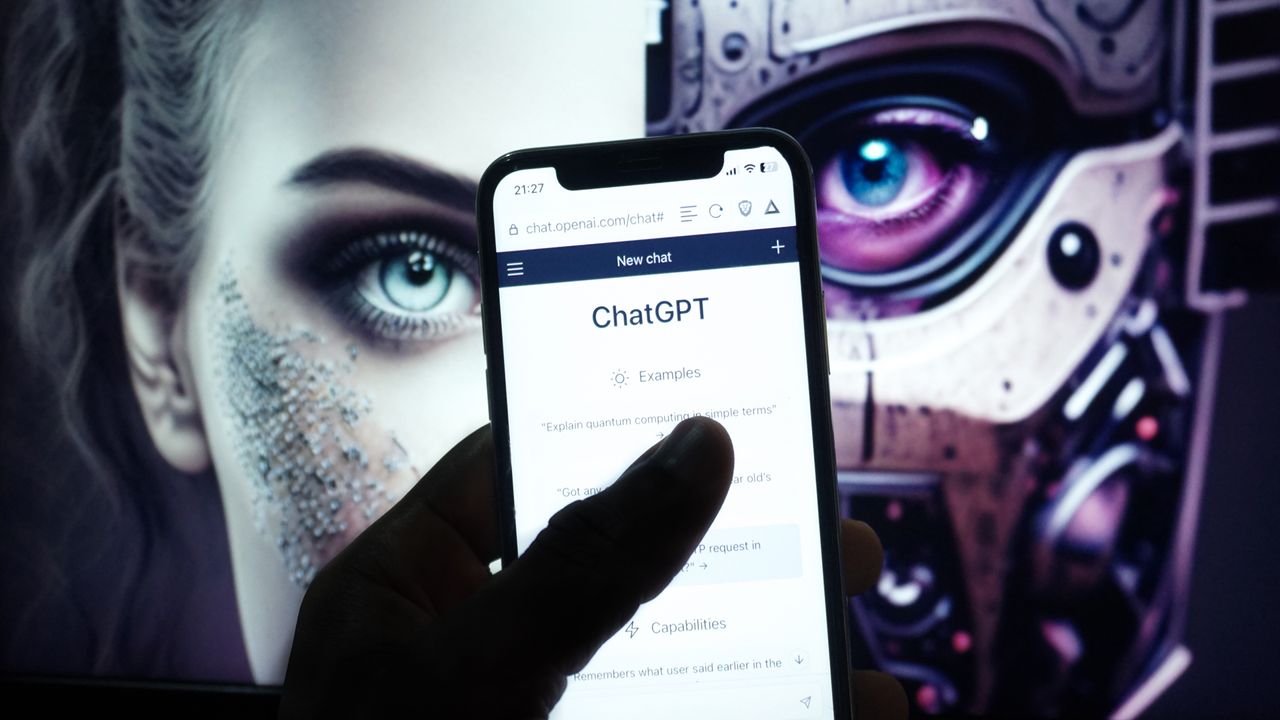
Picture from cdn.mos.cms.futurecdn.net
Rank 7678530% of Britons are providing AI chatbots with confidential personal informationResearch from NymVPN shows company and customer data is also at riskEmphasizes the importance of taking precautions, like using a quality VPNAlmost one in three Britons shares sensitive personal data with AI chatbots like OpenAI’s ChatGPT, according to research from cybersecurity company NymVPN. 30% of Brits have fed AI chatbots with confidential information such as health and banking data, potentially putting their privacy – and that of others – at risk.This oversharing with the likes of ChatGPT and Google Gemini comes despite 48% of respondents expressing privacy concerns over AI chatbots. This signals that the issue extends to the workplace, with employees sharing sensitive company and customer data.NymVPN’s findings come in the wake of a number of recent high-profile data breaches, most notably the Marks & Spencer cyber attack, which shows just how easily confidential data can fall into the wrong hands.“Convenience is being prioritized over security”NymVPN’s research reveals that 26% of respondents admitted to disclosing financial information related to salary, investments, and mortgages to AI chatbots. Riskier still, 18% shared credit card or bank account data.24% of those surveyed by NymVPN admit to having shared customer data – including names and email addresses – with AI chatbots. More worrying still, 16% uploaded company financial data and internal documents such as contracts. This is despite 43% expressing worry about sensitive company data being leaked by AI tools.“AI tools have rapidly become part of how people work, but we’re seeing a worrying trend where convenience is being prioritized over security,” said Harry Halpin, CEO of NymVPN.M&S, Co-op, and Adidas have all been in the headlines for the wrong reasons, having fallen victim to data breaches. “High-profile breaches show how vulnerable even major organizations can be, and the more personal and corporate data that is fed into AI, the bigger the target becomes for cybercriminals,” said Halpin.The importance of not oversharingSince nearly a quarter of respondents share customer data with AI chatbots, this emphasizes the urgency of companies implementing clear guidelines and formal policies for the use of AI in the workplace.“Employees and businesses urgently need to think about how they’re protecting both personal privacy and company data when using AI tools,” said Halpin.Although avoiding AI chatbots entirely would be the optimal solution for privacy, it’s not always the most practical. Users should, at the very least, avoid sharing sensitive information with AI chatbots. Privacy settings can also be tweaked, such as disabling chat history or opting out of model training.A VPN can add a layer of privacy when using AI chatbots such as ChatGPT, encrypting a user’s internet traffic and original IP address. This helps keep a user’s location private and prevents their ISP from seeing what they’re doing online. Still, even the best VPN isn’t enough if sensitive personal data is still being fed to AI.
-

Picture from ichef.bbci.co.uk
Rank 76786 -
Picture from static.independent.co.uk
Rank 76787 -

Picture from static.independent.co.uk
Rank 76788 -

Picture from static.independent.co.uk
Rank 76789 -

Picture from static.independent.co.uk
Rank 76790 -

Picture from ichef.bbci.co.uk
Rank 76791 -

Picture from static.independent.co.uk
Rank 76792 -

Picture from static.independent.co.uk
Rank 76793 -

Picture from static.independent.co.uk
Rank 76794 -

Picture from static.independent.co.uk
Rank 76795 -

Picture from static.independent.co.uk
Rank 76796 -

Picture from static.independent.co.uk
Rank 76797 -

Picture from static.independent.co.uk
Rank 76798 -

Picture from static.independent.co.uk
Rank 76799 -

Picture from static.independent.co.uk
Rank 76800