News
This constantly updated list features the latest and most important news articles, ranked in order of significance. The top stories highlight major developments, breaking news, and critical updates across various topics, ensuring you stay informed about the most pressing issues. As new articles are added, the list adapts to reflect the latest priorities, keeping the most impactful stories at the forefront. Whether it’s global events, technology breakthroughs, or industry trends, this dynamic list ensures you always have access to the most relevant and timely information.
-

Picture from static.independent.co.uk
Rank 75901 -

Picture from static.independent.co.uk
Rank 75902 -
Picture from static.independent.co.uk
Rank 75903 -

Picture from static.independent.co.uk
Rank 75904 -
Picture from assets3.cbsnewsstatic.com
Rank 75905 -

Picture from assets1.cbsnewsstatic.com
Rank 75906 -

Picture from image.cnbcfm.com
Rank 75907 -
Picture from o.aolcdn.com
Rank 75908TikTok has proven to be a powerful platform to help tunes go viral and now the company is making it easier for songwriters to benefit from that reach. The social media site has rolled out a pair of new features in beta: a Songwriter label that identifies users as such under their profile, and a Songwriter Music Tab that lets them spotlight tracks they've written or co-written.
So far, only a limited number of publishers and songwriters can apply to get the new label and tab. TikTok noted that several established songwriters including Lauren Christy (Avril Lavigne, Britney Spears), Toby Gad (Fergie, John Legend) and Justin Tranter (Dua Lipa, Ariana Grande) are among the first to gain access. Others who want to join can put their names on a waitlist.
TikTok and its parent ByteDance developed the Songwriter Features after surveying 871 songwriters and doing 18 in-depth interviews. Those findings informed the design of the feature with the aim of improving discovery and monetization opportunities while raising songwriters' profiles on TikTok. The platform noted that 53 percent of full-time songwriters who post content on social media do so on TikTok.
When it comes to royalties and copyright, TikTok has taken a similar tack to YouTube and other social media sites. All the music available on TikTok can be used in videos and the platform has deals in place with distributors and labels to license music. Artists then receive royalties whenever creators use their music on TikTok, the amount of which depends on the individual distributor.
TikTok is following belatedly in the heels of Spotify, which has offered a similar songwriter spotlight feature since 2020. Last month, ByteDance introduced the TikTok for Artists music insight platform designed to help musicians gain access to "data and insights about their music, posts and followers." This article originally appeared on Engadget at https://www.engadget.com/social-media/tiktoks-latest-feature-will-help-songwriters-show-off-their-work-131512204.html?src=rss
-
Picture from ichef.bbci.co.uk
Rank 75909 -
Picture from static.independent.co.uk
Rank 75910 -

Picture from image.cnbcfm.com
Rank 75911 -

Picture from image.cnbcfm.com
Rank 75912 -
Picture from static.independent.co.uk
Rank 75913 -

Picture from static.independent.co.uk
Rank 75914 -
Picture from static.independent.co.uk
Rank 75915 -

Picture from image.cnbcfm.com
Rank 75916 -
Picture from assets2.cbsnewsstatic.com
Rank 75917 -

Picture from assets2.cbsnewsstatic.com
Rank 75918 -
Picture from assets2.cbsnewsstatic.com
Rank 75919 -

Picture from assets2.cbsnewsstatic.com
Rank 75920 -
Picture from assets3.cbsnewsstatic.com
Rank 75921 -

Picture from assets1.cbsnewsstatic.com
Rank 75922 -

Picture from assets3.cbsnewsstatic.com
Rank 75923 -

Picture from assets2.cbsnewsstatic.com
Rank 75924 -
Picture from cdn.mos.cms.futurecdn.net
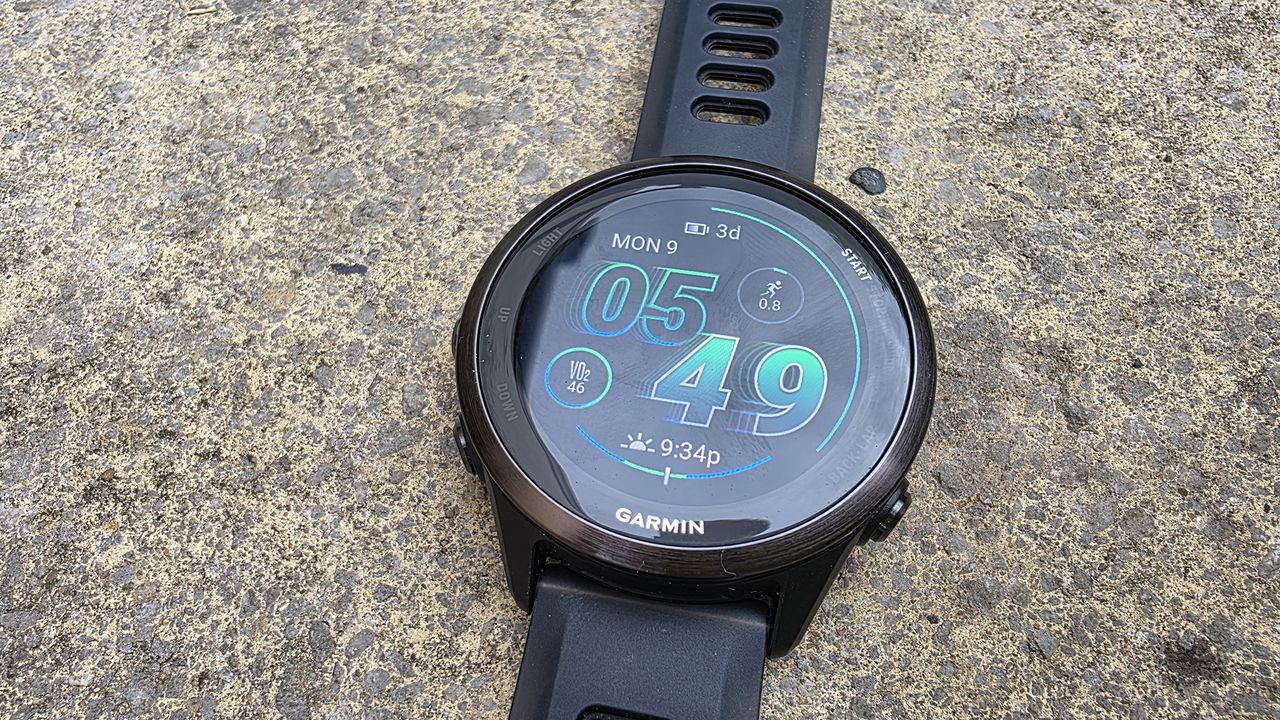
Rank 75925A new Garmin update addresses ghost touch issuesForerunner 570 and Forerunner 970 watches have been affectedUsers are still reporting bugs in the softwareIf you own a Garmin Forerunner 570 or Forerunner 970, keep your eyes open for software version 6.18: the patch is rolling out now and addresses problems with ghost touches on the recently launched wearables (where a press is registered on screen even though it's not been touched).The update was spotted by Notebookcheck, and you can see the official listings for the update here and here. The change log says the update "reduces the occurrence" of ghost touches rather than eradicating them – so it seems the issue might not be fully fixed.Your watch should get the update automatically, but you can run a manual check too, as long as your device is online: from the main menu, choose System > Software Update > Check For Updates to see if it's available.It's not clear just how many of the Forerunner 570 and Forerunner 970 watches have been affected by this. We didn't report any problems in our Garmin Forerunner 570 review, describing it as "a marvel of a running watch".It's a bug's lifeThe Forerunner 570 and Forerunner 970 launched in May (Image credit: Garmin)However, while the ghost touch issue may be getting closer to being resolved, it seems the 6.18 software update has introduced several new bugs that users of the Forerunner 570 and Forerunner 970 are now trying to bring to Garmin's attention.It seems that some users are having issues with their watch freezing right after the PIN code is entered to unlock it. Another user says that scrolling isn't working properly when trying to reach the Glances screen.There's also a Garmin support thread on altimeter issues with the Forerunner 970: the thread was only started a couple of days ago, but it's not immediately clear if these problems are related to the 6.18 update that's just been rolled out.The best course of action if you own one of these smartwatches is to keep them updated to the latest software version, and if you do experience bugs, check the Garmin support forums – where it should also be said there are plenty of users not having issues with their devices or the new update.You might also like5 things I change on every Garmin watch straight awayOur pick for the best Garmin smartwatchesGarmin just gave its smartwatches a big Google Maps upgrade
-
Picture from o.aolcdn.com
Rank 75926Stellantis, the automotive giant behind Chrysler, Citroen, Fiat, Jeep and Peugeot, is pulling out of hydrogen. The company said it’s killing its fuel cell development program in the face of “limited availability of hydrogen refueling infrastructure, high capital requirements and the need for stronger consumer purchasing incentives.” To put that another way, it’s realized hydrogen EVs are facing the same set of challenges it’s not been able to overcome in the last two or three decades.
It’s a stark shift in tone from January 2024, when the company promised to roll out a fleet of commercial fuel cell vehicles. Stellantis sells many of Europe’s most popular panel vans including the Citroen Jumper, Fiat Ducato, Opel Movano and Peugeot Boxer. Back then, it said we’d see hydrogen versions of all those vehicles (as well as its smaller siblings) with maximum ranges of 500km (310 miles).
The decision to pull the plug came relatively late, with the company saying it was due to begin production at its plants in France and Poland “this summer.” It added the decision to kill the range will not impact staffing in production or R&D, with employees transferred to other projects. It will, however, have to delicately negotiate its exit with Symbio, the fuel cell maker it bought a one-third share of back in 2023.
Stellantis isn’t the first company that pledged to put its weight behind fuel cells only to pull back. Toyota has thrown a lot of time, effort and money behind hydrogen, believing fuel cells would be preferable to battery electric vehicles (BEVs). Sadly, as time progressed, the company has had to cede more and more of the market to batteries, and only advertises its third-generation fuel cell as a power unit for heavy industrial vehicles.
Hydrogen was, and has been for some time, an article of faith for fossil fuel companies, the car industry and even some countries that lack their own energy reserves. After all, the promise of being able to pull (theoretically limitless), emission-free energy out of water is the stuff of dreams. Not to mention, it requires much of the same knowledge and infrastructure used by the traditional oil and gas industry, and refueling can only take place at a commercial site.
Had hydrogen made more of an impact, it would have likely preserved the status quo or something much like it, for those industries long into the future. But while the hope was that hydrogen could be a cleaner, greener substitute for oil and gas, its inherent flaws always made that a non-starter.
For instance, hydrogen is far less energy dense than oil and gas, and far less physically dense — it’s so prone to leaking that you have to go above and beyond to seal it in. It’s difficult to mass produce cleanly, especially if you want to power every car in the world, unless you use a dirty process like the steam reformation of methane. So, rather than moving away from fossil fuels and emissions, you’d be further entrenching them into the system and adding to the problem.
And if you did want to just use renewable energy to pull hydrogen from water, then you’d require an unprecedented amount of investment. Back in 2021, I asked Tim Lord, who had previously been in charge of the UK’s decarbonization strategy, about that sort of industrial-scale hydrogen generation. He said that you’d essentially need to double your whole electricity generation output to get close.
That’s before you get to the other factors, like hydrogen’s efficiency as a store of energy or the investment necessary to equip every gas station on the planet with a hydrogen tank. Which is not likely going to pay off given that Toyota’s Mirai, arguably the flagship hydrogen fuel cell EV, has only sold 28,000 models since its launch in 2014. In the US market, there's only the Mirai, the Hyundai Nexo and the Honda CR-V e-FCEV knocking around, nothing compared to how many BEVs are on sale. I think it’s time for everyone to admit that we’re done with hydrogen fuel cell EVs and focus their attention elsewhere.This article originally appeared on Engadget at https://www.engadget.com/transportation/another-big-car-company-gives-up-on-hydrogen-133011978.html?src=rss
-
Picture from ichef.bbci.co.uk
Rank 75927 -

Picture from static.independent.co.uk
Rank 75928 -

Picture from static.independent.co.uk
Rank 75929 -
Picture from static.independent.co.uk
Rank 75930 -

Picture from static.independent.co.uk
Rank 75931 -

Picture from static.independent.co.uk
Rank 75932 -

Picture from static.independent.co.uk
Rank 75933 -

Picture from assets2.cbsnewsstatic.com
Rank 75934 -

Picture from image.cnbcfm.com
Rank 75935 -

Picture from image.cnbcfm.com
Rank 75936 -

Picture from techcrunch.com
Rank 75937 -

Picture from image.cnbcfm.com
Rank 75938 -

Picture from image.cnbcfm.com
Rank 75939 -
Picture from ichef.bbci.co.uk
Rank 75940 -

Picture from static.independent.co.uk
Rank 75941 -

Picture from static.independent.co.uk
Rank 75942 -
Rank 75943
-
Picture from static.independent.co.uk
Rank 75944 -
Picture from assets1.cbsnewsstatic.com
Rank 75945 -

Picture from static.independent.co.uk
Rank 75946 -
Picture from static.independent.co.uk
Rank 75947 -

Picture from static.independent.co.uk
Rank 75948 -

Picture from static.independent.co.uk
Rank 75949 -

Picture from ichef.bbci.co.uk
Rank 75950

