News
This constantly updated list features the latest and most important news articles, ranked in order of significance. The top stories highlight major developments, breaking news, and critical updates across various topics, ensuring you stay informed about the most pressing issues. As new articles are added, the list adapts to reflect the latest priorities, keeping the most impactful stories at the forefront. Whether it’s global events, technology breakthroughs, or industry trends, this dynamic list ensures you always have access to the most relevant and timely information.
-

Picture from static.independent.co.uk
Rank 73901 -

Picture from static.independent.co.uk
Rank 73902 -

Picture from image.cnbcfm.com
Rank 73903 -

Picture from cdn.mos.cms.futurecdn.net
Rank 73904Cloudflare’s 1.1.1.1 DNS resolver service fell victim to a simultaneous BGP hijack and route leak event, causing massive internet outages and degradation worldwide. Pakistan caused the most famous BGP outage. The government tried to block access to YouTube within the country. Their misconfiguration caused a worldwide YouTube outage.Most organizations are targets of attacks 7.5 times a year. And while most are resolved quickly, these are examples of public infrastructure failures that are beyond your control.What other technology do you rely on every day that was invented in the 1980s? Not your smartphone. Not your car. Not your TV. And definitely not your work tools. Yet, every time you send an email, connect to a website, or deploy a cloud service, you’re relying on core internet protocols that predate the web itself.The Fragile FoundationThe Border Gateway Protocol (BGP) was designed in 1989, an era when the “internet” was barely a concept and security was an afterthought. Back then:- Home users connected via dial-up modems.- Businesses considered themselves cutting-edge if they had a T1 line.- Network reliability was a hope, not an expectation.BGP’s original purpose was simple: keep the nascent internet stitched together. It provided large institutions with a means to announce which IP address blocks they controlled and to learn about others. The protocol allowed routers across autonomous systems (ASes) to share route announcements and dynamically discover paths to distant networks.BGP was designed for resilience, not determinism. For openness, not security.Speed, uptime, and securityToday, we demand speed, uptime, and security that BGP was never built to deliver. Multi-gigabit fiber reaches homes. Enterprises span multiple clouds across continents. Workloads like real-time video, financial transactions, and machine learning require low-latency, high-throughput data paths.However, BGP still routes traffic based on trust and reachability, rather than performance or identity. It can’t enforce policies. It can’t prevent hijacks. And it certainly can’t guarantee who’s on the other end.Despite multiple security incidents and efforts, such as RPKI and BGPsec, the internet still routes traffic based on a chain of trust that can be exploited by anyone with a few malicious route announcements. Most fixes require coordination that doesn’t exist and IT infrastructure upgrades that move at glacial speed.The result? The modern internet rides on a protocol that thinks it’s still 1992.Public by DefaultAnother artifact of that era is the Domain Name System (DNS). Created to make numeric IP addresses human-readable, DNS transformed how people accessed websites. Instead of memorizing strings of numbers, you could simply type in a name.The problem? DNS is public by design.Every query, every resolution, and every domain is visible and discoverable. Attackers can enumerate subdomains, discover shadow IT resources, and probe for vulnerabilities – all by posing as legitimate users.We’ve seen this pattern before. Consider phone numbers. In the 1990s, receiving a call or piece of mail felt like an event. Now? Most calls are spam, and most email is junk. People don’t pick up unless they recognize the number. Our relationship with public identifiers has undergone a fundamental shift.The same evolution is happening with network services. Public IP addresses and DNS names are easily scraped, scanned, and attacked. In an age of automation and AI-assisted hacking, exposing your infrastructure by default amounts to sending an invitation.Yet we continue treating server addresses like phone numbers in a white pages directory – a model that no longer works for the threats we face.Obsolete AssumptionsBoth BGP and DNS reflect assumptions that simply don’t hold up anymore:- Assumption: Networks are trusted.-- Reality: Most attacks now originate from within or via compromised peers.- Assumption: Routes are stable.-- Reality: Internet routes change unpredictably due to performance tuning, outages, and misconfigurations.- Assumption: Identities don’t matter.-- Reality: Zero-trust architecture has become the standard for secure design.- Assumption: Services are few and fixed.-- Reality: Modern architectures dynamically spin up and down thousands of services.The more we scale and automate, the more these assumptions crumble.Time for a RethinkThe internet’s early architecture was undeniably brilliant for its time. But that time has passed.Today’s needs are different. We need:- Deterministic data paths that can be trusted end-to-end.- Secure naming systems that are private by default.- Policy-aware routing that aligns with business, performance, and compliance requirements.- A model where services announce themselves securely to authorized peers, not to the entire internet.These aren’t enhancements; they’re necessities.The irony is striking: everything else in tech has evolved dramatically. Compute became elastic. Storage turned redundant and distributed. Deployment went fully automated. But networking? It’s still largely manual, primarily public, and built mainly on 40-year-old concepts.This should be our wake-up call. We can’t keep patching internet security with duct tape and hoping for the best. It’s time to challenge the status quo and ask a hard question: are the foundational protocols we depend on every day actually fit for purpose anymore?Security and privacy can’t remain afterthoughts we layer onto a crumbling foundation. They need to be built from the ground up. That means completely reimagining how the internet connects, routes, and identifies everything.Think about it: what other critical system in your life still runs on ideas from the 1980s?LINK!This article was produced as part of TechRadarPro's Expert Insights channel where we feature the best and brightest minds in the technology industry today. The views expressed here are those of the author and are not necessarily those of TechRadarPro or Future plc. If you are interested in contributing find out more here: https://www.techradar.com/news/submit-your-story-to-techradar-pro
-

Picture from static.independent.co.uk
Rank 73905 -

Picture from image.cnbcfm.com
Rank 73906 -

Picture from static.independent.co.uk
Rank 73907 -

Picture from static.independent.co.uk
Rank 73908 -

Picture from static.independent.co.uk
Rank 73909 -
Picture from static.independent.co.uk
Rank 73910 -

Picture from cdn.mos.cms.futurecdn.net
Rank 73911The tubular bike comes in two guises, with a top speed of 53mphIts frame houses a removable battery that looks like a giant AAPrices start at €5,999 (around £5,200/$7,000/AU$10,600)The story of Sol Motors is a long and slightly turbulent one, as the slightly bizarre, Pocket Rocket electric two-wheeler has been teased for many years but struggled to fully achieve lift off.Now, the German innovators are ready to release their pipe-shaped urban transport into the wild, with pre-orders being taken now and delivery to anywhere in the world typically taking around 6-8 weeks from point of purchase.Designed to be small, lightweight and practical, the Pocket Rocket comes in two guises that cover the full spectrum of license requirements in Germany (these will differ across markets).The standard model, for example, has a peak power output of 6.5kW and is limited to a top speed of 45kph (just under 30mph), which makes it legal to ride on most moped or scooter licenses in Europe.For those wanting more punch, there’s an S model that develops 8.5kW of peak power and can hit 85kph (or around 53mph), which will generally require an additional license.Both models weigh just 87kg and offer an electric range of between 42 and 67 miles, depending on the version.When it comes time to charge, the large tubular battery pack that is housed within the frame’s crossbar can be removed and charged in the house, office or apartment, with Sol even offering a stylish charging station to neatly hang the battery from.What’s more, customers can buy additional battery packs for rapid swaps, although this will see the final bill increase other the tune of €1,695 (around £1,470/$2,000/AU$3,000).Similarly, if you go wild with the online configurator, which offers a number of frame, fender and logo colors, the price starts to tickle the €8,000 (around £7,000/$9,300AU$14,200) mark.Funky, fun but not for everyone(Image credit: Sol Motors)The emerging EV landscape has encouraged a number of start-ups to produce all manner of weird and whacky designs, but the Sol Pocket Rocket is up there with some of the strangest.Why anyone would want to ride atop a drainage tube is anyone’s guess and ergonomically, it doesn’t look like a great options for particularly tall or very short users, as there’s not much in the way of adjustability.But like Infinite Machine, which produces highly futuristic electric scooters and pedelecs, Sol Motors is offering something a bit different for those wanting lightweight, easy-to-maintain urban transport that turns heads.Will it be the next big thing? Probably not. But will it raise a few smiles on the streets? Most definitely.you might also likeI rode the new Maeving RM1S – and it's the first truly convincing 125cc electric motorbike I've triedRoyal Enfield has turned this classic WW2 bike into a next-gen EV range – and it might just take electric motorcycles mainstreamTesla introduces Grok AI into some of its cars, but it can’t control the vehicle… yet
-

Picture from ichef.bbci.co.uk
Rank 73912 -

Picture from assets2.cbsnewsstatic.com
Rank 73913 -

Picture from ichef.bbci.co.uk
Rank 73914 -

Picture from static.independent.co.uk
Rank 73915 -
Picture from assets2.cbsnewsstatic.com
Rank 73916 -
Picture from cdn.mos.cms.futurecdn.net
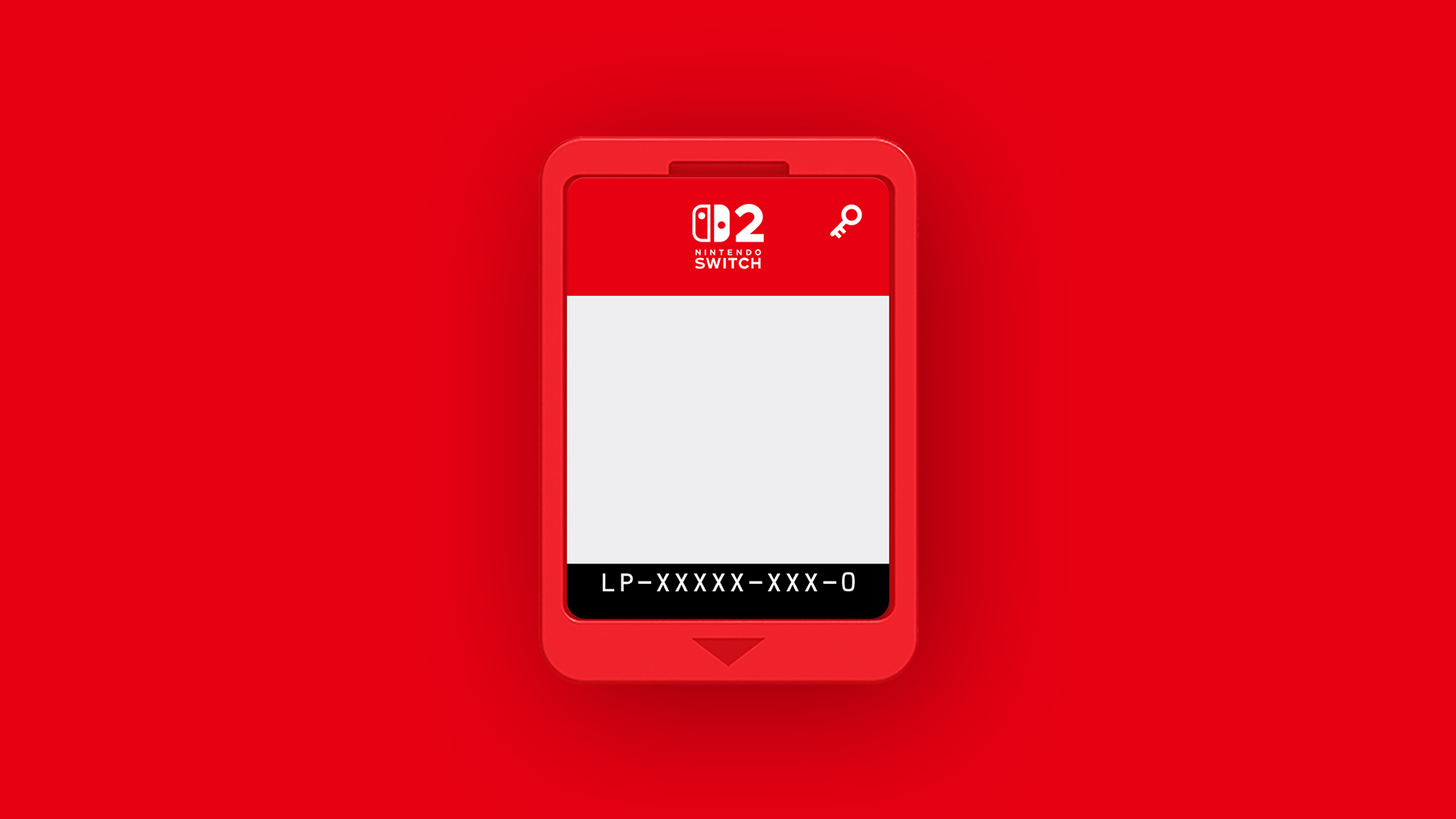
Rank 73917Nintendo is asking Japanese players for their thoughts on Nintendo Switch 2 Game-Key CardsIt follows reports of low sales for third-party Nintendo Switch 2 softwareIt hopefully signals a shift towards more traditional physical releasesNintendo is asking Japanese players for their thoughts on the controversial Nintendo Switch 2 Game-Key Cards.As first spotted by SwitchSoku and reported by VGC, surveys have been going out to Nintendo Switch 2 players in Japan.The multiple-choice form asks whether you are aware of the existence of Game-Key Cards or currently own any. Next, it lists a number of the characteristics of Game-Key Cards and prompts you to select the ones you already know.Finally, it asks whether you would choose the digital download version of a piece of software if a Game-Key Card was available.If you're not aware, Game-Key Cards are a special type of Nintendo Switch 2 release. They are physical game cards that do no contain any substantial data. When inserted into a Nintendo Switch 2 system, they prompt a download of the game much like an eShop purchase.You need to insert the Game-Key Card every time you want to access the title. The game takes up space on your system's internal storage, negating one of the big benefits of traditional game cards.The only real benefit of a Game-Key Card is that it can be resold or swapped between multiple consoles freely, though in my eyes this isn't really worth the hassle.The vast majority of Nintendo Switch 2 third-party releases have been Game-Key Cards, much to the disappointment of some players.As sales of third-party software has reportedly been lower than expected, I suspect that this survey signals that Nintendo is re-evaluating its approach and hopefully will begin pushing developers towards traditional physical releases.You might also like...'Coming soon': IO Interactive issues update on fixes for Hitman performance problems on Nintendo Switch 2Donkey Kong Bananza has potentially been in development for nearly eight years: 'we started developing it after finishing Super Mario Odyssey'A new Nintendo Direct is reportedly scheduled for this month – here's what to expect and our predictions for the rumored broadcast
-

Picture from techcrunch.com
Rank 73918 -

Picture from ichef.bbci.co.uk
Rank 73919 -

Picture from static.independent.co.uk
Rank 73920 -

Picture from static.independent.co.uk
Rank 73921 -

Picture from static.independent.co.uk
Rank 73922 -

Picture from static.independent.co.uk
Rank 73923 -

Picture from static.independent.co.uk
Rank 73924 -

Picture from assets1.cbsnewsstatic.com
Rank 73925 -

Picture from assets3.cbsnewsstatic.com
Rank 73926 -

Picture from image.cnbcfm.com
Rank 73927 -

Picture from image.cnbcfm.com
Rank 73928 -

Picture from static.independent.co.uk
Rank 73929 -

Picture from static.independent.co.uk
Rank 73930 -

Picture from static.independent.co.uk
Rank 73931 -

Picture from static.independent.co.uk
Rank 73932 -

Picture from static.independent.co.uk
Rank 73933 -

Picture from static.independent.co.uk
Rank 73934 -

Picture from cdn.mos.cms.futurecdn.net
Rank 73935VRI will complement NCSC's current vulnerability research effortsIt will be tasked with communicating NCSC's needs with external expertsThe goal is to understand the flaws, patches, and research methodologyThe UK’s National Cyber Security Centre (NCSC) just announced the forming of The Vulnerability Research Initiative (VRI), a new program that will see it partner with third-party cybersecurity experts for vulnerability research in commodity and specialized tech.In a short announcement published on its website earlier this week, NCSC said it currently operates a team of internal researchers who are experts in common technologies, and who conduct vulnerability research (VR) on a range of technologies and products, from traditional commodity tech, to specialized solutions only used in a few places.However, the team is unable to keep up with the speed at which the technology industry is changing. New tech is popping up every day, and old tech is evolving beyond recognition, “and thus VR is getting harder”.Understanding the vulnerabilities“This means the NCSC demand for VR continues to grow,” NCSC explained.To tackle the challenge, it decided to create VRI, and bring in third-party help. The program’s goal is to help NCSC’s researchers understand the vulnerabilities present in today’s technologies, the necessary mitigations, how experts conduct their research, and which tools they use in the process.“This successful way of working increases NCSC’s capacity to do VR and shares VR expertise across the UK’s VR ecosystem,” the press release further reads.The VRI core team will include technical experts, relationship managers, and project managers, with the core team being responsible for communicating the VR team's requirements to VRI industry partners and for overseeing the progress and outcomes of the research.In the (near) future, NCSC will bring in more experts to tackle AI-powered, or otherwise AI-related vulnerabilities. Those who are interested in participating in VRI should reach out to the agency via email at vri@ncsc.gov.uk. The address should not be used for sharing vulnerability reports.Via BleepingComputerYou might also likeNCSC gets influencers to sing the praises of 2FATake a look at our guide to the best website builders aroundWe've rounded up the best password managers
-

Picture from static.independent.co.uk
Rank 73936 -

Picture from static.independent.co.uk
Rank 73937 -

Picture from assets3.cbsnewsstatic.com
Rank 73938 -

Picture from image.cnbcfm.com
Rank 73939 -
Picture from cdn.mos.cms.futurecdn.net
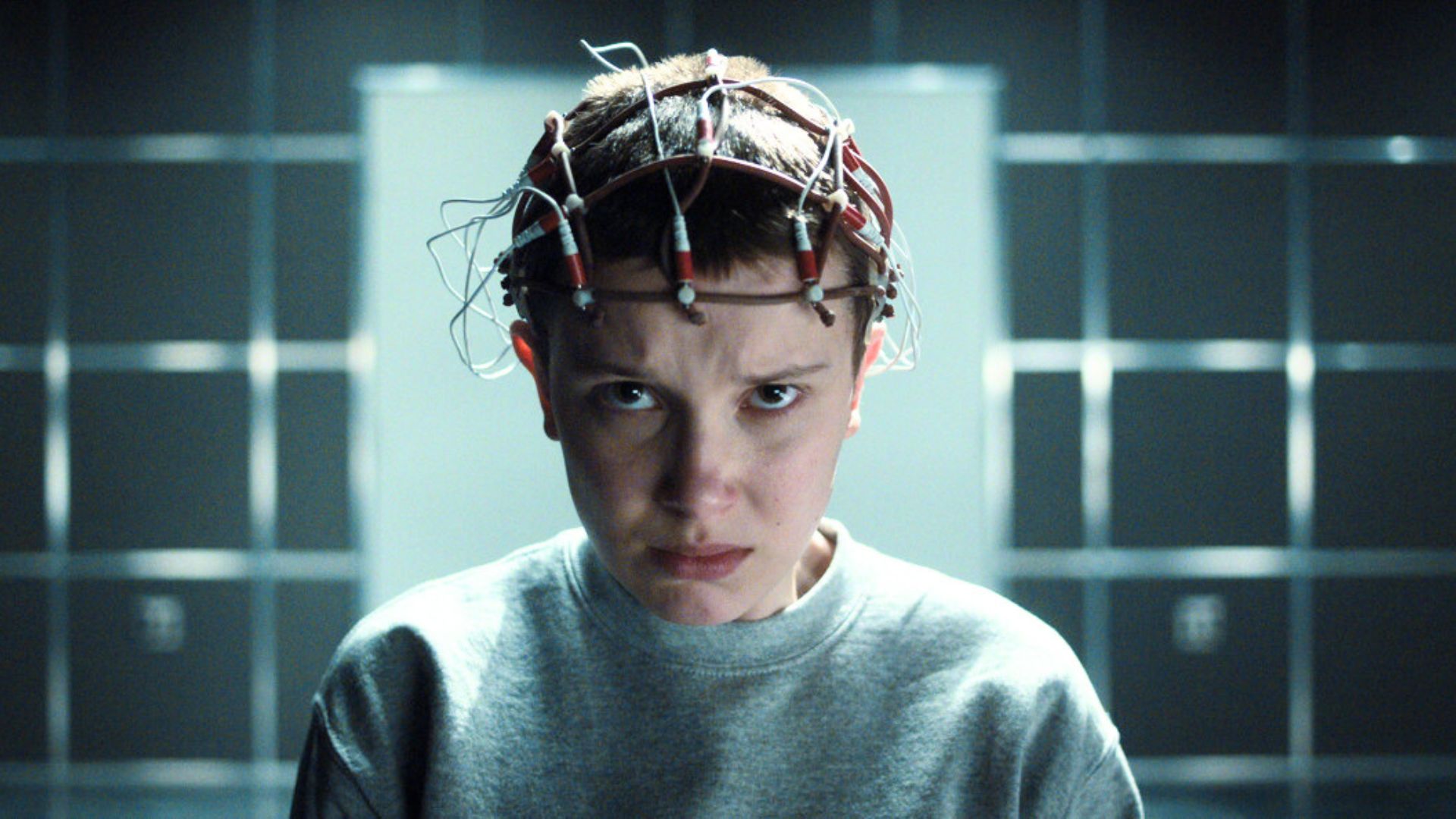
Rank 73940Congratulations, fellow Stranger Things fan! You’re on the home stretch of the three year wait between Stranger Things season 4 and Stranger Things season 5. The final episodes will be split into three releases – volume 1 on November 26, volume 2 on December 25 and the season 5 finale on December 31 – so there’s still a small wait to go, but rumour has it we’re getting the first full season 5 trailer at some point this week.Today (July 15) marks the first time we ever saw one of the best Netflix shows of all time on screen, with the series debuting nine years ago in 2016. If you can’t remember what happened when we last visited Hawkins (and that’s understandable), our group of best friends attempted to defeat Vecna, causing Max's apparent death as well as the opening of a massive rift between the town and the Upside Down. No big deal, I’m sure.But as Netflix finally tries to get its fanbase excited about the drawn-out end, a painful question has to be asked. Why should anybody care about Stranger Things season 5 when we’ve been left in the lurch for so long? I’m wondering if it would have been less of a hassle to have been eaten by Vecna when we first met him, and that’s a problem.Stranger Things season 5 and its trailer are coming, but do we even care?Let’s put it into context. Since Stranger Things season 4 aired, we’ve had four seasons of The Bear, five seasons of Slow Horses (if you count new episodes we’re going to get in September) and two seasons of Severance… and look how long that took to return. In the Stranger Things world alone, we’ve had the arrival of non-canon West End play The First Shadow, plus the announcement of two spinoffs: animated series Stranger Things: Tales from '85 and live-action show The Boroughs. Everyone and their nan has seemingly complained about not getting season 5 in the meantime, and they’ve got good reason to be annoyed.Back in the good old days of the mid-2000s, we were regularly whipping through 22-episode seasons of TV like there was no tomorrow. Desperate Housewives and Lost were great examples of this, each requiring a high level of input and resource in their own way. Fast forward two decades, and the consolation prize of feeling lucky to get eight new episodes in three years doesn’t feel like something worth investing in.Sure, these upcoming episodes are basically feature length movies and the technical craft needed to achieve them is immense, but this is Hollywood, for goodness sake! Every resource we allegedly have at our disposal is supposed to be at the top of its game, able to give us everything we have and haven’t yet dreamed up. From a marketing perspective, Netflix might have thought dragging out the jewel in the crown of its streaming back catalog would make fans hungrier for the end product, but there’s only so far you can stretch the theory in practice. Of course, I’ll be streaming Stranger Things season 5 like the rest of us, but it will be a reluctant watch. The endless wait over the last few years has definitely made me think twice about investing in shows on one of the best streaming services around, and that’s before we even touch on the frequent cancellations (another story for another day).You might also likeStranger Things season 5's 12-month shoot yielded 650-plus hours of footage for its eight 'blockbuster movie' episodes, the popular Netflix show's creators sayStranger Things: The First Shadow's big lore reveal needs addressing in hit Netflix show's final seasonEverything new on Netflix in July 2025
-
Picture from o.aolcdn.com
Rank 73941Be extra careful where you buy your used Nintendo Switch game cards. A Switch 2 owner posted on Reddit about how their account was banned after downloading patches for a few Switch game cards they'd bought from Facebook Marketplace. The Switch 2 user contacted Nintendo support and discovered they were banned, but they provided proof of purchase and were unbanned shortly after. The Redditor said the “whole process was painless and fluid.”
Nintendo
Nintendo attaches unique codes to its Switch game cartridges to prevent piracy. However, bad actors can copy games to a third-party device, like the MIG Flash, and resell the physical game card, meaning the code can exist twice. Once Nintendo detects two instances of the same code online at the same time, down comes the ban hammer.
Nintendo continues to push back against piracy aggressively. It amended the Switch user agreement to allow it to brick a console it detects running pirated games or mods.
— Mat Smith
Get Engadget's newsletter delivered direct to your inbox. Subscribe right here!
The news you might have missed
Canon R50 V review: An affordable vlogging camera that lags behind its rivals
The 30th-anniversary PS5 controller will be available again for a limited time
Capcom shares first footage of Resident Evil mobile spinoff
The UK needs to deal with its e-scooter problem
The owners of TikTok are making mixed reality goggles
Expect a tethered puck for processing and battery.
Getty
The Information reports that ByteDance, the parent company of TikTok, may be working on mixed reality goggles. It’s designed to layer digital objects over your view of the real world and, apparently, is supposed to compete directly with Meta’s upcoming mixed reality products. God, what will it look like?
ByteDance’s virtual reality startup, Pico, the creators of the Pico 4 VR headset, is building the goggles. Its past products have attempted to match Meta’s Quest headsets’ features. However, this new project will be lighter, smaller goggles, which weigh around 0.28 pounds. Pico plans to offload most of the computing work to a wired puck.
Continue reading.
Threads users stay on Threads
Data suggests people aren’t clicking on links.
Getty
Threads is starting to look more and more like the most viable challenger to X, but it still isn’t sending much traffic to other websites, which could make the platform less appealing for creators, publishers and others whose businesses depend on non-Meta-owned websites. According to Similarweb, outbound referral traffic from Threads climbed to 28.4 million visits in June. That’s a notable jump from 15.1 million visits a year ago but still relatively tiny, considering Threads is currently averaging more than 115 million users a day.
Continue reading.
US government is giving leading AI companies a bunch of cash for military applications
This will “maintain strategic advantage.”
The US Chief Digital and Artificial Intelligence Office (CDAO) is awarding up to $200 million each to leading AI companies, like Anthropic, Google, OpenAI and xAI, for military applications. A press release says the move will “broaden” the Department of Defense’s use of AI to “address critical national security needs.” This initiative aims to expand the Department of Defense’s AI use for national security. Notably, xAI’s receipt of funds coincides with its new version of Grok, made for federal use.
Continue reading.This article originally appeared on Engadget at https://www.engadget.com/general/the-morning-after-engadget-newsletter-111439608.html?src=rss
-

Picture from ichef.bbci.co.uk
Rank 73942 -

Picture from cdn.mos.cms.futurecdn.net
Rank 73943New Microsoft Research paper identifies areas where AI is already being used the mostIt also shows areas that AI has very little influence on currentlyThe research could show potential for AI job augmentation, not just replacementI don’t know about you, but I have this kind of nagging fear that AI is coming for me one of these days. If not imminently, then in the very near future. One thing that might allay that fear is knowing exactly where AI’s axe is going to fall in the labor market, so that I can make sure I’m always just out of its reach.The problem is that right now we have a lot of people making bold assumptions about what sorts of jobs AI will take away, but as we all know, no plan survives contact with the enemy, so it might be better to approach the problem from another direction.A new report from Microsoft Research has analyzed 200,000 real conversations between people and Copilot to understand how AI is being used by people in the workplace right now. This way, we can determine which roles are likely to be the most impacted as companies adopt generative AI in the future.The most at riskIt should come as no surprise that the jobs the report identified as the most common work activities people seek AI assistance for all involve gathering information and writing, and that the most common activities that AI is performing are providing information and assistance, writing, teaching, and advising.It turns out that interpreters and translators are top of the list when it comes to compatibility with AI, with a stunning 98% of their activities overlapping with frequent Copilot tasks that have fairly high completion rates.So, if you're thinking of changing careers to become a translator, it might be worth considering your options. Also at the top of the list are historians, writers and authors, and journalists. It should be no surprise to also see proofreaders, editors, and PR specialists high up on the list, too.(Image credit: Shutterstock)The most resistant to AIIt’s physical trades involving working with people that are the most resistant to the influence of AI. The report puts nursing assistants, massage therapists, and machinery operators, including truck and tractor drivers, as the most AI-resistant occupations. Manual laborers like roofers, dishwashers, maids, and housekeeping cleaners were also near the top of the list.The news will be good for some jobs, but terrible for others. Of course, nothing is guaranteed, and if you’re working in one of the most compatible areas for AI (I know I am!), then don’t panic right now because the research could be simply indicating that your area is one that is ripe for augmentation by AI, rather than replacement.I think there will always be a need for skilled humans in some capacity, even in areas that will be heavily dominated by AI. That said, understanding AI’s impact on jobs is probably going to put you in a better position than if you have no clue about its threats.You might also likeYou don’t have to explain everything to Claude anymore – it’s finally in your appsThe next generation of ChatGPT is just around the corner - here’s why GPT-5 could transform the way you use AII tried asking ChatGPT what my favorite fictional characters say about me – here’s what I learned about myself
-

Picture from ichef.bbci.co.uk
Rank 73944 -

Picture from static.independent.co.uk
Rank 73945 -

Picture from static.independent.co.uk
Rank 73946 -

Picture from static.independent.co.uk
Rank 73947 -

Picture from image.cnbcfm.com
Rank 73948 -

Picture from ichef.bbci.co.uk
Rank 73949 -

Picture from static.independent.co.uk
Rank 73950
