News
This constantly updated list features the latest and most important news articles, ranked in order of significance. The top stories highlight major developments, breaking news, and critical updates across various topics, ensuring you stay informed about the most pressing issues. As new articles are added, the list adapts to reflect the latest priorities, keeping the most impactful stories at the forefront. Whether it’s global events, technology breakthroughs, or industry trends, this dynamic list ensures you always have access to the most relevant and timely information.
-
Picture from o.aolcdn.com
Rank 7101Amazon has reportedly joined the growing list of suitors angling to acquire TikTok as a new ban deadline approaches. According to The New York Times, the retailer has made a “last-minute bid” to buy the app, and has approached Vice President JD Vance and Commerce Secretary Howard Lutnick about the offer.
It’s not clear why Amazon is making an offer this late in the process. TikTok is currently facing an April 5 deadline to strike a deal, though President Donald Trump has said he would likely extend it if necessary. The Times reports that White House officials don’t seem to be “seriously” considering the longshot bid. Amazon declined to comment.
Amazon joins several other companies and investors that have proposed bids. The group includes YouTuber MrBeast (with backing from a group that includes Roblox CEO David Baszucki), Reddit cofounder Alexis Ohanian (who joined a group of investors known as “Project Liberty”) and Perplexity AI, which has proposed integrating the shortform video into its search engine.
Even with the deadline just days away, we still don't know exactly when a decision will be made about TikTok’s future. Trump has said he wants to announce a deal before the Saturday deadline.This article originally appeared on Engadget at https://www.engadget.com/social-media/amazon-reportedly-wants-to-buy-tiktok-now-too-173957102.html?src=rss
-
Picture from o.aolcdn.com
Rank 7102Nintendo just dropped a boatload of Switch 2 news, including the release date, price and a launch title or two. It also announced a bevy of accessories that’ll be available for the console on June 5. Let’s go over the most notable of these doodads.
For my money, the Nintendo Switch 2 Camera is the highlight here. This was featured heavily in the company’s livestream, as the Switch 2 will allow for in-game video chat. This is thanks to the magical “C” button on the right Joy-Con controller. The camera will also shrink down your head to use as a live avatar in certain games. It costs $50.
It wouldn’t be a Nintendo console without a pro controller. The Nintendo Switch 2 Pro Controller will cost $80, but it includes the aforementioned “C” button, a screen capture button, an audio jack and HD rumble 2. It also allows for motion controls and Amiibo functionality. The GL/GR buttons can be mapped to suit different playstyles.
The company also announced a dedicated GameCube controller for use with Nintendo Online. It comes in iconic purple and also includes a “C” button. It charges via USB-C so you won’t burn through AA batteries like Wall-E or something. We don’t have a price on this yet, but Nintendo did say it’s launching with the console. We do know, however, that it’s only available to Nintendo Online subscribers.
The Switch 2 is launching with a new Mario Kart game, so you know what that means. The Joy-Con wheel controllers are back. The Joy-Con 2 Wheel ships in a two-pack, which costs $20. The set includes one blue wheel and one red wheel.
There are two official carrying cases. There’s one just for the console, for handheld mode, that costs $35. There’s also a much larger one that holds everything, including the console, dock, cables and game cards. That one costs $80.
Those are the most interesting items, but Nintendo also announced the usual replacement components. An AC adapter costs $30, while a dock set costs $110. A pair of Joy-Cons will set you back $90 and replacement straps cost $13.This article originally appeared on Engadget at https://www.engadget.com/gaming/nintendo/the-official-switch-2-accessories-include-a-camera-a-gamecube-controller-and-more-173912613.html?src=rss
-
Picture from o.aolcdn.com
Rank 7103The entry-level laptop from modular computing company Framework, which we first saw in February, is almost ready to roll. Founder and CEO Nirav Patel said on Wednesday that you can reserve the Framework Laptop 12 on April 9 at 11AM ET.
The Framework Laptop 12 is a colorful 12.2-inch notebook with a 360-degree hinge that lets you fold it back into a (chunky) tablet. This zillionth iteration of that form factor stands out because of Framework's ethos of modular repairability. If you decide it's time for an upgrade in a couple of years, there's no need to fork out $1,500 for a new device; you can simply upgrade its modular parts.
The Framework Laptop 12 has a 12.2-inch, 1,920 x 1,200 touchscreen display that, at 400 nits, gets "much brighter than you typically see from an entry-level or lower-cost laptop." It will be available with a 13th-gen i3 or i5 Core processor and up to 48GB of DDR5 RAM. You can also get up to a 2TB 2 TB M.2 2230 SSD, Wi-Fi 6E and the company's standard choice of Windows 11 or Linux.
Framework
Although it's helpful to have those general spec guidelines, Framework says it won't share the modular machine's full spec breakdown, ship date or pricing until it's available for pre-order. So, you won't know how "entry-level" it is until the clock is ticking to reserve one. Although seeing Big Tech marketers weaponizing FOMO to increase sales numbers isn't exactly a rarity these days, it stands out all the more coming from a startup that, in other ways, is among the most consumer-friendly.
Patel even cautioned in today's announcement, "We have a hunch that the early batches are going to go very quickly." In other words, you'd better not take too long scanning that spec sheet and weighing it against pricing before the train pulls out of the station.
Regardless, you can learn more about the Framework Laptop 12 in the video below before checking out its full specs on April 9 at 11AM ET. Patel advises pre-order customers to create an account on the company website in advance.
This article originally appeared on Engadget at https://www.engadget.com/computing/laptops/you-can-pre-order-frameworks-entry-level-2-in-1-touchscreen-laptop-on-april-9-182310021.html?src=rss
-

Picture from techcrunch.com
Rank 7104 -
Picture from cdn.mos.cms.futurecdn.net
Rank 7105While there are still a few question marks, the Nintendo Switch 2 Direct has taught us pretty much everything we need to know ahead of the console's June 5 release date, and I have some mixed feelings.GameChat seems fun (though suspiciously reminiscent of Discord), Switch 2 Editions of both The Legend of Zelda: Breath of the Wild and Tears of the Kingdom caught my interest, plus a litany of new games and ample examples of why mouse mode could be a silver bullet for an otherwise iteratively updated console.One area sorely missing an overhaul is the user interface (UI), which, based on a screen capture shared by Nintendo, looks much the same as the original Switch with a few minor tweaks: rounded corners on the game library and a slightly expanded menu bar.The menu bar features a few new options, though. Those include a green scroll, which I'd expect to be for news, a 'C' button for the new GameChat features, and a teal button, which I'd wager is for GameShare.Now, UI news may not take pride of place on your Nintendo Direct Bingo card, but I've always been surprised that Nintendo has gutted so many of its personalization and customization features over the years.Gone are the days of wacky menus, peppy menu music, and Miis; now, it's sterile, stripped-back, and, in my opinion, entirely at odds with Nintendo's design ethos.Especially when you consider the pared-back Joy-Con 2 design, too, it feels like Nintendo has lost its look.
(Image credit: Nintendo)
I was really hoping for UI themes to be announced or for some new features to bring Miis back to its former glory. Even the new, bizarrely positioned Welcome Tour game (which, to everyone's surprise, seems to be a paid-for title, not pre-installed free software) opted for a lifeless, basic design instead of utilizing anything remotely Nintendo-like.Time will tell if Nintendo plans to bring back some of its iconic whimsy to the Switch 2's UI, but I'm certainly hoping for a suitably garish Splatoon UI theme at some point to bring back a splash of color to the more sleek-looking Switch 2.
You might also like...
Nintendo Switch 2 specs revealed, and yes, it will support 4K resolution - as well as a host of other upgrades over the originalWhile we wait for a Bloodborne remake or sequel, FromSoftware just announced The Duskbloods, a brand new Switch 2 exclusiveGet ready, Tarnished! Elden Ring is coming to the Nintendo Switch 2 this year
-

Picture from cdn.mos.cms.futurecdn.net
Rank 7106More than $1.5bn of crypto was lost to scams and theft in Q1 2025, report saysMost of the funds were lost in the ByBit hackWallet compromise is the most common way people lose their crypto
When it comes to scams and theft, crypto hasn’t had a great year so far. Just in the first quarter of the year, hackers stole more than $1.67 billion across 197 security incidents. This is according to a new report published by blockchain cybersecurity pros CertiK.The Q1 2025 Hack3d Report says the figure represents a 303.38% increase in value compared to the previous quarter. Across the industry, the average loss per incident was $9,549,339, CertiK further said, while the median loss per incident was $66,303.The total value of funds returned was $6,390,698, leading to adjusted total losses of $1,662,600,186 for the quarter. Sadly enough, just 0.4% of stolen funds were returned to customers, but that’s basically how blockchain works, since most transactions are irreversible.
Monitor your credit score with TransUnion starting at $29.95/monthTransUnion is a credit monitoring service that helps you stay on top of your financial health. With real-time alerts, credit score tracking, and identity theft protection, it ensures you never miss important changes. You'll benefit from a customizable online interface with clear insights into your credit profile. Businesses also benefit from TransUnion’s advanced risk assessment tools.Preferred partner (What does this mean?)View Deal
Wake-up call
Without a wider context, these figures could be a bit misleading, though. Almost all of the money stolen fell on just one incident - the ByBit hack in late February 2025.ByBit, a major cryptocurrency exchange, lost $1.5 billion in Ethereum, in an attack that was attributed to North Korea's state-sponsored Lazarus Group. The hackers infiltrated Safe{Wallet}'s infrastructure, injecting malicious JavaScript that deceived ByBit's security team into approving unauthorized transactions.Lazarus is one of the world’s most infamous threat actors, deploying enormous state resources to steal cryptocurrencies, which are then used to fund the government’s state apparatus and its weapons program.“Hackers are using increasingly sophisticated techniques, and it is now more important than ever for blockchain businesses and projects to proactively invest in robust security measures,” said CertiK Co-Founder Ronghui Gu. The Bybit breach is a wake-up call for the entire industry. Security is not simply a competitive edge - it is a shared responsibility.”The most costly attack vector is wallet compromise, followed by private key compromise, code vulnerability, and phishing.
You might also like
One of the biggest data leaks ever has just been revealed - here's what to do if you've been hitWe've rounded up the best password managersTake a look at our guide to the best authenticator app
-
Picture from o.aolcdn.com
Rank 7107Following its big Switch 2 presentation, Nintendo revealed in an interview with the team behind the console that one of the (arguably better) names the company was considering before it landed on Switch 2 was "Super Nintendo Switch."
"There were a lot of ideas for the name, and we really struggled to find the right one," Kouichi Kawamato, the producer on the Switch 2, says. "We even considered ideas like 'Super Nintendo Switch.'" The issue with the name was that even though drawing a parallel to the Nintendo Entertainment System (NES) and Super Nintendo Entertainment System (SNES) was fun, it was also potentially confusing. The SNES was the successor to the NES, but it couldn't play NES games. "Since Switch 2 can play Switch games, it didn't feel right to use the same naming convention as Super NES."
Adding a number to the end of the original console's name (the general strategy Nintendo's competitor Sony has taken with the PlayStation) just made things a lot simpler and easier to understand. Nintendo's caution isn't totally unfounded. The Wii U was more powerful than the Wii and featured a unique controller in the Wii U GamePad. Because it's name was so similar to Nintendo's older console, it was backwards compatible with the Wii and it supported pre-existing accessories like Wii Remotes, though, it was viewed as an add-on rather than a new device worth upgrading to.
There were other problems that helped do the Wii U in, like a steep decline in support from third-party game developers and a failure on Nintendo's part to explain what made the console distinct, but the name certainly didn't help. The Switch 2 is much better set up for success than the Wii U, but "sticking to what works" seems like the defining idea of the new console, so the name is following suit.This article originally appeared on Engadget at https://www.engadget.com/gaming/nintendo/the-switch-2-was-almost-called-the-super-nintendo-switch-184243089.html?src=rss
-
Picture from cdn.mos.cms.futurecdn.net
Rank 7108Nintendo has some requirements for access to Nintendo Switch 2 priority salesOne of them is a Nintendo Switch Online membershipIt might be an awesome anti-scalper strategy
What if on April 8, you queued up to buy the just fully announced Nintendo Switch 2 and didn't find that inventory was empty before you even had a chance to hit enter? Nintendo might have a fascinating new plan for leveling the consumer gaming console playing field.The new Nintendo Switch 2 is bigger and better in almost every way than the original Nintendo Switch and even the more recent OLED model. It's got a bigger screen, magnetic Joy-Cons, USB ports, four times the storage, and 4K support (when docked). My personal favorite is support for classic GameCube games.Even though it costs $150 more than the last model, it's sure to be a hot item and one that you might struggle to get your hands on. Unless, that is, Nintendo's unusual purchasing restrictions make it harder for scaplers to scoop up thousands of units and deplete what is sure to be limited supply.The requirements, as outlined on Nintendo's How to Buy FAQ page, are simple:
You must have been the one who purchased any Nintendo Switch Online membershipYou must have had any paid Nintendo Switch Online membership for a minimum of 12 monthsYou must have opted in to share gameplay data and have at least 50 hours total gameplay hours.
This is not "one of the above." It's all of them.On the face of it, I might be against the rules. Who is Nintendo to force us to pay almost $20 a year on a service membership just for the privilege of owning a Nintendo Switch 2? But when viewed through the prism of a reality hurdle, meaning a real Switch gamer who's anxious to upgrade, it makes sense.Combining that with the one-year of active membership is smart because while it's easy to sign up for Nintendo Switch Online membership today, that won't be enough.I might also give the last requirement some privacy side-eye. After all, why would I want to share my gameplay data with Nintendo? Who might they share it with?Still, in this case, it shows, through the additional task of 50 hours of gameplay, that you're serious about the platform.
(Image credit: Getty Images)
All of this is undoubtedly designed to separate real Switch fans from scalpers who will try to flood the zone and use countless auto-generated Nintendo IDs and virtual credit card numbers to scoop up as many Nintendo Switch 2 consoles as possible. They'll then turn around and sell them on third-party reseller sites, eBay, and elsewhere at a significant markup.These rules could make that difficult, if not impossible.Looking at it another way, though, I see that this is also a smart strategy for managing supply chain issues. Causal buyers may be cut out of the mix, and what already looks to be a limited supply will only go to the most invested Nintendo Switch 2 buyers.Nintendo describes the priority availability as going out "in batches...until purchasing on My Nintendo Store is opened to everyone." Who knows when that wil be. It could take all year for Nintendo to open up the purchasing doors.
Gaming supply and demand
The Nintendo Switch was notoriously limited in supply for years and took forever to overtake its predecessor, the Nintendo Wii, in sales.If Nintendo is successful in selling mostly to real, motivated buyers, that equation may change, and we could go from batches to full availability and have the Nintendo Switch 2 surpass the original Nintendo Switch in sales in no time.Overall, I applaud this and hope that we see similar loyalty programs applied to the PlayStation 6 and future Xbox launches. It might not hurt to do it with Apple's first foldable iPhone and Samsung's first tri-fold either.Your best customers are usually connected to your brand through previous purchases and service memberships (look at Apple customers and iCloud).This is the best way to reward them and ensure that demand and supply stay in balance and that those who deserve to buy your new product get a chance to do so at the original retail price.
You might also like
Nintendo Switch 2: everything we know about the long ...The Nintendo Switch 2 Pro Controller has been revealed ...Everything we learned from the Nintendo Switch 2 Direct ...
-
Picture from cdn.mos.cms.futurecdn.net
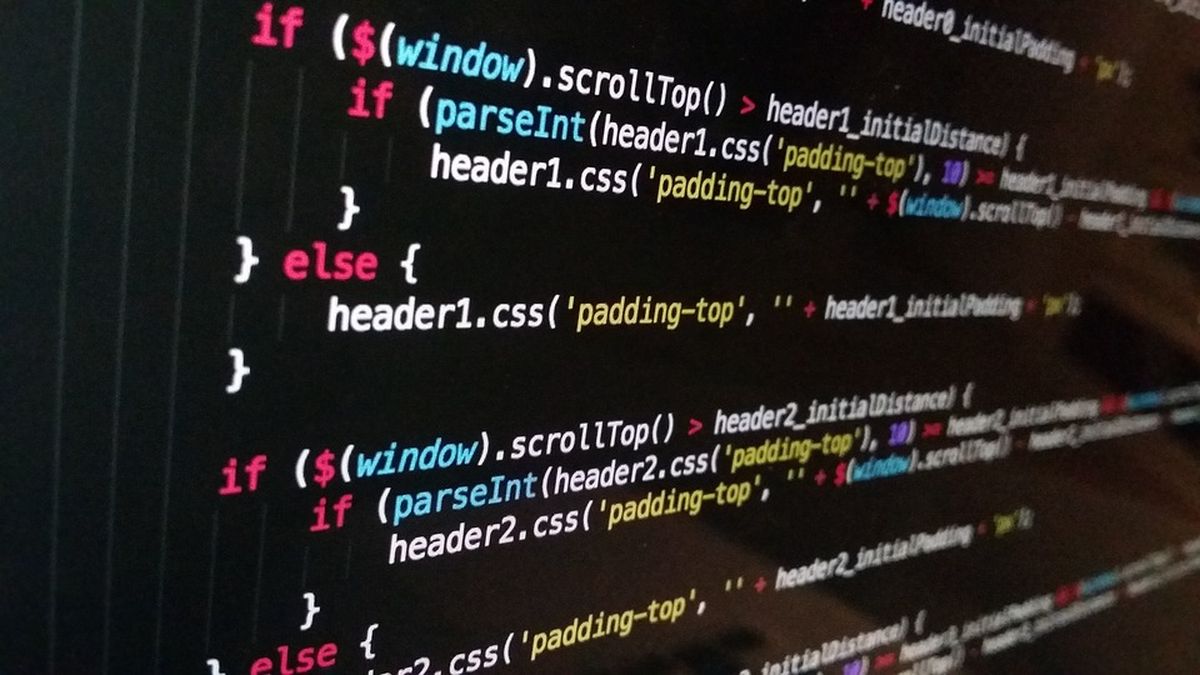
Rank 7109Vibe coding—creating and editing software simply by giving instructions to AI—enables businesses and individuals to unleash their creativity without requiring a developer. Some worry that vibe coding will replace developers, but that’s not the case. This trend proves that programming is evolving, and those who adapt will find more opportunities, not fewer.
The evolution of AI coding
AI-powered coding assistants have been around for a while. They started as “autocomplete” tools, similar to how your phone predicts the next word when you text.GitHub Copilot, Cursor, and similar tools boosted developer productivity by helping them finish lines of code, detect mistakes, and suggest improvements.In fact, software engineering is the field where AI is most commonly applied. To put things in perspective, over 37% of all queries sent to Claude cover tasks like software modification, code debugging, and network troubleshooting.Even major tech companies, such as Google, now rely on AI for coding—more than a quarter of their new code is AI-generated.But vibe coding takes this concept even further. Instead of merely assisting developers, tools like Hostinger Horizons, Lovable, or Bolt.new can now generate complete applications based on user prompts.People with no coding knowledge are creating personal web apps, automating tasks, and even building successful SaaS businesses.This marks a fundamental shift: AI is no longer just assisting developers—it’s taking on entire development tasks.While vibe coding is impressive, it comes with notable limitations that make human oversight essential. However, with research advancing rapidly, AI’s coding capabilities will continue to improve. AI already outperforms humans in creative tasks, decision-making, and some other tasks, so similar progress in software development is inevitable.
What AI currently can and can’t do
Basically, current large language models (LLMs) are advanced text predictors. They analyze patterns and generate outputs based on training data, but unlike humans, they can’t comprehend the meaning of what they generate.AI's lack of true understanding causes several significant limitations:
AI can’t think out of the box to find better solutions on its own. It simply generates code based on given instructions and examples from the training data.AI hallucinates and makes errors. In some cases, a subtle mistake or oversight can require extensive efforts to correct later on.To create a large, complex application, users must clearly explain the app's logic to the AI because it’s unlikely to come up with that structure on its own.
In other words, current vibe coding tools are similar to junior software developers. They help non-developers bring their software ideas to life with minimal effort.That said, complex projects still require more time, deeper expertise, and often the involvement of a professional developer.
The new role of developers
Vibe coding tools are evolving rapidly. In just a few months, we could see significant improvements—bringing them closer to the expertise of mid-level or even senior developers.Nevertheless, AI will need humans to guide it, test, and refine the outputs. This is where the future developers will step in, ensuring AI-generated code is reliable and secure, managing and integrating different AI solutions, and solving complex and unique challenges.AI isn’t a threat but rather a tool to solve tedious, repetitive tasks, allowing developers to focus on new, unique challenges, and create innovations.That’s what we see in our business today. AI fully solves more than half of all client queries, allowing our Customer Success experts to focus more on advanced technical issues.
Adapt or step back
As AI becomes an integral part of software development, the skill set required for developers is evolving. Future-proof developers will need to master AI literacy, prompt engineering, code analysis, debugging, and problem-solving to stay ahead in the job market.This shift also necessitates changes in education. Schools and universities must integrate AI-powered tools into their curricula to ensure graduates are relevant and competitive in the job market.Yet, this transformation is not limited to programming. With 400 million weekly ChatGPT users, it’s hard to imagine any industry without AI, at least in terms of intellectual work.However, rather than replacing human ingenuity, AI helps people be more productive and efficient. Businesses will always need smart people for strategic thinking, decisive action, and driving innovation.The future of coding isn’t about choosing between AI and human developers—it’s about collaboration. The best developers will be those who know how to harness AI effectively.
This article was produced as part of TechRadarPro's Expert Insights channel where we feature the best and brightest minds in the technology industry today. The views expressed here are those of the author and are not necessarily those of TechRadarPro or Future plc. If you are interested in contributing find out more here: https://www.techradar.com/news/submit-your-story-to-techradar-pro
-
Picture from cdn.mos.cms.futurecdn.net
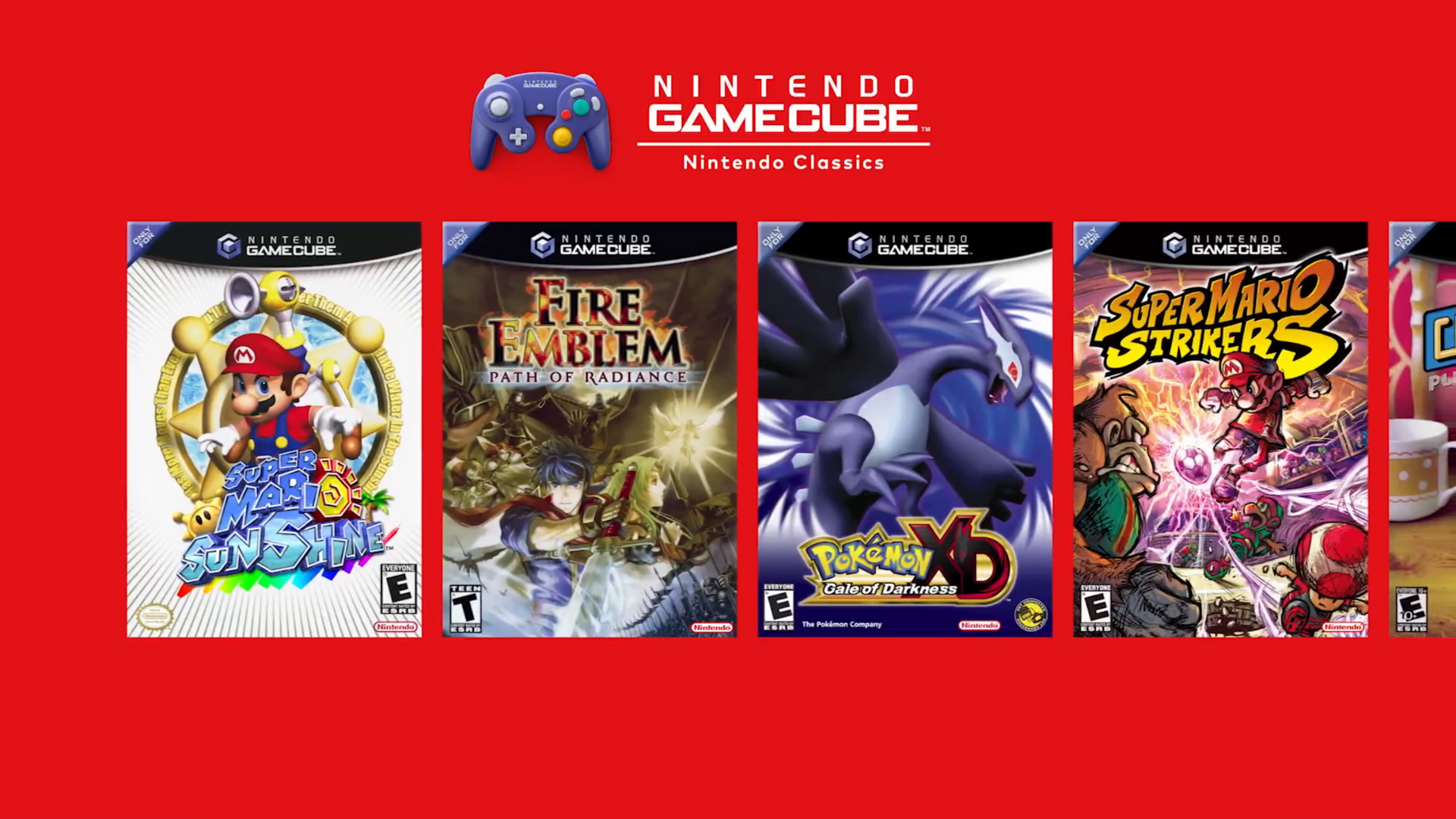
Rank 7110GameCube Classics are headed to the Nintendo Switch 2The first three titles are The Legend of Zelda: Wind Waker, Soul Caliber 2, and F-Zero GX, coming on June 5, 2025Other games like Pokémon Colosseum, Luigi's Mansion, and Pokémon XD: Gale of Darkness
Nintendo’s major Nintendo Switch 2 Direct event was brimming with game releases, but forget about Mario Kart World, FromSoftware’s new The Duskbloods and that sweet five seconds of Silksong footage for a minute and join me in celebrating the two actual biggest announcements: Pokémon Colosseum and Pokémon XD: Gale of Darkness are hitting the new console (alongside other GameCube games).With limited opportunities to capture and train your Pokémon companions adding some real challenge compared to the core series, combined with some incredible music and a unique plot, these spinoffs are my favorites in the whole Pokémon series.And after misplacing my copy of Gale of Darkness (which is very costly to replace on the secondary market) I’m beyond excited to be able to replay both of these titles again soon.
They’re being released via a new GameCube addition to the Nintendo Switch Online + Expansion Pack. This expanded version of the Online subscription includes access to DLC and exclusive classic console game libraries (including the N64 and GameBoy Advance) for $49.99 / £34.99 / AU$59.95 a year.The only downside for Pokémon fans is that while these two best-in-class spinoffs have been confirmed to be launching on the service at some point they won’t be available at the new console’s launch.Instead, The Legend of Zelda: Wind Waker, Soul Caliber 2, and F-Zero GX will be the first trio of GameCube titles to hit the service on the Switch 2’s launch date.One thing to note is that it appears that Nintendo Switch original players with a Nintendo Switch Online + Expansion Pack won’t be able to access these GameCube titles. Instead, the GameCube expansion will be exclusive to Nintendo’s latest console.
Complete the GameCube setup
(Image credit: Nintendo)
To capture the authentic GameCube experience, Nintendo announced it’s releasing a wireless GameCube controller (complete with the new C button) for £58.99 (likely around $75 based on exchange rates; Nintendo has yet to confirm a US price).It’ll only be available through the MyNintendo online store, and – to make things more frustrating – you’ll only be able to preorder one if you’re a Nintendo Switch Online member, and initially it will “only be offered to those invited to pre-order a Nintendo Switch 2 console” according to the MyNintendo UK store.This is presumably a move to prevent scalpers from sucking up all the stock before anyone else can react, so just be prepared to jump through some hoops if you’re keen to get this Switch 2 GameCube accessory.
You might also like
We finally know about the C button on the Nintendo Switch 2 – here’s what it doesWhile we wait for a Bloodborne remake or sequel, FromSoftware just announced The Duskbloods, a brand new Switch 2 exclusiveNintendo Switch 2 specs revealed, and yes, it will support 4K resolution
-
Picture from o.aolcdn.com
Rank 7111Hear me out. I too rolled my eyes when A Minecraft Movie was announced. We're all tired of seeing Jack Black in video game movies — he was fine in Super Mario Bros., but good god Borderlands was a disaster. And the Minecraft film's trailers did it no favors, another soulless movie produced on a virtual set about a game that's completely open-ended and plotless. But it turns out A Minecraft Movie is actually good.
Honestly, I'm as surprised as you are.
A Minecraft Movie isn't exactly groundbreaking, to be clear. It certainly never reaches the heights of The Lego Movie. But it's surprisingly funny for a children's movie, and it delivers a decent message about championing creativity in a world that wants to beat down free-thinking non-conformists. And if you were around for the inexplicable Napoleon Dynamite craze of the mid-2000's, you'll notice plenty of that film's quirky sensibility from director Jared Hess.
From the beginning, A Minecraft Movie seems well aware of the ridiculousness of its own existence. The story starts off with Jack Black's Steve (dressed just like the game's default skin) retelling his obsession with "the mines," and his inability to go digging while he was a kid. He later grows up, gets a boring office job and remembers his erstwhile calling to make holes in the earth. Once he makes his way into a cave, he stumbles into a portal that brings him to the blocky "Overworld" of the Minecraft universe. It's classic isekai stuff — the genre of anime where the main character is transported to another (often digital) world.
And yes, I know all of this sounds incredibly contrived as I write this, but Black's zaniness really sells the absurdity of the film. It's as if he's saying out loud, "Yes, I know the idea of a Minecraft movie is beyond dumb, but at least you get to spend time with me in classic Jack Black mode!" Now if you're tired of his schtick, that may be a major knock against the film. But for me, it was a nice reminder of his Tenacious D days.
Warner Bros.
The film eventually focuses on two siblings, Henry (Sebastian Hansen) and Natalie (Emma Myers), who are moving to a small Midwestern town after the death of their mother. Natalie is gearing up for a social media producer role at a local business, while Henry is forced to adapt to a new school. Coincidentally, a former gaming superstar lives in their town, Jason Mamoa's Garret "The Garbageman" Garrison, who befriends Henry as another outcast. Danielle Brooks' Dawn, a struggling local realtor/mobile zookeeper, ends up taking Natalie under her wing after seeing how much she's sacrificing for her brother.
Inevitably, thanks to a glowing MacGuffin, those four characters also stumble into the same portal that sent Steve to the Overworld. They quickly run into Steve, break their glowing MacGuffin and then head off to find a way to fix it and return home. If any of this sounds boring, don't worry, it's not really important. What works best in A Minecraft Movie is the humor and personality Hess stuffs in between the trappings of a big budget Hollywood game adaptation.
Warner Bros.
The majority of the film hinges on Jack Black's persona, but I also enjoyed seeing Jason Mamoa play an egotistical manchild who's in love with video games. He's decked out in an absurd wig and hot pink jacket, and Mamoa hams it up just as well as he did Fast X. He's a jerk at times, but he's also kind to Henry and clearly doesn't care what anyone thinks of his personal style. The rest of the cast mostly plays it straight against the force of Black and Mamoa's personalities, but they each get a few moments to shine.
Whenever the core story starts to fall flat, A Minecraft Movie veers into more interesting territory, like a hapless Minecraft villager who stumbles into the real world. For those who don't play the game, villagers are simple NPC who can't speak, and often find themselves in danger. I got a kick out of seeing him navigate traffic and have a meet-cute with Jennifer Coolidge's Vice Principal Marlene, a relationship that gets weirder than you'd think. (Again, it's like something straight out of Napoleon Dynamite.)
Warner Bros.
I’m no Minecraft devotee, but I wish the film’s interpretation of the game’s blocky graphics were a bit more pixelated. While the characters and animals we see resemble their game counterparts, their over-designed look clashes with the beautiful simplicity of Minecraft’s aesthetics. I’m sure it’s tough to unite the low-poly look with live action, while also delivering polished CG that audiences expect, but the path A Minecraft Movie took just feels over-cooked. That being said, the film’s game world seems more alive than the empty virtual sets in Quantumania. There are tons of characters milling about, and the environments all feel distinctly Minecraft.
The kids in my press screening didn’t seem to mind the shift in visual language. They loved seeing the game’s creatures in any form — a family of pandas got a theater-wide “awww.” And they also loved seeing in-game Minecraft tricks represented on the big screen, like using a water block to cushion a fall.
My daughter Sophia’s verdict? “I liked it, but I don’t think I’d want to see it again,” she said. But I know she’s lying. We’ll likely end up seeing this thing hundreds of times at home, and even more so once her brother jumps aboard the Minecraft bandwagon. I won’t mind, though. As far as kid’s movies go, it’s a world I wouldn’t mind revisiting.This article originally appeared on Engadget at https://www.engadget.com/entertainment/tv-movies/a-minecraft-movie-review-its-good-actually-190035499.html?src=rss
-

Picture from techcrunch.com
Rank 7112 -

Picture from techcrunch.com
Rank 7113 -
Picture from cdn.mos.cms.futurecdn.net
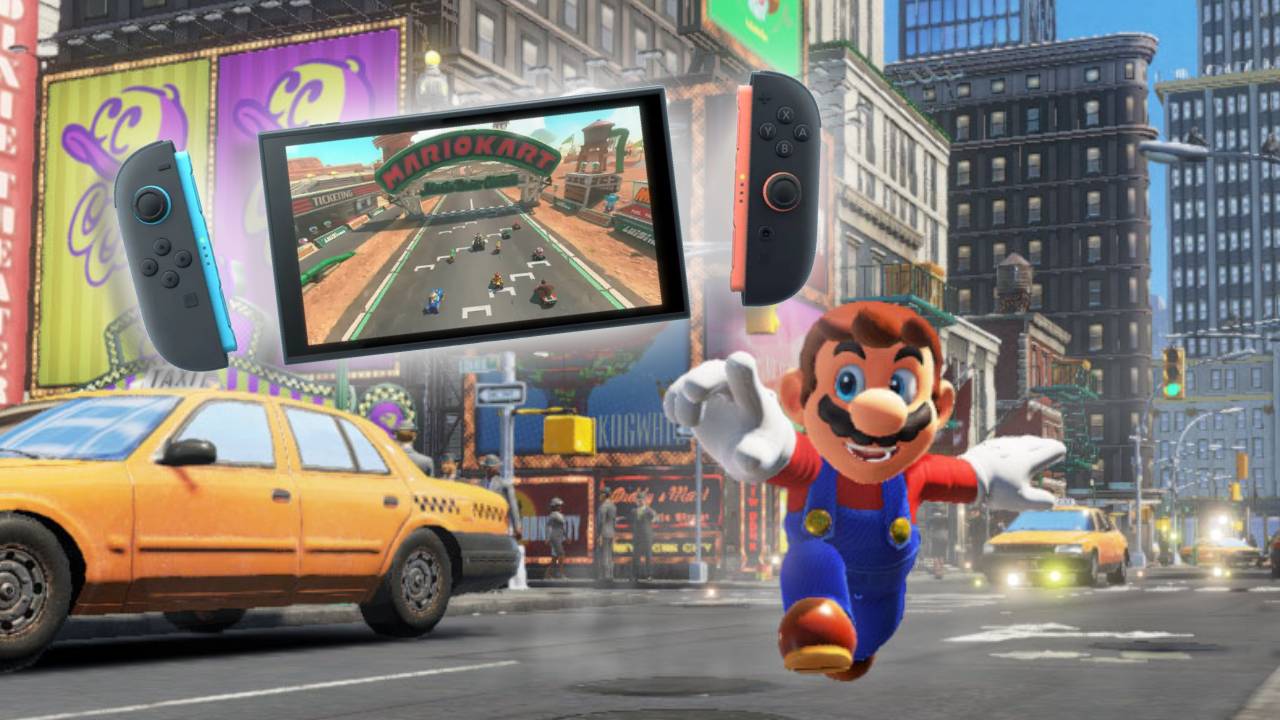
Rank 7114If you’ve got your eyes on the Nintendo Switch 2 and are in the US, Best Buy might be your best place to secure the hybrid console.That’s because Best Buy will open at midnight ET / 9pm PT on launch day so that those who secure a pre-order can pick up the console as soon as possible on June 5.The pre-orders are set to start on Wednesday, April 9, and to be in the best position to get the Switch 2 as soon as possible, you’ll want to pre-order through the BestBuy.com website or the Best Buy Mobile App.
Best Buy is one of the best places to pre-order gaming gear, and we envisage it being the same for the Nintendo Switch 2 - it should have plenty of stock, too, we hope. All you can do at the minute, though, is register your interest
“There are some moments gamers don’t forget, and one of those is the excitement and anticipation that comes with being one of the first to get the hot new console on launch night,” said Patrick McGinnis, chief merchandising officer at Best Buy. “We can’t wait to bring that moment to life with the Nintendo Switch 2, and help customers level up their gaming experience.”There’s more good stuff, too, if you’re a My Best Buy Plus or My Best Buy Total member. For every $150 spent on Nintendo hardware, accessories, and games, you can get a $20 Best Buy certificate, ramping up to $100 worth. There’s a caveat: This offer is only valid from April 2 to August 3.While I expect the Switch 2 to be offered by a whole range of the big US retailers, I’d cautiously suggest that Best Buy might be one of the best places to go to in order to secure the new Nintendo console; the retailer tends to be one the the companies that has healthy amounts of stock for such devices.Given the massive success of the original Nintendo Switch, if you’re super-keen on the Switch 2, I’d suggest you be prepared to get a pre-order in so that you’re not left disappointed on its release day.And as a reminder, the Switch 2 on its own will be $449.99 or $499.99 with a download code for Mario Kart World.
You might also like
Nintendo Switch 2 Direct live: The Duskbloods revealed, plus release date, price and a full recap of everything announced todayThe Nintendo Switch 2 Pro Controller has been revealed offering a bunch of improvements over its predecessorMario Kart World officially revealed as a Nintendo Switch 2 exclusive
-
Picture from cdn.mos.cms.futurecdn.net
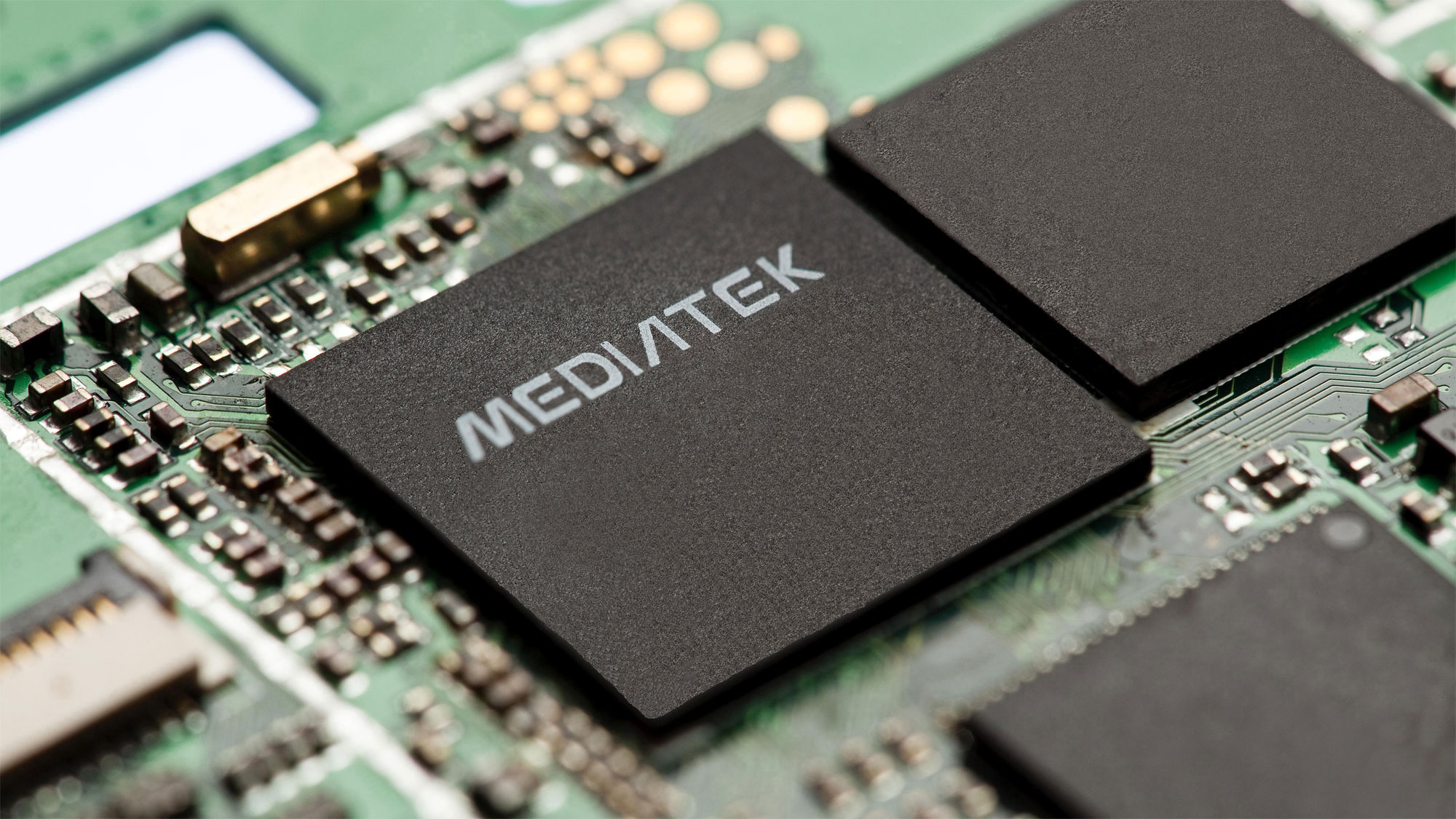
Rank 7115MediaTek challenges Broadcom in Google's evolving AI hardware strategyNext-gen TPU aims for better AI processing and lower costsGoogle diversifies AI chip supply, reducing reliance on Broadcom
MediaTek and Google will collaborate to develop the next-gen tensor processing units (TPUs), a move which means Google will likely be reducing its reliance on Broadcom in its AI tools hardware business strategy. The aim of this collaboration is to design an affordable and energy-efficient TPU, produced by TSMC and will likely launch as part of Google’s 7th-gen TPU series.While Google will lead the overall design, MediaTek will handle input/output modules to facilitate communication between the processor and peripherals, marking a shift from Broadcom’s previous role in TPU core development, though Google is not cutting ties with Broadcom entirely.
Developing more efficient AI processors
Google’s TPUs, designed for demanding AI computations and essential for training the best LLMs, will reportedly see improved efficiency and performance, addressing the increasing demand for powerful AI processing.Google has been developing its own AI server chips for internal use and cloud services to reduce reliance on external providers like Nvidia, whose dominance in AI hardware contrasts with Google’s push for a more self-sufficient ecosystem through TPU investments.Meanwhile, Mediatek has been expanding its presence in AI chip development, including partnerships in AI supercomputers.Ine arly 2025, the company announced an AI supercomputer project collaboration, with its latest partnership with Google aligning with its broader strategy to strengthen its position in the AI industry.If this collaboration is successful, it may influence the development of the best LLM models by making AI processing more efficient.Via UDN
You may also like
These are the best mobile workstation you can buy right nowWe've also listed the best portable monitors for every budget and resolutionMicrosoft skirts around rumors that it has cancelled several data center projects worth billions of dollars
-
Picture from o.aolcdn.com
Rank 7116The Nintendo Switch 2 had its big debut on Wednesday, and the new console looks to be a sizable, if mostly straightforward, upgrade over its mega-popular predecessor. Tucked between the new Donkey Kong and (pricier) Mario Kart games, mouse mode and overhauled party chat features, though, was another significant update: The device supports faster microSD Express cards. This may not be the sexiest feature, but it should bring quicker load times and generally improved storage performance to the upcoming handheld. The company briefly showed new 256GB cards from Samsung and SanDisk during its presentation, complete with Mario logos printed on.
However, the news came with a major caveat: The console is only compatible with microSD Express. The cards most people use today — which are based on the older UHS-I bus interface — will only work for loading videos and screenshots from an original Switch, not playing games, according to Nintendo’s support site. Nintendo says this restriction is necessary to preserve the Switch 2’s performance upgrades, and it’s worth noting that the console itself comes with a much more generous 256GB of space by default. But if you ever need to expand the device’s storage, this change will likely make doing so cost extra, while drastically shrinking the options you have to choose from.
Unlike traditional UHS-I cards, a microSD Express card like the SanDisk model on the right comes with a second row of pins on the back.
Jeff Dunn for Engadget
What are microSD Express cards?
SD Express is a relatively recent but seldom-used standard that lets SD cards take advantage of the NVMe protocol and PCIe interface, which is the underlying tech used by SSDs. A microSD Express card has a second row of “pins” on its back and can utilize a single lane’s worth of PCIe bandwidth. As a result, it can produce dramatically faster read and write speeds than its UHS-I counterparts. Whereas the latter advertise sequential transfer rates up to 104 megabytes per second (MB/s), microSD Express cards have a theoretical maximum of 985 MB/s.
That’s far behind the NVMe SSDs used by the PlayStation 5 and Xbox Series X, but in theory, it makes Express cards faster than some older SATA-based SSDs when it comes to loading game levels, retrieving saves or copying games to the external storage. It’s worth noting that many UHS-I microSD cards can exceed the 104 MB/s limit with proprietary card readers, but they still fall well short of microSD Express levels even with those. The same goes for speedier UHS-II cards, which are mostly used by professional types with select cameras and PCs and max out at 312 MB/s. (There’s also a UHS-III interface, but nobody uses it. Getting all of this?)
Prior to Wednesday, the only reliably available microSD Express card we could find was this model from SanDisk. We recently tested it for our microSD card buying guide, and the upgrade was pretty dramatic. In the synthetic benchmark CrystalDiskMark, the SanDisk card achieved sequential reads up to 899.12 MB/s and sequential writes up to 650.41 MB/s. For comparison, the absolute fastest UHS-I card we’ve tested (Lexar’s Professional Silver Plus) topped out at 209.25 MB/s for reads and 193.93 MB/s for writes — so, three to four times slower.
In one of our “real-world” tests, the SanDisk Express card took an average of 20 seconds to move a 12GB folder containing various file types and subfolders to a PC and 52 seconds to write the folder back to the card. The Lexar card averaged 67 and 76 seconds, respectively. The gulf in random speeds — which measure how quickly a card can read and write small bits of data scattered throughout a device and tend to be particularly important for gaming — was similarly large, and in some benchmarks even greater.
SanDisk's microSD Express card is one of the (very) few options you can actually buy today.
Jeff Dunn for Engadget
Nintendo has not provided any official transfer speed ratings for the new console just yet, but all of this suggests that the Switch 2’s storage should be much faster than before, even if it’s not on par with the speeds of a PS5 or Xbox Series X. It’s also possible that, like those other consoles, the Switch 2 has hardware dedicated to decompressing files, which could make the real-world improvements over the original Switch’s storage performance even greater. (We’ve reached out to Nintendo and will update this post if we receive any further details.)
The original SD Express standard was released in 2018, but the tech has mostly gone nowhere in the years since. There’s been the SanDisk card noted above, a full-size SD card from ADATA and not much else. Previously, Samsung and Lexar announced microSD Express cards that wound up missing their original release windows — though Samsung’s card may just be the same one unveiled today, and Lexar did release a new “Play Pro” microSD Express card on Wednesday.
Host devices that support the standard, which are required to even see any improved speeds, have been highly uncommon over the same time frame. (If you put a microSD Express card in a device that doesn’t support the underlying tech, such as the original Switch, it’ll be limited to standard UHS-I speeds.) And while compatible card readers can deliver the faster transfer rates on certain PCs, they aren’t cheap, so at that point most people have been better off buying a faster external SSD.
The SD Association pointed us to a LinkedIn page (!) with other compatible devices when reached for comment, but the pickings are still slim, and very few of those support microSD Express cards specifically. The Switch 2 is by far the highest-profile device to embrace the standard, so it could be the thing that finally takes these cards from “cool idea” to “useful niche.”
The Samsung and SanDisk microSD Express cards Nintendo quickly teased during its Switch 2 unveiling on Wednesday.
Nintendo
Questions of price and heat
That said, there are multiple reasons why SD Express has failed to take off before this week, and it remains to be seen whether the Switch 2 will truly fix them. First and foremost is price. We’ve reached out to SanDisk and Samsung for confirmation, but for now we don’t know how much the microSD Express cards that Nintendo has teased will cost. If the couple other Express models available today are any indication, though, they’re likely to be much more expensive than the conventional cards you may have bought for the previous Switch.
SanDisk’s Express card, for instance, costs $45 for a 128GB model and $60 for the 256GB version. The 256GB Lexar Play Pro is $10 cheaper, but its 512GB and 1TB versions cost a whopping $100 and $200, respectively. For reference, Samsung’s Pro Plus — another UHS-I card we recommend in our buying guide — costs $17 for 128GB, $23 for 256GB, $38 for 512GB and $80 for 1TB as of this writing. That’s a huge difference.
What’s more, the Play Pro is the only purchasable microSD Express card we’ve seen thus far that even supports capacities greater than 256GB. Nintendo says the console can support up to 2TB of external storage, but no Express card with that capacity appears to exist yet. The Switch 2 will be one of the first mainstream devices to truly push SD Express in earnest, so we’d expect it’ll drive prices down and increase competition over time. But how quickly, and by how much, remains up in the air.
Nintendo
The other concern relates to thermal management. MicroSD Express cards can pump out significantly faster transfer speeds, but they’re still working with tiny little frames that don’t leave much room to dissipate heat. When we tested SanDisk’s microSD Express model for our guide, we noticed that it slowed down under longer, more sustained loads — not enough to fall behind than UHS-I cards, but still below its peak by a few hundred MB/s.
The SD Express spec does have mechanisms for keeping heat in check, and manufacturers like SanDisk advertise similar protections. Nintendo presumably has come up with ways to further avoid severe throttling with the Switch 2. (We already know that the new dock comes with a cooling fan built in, for instance.) But it’ll be something to keep an eye on once we can move large game files around the device.
In a developer Q&A posted to Nintendo’s website on Wednesday, Switch 2 producer Kouichi Kawamoto notes that the move to microSD Express will help the console’s performance hold up better in the long-term. With the new Mario Kart World, for instance, he says the faster transfer speeds will help make far-off destinations in the game’s open world visible faster. He also notes that Switch 2 games will have larger file sizes, but that he “doubt[s] most people will need a microSD Express card immediately after buying the system” thanks to the Switch 2’s larger built-in capacity.
Hopefully that’s the case. It’d be unfair to call this a PlayStation Vita situation, as that portable console relied solely on proprietary memory cards, and the Switch 2 will support options from several third-party manufacturers. But as it stands now, storage upgrades for the new console look like they’ll be much pricier and more limited to start. And just how much of an advantage the new tech provides is something we won’t know until the console arrives in June.
This article originally appeared on Engadget at https://www.engadget.com/gaming/nintendo/the-nintendo-switch-2-promises-major-storage-upgrades-but-itll-cost-you-193758964.html?src=rss
-
Picture from o.aolcdn.com
Rank 7117It seems fitting that Nintendo didn’t reveal the Switch 2’s $450 price during its Direct stream this morning — it would have just bummed everyone out. After spending an hour hearing about how the Switch 2 practically fixes almost every problem we had with the original console, and seeing teasers for exciting games like Mario Kart World, why spoil the good vibes with the harsh reality of market economics? Instead, Nintendo revealed the console’s price in the lowliest of media communications: A simple press release.
My first reaction was shock. $450 for a mostly portable console? That’s the same retail price as the PlayStation 5, a system that’s also currently on sale for $400 together with Astro-Bot. Sure, the Switch 2 is vastly superior to the original Switch, but it likely doesn’t have PS5-level hardware. The price jump is also surprising since the original Switch launched at $300 in 2017. Can you imagine we thought the $350 Switch OLED was too high-priced?
Unfortunately, it’s not 2017. NVIDIA now has mid-range GPUs selling for upwards of $600, the cost of almost every product has gone up, and massive companies like Nintendo are bracing for the potential impact of the Trump administration’s long-threatened tariffs.
A $450 Switch 2 is expensive, I’m not denying that. But in the current economic landscape, I would hesitate to call it too expensive.
Nintendo
Consider this: The Switch 2 is just $50 more than the cheapest Steam Deck, a portable PC gaming handheld with significantly slower hardware, a smaller and lower quality (7-inch, 1280 by 800, 60Hz) screen, and a much bulkier frame. The Switch 2, meanwhile, is just as thin as the original model, it has a 7.9-inch 1080p screen that can run up to 120fps with HDR, and it’s powerful enough to play games at up to 4K/60fps while docked. Based on the games we’ve seen so far, the Switch 2 seems surprisingly powerful for its size.
The Switch 2 also improves on its controls with the Joy-Con 2, which now magnetically attach to the consoles, feature larger analog sticks and can also work as mice across a variety of services. You won’t be removing the Steam Deck’s controls without the use of a small saw. And I’ve yet to see a handheld PC maker deliver removable controls that are as comfortable and easy to use as the original Switch (that means you, Lenovo). Nintendo’s original Joy-Con were far from perfect, but they did the job, and I’d wager the company has learned enough to make the Joy-Con 2f even better.
Nintendo
And while you can technically dock other PC gaming handhelds, they won’t see the performance upgrade Nintendo is claiming with the Switch 2. The company says its new console can reach up to 4K/60fps for some titles, thanks to an additional fan in the dock. We don’t know exactly what’s powering the Switch 2 yet, so Nintendo could be drastically overselling its capabilities. But given how seamless docking worked on the first Switch (where it also delivered a bit of a performance upgrade, sans an additional fan), it’s also something I think Nintendo has optimized more than PC companies, who are only just now dipping their toes into portable gaming.
Maybe I’m just trying to justify my own purchases (I just realized I’ll probably need a second Switch 2 for my kid), but I just can’t get too angry about a $450 Switch 2. If we see many more $80 games like Mario Kart World, though, we should absolutely riot in the streets.This article originally appeared on Engadget at https://www.engadget.com/gaming/nintendo/is-the-450-nintendo-switch-2-too-expensive-195750206.html?src=rss
-
Picture from cdn.mos.cms.futurecdn.net
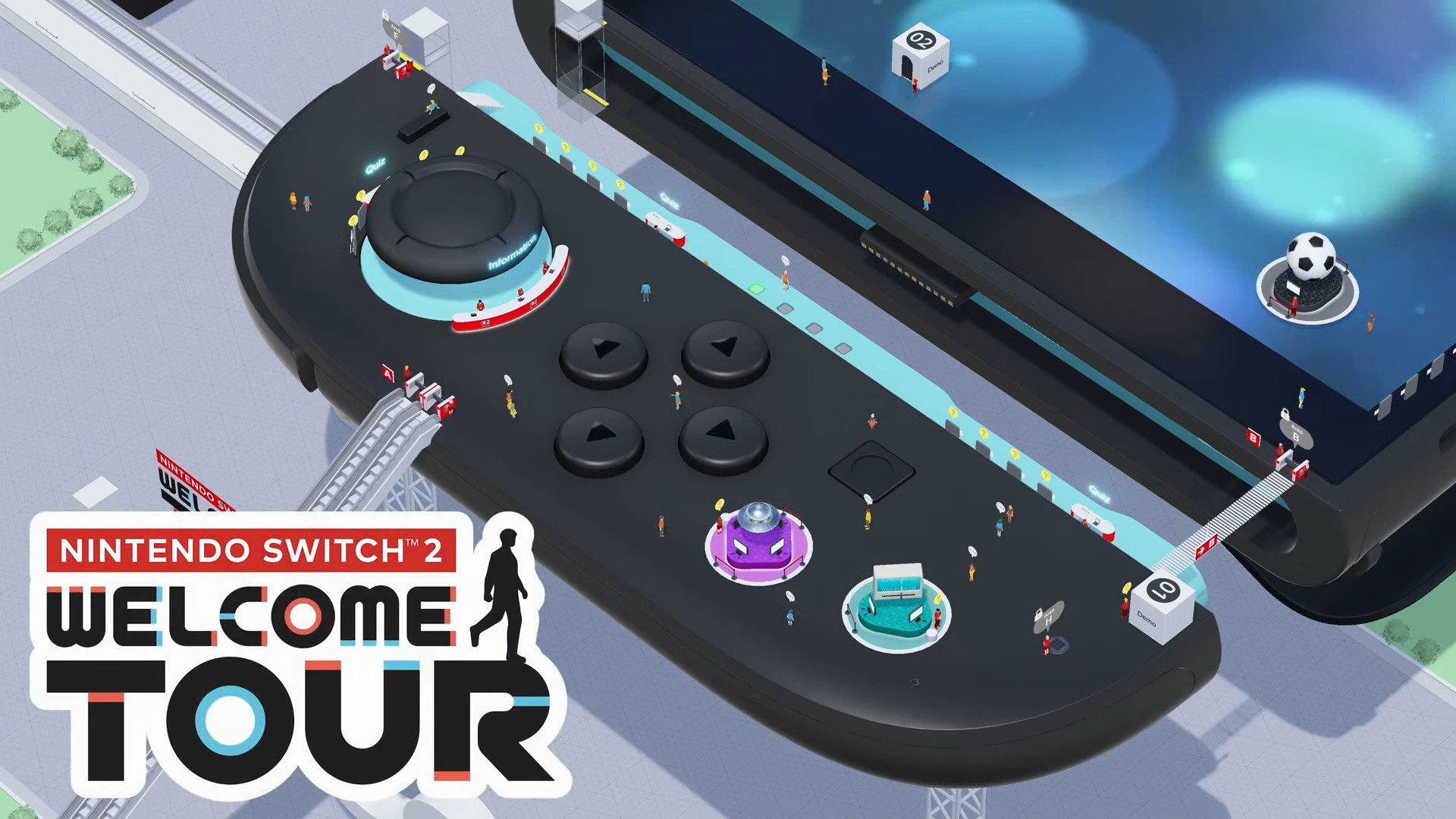
Rank 7118The Nintendo Switch 2 Direct has been a rollercoaster of emotions with highs like the GameCube game announcements for Switch Online and the Mario Kart World showcase, and then lows like the eye-wateringly high prices.The Nintendo Switch 2 will cost $449.99 in the US or £395.99 in the UK (AU pricing is TBC), games like Mario Kart will set you back $79.99 / £74.99, and that cute Welcome Tour title that will explain the console’s features to you? You'll have to pay for that as well.Cue the Michael Scott reaction:
That can’t be true, you must be thinking. I thought the same, but the official Nintendo of Europe account on Twitter – complete with Gold verification checkmark – described it as a “a paid downloadable launch title for Nintendo Switch 2.” There’s no more solid confirmation than hearing it from Nintendo itself.
Discover all the secrets inside your new console with #NintendoSwitch2 Welcome Tour, a paid downloadable launch title for Nintendo Switch 2. pic.twitter.com/X4SqIPDRtJApril 2, 2025
When the Direct’s Welcome Tour trailer showed us a handful of minigames and digital information desks detailing overly in-depth information on the magnets in the new Joy-Cons my initial reaction was that it looks like a harmless interactive manual and eventual bloatware – the sort of software we’ll hop into for a few minutes while we wait for our actual games to finish installing and eventually delete when we run out of Switch 2 storage.It didn’t once cross my mind that Nintendo would charge anyone to 'play' Welcome Tour. Pricing has yet to be confirmed, but frankly even $1 / £1 feels too high.
I know this title would have taken time to develop and to fill with demos and info, but surely its cost could have been eaten up by the high Switch 2 price? Right?I was cautiously excited for the Nintendo Switch 2, and the Direct mostly morphed that into true anticipation. June 5, 2025 was marked on my calendar, and as hype grows I could see myself putting in a preorder despite my promise to myself that a new Mario Kart wouldn’t be enough of a draw.Now, with this Welcome Tour announcement, and several other missteps, I’m just feeling deflated by the whole launch. Hopefully my frustrations will mellow out in the coming days, but in the Switch 2 vs Steam Deck battle, in my mind the Nintendo console is in a losing position for now.
You might also like
We finally know about the C button on the Nintendo Switch 2 – here’s what it doesWhile we wait for a Bloodborne remake or sequel, FromSoftware just announced The Duskbloods, a brand new Switch 2 exclusiveNintendo Switch 2 specs revealed, and yes, it will support 4K resolution
-

Picture from techcrunch.com
Rank 7119 -
Picture from o.aolcdn.com
Rank 7120Sonos has given two of its audio products price cuts. The Era 100 smart speaker and Ray soundbar now retail for $199. The change offers new customers a $50 savings for the Era 100 and $80 on the Ray. Both speakers would frequently show up on sale, but Sonos has confirmed that this is a permanent pricing change for the products.
These items have been available for a few years, so the price drop might signal that a refresh is in store for both. When it debuted in 2023, the Era 100 was an upgrade on the Sonos One, bringing overhauled touch controls and even better audio quality to the same cylindrical form factor. At $200, it's now selling for what the Sonos One cost, making it a solid choice for a home speaker. The Ray came out in 2022, offering a solid home theater performance without the most high-end audio or accompanying high-end price tag.
This article originally appeared on Engadget at https://www.engadget.com/audio/speakers/sonos-cut-retail-prices-for-its-era-100-speaker-and-ray-soundbar-201049055.html?src=rss
-

Picture from techcrunch.com
Rank 7121 -
Picture from cdn.mos.cms.futurecdn.net
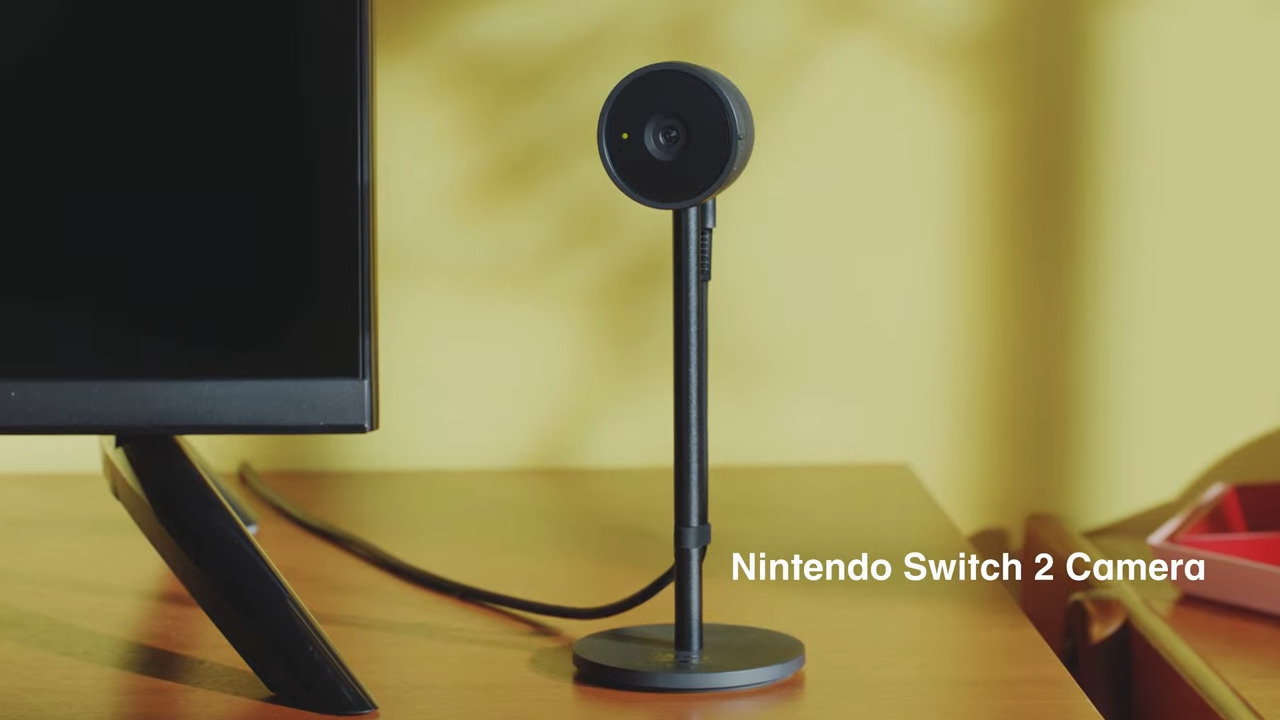
Rank 7122Following the Nintendo Switch 2 Direct, we've got our first glimpse at how Nintendo might make use of its new top-mounted USB-C port.When Nintendo unveiled the new Switch 2, the secondary USB-C port caught my attention. No, not because I want a more convenient charging port for playing in tabletop mode or because I use wired controllers and can't be bothered to re-plug them into the dock's USB-C ports.Instead, I was mostly excited by what this new port could represent for the Switch 2's future accessories, and Nintendo delivered with its new Nintendo Switch 2 Camera.
(Image credit: Nintendo)
As part of its latest livestream, Nintendo unveiled GameChat, which utilizes the new Camera for video calls, in-game AR features, and emotes. It'll be available at launch – June 5, 2025 – for $49.99 / £49.99.As of this writing, we haven't seen any single-player games use the camera, but in time, you may be able to use it for motion-capture games like the good old heyday of EyeToy and Kinect gaming.My hope, however, is that the Camera is only the beginning. I'd love to see the likes of the Super Scope 6, the Game Boy Camera and Pocket Printer, or even the Wii's Balance Board.In an otherwise slightly underwhelming Direct with no major first-party launch titles to catch my eye beyond Mario Kart World, this second USB-C port and its peripheral potential remains one of the most interesting developments in the console.
You might also like
Nintendo Switch 2 specs revealed, and yes, it will support 4K resolution - as well as a host of other upgrades over the originalWhile we wait for a Bloodborne remake or sequel, FromSoftware just announced The Duskbloods, a brand new Switch 2 exclusiveGet ready, Tarnished! Elden Ring is coming to the Nintendo Switch 2 this year
-
Picture from o.aolcdn.com
Rank 7123In 2002, Microsoft launched Xbox Live with built-in voice chat as one of the main selling points of the then new service. Now, nearly 25 years later, Nintendo is finally giving its fans an easy way to talk to their friends online over a friendly match of Mario Kart World.
Considering some of the solutions Nintendo has offered in the past, GameChat is surprisingly elegant. A tap of the Switch 2's new C button, conveniently located below the Home button on the right Joy-Con, brings up a dedicated interface that allows you to quickly start screensharing, mute and unmute your mic and, if you decide to buy the optional Switch 2 Camera, enable video.
What's more, the Switch 2 has a built-in mic. We'll need to test the handheld to see how well the microphone performs in a noisy environment; Nintendo touted its noise-reduction features in today's introduction. But if nothing else, kudos to Nintendo for realizing it couldn't release a new console in 2025 without voice chat built-in and making that feature standard on all models.
However, if the demo Nintendo showed off today is any indication of the final product, the company has some work to do. Voice chat looks like it works well enough, with users allowed to invite up to 11 other people to join their conversation. That said, screen sharing and video chat look very rough.
When everyone in the video started streaming their gameplay, it looked like the games were running at less than 30 frames per second, making it difficult to see how it would be possible to use the feature to guide a friend through a tricky section, like Nintendo suggested in the demo. Video chat was equally janky, with the footage from the Switch 2 Camera looking like something captured by a webcam from the mid-aughts. Moreover, if you want to see your friend's screen, there's an additional tradeoff.
Nintendo showed off three different interface options, with two of them devoting a fair amount of screen space to tiles for your friends. I imagine this won't be a problem if you're playing on a TV, but even on the Switch 2's large 7.9-inch screen, the interface looks like it could get cramped fast.
To Nintendo's credit, the company has thought a lot about parental controls, with features that allow parents and guardians to decide who their kids can chat with online and if they can join a session with video. But the thing is none of GameChat’s capabilities are new. They've existed in apps like Discord for years, which begs the question why some of them look so rough this close to launch.
Nintendo has time between now and June 5 to polish GameChat, but in 2025, making a technically competent chat app shouldn't be so hard. Of course, I imagine most of the Switch 2's audience won't care if some of GameChat's features are half-baked. For the rest of us, the company plans to offer the feature for free until the end of March 2026. One would hope that's enough time for the company to catch up on two decades worth of progress in online gaming.This article originally appeared on Engadget at https://www.engadget.com/gaming/nintendo/gamechat-is-decades-late-and-looks-pretty-janky-202309823.html?src=rss
-

Picture from techcrunch.com
Rank 7124 -

Picture from cdn.mos.cms.futurecdn.net
Rank 7125Semimetals promise more efficient conductivity, outperforming copper in energy useCopper’s limitations drive the search for semimetals like niobium phosphideNiobium phosphide conducts electricity better, even at nanometer thicknesses
For nearly two centuries, copper has been the standard for electrical conductivity, used in wiring, microelectronics, and computing - but as electronic devices become portable power stations, it's clear that copper is reaching its physical limits.To that end, recent research at Stanford University has shown niobium phosphide can outperform copper in ultra-thin films, making it a promising candidate for nanoscale electronics.Researchers are exploring semimetals as a potential alternative because these materials possess unique electronic properties that could enhance efficiency, minimize energy loss, and improve performance in next-generation technology.
Unlocking new possibilities in conductivity
Unlike traditional metals, semimetals such as niobium phosphide exhibit distinctive band structures and topological properties, allowing for improved electron transport.Niobium phosphide (NbP) thin films exhibit much lower resistivity than copper at nanometer scales. As the film thickness decreases, the resistivity of NbP decreases as well, reaching just one-sixth of copper's resistivity at a similar thickness.At approximately 1.5 nanometers, NbP has a resistivity of about 34 microohm-centimeters at room temperature, significantly outperforming copper’s resistivity of around 100 microohm-centimeters at similar scales.“Better materials could help us spend less energy in small wires and more energy actually doing computation,” said Eric Pop, a professor at Stanford’s School of Engineering.The problem with copper is that it becomes less effective as it gets thinner, particularly below 50 nanometers, and struggles to handle rapid electrical signals, resulting in energy loss as heat, yet the Stanford team discovered that NbP, even at just five nanometers thick, conducts electricity more efficiently than copper due to its topological nature, where the material’s outer surface is more conductive than its core.“Now we have another class of materials – these topological semimetals – that could potentially act as a way to reduce energy usage in electronics,” said Akash Ramdas, a doctoral researcher involved in the study.One of the key advantages of niobium phosphide is its compatibility with existing semiconductor technologies, as it can be deposited at just 400°C, a temperature low enough to avoid damaging silicon chips. This means it could be integrated into current manufacturing processes without requiring expensive redesigns.The Stanford team is now exploring other topological semimetals that could further improve performance and efficiency.“This kind of breakthrough in non-crystalline materials could help address power and energy challenges in both current and future electronics,” Pop explained.However, there are challenges in making NbP a viable commercial material, such as maintaining the correct layer tolerances during production, as variations in the thickness of the seed Nb layer can impact the resistivity and quality of the NbP film.As the demand for smaller, faster, and more energy-efficient devices grows, semimetals could play a crucial role in shaping the future of microelectronics. If research continues to advance, nanometer-thick semimetal conductors may soon replace copper in high-performance computing, setting a new standard for electrical conductivity.Via IEEE Spectrum
You may also like
These are the best business laptopsWe've also listed the best laptops for working from homePalo Alto firewall hack: network security policy management is no longer optional
-
Picture from cdn.mos.cms.futurecdn.net
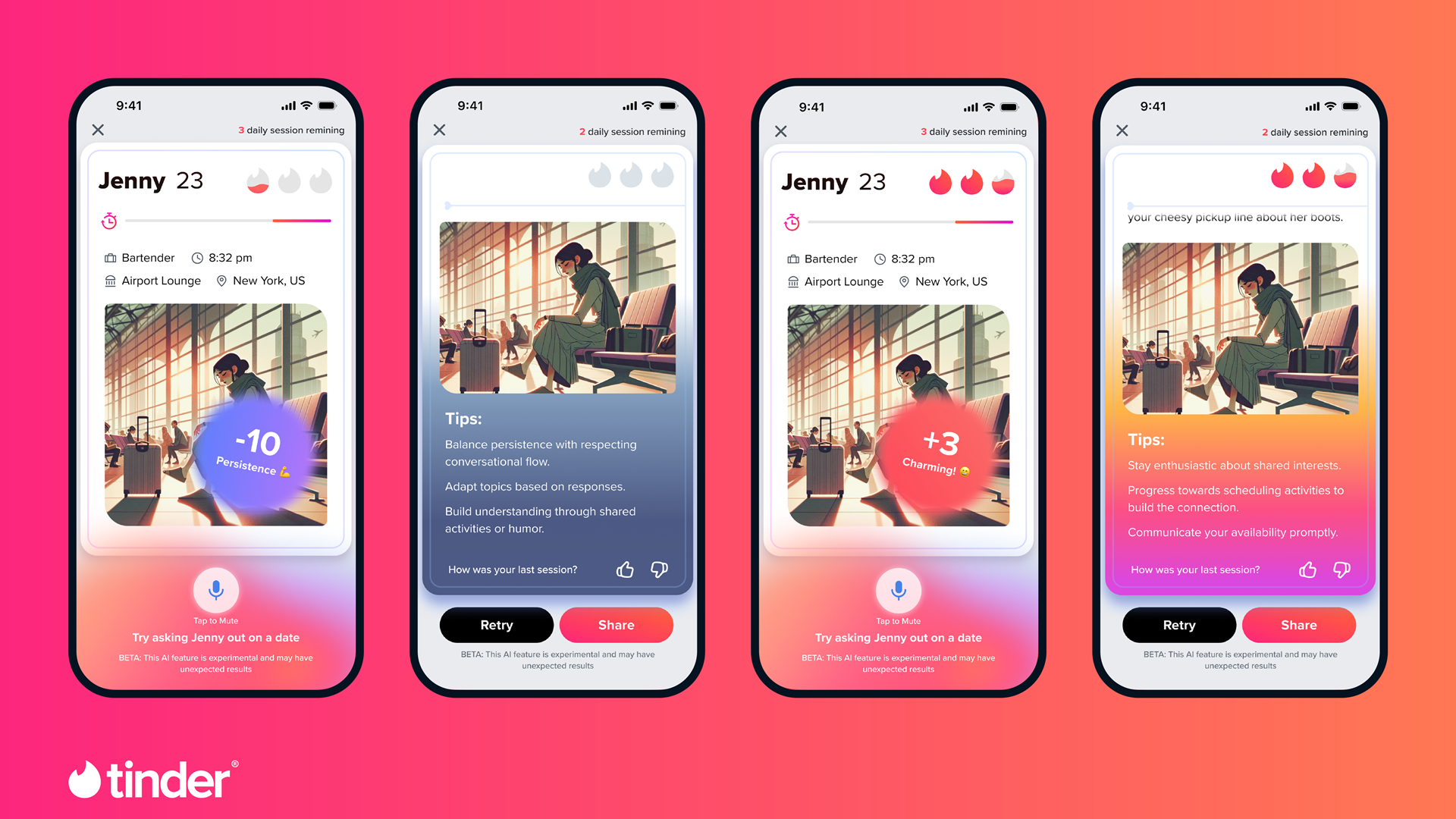
Rank 7126Tinder’s new Game Game feature lets users practice flirting with AI personasThe voice-based encounters provide real-time feedback on your charmUsers are rated on a three-flame scale to gamify the experience
I'm very happily married, but the memories of excruciating anxiety in attempts to flirt are carved into my brain forever. Just getting up the nerve to start a conversation felt like a victory. Perhaps it would have felt less intense after practicing with someone who has absolutely no chance of rejecting me, like, say, an AI character. That's what Tinder thinks. The dating app has released an AI-powered experiment called 'The Game Game,' which produces artificial conversational partners and fictional situations for you to practice those pick-up lines.Despite the April 1st release, The Game Game is a no-fooling real voice-based feature built into Tinder’s iOS app. Using OpenAI’s GPT-4o AI model, the feature lets you practice flirting with AI characters. Play out a scenario like you’re at an airport, and your AI-generated love interest has accidentally picked up your identical suitcase. Sparks fly. You charm them. Or at least, you try.You access it by tapping the Tinder logo in the corner of the app, where you're dealt a stack of virtual cards. Each one contains a random persona, albeit one based on your age and other preferences. That persona is matched to an often cheesy meet-cute scenario in a random location. Whatever it is, the AI initiates the conversation, and you respond with your voice.And the voices are all different, with accents, cadences, and tones that are unique. You actually talk out loud to your phone, interrupting each other and talking about the scenario as if you're casually bantering with a charming stranger in real life. You can see a couple examples of the scenarios and the 'people' I talked to below.
(Image credit: Tinder Screenshot)
(Image credit: Tinder Screenshot)
Flirting AI
I’ll admit, I went in skeptical, but it was actually a pretty smooth interaction that didn't feel stilted at all. I could imagine attempting to work on my initial conversational gambits with it. The real-time feedback doesn’t just tell you whether you “won” the scenario; it nudges you. If you’re too sarcastic, the AI might suggest you dial it down. If your answers are a little flat, it might prompt you to open up. Based on how you handle yourself, the AI scores your "date" using a three-flame rating system, a flirtatious Michelin rating.That gamification is likely a major draw for some who like the idea of a somewhat objective rating. Of course, the AI isn't perfect. Sometimes, the responses felt canned, repetitive, or just a little off. There are guardrails in place so users can’t veer into wildly inappropriate territory, which might be overly limiting sometimes, though it does keep the vibe light and weird in the right way.I don't think The Game Game will be universally loved, as it comes off as a somewhat gimmicky concept. And some people may worry it’s another step toward outsourcing genuine human interaction. But I think most people know it's just a simulation with sophisticated technology that lets you rehearse for real people.The Game Game is only available for a limited time on iOS in the U.S., but I wouldn't be surprised if Tinder brings it back and expands access should it prove popular. Whether the practice translates to real-life success, well let's just say puns are a hit-or-miss tactic with both AI and real people.
You might also like
Tinder's new AI will pick out your best photos for your dating profileCan Grindr's AI Cupid help you find love?Bumble is giving you new AI tools to find love
-

Picture from techcrunch.com
Rank 7127 -
Picture from cdn.mos.cms.futurecdn.net
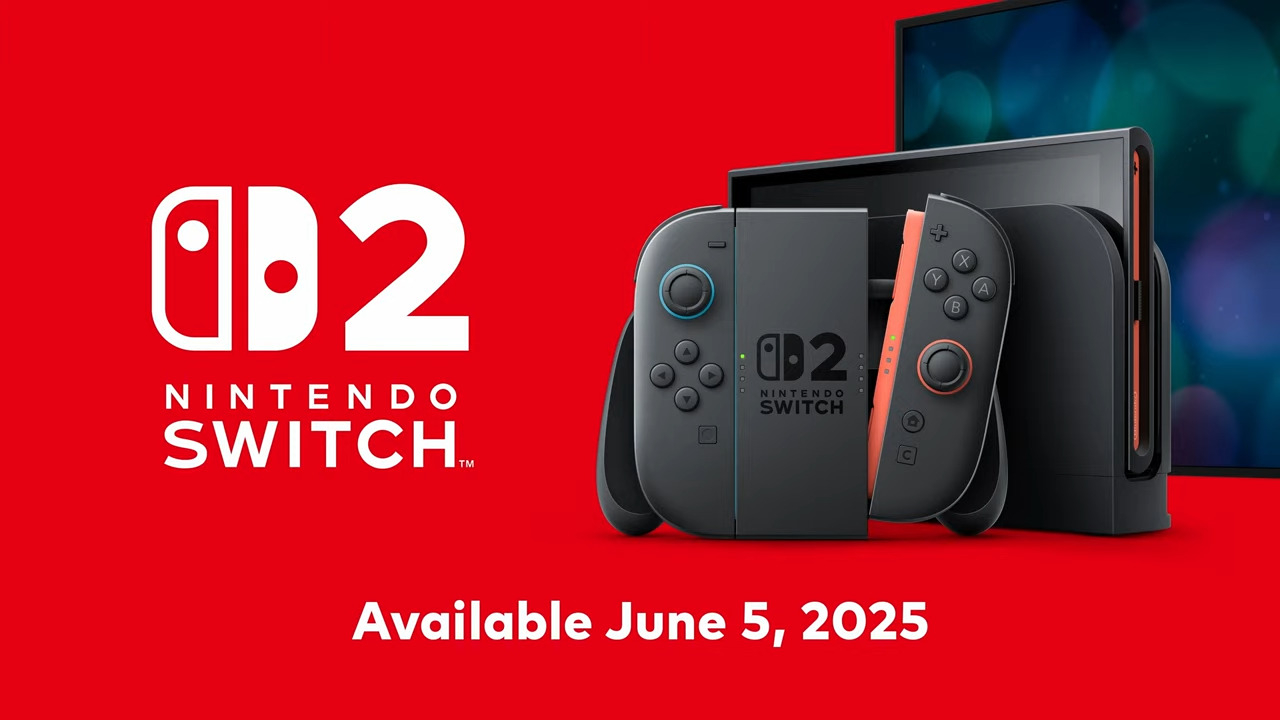
Rank 7128While the Nintendo Direct about the Switch 2 was only about an hour long, the accompanying deep dives released offer even more information and peeks at the much-anticipated console, which launches on June 5, 2025.Now, as spotted in “Ask the Developer Vol. 16, Nintendo Switch 2 – Chapter 4,” we’re getting our first look at the redesigned Nintendo eShop. It not only looks much sleeker and well organized, but it should also allow for better curation of titles and for you to more easily find titles that interest you.Similar to the Switch 2’s interface compared to that of the original, Lite, and OLED, it’s not night and day with the shop. You’ll still find your primary sidebar on the left-hand side, but it has new options. I’ll list those out below, but what’s catching my eye is the central portion next to it titled “Game Finds For You.”
(Image credit: Nintendo)
The shared image reads, “Hey there, Sarah! Looking to find some games? We’ve got recommendations!” Seemingly, Nintendo will be doing some personalized curation based on your preferences, and it will be refreshed weekly, on Saturdays, in this case.Kouichi Kawamoto, Producer, Entertainment Planning and Development Department at Nintendo, says in the post “there's a feature on Nintendo eShop called For You, which lets you quickly see screenshots and watch introduction videos for games.” The team believes this will let you more easily find something you like within a title, and decide if you’d like to get it or not.Additionally, the Nintendo eShop has been optimized and improved to run on the Switch 2’s larger 7.9-inch display. The post details that Nintendo thinks it’s just as important that the browsing experience here for deciding what to play is as good as a game.The new sidebar for the eShop, reads as:
Featured TitlesProduct SearchGame Finds For YouWish ListGreat DealsBestselling SoftwareRecent ReleasesComing SoonNintendo Switch OnlineEnter Code
While it’s not a complete redesign, the optimizations shown off here seem to up the fidelity and enhance the recommendation engine a bit further for the eShop. It’s unclear as of yet if there are more changes or if this new look might trickle down to the Switch Lite, Switch, or Switch OLED.
You might also like...
Nintendo Switch 2 Direct live: The Duskbloods revealed, plus release date, price and a full recap of everything announced todayThe Nintendo Switch 2’s interactive-manual bloatware is a paid app, and it’s the last straw following a disappointing launch
-

Picture from techcrunch.com
Rank 7129 -
Picture from o.aolcdn.com
Rank 7130The Switch 2 is bigger, more powerful and more expensive than the original Switch, but the tech specs for the new console reveal at least one key way it's worse: The Switch 2's battery life is shorter.
Nintendo says that battery life on the Switch 2 varies depending on the game you play, but that it estimates the console should last approximately "2 – 6.5 hours." That's notably shorter than the battery life you'll get out of a current Switch or Switch OLED, based on the company's support page. Nintendo estimates that a Switch OLED "with a serial number that starts with 'XT'" should last around "4.5 to 9 hours." Non-OLED Switch consoles "with a serial number that starts with 'XK'" are expected to last the same amount of time. Even the original Switch, which has "a serial number that starts with 'XA'," gets a minimum of 2.5 hours of battery life. Apparently, the extra power of the Switch 2 comes with a price.
Nintendo's tech specs confirm a few other notable details. The Switch 2 supports Wi-Fi 6, which should mean you'll get faster internet speeds when the console isn't docked and connected over ethernet. Based on Nintendo's guarantee that the console "supports 120 fps when 1920x1080/2560x1440 resolutions are selected," it seems like the Switch 2 won't support HDMI 2.1.
As far as controllers are concerned, Amiibo support remains, but if you have special place in your heart for the Wii-esque motion controls you could use on the original Switch, it looks like you're out of luck on the Switch 2. Neither the left or right Joy-Con 2 controllers have an IR sensor, one of the ways Nintendo tracked motion on the Wii and Switch. That doesn't mean you can't use motion controls on the Switch 2, just that Nintendo isn't using IR to make them work. (At least in Metroid Prime 4: Beyond, it seems like "mouse control" fills the role motion controls used to on older games.)
Do any of these changes dramatically alter the calculus on whether the Switch 2 is worth buying? Maybe not, but it is interesting to see some of the compromises and decisions Nintendo made to offer what is effectively "the Switch, but better."This article originally appeared on Engadget at https://www.engadget.com/gaming/nintendo/the-switch-2s-battery-life-is-shorter-than-the-current-switch-211753028.html?src=rss
-

Picture from cdn.mos.cms.futurecdn.net
Rank 7131Pump-and-dump schemes dominate crypto markets, driven by 438 manipulative mastermindsTelegram’s ease of communication fuels the rise of crypto manipulationsAdvanced tools like Perseus expose crypto scammers, but regulation remains essential
As cybersecurity faces challenges with common internet scams like phishing, advanced fee fraud, and fake lotteries, cryptocurrency pump-and-dump schemes have emerged as a significant issue.A recent study from researchers at University College London revealed just 438 masterminds are responsible for the majority of pump-and-dump crypto schemes worldwide.These masterminds manipulate crypto coins by inflating prices through misleading hype, selling them once enough buyers are lured, collectively accounting for $3.2 trillion in artificial trading and earning $250 million annually. According to Google, such "cloaking" scams are the most damaging scams around.
Telegram is the preferred platform for manipulation
The researchers found popular encrypted messaging app Telegram is the primary tool used by crypto coin masterminds to spread false information, with manipulators using channels and chats to create artificial demand for coins."On the app, chats are used to communicate between potential buyers and sellers," the researchers note.With easy communication and limited regulation, manipulators convince others to buy into the hype, leaving many victims unaware of the risks and devastated by the schemes.As the research team pointed out, the simplicity of executing these scams "should be of concern to those attempting to make money off crypto coin investing."To track these schemes, the researchers developed Perseus, a tool capable of analyzing the coordination efforts behind these manipulations.Similar to AI-powered scam detectors like the one developed by McAfee, which stops scammers before they can reach potential victims, Perseus helps identify the masterminds behind the scams and measure their impact.Perseus consists of three components: a real-time fetcher, a temporal attributed graph generator, and a mastermind detector. These technologies work together to uncover and track the key figures orchestrating these scams.The researchers suggest that tools like Perseus, along with other scam detection technologies, could be crucial in recognizing harmful schemes within the largely unregulated crypto space."At some point, some form of regulation is going to be needed to keep the system running," they concluded.As cryptocurrencies grow in popularity, the prevalence of scams raises concerns about market stability, with the lack of regulations leaving investors vulnerable to manipulations.Via Techxplore
You may also like
These are the best Android antivirus apps around todayHere is our guide to the best malware removal tools aroundFBI warns about working from home scam
-
Picture from o.aolcdn.com
Rank 7132TikTok may be back online and in app stores, but its future in the United States is still far from certain. President Donald Trump’s executive order delaying enforcement of the ban was only a temporary reprieve for the company and the clock is once again running out on a potential ban.
While ByteDance was once resistant to the idea of selling TikTok’s US business, that seems to have changed since Trump took office. A ByteDance investor said early this year that striking a deal to keep TikTok in the US is “in everybody's interest." Officials in China also suggested they were “open” to a deal, according to The Wall Street Journal.
A number of people and companies have signaled some interest in TikTok. Trump himself has said he would like to see a “bidding war” for the app and that the US government should own a stake in the company. What an eventual deal may look like, though, is unclear. These are the offers we currently know about. On March 9, Trump said the administration was "dealing with four different groups" on a potential deal, though he didn't name names.
Trump’s executive order gave the company 75 days to come to an agreement, though he has recently said he would "probably" extend the deadline if a deal isn't reached by April 5.
Oracle + new US investors
NPR reported in January that Oracle was working with Trump Administration officials on “a plan to save TikTok that involves tapping software company Oracle and a group of outside investors to effectively take control of the app's global operations.” Under this arrangement, ByteDance “would retain a minority stake in the company” but Oracle would oversee “the app's algorithm, data collection and software updates.”
Recent reports suggest that a new investors, including Silicon Valley heavyweight Andreesen Horowitz, would join TikTok's existing US investors to form a new entity. It could be called "TikTok America," according to a report in The Information. This option is likely appealing because it wouldn't require a new owner to attempt to re-architect the app's algorithm and because TikTok has an existing partnership with Oracle. The cloud company already hosts TikTok’s US user data and the company was a key part of TikTok’s original negotiations to remain operational in the US under a plan called Project Texas. (Those negotiations abruptly fell apart in 2022.)
Trump also previously signed off on a deal for Oracle and Walmart to acquire a 20 percent stake in TikTok in 2020, when the president tried to ban the app during his first term. That deal never materialized.
Microsoft
Microsoft is reportedly also interested in playing a role in TikTok’s future, according to the same NPR story, which said Microsoft was among the “other potential investors” involved in the talks with Oracle. Trump seemingly confirmed this. When asked directly if Microsoft was interested in buying TikTok, Trump responded “I would say yes.”
As with Oracle, this isn’t the first time Microsoft has attempted to acquire the social media company. Microsoft was in talks to buy TikTok in 2020 and take over its US business, but the deal abruptly fell apart. Microsoft CEO Satya Nadella later described it as “the strangest thing I’ve ever sort of worked on.”
Perplexity AI
Just before TikTok briefly went offline, Perplexity AI threw its hat into the ring, offering a deal to ByteDance that “would “create a new entity combining Perplexity, TikTok US and New Capital Partners.”
Since then, Perplexity has tweaked its proposal. The company put out a detailed plan outlining how it would rebuild the app's core recommendation algorithm, integrate shortform videos into its search engine and bring a Community Notes-like fact checking feature to the service.
Project Liberty
Another set of investors that’s proposed a bid to buy TikTok is a group known as Project Liberty. Led by investor Frank McCourt, it includes Kevin O’Leary of Shark Tank fame. The group initially came forward before the ban took effect.
In March, Reddit cofounder Alexis Ohanian announced that he was joining the Project Liberty bid to acquire TikTok's assets. "I'd love to see an app where users actually own their data and where creators have real control," he wrote in a short post on X that hinted at a potential tie-in with... the blockchain. "Imagine bringing all those users seamlessly onchain..." An accompanying video referenced the possibility of "decentralized distribution," but didn't offer details.
O’Leary previously told CNBC that deals involving a government stake may not comply with the law. “That 50/50 deal, I would love to work with Trump on, so would every other potential buyer ... But the problem with some of these ideas is they are inconsistent with the ruling of the Supreme Court,” he said. “I would love to do a deal, if the law provided for it, but I don’t have the luxury of breaching the order of Congress.” Later, he said that the deal "changes by the hour," writing on X that "it's clear to me now that we're going to have to do a dance between the original owners, the founders of ByteDance itself, and interpreting the law of what Congress and Supreme Court has upheld."
MrBeast
YouTuber MrBeast, also known as Jimmy Donaldson, joked on X about buying TikTok ahead of the initial ban. He later said that “so many billionaires” had reached out to him about making an offer that he was going to try to actually pull it off.
Okay fine, I’ll buy Tik Tok so it doesn’t get banned— MrBeast (@MrBeast) January 14, 2025
At least one group has already confirmed his involvement, along with other “high-net-worth individuals” looking to make an “all-cash offer.” That group, led by employer.com founder Jesse Tinsley also reportedly includes Roblox CEO David Baszucki. According to Bloomberg, together they have put together “significantly” more than $20 billion for a bid, though it’s not clear how seriously their offer is being considered. Bloomberg noted that there’s also a possibility that MrBeast may attach himself to other bids.
Amazon
Amazon reportedly made a last-ditch bid to buy TikTok, according to reports in The New York Times and Wall Street Journal. The online retailer reportedly approached Vice President JD Vance and Commerce Secretary Howard Lutnick about the offer, which doesn't seem to be under serious consideration. Amazon declined to comment on the reports.
AppLovin
Another company to make a last-minute offer is AppLovin, a Silicon Valley company that makes software for app developers. The Wall Street Journal reported that the firm also has backing from Steve Wynn, a casino mogul and Trump donor. "AppLovin’s pitch to the Trump administration, which would be funded by Wynn, was that it could solve national security concerns and unleash economic growth as a job creator," The WSJ reported.
OnlyFans CEO Tim Stokely
Yet another eleventh hour bid for TikTok reportedly comes from OnlyFans CEO Tim Stokely. Reuters reports that Stokely (via a startup he runs called Zoop) partnered with the Hbar Foundation, a cryptocurrency firm, to bid on TikTok.
"Our bid for TikTok isn't just about changing ownership, it's about creating a new paradigm where both creators and their communities benefit directly from the value they generate," one of Zoop's executives told the publication.
pic.twitter.com/bQNcWYJ2tD— HBAR Foundation (@HBAR_foundation) April 2, 2025
What’s next?
So where does all this leave TikTok? For now, the company is still in limbo. Even if a tentative deal is announced ahead of the April 5 deadline, ByteDance and Chinese officials would also need to sign off on any agreement in order for it to move forward.
Update, March 10, 2025, 6:55PM ET: This story has been updated to add new statements from President Trump, as well as to add details about Reddit founder Alexis Ohanian joining the Project Liberty bid.
Update, April 2, 2025, 6:47PM ET: This story has been updated with new information regarding proposals involving Oracle and Perplexity AI. It's also been updated to reflect reported bids from Amazon, AppLovin and OnlyFans CEO Tim Stokely.This article originally appeared on Engadget at https://www.engadget.com/social-media/what-will-happen-to-tiktok-a-look-at-the-potential-buyers-000110723.html?src=rss
-
Picture from cdn.mos.cms.futurecdn.net
Rank 7133With announcements flooding in on all sides from Nintendo Direct, it's easy to get caught up in the excitement and miss some important details.One of which isn't all Mario Sunshine and daisies: unfortunately, you won't be able to play all of your Switch 1 games on the Switch 2.This is due to how Nintendo built the Switch 2 as, interestingly, it "doesn't contain any Switch hardware."That doesn't mean you won't be able to move any of your favorite titles over to the new system, but it does mean you won't see the same kind of compatibility you saw between the DS and 3DS.Here's what you need to know.
The Switch 2 focuses on "enhancing its performance as hardware"
Dohta (left) and Kawamoto (right) discuss the launch of the upcoming Switch 2 (Image credit: Nintendo)
Now, the incompatibility between some Switch games and the new Nintendo Switch 2 does come with a reasonable explanation.In Vol. 16 of Nintendo's Ask the Developer conference, Kouichi Kawamoto (Producer, Entertainment Planning & Development Department), Takuhiro Dohta (Senior Director, Entertainment Planning & Development Department), and Tetsuya Sasaki (General Manager, Technology Development Division) accepted questions on the development of Nintendo's new handheld console.When asked if the team had "already decide[d] on this functionality when [they] were first planning the development of a new dedicated game system," the team highlighted that compatibility was indeed a consideration. Even so, it wasn't as simple as porting Wii games to the Wii U.The foremost focus with the Switch 2 was instead "on enhancing its performance as hardware, namely, expanding its capacity. So, compatibility was a lower priority."This meant creating a revamped system with no original Switch hardware under the hood. Sasaki comments, "It's tricky to explain... Maybe the easiest way to understand it is that the methods used to achieve compatibility between Nintendo DS and Nintendo 3DS, and between Switch and Switch 2, are completely different."Kawamoto adds to that: "Simply put, those systems were compatible because Nintendo 3DS contained Nintendo DS hardware, and Wii U contained Wii hardware. However, Switch 2 doesn't contain any Switch hardware."If you're brave enough to check whether your favorite game made the journey, Nintendo published and continues to update a comprehensive list of Switch games that are not compatible with the Switch 2.
It's not all gloom and doom, though
That's not to say the Switch 2 won't run any games from the OG Switch. Most of your favorites run just fine thanks to what Dohta explains is "something that’s somewhere in between a software emulator and hardware compatibility."It's also important to note that almost all first-party Nintendo titles are available on the new Switch 2 (save for Fitness Boxing).Sasaki continues, "There are some games that ran well due to the Switch system's hardware configuration. Switch 2, on the other hand, has increased processing capabilities and an expanded memory capacity, which could theoretically cause some of those games to stop working. We weren't so confident at first, but as we tested games one by one, we found out that some issues could be solved by making improvements. This process helped us build confidence that, while we might not be able to solve everything, we can work it out for many games."In fact, thanks to the Switch 2's new and improved hardware, some of your go-to games may even run better. The team mentioned seeing shorter load times and more stable gameplay in some instances.You'll also see the arrival of some new features like GameChat, which lets you voice chat and screen share with up to 12 players at a time. This could be a home run for party games, ultimately enhancing the experience of hanging out with your Switch- 2-wielding friends.Overall, it's worth checking the list of games that will run on the Switch 2 to make sure your favorites aren't on the red light list. The good news is that the majority of Switch titles will run on the Switch 2, which launches June 5 and will be available for preorder starting April 9.
You might also like
We finally know about the C button on the Nintendo Switch 2 – here’s what it doesHollow Knight Silksong - everything we knowNintendo’s best Switch 2 announcement was its GameCube game rereleases, but buying the new GameCube controller will be a challenge
-

Picture from cdn.mos.cms.futurecdn.net
Rank 7134Same 24.5MP full-frame stabilized sensor as Nikon ZfLatest Expeed 7 processor delivers a raft of performance improvementsPricier than Z5 at launch, costing £1,599 body-only (US and AU pricing TBC)
Nikon has unveiled the successor to its Z5 entry-level full-frame mirrorless camera: the powerful – and pricier – Z5 II.It's probably about time – the 24MP Z5 was launched in 2020 and was beginning to look a little dated, especially for high-speed photography and video.Nikon has pushed the boat out with the Z5 II – the second-gen model delivers several performance-based improvements and inherits a raft of flagship features, including superb autofocus skills.These improvements mirror how the Nikon Z50 II improved on the Z50 – it was a decent if not radical upgrade.The rub, however, is that the Z5 II feels pricey for an entry-level model, and is close to stepping on the toes of Nikon's mid-range models; so much so, in fact, that it could represent an upgrade from the Z6 II – the previous version of Nikon's mid-range model, since updated by the Z6 III.So the question is, does the Z5 II step out of its lane, or is it a perfectly balanced offering?
Image 1 of 2(Image credit: Nikon)Image 2 of 2(Image credit: Nikon)
Too much camera?
In the five years since its launch, the Nikon Z5 has steadily dropped in price, and can be had for way less than $1,000 / £1,000. That feels like a sensible price tag for beginners and enthusiasts considering their first full-frame camera.The Z5 is surprisingly well made for an entry-level model, too, meaning it's excellent value for stills-focused users. However, in 2025 the camera's specs are somewhat modest, especially if you shoot action and video. In steps the Z5 II.At £1,599 body-only, or £1,859 with the 24-50mm lens, the Z5 II, costs around 10% more than the Z5 when it launched in 2020, but it's effectively double the price of a Z5 now in 2025. In some regions, the Z5 II is also available in a kit with the 24-70mm f/4 lens (£2,129) or with the 24-200mm lens (£2,299). I'll update this page with US and Australia pricing when I get it.
What do you get for the money? A camera with the same 24.5MP resolution as the Z5, albeit in a refined sensor that's identical to the one in the Nikon Zf, with Nikon's best-ever image stabilization, now rated up to 7.5EV.There's also Nikon's latest, snappier Expeed 7 processor, which delivers significantly faster burst-shooting speeds: 14fps continuous high, and 30fps in a high-speed frame capture+ mode, complete with up to one second of pre-capture when you half-press the shutter button.The phase-detection autofocus system with 3D tracking is also Nikon's best version, as found in the flagship Z8 and Z9 models, with subject detection for up to nine types, including people, birds, dogs, cats, cars, and airplanes.Nikon says the Z5 II's autofocus can detect distant and small subjects that take up as little as 3% of the frame, plus it's the most sensitive focusing yet, rated up to -10EV, meaning it's able to acquire focus in near darkness.Video recording is much improved over the Z5 too. We now get 4K 30p video with Nikon's N-RAW and N-Log color profiles, plus 4K 60p video, albeit with an image area crop. N-RAW video can be recorded straight onto a memory card, which is a first for Nikon – the Z5 II has twin SD UHS-II slots.
Image 1 of 2(Image credit: Nikon)Image 2 of 2(Image credit: Nikon)
It's not just the performance that's received a boost – the Z5 II's handling is improved too. Its weather-sealed body is much like the Z6 III's, including a 3.2-inch 2.1m-dot touchscreen that's now the vari-angle type, meaning it that can be flipped out to the side of the camera and reversed for selfies. The 3.69m-dot EVF is three times brighter too, rated at 3,000 nits to the Z5's 1,000 nits.And, as on the Z50 II, there's a Picture Control button, with which users can select the color profile they like, including recipes that can be downloaded from Nikon's Imaging Cloud and / or custom created.Overall, it's a sizable update without rocking the boat, even if the asking price is pushing it a bit. That said, we won't labor the cost point too much, because Nikon has a history of discounting its cameras more rapidly, and heavily, than rivals.The fact that the Z5 II addresses the three Z6 III upgrades I wished for as a Z6 II user is super-impressive – Nikon's Z5 series just upped the bar for entry-level performance.We're currently carrying out an in-depth review of the Nikon Z5 II, and we'll share our experiences soon.
You might also like
Best full-frame mirrorless camera 2025: top options from Canon, Sony, Nikon and moreNikon Z5 review The best beginner mirrorless camera for 2025: budget stars for new photographers
-

Picture from cdn.mos.cms.futurecdn.net
Rank 7135The threat landscape is evolving at an alarming rate, and business leaders who may have previously believed that nation-state attacks are a problem for governments alone are increasingly mistaken. The latest revelations surrounding China’s Volt Typhoon and Salt Typhoon campaigns should serve as a wake-up call to executives worldwide. These are not theoretical threats—they are calculated, long-term infiltrations into critical infrastructure, and no company or country is off-limits.While the bulk of the activity surrounding these operations has focused on the United States, the underlying objective is clear: establish persistent access to key systems that, when needed, can be exploited for geopolitical leverage. In other words, these attacks are not just about stealing secrets—they are about preparing to disrupt entire industries and nations when it is strategically advantageous to do so. And the UK, along with Europe and other Five Eyes nations, is likely on that target list.If your business operates in energy, telecommunications, transport, water, or government-adjacent industries, you’re already in the crosshairs. Volt Typhoon, a Chinese-backed cyber operation, has been caught burrowing into critical infrastructure with the goal of establishing long-term footholds that can be used for future sabotage. Meanwhile, Salt Typhoon has been focused on telecommunications—an industry with a truly global footprint and an essential enabler for economic and national security.
No organization is safe
The interconnected nature of global business means that no organization is safe. The very corporations targeted in the US—large multinational firms with operations across the UK, Europe, and beyond—are the same ones supporting infrastructure elsewhere. China has every reason to expand these attacks to Five Eyes allies like the UK, given its vested interest in disrupting intelligence-sharing and counter-espionage efforts.There is precedent for this expansion. We’ve already seen similar tactics in Flax Typhoon, which targeted Taiwan, and given China’s long-term cyber strategy, it is reasonable to assume that European and UK-based entities are already on the list for similar intrusions. The question isn’t if these attacks will scale globally—it’s whether businesses will be prepared when they do.State-sponsored cyber actors typically don’t launch ransomware attacks for quick payouts. Their goals are much more insidious: access, persistence, and control. China’s cyber teams are laser-focused on industries where disruptions would have the most significant impact—energy, water, communications, transportation, and education.These sectors are not just economic pillars; they are also key to national security and societal stability. Imagine the chaos that could ensue if a foreign adversary had the ability to disrupt power grids, water supplies, or telecom networks at will, such as SektorCert in the EU.
Action required at board level
Yet many businesses in these sectors are still not treating cybersecurity as a board-level issue. Too often, security is seen as an IT problem rather than a core risk. If a company has any role in critical infrastructure—even as a supplier to larger entities—it should already be treating cyber resilience as a priority, because ignoring it is an open invitation for adversarial control.There has been speculation about AI-powered cyber threats, but here’s the reality: Volt and Salt Typhoon are not using cutting-edge AI to develop novel exploits. Instead, they are deploying well-worn tactics—leveraging known vulnerabilities and methodically working through their targets with a level of discipline that outpaces many corporate defenses.However, China, like everyone else, is integrating AI into its cyber operations. It may not be leading the charge in AI-powered hacking just yet, but automation, summarization, and workflow efficiency tools are already being employed to accelerate and scale cyber operations.This means that while companies may not yet be facing AI-generated, self-evolving malware, they are still dealing with adversaries who can analyze, target, and exploit weaknesses faster than ever before. The key takeaway is that businesses cannot afford to move at yesterday’s speed when their attackers are already operating at tomorrow’s pace.
Traditional security solutions aren’t enough
What makes the Volt and Salt Typhoon campaigns even more threatening is that traditional security solutions—firewalls, endpoint protection, intrusion detection—simply aren’t sufficient enough.In fact, one of the biggest weaknesses that attackers like Volt and Salt Typhoon exploit is a lack of network visibility. Businesses often invest in endpoint protection and firewalls, yet many industrial control systems (ICS), IoT devices, and network appliances—the exact infrastructure being targeted—do not support traditional security tools. This creates a massive blind spot, allowing state-sponsored actors to infiltrate, persist, and move laterally undetected.Without deep, real-time network monitoring, organizations have no way of detecting unusual patterns of behavior, unauthorized communications, or stealthy command-and-control (C2) traffic that signal a compromise. Volt Typhoon, for example, has been known to use “living off the land” techniques, blending in with normal system activity to evade detection. The only way to uncover these threats is through continuous monitoring, anomaly detection, and threat intelligence integration—traditional perimeter security simply isn’t enough.
Resilience is essential
Boardrooms globally must recognize that resilience against state-backed cyber threats is as essential as financial stability. Businesses must adopt an assumption-of-breach mindset, recognising that their systems may already be compromised, and focus on threat hunting and proactive monitoring. Supply chains have to be secured, as many breaches occur through third-party vendors, making every link in the supply chain a potential vulnerability.Companies that operate in or support critical industries must prioritize robust cyber defenses now, rather than reacting once an attack occurs. Aligning with national security efforts and intelligence-sharing initiatives is critical, as collaboration with government cybersecurity bodies can provide crucial insights and defenses. Training and testing must be continuous, with regular cybersecurity education for employees and rigorous red-teaming exercises to stay ahead of emerging threats.We are just beginning to understand the full extent of the Salt Typhoon campaign and the vulnerabilities it has exposed. This is just one front in an ongoing cyber war where the stakes are national and economic security. The sheer number of connected devices in the average organization today is unmanageable without advanced monitoring, making network detection and defense more critical than ever in identifying and stopping these persistent threats before they escalate into full-scale cyber crises.
We rate the best cloud firewalls.
This article was produced as part of TechRadarPro's Expert Insights channel where we feature the best and brightest minds in the technology industry today. The views expressed here are those of the author and are not necessarily those of TechRadarPro or Future plc. If you are interested in contributing find out more here: https://www.techradar.com/news/submit-your-story-to-techradar-pro
-

Picture from cdn.mos.cms.futurecdn.net
Rank 7136While AI Agents, or agentic AIs, are being touted as the next leap in human productivity, the unadvertised reality is that, like other AI technologies, they are only as good as the humans that design and use them.They still require a human to know what the problem is and give the right command. But what if you were to combine the horsepower of an agent with an AI that can think like a human? How much more could be achieved?This question is why many in the AI industry are already looking past agents, and are solely focused on AGI, artificial general intelligence. There are some leaders in the tech industry who believe AGI is as close as two years away. Google co-founder Sergey Brin, recently sent a memo to employees recommending they work 60 hours a week, saying “Competition has accelerated immensely and the final race to A.G.I. is afoot.”But let’s get real, are we really that close to AGI? Even if we are, will it be able to truly replicate the adaptability and complexity of the human mind? And even if so, should we look past agents now and wait for the promise of AGI?
True AGI is Still a Long Ways Away
Much of the conversation around AGI has started with AI reasoning models. Reasoning models like OpenAI’s o1 and X’s Grok 3, are designed to “think through” problems before they respond. The human mind, however, is much more sophisticated than a reasoning machine. Reasoning models don’t solve the three biggest problems with achieving AGI.The first problem is AI models, even reasoning models, need to be continually updated and trained. That requires continual human oversight to reinforce the AI’s logic. Without a human telling an AI that it is thinking about things in the right way or the wrong way, it will remain in a perpetual embryonic state.The second problem is that current AI models cannot assimilate information or adapt to novel situations. If an AI model can think through a math problem, that does not mean it can think through a legal problem.Finally, the biggest problem is that AI’s are unable to form unique ideas. AI “thought” is confined to the data it was trained on. To put it another way, AI can only restate concepts that already existed. We are struggling to find a way for AIs to come up with anything original.Dr. Robert Ambrose, NASA’s former Chief of its Software, Robotics and Simulation Division, has posited that a possible solution is to induce AI’s to dream. The idea being that if you can make it possible for an AI to think abstractly and spontaneously by suspending its normal reasoning for extended periods of time, and then having the AI incorporate those abstract thoughts into its training data, you could artificially create original thought.But scientists don’t even know why humans dream or how, making the prospect of having AI’s dream of electric sheep that much more remote.
Don’t Overlook Agents – They Can Help You Right Now
Believe it or not, you don’t need to wait for AGI to control your agents, general intelligence still works. If you are intentional with how you set up your AI agent, you can use it to substantially multiply your productivity. Instead of performing tasks manually or prompting discrete AIs and automations to do work, you can rely on an AI agent to project manage for you.Don’t mistake AI agents as some sort of magic “Easy Button,” though. No matter what tech companies are promising you, there is still work that needs to be done on the front end to really make AI agents effective.Think of it this way, if you hire a person, presumably with general intelligence, and hand them a work manual, would you expect they could do your job on day one?Like a new employee, your agent needs to be trained on your processes to know how to get the job done. It needs to be given tools and trained on how to use them to accomplish each task in the process chain. That means you need to create underlying automations for your AI to execute in pursuance of its objective. It also needs to be trained on how to handle the different exceptions, roadblocks, and variations that may interrupt the nominal process flow.The difference with an agent is, once built, you are not at risk of losing an employee anymore. Recruiting and training people is not only expensive but continuous no matter the role. The investment of time and money in an agent on the other hand is a mostly a one time cost, you don’t need to recruit or train a new one ever again.It may seem daunting but we’re doing it today, and guess what, even AGI wouldn’t be able to work without that groundwork being laid.The payoff is once that initial work is done, you have an agent that cannot only work at a speed a human never could but can also perform far more task simultaneously.
Don’t Pin Your Hopes on Sci-Fi Timelines
According to Back to the Future we’d have flying cars and time travel by 2015. Blade Runner said we’d have fully sentient androids by 2017. In Terminator 2, Skynet’s artificial super intelligence comes online in 1997. AGI is still in the realm of science fiction, if we wait around for it, we’re missing out on the progress available now.The path forward isn't about choosing between agents and AGI, but rather about leveraging the concrete benefits of current AI technology while maintaining a pragmatic perspective on future developments. By focusing on thoughtful implementation of AI agents today – establishing clear processes, creating necessary automations, and providing proper training – organizations can realize significant productivity gains without waiting for the uncertain timeline of AGI.Rather than fixating on when machines might think exactly like humans, we should concentrate on how they can help us think and work better right now.
We rate the best task management app.
This article was produced as part of TechRadarPro's Expert Insights channel where we feature the best and brightest minds in the technology industry today. The views expressed here are those of the author and are not necessarily those of TechRadarPro or Future plc. If you are interested in contributing find out more here: https://www.techradar.com/news/submit-your-story-to-techradar-pro
-

Picture from cdn.mos.cms.futurecdn.net
Rank 7137As artificial intelligence (AI) technology continues to advance its way further into our daily lives, new, and often controversial, players are entering the space, intensifying the competition. While we see the immediate benefits, these innovations also give rise to a complex suite of legal challenges, particularly in respect of how AI models are trained.The latest competitor to enter the industry, DeepSeek AI, came under fire, not only, for potential sharing of user data, but also met with claims that its model is trained on outputs from existing AI models – specifically Open AI’s ChatGPT. These allegations raise critical questions for the industry regarding AI copyright, data usage rights, and just how enforceable platform policies really are.
Copyright protection
Competing players aside, one of the most pressing issues in this debate is whether AI-generated content is itself eligible for copyright protection. There’s no immediate and clear answer here as there has not yet been a case of this nature between two AI companies, and it also varies depending on jurisdiction. Many countries still require human authorship as a fundamental condition for copyright ownership, meaning that purely AI-created works often fall into a legal “grey area.Let’s look into the copyright issue first. AI models operate by processing and generating responses based on vast data pools, making it exceedingly difficult to establish clear-cut cases of direct copying. We can’t use the same methods for identifying traditional plagiarism here, where we’d usually see identical passages of text or near-verbatim reproductions, as AI outputs are inherently non-deterministic—meaning they produce varied results even when given the same prompt.A competitor AI system might also be trained by repeatedly querying an existing AI model, collecting the responses, and using them to improve its own algorithms. This creates another challenge for enforcement: unless an AI model produces identical or highly similar outputs to another, trying to prove substantial copying remains a significant hurdle.
Infringement claims
One possible approach for AI providers seeking to establish infringement claims is to embed unique, detectable markers within their AI-generated responses. If such markers consistently appear in a competing AI’s output, it could serve as stronger evidence of unauthorized training. However, such methods are not foolproof, as AI models that are trained on large datasets may generate similar responses simply due to the nature of large-scale language modelling.So, even if an AI company had a compelling case of direct copying, the issue of jurisdiction then comes into play. In regions where AI-generated content does not qualify for copyright, AI companies may struggle to assert ownership over their models' outputs. This raises a further dilemma: if an AI system produces content that isn’t legally protected, can another company legally train its own models using those outputs? And if there’s no copyright to infringe upon, is there even a case for intellectual property theft? Jurisdictions that allow for some level of protection over AI-generated work may provide AI firms with a stronger legal footing.For example, the US copyright office recently determined that copyright vests in an image that was created by an artist selectively modifying or regenerating parts of an AI generated image through multiple prompts. However, whether an AI provider like OpenAI retains rights over user-generated content would then depend on its terms of service and the licensing agreements accepted by users when utilizing the platform.
Contractual restrictions
Finally, there’s the matter of contractual restrictions. OpenAI, like many AI service providers, has strict terms that prohibit ChatGPT users from employing its AI-generated content to train competing models. If DeepSeek AI, or any other company, violated such an agreement, the issue at hand then shifts from copyright infringement to breach of contract.If an AI company believes it has a strong case against another, it is highly likely that they would opt to mediate or settle such a dispute privately in order to avoid the potential downsides associated with litigation. A confidential settlement would allow both parties to protect their proprietary training methodologies, reduce costs, and avoid the risks of an unfavorable legal precedent.However, should a landmark AI training practices case emerge, far-reaching implications would be introduced. If a court can definitively rule that AI-generated materials are protected under copyright law, or that training on another model’s output is an infringement, then this would set a precedent for global AI development and the legal frameworks governing it.Ultimately, the allegations surrounding DeepSeek AI and the lack of a clear-cut route to protect AI companies highlights that legal frameworks and contractual agreements are struggling to keep up with the pace of a rapidly evolving AI industry. While we await a case that could settle the issues raised around copyright and user agreements, it is important that businesses relying on AI remain vigilant as to how they use third-party services and are cautious to safeguard their own proprietary technology.
We've compiled an extensive list of the best AI tools.
This article was produced as part of TechRadarPro's Expert Insights channel where we feature the best and brightest minds in the technology industry today. The views expressed here are those of the author and are not necessarily those of TechRadarPro or Future plc. If you are interested in contributing find out more here: https://www.techradar.com/news/submit-your-story-to-techradar-pro
-
Picture from cdn.mos.cms.futurecdn.net
Rank 7138Google confirms more Android devices will get this AI upgradeReal-time camera and screen access is being added to Gemini LiveWe've previously seen the tech demoed with Project Astra
Last year we got a tantalising preview of Project Astra, Google's next-gen, multi-modal AI upgrade that interprets the world through your phone's camera. Now it seems the upgrade will be appearing on more Android phones than originally thought.According to a Google support article (via 9to5Google), the ability to share your camera or screen with Gemini Live inside the Gemini app – so key aspects of the Project Astra update – is going to be available on "any Android device with Gemini Advanced".There had been rumors that this enhanced functionality was going to be exclusive to Gemini running on flagship Google Pixel and Samsung Galaxy devices, but it appears that won't be the case. The catch is, you'll need to pay $19.99 / £18.99 / AU$32.99 a month for Gemini Advanced.The features are actually in the process of rolling out now, as we reported last week, but Google advises that "these features are being released gradually, so they might not be available to you just yet". So far we haven't seen them pop up on the phones of the TechRadar team.
Gemini Live meets Project Astra
Thanks for the comments -- we see (and share) the excitement around this feature and are working hard to make it available to more people! The ability to share your camera or screen in Gemini Live conversations will continue to roll out and we'll provide updates on this page as…March 30, 2025
There are so many modes and sub-modes in Google's Gemini AI chatbot that you'd be forgiven for being a little confused about what each one does. Gemini Live is the more natural, conversational chat mode on mobile that lets you interrupt it, while speaking in a more human-like way compared to the standard Gemini voice mode.The upgrade on the way now will give Gemini Live access to your camera feed and phone screen, so you can ask it about anything you're looking at in the real world or on your mobile device. The early demos look promising, with Gemini identifying objects, remembering locations, and even solving math problems.Gemini can already analyze images and screenshots you give to it, and identify what's in them, but the upgrade will make all of this a real-time experience you can call on as you make your way around the world.You can access the core Gemini Live features – minus the new Project Astra upgrades – with or without a Gemini Advanced subscription. In the Gemini app for Android or iOS, tap the sound wave icon on the far right, next to the text input box.
You might also like
Gemini's 'most intelligent AI model' yet is now available for free5 ways to get the best art from Google's AI image generatorGemini could be about to make an appearance on Wear OS
-

Picture from cdn.mos.cms.futurecdn.net
Rank 7139Microsoft is celebrating a very special birthday, and you're all invited. The Microsoft 50th Anniversary Copilot Event takes place tomorrow, and will see the Seattle tech giant unveil its latest AI developments – and, presumably, look back at its vast history.In the lead-up to the event at 9:30 AM PT / 12:30 PM ET / 5:30 PM BST on April 4, we'll discuss all of our favorite Microsoft moments from the last 50 years and predict what Copilot upgrades we can expect to see.Whether you're a fan of Windows, Xbox, Copilot, or even the Zune (remember that?), you won't want to miss this birthday bash.Plus, we'll have reporters on the ground in Seattle ready to cover all the breaking news as it happens, so stay tuned to TechRadar and bookmark this live blog to keep up with everything Microsoft 50th Anniversary and Copilot.
Good morning! John-Anthony Disotto, TechRadar's Senior AI Writer here, ready to kickstart our coverage of the Microsoft 50th Anniversary Copilot event!Stay tuned – because we've got a while until the event starts tomorrow (April 4), so we'll have plenty time to talk about the best (and worst) Microsoft moments from the last half century.And of course, we'll also be speculating as to what we expect to see from Copilot, and bringing you any last-minute rumors on that front.
-
Picture from cdn.mos.cms.futurecdn.net
Rank 7140Big CarPlay updates adds a number of handy featuresHyundai showcases its next-gen infotainment systemTesla probably won’t be very happy
It has been a bumper week for automotive infotainment updates, with Hyundai launching its Pleos software brand, proprietary vehicle OS and open app development program, while Apple rolled out iOS 18.4 that brought with it a number of updates to CarPlay.Interestingly, the Hyundai Motor Group has been working alongside Google to realize its next-generation operating system, leveraging the power of Android Automotive OS to create a more “smartphone-like” experience for users.Due to roll out in the second half of next year, Pleos Connect features Hyundai’s upcoming Gleo AI voice assistant, as well as ‘split-view’ multi-window approach.It looks eerily like Tesla’s interface – even down to the icon of the vehicle and the ability to open doors and the trunk. Don't tell Elon.Pleos Connect is part of a wider drive by Hyundai to move into the true Software Defined Vehicle (SDV) space, which sees the entire electrical and sensor architecture redesigned and refined so all parts of the vehicle can be updated over the air.
(Image credit: Hyundai)
Chang Song, the man in charge of all things SDV at the Hyundai Motor Group, says the Pleos platform supports "all devices in motion" to move autonomously and be managed smartly. It will connect transport and infrastructure, assisting in the next generation of autonomous vehicles, both passenger cars and logistics vehicles.Another part of Song’s master plan is to develop what he refers to as “killer apps”, which is a reference to unique software that benefits the end user to such a degree, it has customers flocking to Hyundai product in order to make the most of it.Pleos Playground will allow the world’s hottest third-party mobile app developers to freely access automotive software endpoints, providing software development kits, analytics and support tools to create apps that can be distributed through Hyundai’s App Market.
Apple expands CarPlay offering... literally
(Image credit: Apple)
As previously reported, Apple recently introduced a third row of apps to select CarPlay users with larger infotainment screens, but this feature has now been rolled out beyond its Beta stage.This crams more app icons onto the display, which should reduce the amount of swiping that’s required – particularly for those that like to horde all of the apps.On top of this, the recent iOS 18.4 update also introduces an API that allows select sports application developers to deliver live scores and match updates to a designated portion of the screen, although we are yet to see how it looks in the wild.Naturally, this won’t include video replay highlights, but it’s a neat way of keeping on top of results as they come in.Finally, Apple CarPlay users in Europe can finally change their default navigation app away from Apple Maps, meaning that simple Siri commands will automatically open in Google Maps, Waze or whatever you select as a favorite in the settings menu.
You might also like
Hyundai is building its own in-car AI system – and it actually sounds like a good ideaNissan is back to its bold best with new EV lineup that's led by a third-generation Leaf – and yes, it's an SUVHyundai reveals wild Insteroid concept EV with Pac-Man interior – and it’s the exciting hot hatch that electric vehicles need right now
-
Picture from cdn.mos.cms.futurecdn.net
Rank 7141Old habits die hard. Even in 2025, legacy systems like fax machines, PBX phone systems and filing cabinets remain in use in many offices. Another surprising holdover is the traditional VPN (Virtual Private Network.) VPN technology had a nice run, serving as the default choice for remote access for decades. But many organizations continue to rely on legacy VPN solutions, despite significant advancements in secure remote access technologies.Indeed, in the modern threat landscape, VPN services bring more risk than benefit. Let’s look at five reasons why it is time to say goodbye to VPN infrastructure and what to use instead.
Workloads have moved to the cloud
In recent years, businesses have steadily migrated their operations to cloud computing environments. Consider how many Teams or Zoom meetings you’ve attended this week and how many of your daily applications now operate in the cloud.This shift has made VPN solutions less and less necessary. As cloud usage increases, the need to remotely access on-premises resources diminishes. Nevertheless, many companies still maintain VPN solutions to provide access to a dwindling number of legacy resources, much like individuals holding onto Blu-ray players solely to watch a couple of dusty discs tucked in an old cabinet.But is it worth maintaining a complex, outdated VPN infrastructure for a few remaining items, such as a designated machine or a legacy file storage repository? Today, businesses have a multitude of alternative solutions to choose from. These cloud-centric solutions improve efficiency and productivity because they eliminate the need for constant maintenance, patching and monitoring. They can also easily scale up or down to accommodate fluctuating numbers of remote users. But perhaps the most important benefit is stronger security.
Blocking lateral movement and privilege escalation is critical
Traditional VPNs provide broad network access to everything — which can expose sensitive data and critical systems unnecessarily. Indeed, this expansion of your attack surface is what enables threat actors to steadily escalate their privileges and compromise multiple systems across the network. What's more, VPN-enabled accounts sit dormant when not in use, ready for takeover by attackers at their convenience. Compounding this risk, organizations have limited control over the off-premises devices running VPN clients, which further increases the potential for malware infiltration and unauthorized access.Secure access solutions, on the other hand, provide access to the specific resources that the user currently needs, nothing more. Strictly enforcing the principle of least privilege restricts lateral movement, which in turn significantly reduces the potential impact of a breach. These modern solutions also dynamically create access privileges that last only for the duration of a session and are then removed; this just-in-time approach dramatically reduces the risk of dormant accounts being exploited while maintaining productivity for remote users.
You need better visibility and control
Traditional VPN configurations are static which means they need to grant broad access to each user. This lack of granular control exposes organizations to significant security risks and potential data breaches – once connected, those users can engage in risky activities such as launching RDP sessions or accessing malicious websites without oversight.In contrast, today’s advanced secure access systems can dynamically modify users’ access rights based on real-time factors such as user behavior, device status and threat intelligence. For example, if an account begins attempting to delete or encrypt sensitive files, its access rights can be cut off immediately.In addition, live monitoring and session recording capabilities empower security teams to carefully observe and analyze user activity. This comprehensive visibility enables prompt threat detection and rapid incident response. Moreover, enabling deep visibility and accountability discourages users from engaging in risky behavior in the first place.
VPNs are a gateway for multiple threats
An active VPN connection is one more open door to your network. If a user is surfing the web while connected, they can inadvertently download malicious code onto their system. As a result, threat actors can gain remote control of the device, enabling them to compromise MFA tokens, redirect text messages, implement man-in-the-middle (MITM) attacks and more.A modern secure access solution significantly reduces the risk of these threats because it creates isolated, application-specific connections rather than broad network-wide access. In addition, it enforces least privilege access and applies real-time security controls to detect and block suspicious activity. This proactive approach helps safeguard sensitive data and systems and, therefore, core business operations.
Compliance regulations are becoming stricter
There is no legislative mandate today that dictates that companies cannot use a VPN. However, the goal of compliance isn’t to check boxes; it is to strengthen your security posture. Ask yourself: are you truly meeting your due diligence obligations if you continue to rely on VPN solutions?Moreover, compliance standards are rapidly changing in response to advances in both technology and the threat landscape. In particular, regulations increasingly emphasize the importance of proactive risk management and adaptive security solutions. Soon enough, regulatory bodies are likely to recommend more robust security measures than VPNs — just as they already discourage the use of old encryption and authentication protocols.
Conclusion
As cyber threats evolve, businesses must rethink their approach to remote access. It’s time to retire VPNs and embrace modern, identity management security solutions that provide far better protection for critical assets while improving efficiency and scalability. Although saying goodbye can be tough, the benefits of contemporary access solutions far outweigh the comfort of maintaining outdated systems.
We rate the best business VPN.
This article was produced as part of TechRadarPro's Expert Insights channel where we feature the best and brightest minds in the technology industry today. The views expressed here are those of the author and are not necessarily those of TechRadarPro or Future plc. If you are interested in contributing find out more here: https://www.techradar.com/news/submit-your-story-to-techradar-pro
-
Picture from o.aolcdn.com
Rank 7142Smartwatches do more than just track your steps and deliver phone alerts to your wrist. The best smartwatches go even further, giving you the ability to pay for a cup of coffee, take calls and connect to apps like Spotify all without whipping out your smartphone.Chances are, if you’re reading this, you already know all of the benefits of a smartwatch. You’re ready to invest, or upgrade from an aging accessory, but we wouldn’t blame you if you if you didn’t know where to start. There are dozens of smartwatches available now, including GPS running watches, fitness trackers that look like smartwatches and multi-purpose devices. Plus, you’ll want to consider factors like durability, battery life and operating system before you spend a lot of money on a new wearable. We’ve tested and reviewed most major smartwatches available today and these are our top picks.
Table of contents
Best smartwatches
Stylish smartwatches: Fossil and more
Factors to consider before buying a smartwatch
Other smartwatches our experts tested
Best smartwatches
Stylish smartwatches: Fossil and more
Fossil
Yes, there are still companies out there trying to make “fashionable” hybrid smartwatches. Back when wearables were novel and generally ugly, brands like Fossil, Michael Kors and Skagen found their niche in stylish smartwatches that took cues from analog timepieces. You also have the option to pick up a “hybrid” smartwatch from companies like Withings and Garmin – these devices look like classic wrist watches but incorporate some limited functionality like activity tracking and heart rate monitoring. They remain good options if you prefer that look, but thankfully, wearables made by Apple, Samsung, Fitbit and others have gotten much more attractive over the past few years.
Ultimately, the only thing you can’t change after you buy a smartwatch is its case design. If you’re not into the Apple Watch’s squared-off corners, all of Samsung’s smartwatches have round cases that look a little more like a traditional watch. Most wearables are offered in a choice of colors and you can pay extra for premium materials like stainless steel for extra durability. Once you decide on a case, your band options are endless – there are dozens of first- and third-party watch straps available for most major smartwatches, and for both larger and smaller wrists, allowing you to change up your look whenever you please.
Factors to consider before buying a smartwatch
Compatibility
Apple Watches only work with iPhones, while Wear OS devices play nice with both iOS and Android phones. Smartwatches made by Samsung, Garmin, Fitbit and others are also compatible with Android and iOS, but you’ll need to install a companion app on your smartphone.
The smartwatch OS will also dictate the type and number of third-party apps you’ll have access to. Many of these aren’t useful, though, making this factor a fairly minor one in the grand scheme of things.
Price
The best smartwatches generally cost between $300 and $400. Compared to budget smartwatches, which cost between $100 and $250, these pricier devices have advanced operating systems, communications, music and fitness features. They also often include perks like onboard GPS tracking, music storage and NFC, AMOLED displays, and long battery life, things that budget devices generally don’t have.
Some companies make specialized fitness watches: Those can easily run north of $500, and we’d only recommend them to serious athletes. Luxury smartwatches from brands like TAG Heuer and Hublot can also reach sky-high prices, but we wouldn’t endorse any of them. These devices can cost more than $1,000, and you’re usually paying for little more than a brand name and some needlessly exotic selection of build materials.
Battery life
Battery life remains one of our biggest complaints about smartwatches, but there’s hope as of late. You can expect two full days from Apple Watches and most Wear OS devices. Watches using the Snapdragon Wear 3100 processor support extended battery modes that promise up to five days of battery life on a charge — if you’re willing to shut off most features aside from, you know, displaying the time. Other models can last five to seven days, but they usually have fewer features and lower-quality displays. Meanwhile, some fitness watches can last weeks on a single charge. If long battery life is a priority for you, it’s worth checking out the watch’s specs beforehand to see what the manufacturer estimates.
Communication
Any smartwatch worth considering delivers call, text and app notifications to your wrist. Call and text alerts are self explanatory, but if those mean a lot to you, consider a watch with LTE. They’re more expensive than their WiFi-only counterparts, but cellular connectivity allows the smartwatch to take and receive phone calls, and do the same with text messages, without your device nearby. As far as app alerts go, getting them delivered to your wrist will let you glance down to the watch face and see if you absolutely need to check your phone right now.
Fitness tracking
Activity tracking is a big reason why people turn to smartwatches. An all-purpose timepiece should function as a fitness tracker, logging your steps, calories and workouts, and most of today’s wearables have a heart rate monitor as well.
Many smartwatches' fitness features include a built-in GPS, which is useful for tracking distance for runs and bike rides. Swimmers will want something water resistant, and thankfully most all-purpose devices now can withstand at least a dunk in the pool. Some smartwatches from companies like Garmin are more fitness focused than others and tend to offer more advanced features like heart-rate-variance tracking, recovery time estimation, onboard maps and more.
Health tracking on smartwatches has also seen advances over the years. Both Apple and Fitbit devices can estimate blood oxygen levels and measure ECGs. But the more affordable the smartwatch, the less likely it is that it has these kinds of advanced health tracking features; if collecting those kinds of wellness metrics is important to you, you’ll have to pay for the privilege.
Music
Your watch can not only track your morning runs but also play music while you’re exercising. Many smartwatches let you save your music locally, so you can connect wireless earbuds via Bluetooth and listen to tunes without bringing your phone. Those that don’t have onboard storage for music usually have on-watch music controls, so you can control playback without whipping out your phone. And if your watch has LTE, local saving isn’t required — you’ll be able to stream music directly from the watch to your paired earbuds.
Displays
Most wearables have touchscreens and we recommend getting one that has a full-color touchscreen. Some flagships like the Apple Watch have LTPO displays, which stands for low-temperature polycrystalline oxide. These panels have faster response times and are more power efficient, resulting in a smoother experience when one interacts with the touchscreen and, in some cases, longer battery lives.
You won’t see significant gains with the latter, though, because the extra battery essentially gets used up when these devices have always-on displays, as most flagship wearables do today. Some smartwatches have this feature on by default while others let you enable it via tweaked settings. This smart feature allows you to glance down at your watch to check the time, health stats or any other information you’ve set it to show on its watchface without lifting your wrist. This will no doubt affect your device’s battery life, but thankfully most always-on modes dim the display’s brightness so it’s not running at its peak unnecessarily. Cheaper devices won’t have this feature; instead, their touchscreens will automatically turn off to conserve battery life and you’ll have to intentionally check your watch to turn on the display again.
NFC
Many new smartwatches have NFC, letting you pay for things without your wallet using contactless payments. After saving your credit or debit card information, you can hold your smartwatch up to an NFC reader to pay for a cup of coffee on your way home from a run. Keep in mind that different watches use different payment systems: Apple Watches use Apple Pay, Wear OS devices use Google Pay, Samsung devices use Samsung Pay and so forth.
Apple Pay is one of the most popular NFC payment systems, with support for multiple banks and credit cards in 72 different countries, while Samsung and Google Pay work in fewer regions. It’s also important to note that both NFC payment support varies by device as well for both Samsung and Google’s systems.
Other smartwatches our experts tested
Apple Watch Ultra 2
The Apple Watch Ultra 2 is probably overkill for most people, but it has a ton of extra features like extra waterproofing to track diving, an even more accurate GPS and the biggest battery of any Apple Watch to date. Apple designed it for the most rugged among us, but for your average person, it likely has more features than they'd ever need. If you’re particularly clumsy, however, its high level of durability could be a great reason to consider the Apple Watch Ultra 2.
Apple Watch SE
The Apple Watch SE is less feature-rich than the flagship model, but it will probably suffice for most people. We actually regard the Watch SE as the best smartwatch option for first-time buyers, or people on stricter budgets. You’ll get all the core Apple Watch features as well as things like fall and crash detection, noise monitoring and Emergency SOS, but you’ll have to do without more advanced hardware perks like an always-on display, a blood oxygen sensor, an ECG monitor and a skin temperature sensor.
Garmin Forerunner 745
Garmin watches in general can be great options for the most active among us. The Garmin Forerunner 745 is an excellent GPS running watch for serious athletes or those who prize battery life above all else. When we tested it, we found it to provide accurate distance tracking, a killer 16-hour battery life with GPS turned on (up to seven days without it) and support for onboard music storage and Garmin Pay.This article originally appeared on Engadget at https://www.engadget.com/wearables/best-smartwatches-153013118.html?src=rss
-

Picture from techcrunch.com
Rank 7143 -
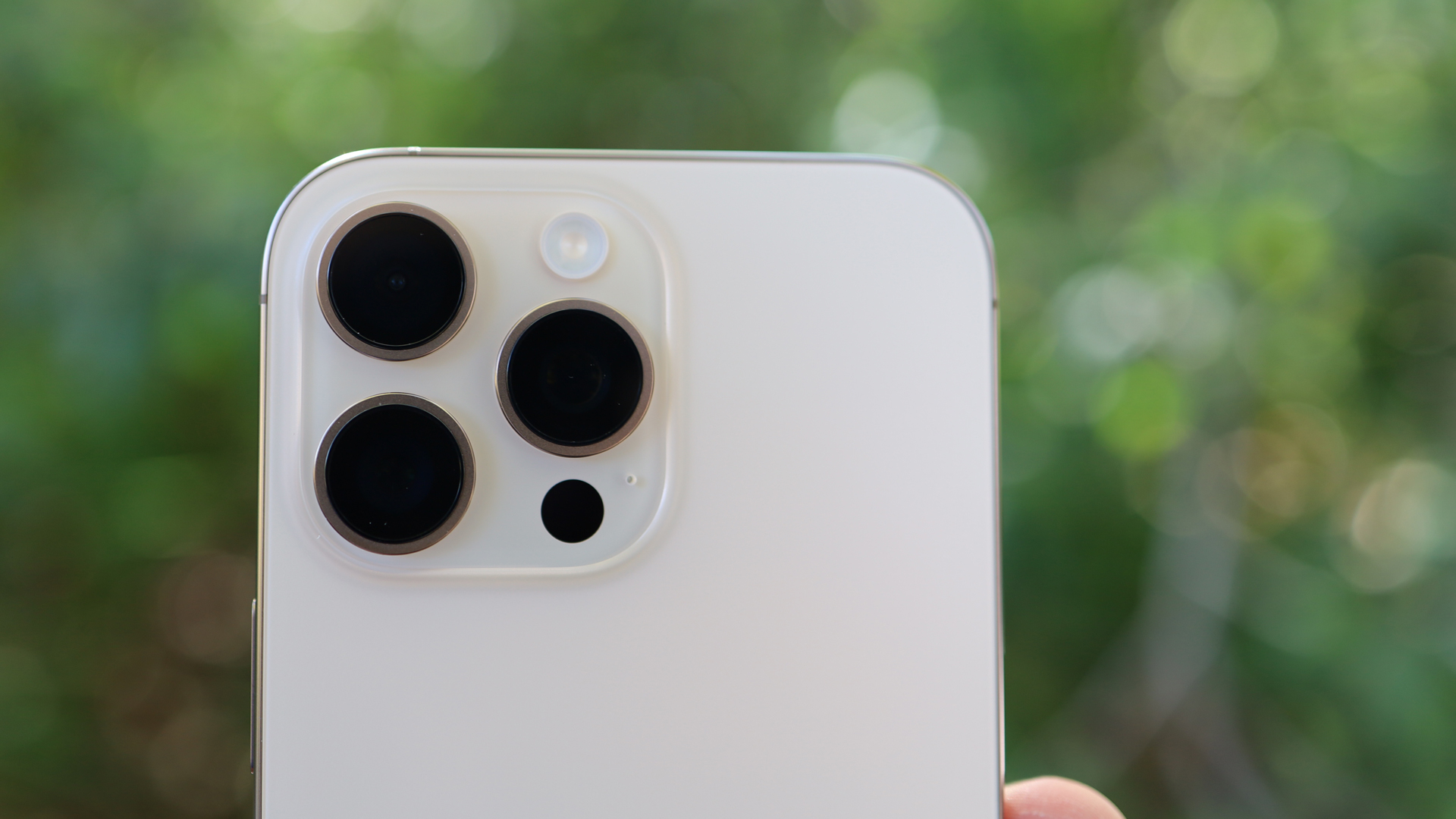
Picture from cdn.mos.cms.futurecdn.net
Rank 7144The iPhone 17 Pro and Pro Max could have a 3.5x optical zoom instead of a 5xHowever a 5x and even 7x lossless zoom might still be achievable through croppingThis change would apparently be paired with a new 48MP sensor
One thing we’ve heard from quite a few sources is that the telephoto camera on the iPhone 17 Pro and iPhone 17 Pro Max could be getting an upgrade, with a 48MP sensor reportedly set to be included in place of the 12MP one on the iPhone 16 Pro models. The latest tip echoes that, but suggests a lot more is changing than just the megapixel count.According to tipster Majin Bu (via 9to5Mac), the iPhone 17 Pro series will have a telephoto camera that offers 3.5x, 5x, and even 7x optical zoom. The wording makes it slightly ambiguous as to how this is achieved, but they mention lossless cropping as a feature, so we’d assume it’s a 3.5x optical zoom camera, which can then crop an image to achieve a 5x or 7x zoom at a lower megapixel count.This sort of optical-quality cropping wouldn’t be possible without upping the megapixels, so it’s a feature that would make sense for Apple to offer if the sensor is 48MP.
Not a new idea for Apple
The iPhone 16 Pro (Image credit: Future / Lance Ulanoff)
We’ve already seen this idea on iPhones, with the 48MP main sensor on the iPhone 16 series being able to take optical-quality 2x zoom photos at 12MP, so it wouldn’t be surprising if Apple added this same feature to the telephoto lens.This change then would arguably be for the better, since you’d still be able to achieve a 5x zoom like you can on the current Pro models, but there would also be longer and shorter distance zooms available too.And being able to get 3.5x images at – presumably – full 48MP quality would be especially desirable for some people, as a 3.5x zoom is typically more useful for portrait shots than a 5x zoom.All that said, while this is a credible claim, we’d take it with a pinch of salt, as the source has a slightly mixed track record, and the iPhone 17 series is still a long way from launching, with September likely to be the announcement month.
You might also like
Our review of the new iPhone 16eNew iPhone 17 report lends weight to rumors of major display and camera upgrades, and a pricey Apple foldableiPhone 17 Air: 5 key rumored features
-

Picture from cdn.mos.cms.futurecdn.net
Rank 7145Project 007 may not have been fully revealed yet, but there is a lot to look forward to from the upcoming James Bond game from IO Interactive. We don't have a lot of information regarding a release date, yet we've still managed to scrape together a few bits and pieces.So far, we've only had two short teaser trailers that doesn’t show any gameplay, but the official website confirms that the story is about James Bond’s origins and it’ll be “completely original”. That means IO Interactive won’t be borrowing stories from previous James Bond movies or books. That said, we also know for a fact that Project 007 doesn't feature actors from the films.As a whole, Project 007 is keeping its cards close to its chest when it comes to gameplay. We can almost certainly expect gunslinging in some form, but the precise details have yet to be revealed. We could be in for some classic first-person action in the vein of Goldeneye 007 for the N64. Alternatively, IO Interactive might opt for some third-person stealth mechanics in the tradition of their much-celebrated Hitman series. But, speculation aside, here's what we know so far.
Project 007: cut to the chase
What is it? A James Bond game from the developer of HitmanWhen can I play it? TBCWhat can I play it on? TBC
Project 007 potential platforms
There are no official details about when we can expect the new Project 007 game. Given we know that IO Interactive is still pulling together its development team, it could be a good few years before the new James Bond title sees the light of day. Interestingly, the game was showcased during the Nintendo Switch 2 reveal event, so we now have one confirmed platform at least.For now, we can also probably expect to see it launch on PS5, Xbox Series X/S and PC, but we don't know definitively. Given the seemingly far out release date, it seems unlikely that it'll come to Xbox One or PS4.
Project 007 trailer
So far, IO Interactive has only provided us with two teaser trailers for Project 007. They're not much to go on, but it's always charming to see a new take on the classic James Bond opening sequence.
Project 007 news
New Bond game could be the start of a trilogySpeaking in an interview with IGN, IO Interactive boss Hakan Abrak shared some details on the upcoming Project 007 game. He revealed: "It's completely beginning and becoming a story, hopefully for a big trilogy out there in the future,"IO Interactive hires audio director for Project 007Making an official announcement on the developer’s website, IO Interactive has announced that its hired a new audio director, Dominic Vega. Having previously worked on big names like League of Legends, Ratchet and Clank: Nexus, and Just Cause 4, Vega stated:“I don’t think there are many sound palettes as iconic as the James Bond universe. It’s one of my favorite soundtracks of all time. Working on such an iconic franchise with IOI, and the audio team here is incredibly exciting."
We're thrilled to welcome Dominic Vega to the team as the Audio Director for Project 007. “Working on such an iconic franchise with IOI and the audio team here is incredibly exciting.” says Vega.Full announcement: https://t.co/IMcRye9flL pic.twitter.com/d8ipXUwhWpJune 15, 2022
Project 007 featured in the Nintendo Switch 2 reveal eventAfter announcing Hitman: World of Assassination for Nintendo Switch 2, IO Interactive then revealed that Project 007 will also be coming to the new platform. A brief teaser trailer was shown, and no further details given.Don't expect familiar actors to returnAt the moment, further details on the project are few and far between, but an interview with IO Interactive's studio director did reveal that the upcoming game won't be based on any of the actors featured in the film series. Hakan Abrak described how his team “have been allowed to make [their] own digital Bond, which will not lean on a Bond actor."
You Might Also Like...
The best horror games to play right nowUpcoming PS5 exclusivesHere are the Xbox Series X games coming in 2024
-

Picture from cdn.mos.cms.futurecdn.net
Rank 7146A Minecraft Movie's name was chosen for a very simple reasonIts director has lifted the lid on why he didn't get more creative with its titleThe decision was taken in light of the hugely successful game's endless storytelling potential
A Minecraft Movie director Jared Hess has a very simple explanation for the film adaptation's uncomplicated title.Speaking ahead of the movie's release on April 4, Hess revealed its plot and cast of characters were just "one of many stories" that could exist within the Minecraft universe.It's an obvious answer to an obvious question, but there's logic to what Hess means. The primary reason is that there's unlimited storytelling potential in Mojang' Studios' best-selling sandbox title. Indeed, every time someone starts a new game, or a group of individuals embark on a new adventure in a unique, procedurally generated world, they've no idea how this new world's story will unfold.It's that 'leap into the unknown' storytelling component that Hess wanted to capture in one of 2025's new movies. Rather than seek narrative inspiration from the seemingly endless number of Minecraft Let's Plays on YouTube, then, Hess and the film's team of writers decided to create a wholly original tale with character that, while relatable, had distinct personalities, strengths, and weaknesses.
Hess' daughter created a hotel for wolves in one of her single-player games (Image credit: Warner Bros. Pictures/Mojang Studios)
"That's what's special about Minecraft," Hess told me. "It's the biggest video game of all-time, but it doesn't have a built-in story to follow, so you bring your own narrative to it every time that you play.
You bring your own narrative to it every time that you playJared Hess, A Minecraft Movie director
"I watched my daughter playing it one day [and] she had a crazy, complex storyline [where] she'd built a hotel for wolves," Hess continued. "I'd never seen that before, but that's proof that there's endless stories that go along with the game."So, while we were developing our movie, we had to have the same approach. We're just one of many, many stories out there that's set in this world with these characters. For me, it was like 'how do we take a group of unlikely heroes, who are in a difficult place in their lives, and send them on this adventure where they have to use creativity to survive and cooperate?'."My introduction to the game was right when it came out. My kids would play it and they were having such a riot, so I thought I had to play it, too. It became something we did together as a family, so to be able to be creative and collaborate with other people just became one of the movie's big themes."
Critics haven't responded kindly to A Minecraft Movie ahead of its April 4 launch (Image credit: Warner Bros. Pictures/Mojang Studios)
Fun as all of that sounds, Warner Bros' film adaptation hasn't been a hit with critics. In my review of A Minecraft Movie, I gave it two stars out of five, said it "isn't the wildly creative blockbuster videogame film adaptation I was hoping for", and told people to wait until it's available to stream on Max.Based on its near-bang average 52% Rotten Tomatoes critical score, it seems many agree with me that it's not very good, either. Nonetheless, industry analysts expect the movie to rake in the cash during its opening weekend at the global box office. Per Deadline, A Minecraft Movie is reportedly eyeing a huge $140m haul this weekend (April 4 to 6). With relatively little in the way of competition during that three-day period, it could defy the critics and easily earn that amount, too.
You might also like
'They were taken out of context': A Minecraft Movie director responds to fan backlash over the film adaptation's visuals'We were old school': A Minecraft Movie's Jared Hess denies using AI to enhance his film adaptation of Mojang's very popular sandbox gameMcDonald's reveals A Minecraft Movie meal with a bizarre set of collectibles and the most sinister sounding sauce ever
-

Picture from cdn.mos.cms.futurecdn.net
Rank 7147Pluralsight survey finds 77% of workers admit to pretending they know more about AI than they doMany workers consider using AI to be lazy, especially leaders93% of employees are worried about losing their job to AI
Nine in 10 (91%) UK tech workers claim to be AI-savvy, yet three-quarters (77%) admit to pretending they know more about AI than they actually do, new research has claimed.The findings from Pluralsuggt come at a critical point for many organizations, with 86% of UK businesses either using or planning to use AI and 93% fast-tracking AI initiatives in the past six months.However, popular misconceptions around the tech continue to plague businesses, preventing the effective deployment and utilization of AI.
AI misconceptions are leading to a lack of AI transparency
Pluralsight found that two in three (59%) workers say that AI use is seen as lazy, rising to three in four (73%) at the C-suite level.As a result, nearly one-third (31%) hide their AI use due to fear of judgment and two-thirds (65%) have observed colleagues using AI without admitting it, highlighting the need for more ethical AI use guidelines and consistent strategies.“Without a clear understanding of the right ways to use AI, UK businesses risk wasted investment, inefficiencies and even security threats,” Pluralsight Chief Technology and Product Offixer Chris McClellan said.“Using AI at work isn’t about cutting corners. When used correctly, it’s a way to increase efficiency and alleviate talented workers from routine tasks,” McClellan added.More broadly, a considerable majority (93%) of workers are still concerned that AI tools could replace their jobs, even though 44% of firms have actually added more roles due to AI growth and a further 87% stated they’re likely to replace or outsource roles just to tackle the AI skills gap.Highlighting just how important it is for workers to upskill in AI, Pluralsight’s study revealed that only 6% do not factor in AI skills when hiring, with 94% agreeing that staying up-to-date with AI skills is the best way to ensure having a job.“The key for tech workers isn’t to resist AI; it’s about leaning into upskilling. Employees who proactively learn to work alongside AI will be the ones shaping the future of the workplace, not being replaced by it,” McClellan concluded.
You might also like
Businesses are struggling to scale AI across their businessCheck out the best online learning platformsWe’ve listed the best job sites
-

Picture from cdn.mos.cms.futurecdn.net
Rank 7148More signs of ultra wide-band in Find My Device are spottedThe upgrade could be rolling out imminentlyDevices can be tracked more precisely with the technology
Google's Find My Device platform got a hefty upgrade last year, adding support for offline devices and third-party trackers, and it looks like it's about to get another significant boost – courtesy of ultra wide-band technology (UWB).This is the precise location tracking protocol that you'll find in everything from the Apple AirTag to the Google Pixel 9 Pro, and the team at Android Authority just found references to it inside the latest Find My Device app for Android.Phones and other gadgets can already be located via GPS, Bluetooth, and Wi-Fi, but UWB adds an extra level of accuracy. Rather than just knowing something is in your house, you'll actually be able to find the sofa cushion it's buried under.We actually got the first signs of this upgrade last June, which were then followed up by mentions of a 'compass' tool in the Find My Device app. The latest code snippets – which aren't yet live – suggest the feature is now about to be deployed.
Compatible devices
AirTags offer UWB support (Image credit: Apple)
Ultra wide-band isn't just about location tracking: the standard works over short distances using radio waves, and it also has applications in smart home and car tech (letting you wirelessly unlock your vehicle, for example).For you to be able to find something via UWB, you'll need the tech to be built into the phone you're searching with, and the gadget you're trying to find. You can then find the lost item to an accuracy of just a few centimeters or inches.Many devices now include UWB, such as the Google Pixel Watch 3, but it's not everywhere – the flagship Google Pixel 9, launched last August, doesn't offer UWB. You will find UWB in some tracking devices, including the Galaxy Smart Tag 2.We're still waiting for some Google-branded AirTag competitors, and we haven't seen anything to suggest they're launching imminently. If Google were to launch its own trackers soon, it would be the perfect way to showcase UWB support for Find My Device.
You might also like
AirTags were pitched against Google's Find My Device trackersOur full review of the Google Pixel 9 ProAndroid's Find My Device can now let you track your friends
-
Picture from cdn.mos.cms.futurecdn.net
Rank 7149NETSCOUT report claims Distributed Denial of Service attacks are on the riseSuch attacks are increasingly being used as political weaponsNotorious Russian Group NoName057(16) targeted European countries in the second half of 2024
Distributed Denial of Service (DDoS) attacks are reportedly becoming a tool of choice for politically motivated cybercriminals, new research has revealed.Sociopolitical events like civil protests, elections, and policy disputes are increasingly playing out through digital platforms, and DDoS attacks are an effective way to erode trust in institutions and critical services, NETSCOUT research claims.These intrusions are aimed at a wide range of industries, and are difficult to defend against as they require constant vigilance and advanced cybersecurity strategies, as shown by a recent Pro-Russian hacking group targeting critical infrastructure and public services through DDoS attacks which disrupted key utilities and companies.
The scale of the surge
A DDoS attack is a technique in which an attacker will flood a server with an enormous amount of traffic, overwhelming the site and making it impossible to access. The malicious traffic can cripple websites and infrastructure, and can cause serious financial and reputational damage.The nature of these attacks means they are very often politically motivated, as opposed to ransomware attacks, for example, which are unsurprisingly largely carried out for financial reasons.According to the research, the second half of 2024 saw almost 9 million DDoS attacks, a 12.75% increase from the first six months. Israel in particular saw a 2,844% increase in attacks, seeing a high of 519 in one day.The above mentioned Russian hacking group, NoName057(16), focused primarily on government services in the UK, Belgium, and Spain. Georgia also saw a 1,489% increase in attacks in the lead up to the “Russia Bill”, highlighting its use as a political weapon.“DDoS has emerged as the go-to tool for cyberwarfare,” stated Richard Hummel, director, threat intelligence, NETSCOUT.“NoName057(16) continues to be the leading actor for politically motivated DDoS campaigns targeting governments, infrastructure, and organizations. In 2024, they repeatedly targeted government services in the United Kingdom, Belgium, and Spain.”
You might also like
Take a look at our picks for the best malware removal software aroundCheck out our choice for best antivirus softwareOne of the most powerful ransomware hacks around has been cracked using some serious GPU power
-

Picture from cdn.mos.cms.futurecdn.net
Rank 7150New Disney+ movies are coming thick and fast now, aren't they?After a lengthy barren spell, we've had four consecutive weeks where a new film had joined Disney+'s movie library. This week, one of 2024's final new movies in A Real Pain has landed on one of the world's best streaming services. Well, outside of the US, anyway – it landed on Hulu stateside in January.Our best Disney+ movies is also packed with other great film suggestions. Bookmark that page for later, though, and read on to see if any of the recently released new Disney+ movies take your fancy first.
New Disney+ movies: April
A Real Pain
Release date: April 2 (available on Hulu in the US)Runtimes: 91 minutesAge rating: R (US) / 16+ (UK)Directors: Jesse EisenbergMain cast: Jesse Eisenberg, Kieran Culkin, Will Sharpe, Daniel Oreskes, Liza Sadovy, and Jennifer GreyRotten Tomatoes (RT) score: 96% (critics); 81% (audiences)
Watch A Real Pain on Disney+
New Disney+ movies: March
Mufasa: The Lion King
Release date: March 26Runtimes: 125 minutesAge rating: PG (US) / 9+ (UK)Directors: Barry JenkinsMain cast: Aaron Pierre, Kelvin Harrison Jr, Tiffany Boone, Preston Nyman, Kagiso Lediga, Mads Mikkelsen, and Thandiwe NewtonRotten Tomatoes (RT) score: 56% (critics); 89% (audiences)
Watch Mufasa: The Lion King on Disney+
O'Dessa
Release date: March 20 (available on Hulu in the US)Runtimes: 108 minutesAge rating: PG-13 (US) / 16+ (UK)Directors: Geremy JasperMain cast: Sadie Sink, Kelvin Harrison Jr, Murray Bartlett, and Regina HallRotten Tomatoes (RT) score: 40% (critics); 64% (audiences)
Watch O'Dessa on Disney+
Moana 2
Release date: March 12Runtimes: 102 minutesAge rating: PG (US) / 6+ (UK)Directors: David G Derrick Jr, Jason Hand, and Dana Ledoux MillerMain cast: Auli'i Carvalho, Dwayne Johnson, Alan Tudyk, Temeura Morrison, Nicole Scherzinger, and Rose MatafeoRotten Tomatoes (RT) score: 61% (critics); 86% (audiences)
Watch Moana 2 on Disney Plus
New Disney Plus movies: coming soon
There aren't many other new Disney+ movies set to arrive this month, so another barren spell may be in-bound. For now, here are three films that are due to land on the platform over the next seven days:
Not Just a Goof – April 7 (docufilm)Pets – April 11 (docufilm)The Abyss in 4K – April 11 (US only)
Not up for a movie? Try our pick of the best Disney+ shows, see if there's a free Disney+ trial available, read our Disney+ review, or get the lowdown on the new Disney+ price points.


