News
This constantly updated list features the latest and most important news articles, ranked in order of significance. The top stories highlight major developments, breaking news, and critical updates across various topics, ensuring you stay informed about the most pressing issues. As new articles are added, the list adapts to reflect the latest priorities, keeping the most impactful stories at the forefront. Whether it’s global events, technology breakthroughs, or industry trends, this dynamic list ensures you always have access to the most relevant and timely information.
-

Picture from static.independent.co.uk
Rank 71151 -

Picture from static.independent.co.uk
Rank 71152 -

Picture from assets1.cbsnewsstatic.com
Rank 71153 -

Picture from image.cnbcfm.com
Rank 71154 -
Picture from image.cnbcfm.com
Rank 71155 -

Picture from cdn.mos.cms.futurecdn.net
Rank 71156A new Gemini Space for Pixel feature has leakedIt displays information like sports scores and birthdaysThe feature is similar to some parts of One UI 8Changes are coming to the At a Glance widget that sits on the Pixel home screen, according to hidden code spotted in the latest preview version of Android – and it could evolve to be more like the Now Bar in Samsung's One UI software.The code spotting was done by Android Authority, and the team there was able to get something called Gemini Space up and running in Android Canary (the earliest beta version of Android you can get).We haven't heard anything official about Gemini Space yet, but it looks to be based on At a Glance, and is able to show more information: Sports scores and birthday reminders, for example, as well as weather forecasts and details of calendar appointments. Some of this info can already be displayed on Android through persistent notifications.All of these updates can be viewed on the lock screen as well as the home screen, and it seems as though users will also have the option to expand these cards into a Daily Hub that delivers relevant information throughout your day.Sound familiar?The At a Glance widget on Pixel phones (Image credit: Future)Displaying contextually relevant information on the home screen and lock screen – including sports scores, timers, and fitness data – sounds a lot like what Samsung is doing with the Now Bar and Now Brief on One UI 7 and One UI 8.It seems Google has looked at what Samsung is doing, and wants to follow suit. At the same time, you could also argue that Samsung's widgets were inspired by At a Glance on Pixels – and Live Activities on iOS.We also know that a feature called Live Updates is coming to Android 16, which will put real time information on the lock screen as well. Across the board we're seeing improvements to how relevant information gets surfaced for users – no matter which make and model of phone you're using.It's not clear when the new Gemini Space might make its way to Pixel phones, but you can expect major updates to Android 16 as we go through the rest of the year, including a wider rollout of the Material 3 Expressive redesign.You might also likeGoogle just announced 5 new Gemini features coming to AndroidThese are the best Android phones right nowWe may have just got pricing details for the Google Pixel 10
-

Picture from ichef.bbci.co.uk
Rank 71157 -

Picture from static.independent.co.uk
Rank 71158 -

Picture from static.independent.co.uk
Rank 71159 -

Picture from static.independent.co.uk
Rank 71160 -

Picture from static.independent.co.uk
Rank 71161 -

Picture from static.independent.co.uk
Rank 71162 -

Picture from static.independent.co.uk
Rank 71163 -

Picture from static.independent.co.uk
Rank 71164 -

Picture from ichef.bbci.co.uk
Rank 71165 -

Picture from static.independent.co.uk
Rank 71166 -

Picture from cdn.mos.cms.futurecdn.net
Rank 71167French and UK tech experts will collaborate on multiple projectsOne of them is to secure technology used in GPS systemsGPS needs to be more resilient to blocking and jammingBritish and French technology experts will be working together more closely to make GPS and other similar technologies more resistant to disruptions.The news was announced by the UK Department for Science, Innovation & Technology (DSIT) earlier this week. As per the announcement, experts from the two countries will work together on a number of different projects, including strengthening the resilience of critical infrastructure to the signal-jamming seen in the Russo-Ukrainian war.“From our electricity infrastructure, to transport, to financial transactions, the tech we rely on for everyday life depends on reliable Positioning, Navigation and Timing (PNT), often provided via satellites,” the announcement reads. “The conflict in Ukraine has shown how new technologies – in some cases, just small hand-held devices – can be used to disrupt PNT services, potentially causing major disruption to the vast areas of life and the economy reliant on them.”e-LORANOne of these complementary technologies, highly resistant to jamming, is e-LORAN, a system that uses ground-based radio towers as a “backup” to GPS. DSIT describes it as being “much more challenging” to block, and as such can keep critical UK infrastructure technology running “even when GPS fails”.The war in Ukraine seems to have exposed significant weaknesses of today’s GPS systems, which could end up in tragedy. According to Ukrainska Pravda, The Telegraph’s researchers examined Flight Radar data for the first four months of 2024, which included 63 UK military aircraft completing 1,467 flights over Eastern Europe and the Middle East.“During this time, the United Kingdom’s military aviation flew 504 transport and reconnaissance missions over Eastern Europe, with 142 of them encountering GPS jamming, and in 60 cases, such efforts occurred multiple times,” the publication explained.At the same time, Business Insider reported that Finnish soldiers were training with “basic navigation tools” - paper maps and compasses, due to the unreliability of GPS systems.Via The RegisterYou might also likeUS government probing security risks of mobile devices using Russian or Chinese satellitesTake a look at our guide to the best website builders aroundWe've rounded up the best password managers
-

Picture from cdn.mos.cms.futurecdn.net
Rank 71168If you weren’t a fan of police procedural Bosch or its subsequent spinoff Bosch: Legacy, there’s a good chance you’re ready to write off Prime Video’s latest installment, Ballard. Despite only being released on July 9, the new TV show has already got an astonishing 100% critical rating on Rotten Tomatoes…and that’s excellent news for the franchise as a whole.But it isn’t just the smashing review score that’s responsible for Ballard’s success. If you’ve not already spotted it on our everything new coming to Prime Video in July 2025 list, the series follows LAPD detective Renée Ballard (Maggie Q) as she oversees a cold case in a new department. As you might imagine, it’s all not as straightforward as that. Don’t let Bosch: Legacy dissuade you from trying Ballard as it hasn’t set an amazing example for crime fans wanting to tune in. Sure, the critic’s score still stacks up (it also had 100% on Rotten Tomatoes), but Harry Bosch’s (Titus Welliver) retirement was more of the same, and that got tired and stale as the years passed. Even though we drove a cop car head-first into a snooze fest, don’t tarnish Ballard with the same brush.Don’t write off Prime Video’s Ballard just because Bosch: Legacy was awfulFrankly, there’s never been a better time to be a Bosh: Legacy hater than now. Ballard’s return to the small screen has made stimulating and fresh crime drama look so effortless, it’s difficult to see how the franchise avoided a new lease of life for so long. The fact we only briefly met Ballard herself during the finale of Bosch: Legacy doesn’t hurt (she’s a big part of Michael Connelly’s original book series), but the new show’s sprint towards success runs much deeper than that.We start off strong with Maggie Q’s casting – the actress is arguably underappreciated in the action movie genre she’s cultivating as her own (Mission: Impossible III remains the best in my book, and she should have had a two-film arc at the very least). Her cold-case detective is sharp and commanding, relentless in the face of the city’s challenges. So far, so good.Then there’s the storylines themselves. Ballard isn’t choosing to play it safe, extending the danger we’d normally see within the department into the personal lives of characters we’re growing attached to. Ballard beats up an intruder who enters her home, Samira Parker (Courtney Taylor) isn’t afraid to be a voice for the most vulnerable victims, and corrupt police conduct is exposed and tackled without hesitation.Prime Video has also played it smart by including Bosch as a cameo role in the new series. Those that did appreciate the main series and Bosch: Legacy don’t have to do without him, but there’s more than enough breathing room for Ballard to become its own programme. There are no shadows to stand in here.So what are you waiting for? Ballard is the new TV show you need to be streaming this week. If nothing else, you might be inspired to kick a door down (or two).You might also likeThe Boys season 5: everything we know so far about the popular Prime Video show's final entryReacher season 4: everything we know so far about the hit Prime Video show’s returnThe best TV show on Prime Video? I can’t stop coming back to this comfortingly cringey comedy series from the 2000s
-

Picture from ichef.bbci.co.uk
Rank 71169 -

Picture from static.independent.co.uk
Rank 71170 -

Picture from ichef.bbci.co.uk
Rank 71171 -

Picture from static.independent.co.uk
Rank 71172 -

Picture from image.cnbcfm.com
Rank 71173 -
Picture from cdn.mos.cms.futurecdn.net
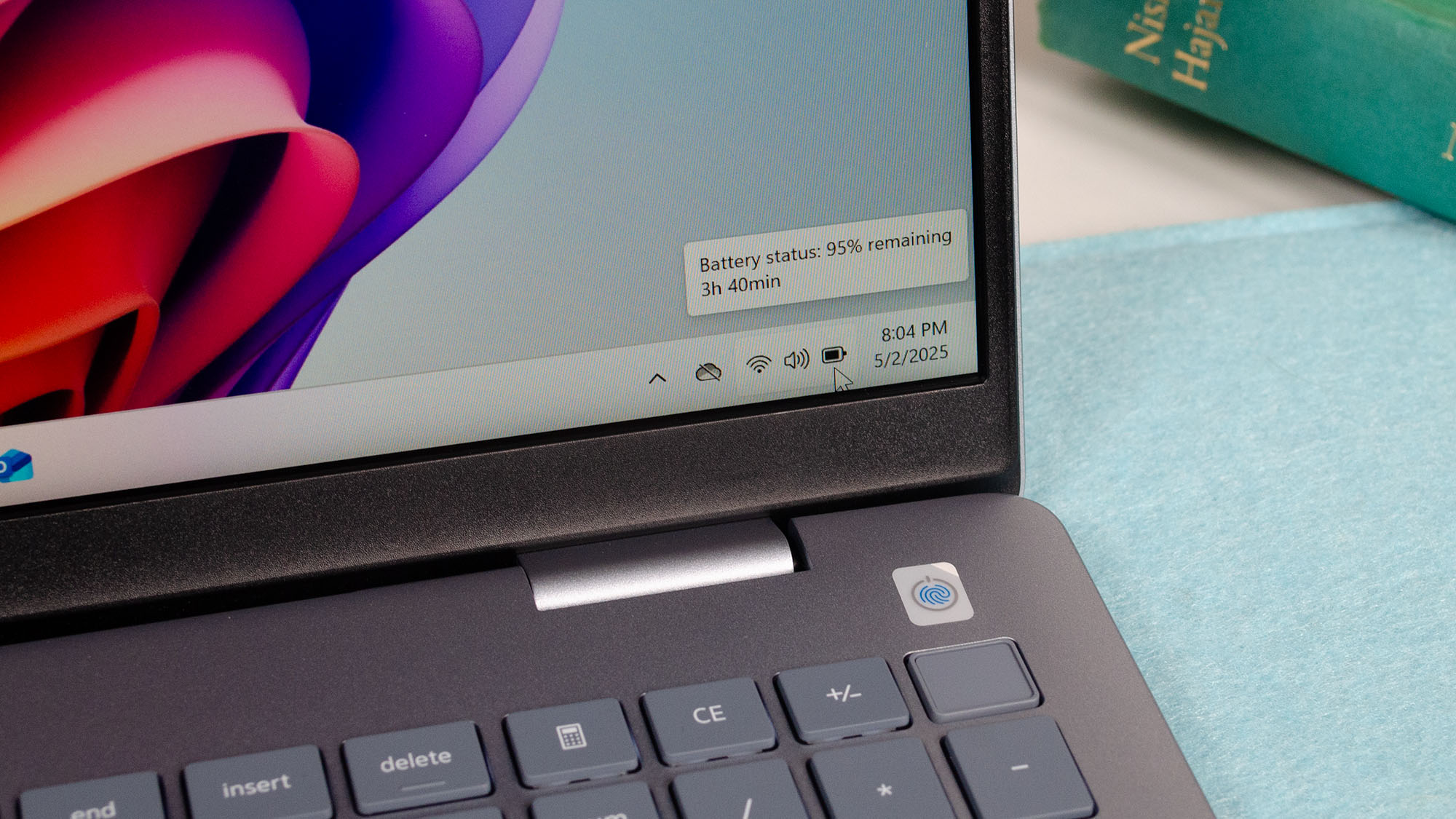
Rank 71174Windows 11 has a fresh preview build in the Canary channelIt offers a new adaptive energy saver feature which is opt-in by natureTurning it on means Windows 11 will intelligently save battery life whenever the system isn't doing anything taxingMicrosoft is trying out a new feature to help give Windows 11 laptops better battery life, and it sounds like a promising idea.It's called adaptive energy saver, and as Windows Central noticed, the functionality is now in testing in the Canary channel (the earliest of the four test channels that Microsoft uses).Normally, energy saver only kicks in when the battery is running low (the exact level at which that happens depends on what the user specifies), but with the new intelligent mode of operation, energy saver will be able to operate at any time.The idea is that if the system detects that there's not much going on – just basic tasks are running, perhaps just light web browsing, or you're writing an email – energy saver will activate in the background and save some battery.At the moment, the capability is just rolling out in testing, so not every Windows Insider in the Canary channel will see it to begin with.It's also an opt-in feature, meaning that you'll have to turn it on in Settings (System > Power & battery) to get the benefit. In other words, by default, nothing will change with the way Windows 11 employs energy saver, unless you specifically turn on adaptive energy saver.Analysis: Bright idea(Image credit: Getty Images)How does adaptive energy saver work? That isn't clear, and Microsoft doesn't provide much in the way of detail in its preview build blog post, save to say that the feature will do its magic "based on the power state of the device and the current system load".I can only assume that it's going to rein in the CPU and GPU – two of the most power-hungry components inside a laptop (or desktop) – when they're not doing much, which, given how many of us use our laptops, is going to be quite often. So there's a fair chance that this energy-saving trick could actually conserve quite a lot of battery life. (Fingers crossed – and check here for more tips in that same vein, incidentally).A key point is that the level of brightness set for the screen won't ever be changed by adaptive energy saver. While the display is the other major source of power drain in a laptop, messing with the brightness would likely only annoy users – I know I wouldn't want my screen suddenly growing dimmer for no apparent reason – so it's a sensible decision to put the display to one side here.While it's obviously designed for laptops, when I first saw this feature I imagined that it could be useful in bringing an eco-friendly element to desktop PCs, too (saving on power bills). That isn't the case, though, and Microsoft makes it clear that this is a notebook-only innovation.For the more paranoid who are worried about adaptive energy saver perhaps messing with performance when it shouldn't – perhaps due to bugs, for example – it's worth repeating that it will be an opt-in ability. If you don't like the sound of it, just don’t switch the adaptive mode on.Also, we shouldn't forget that features in testing may not make the cut for final release in Windows 11 anyway – but I'm hoping this one does.You might also like...Latest Windows 11 update fail brings yet more installation woes – but some other reported bugs have me seriously worriedNo, Windows 11 PCs aren't 'up to 2.3x faster' than Windows 10 devices, as Microsoft suggests – here's why that's an outlandish claimWindows 11 desktop PCs could soon get Copilot+ AI powers, as Intel might radically switch tactics with next-gen CPUs
-

Picture from techcrunch.com
Rank 71175 -

Picture from ichef.bbci.co.uk
Rank 71176 -

Picture from static.independent.co.uk
Rank 71177 -

Picture from static.independent.co.uk
Rank 71178 -

Picture from static.independent.co.uk
Rank 71179 -

Picture from image.cnbcfm.com
Rank 71180 -

Picture from cdn.mos.cms.futurecdn.net
Rank 71181Cloudflare’s 1.1.1.1 DNS resolver service fell victim to a simultaneous BGP hijack and route leak event, causing massive internet outages and degradation worldwide. Pakistan caused the most famous BGP outage. The government tried to block access to YouTube within the country. Their misconfiguration caused a worldwide YouTube outage.Most organizations are targets of attacks 7.5 times a year. And while most are resolved quickly, these are examples of public infrastructure failures that are beyond your control.What other technology do you rely on every day that was invented in the 1980s? Not your smartphone. Not your car. Not your TV. And definitely not your work tools. Yet, every time you send an email, connect to a website, or deploy a cloud service, you’re relying on core internet protocols that predate the web itself.The Fragile FoundationThe Border Gateway Protocol (BGP) was designed in 1989, an era when the “internet” was barely a concept and security was an afterthought. Back then:- Home users connected via dial-up modems.- Businesses considered themselves cutting-edge if they had a T1 line.- Network reliability was a hope, not an expectation.BGP’s original purpose was simple: keep the nascent internet stitched together. It provided large institutions with a means to announce which IP address blocks they controlled and to learn about others. The protocol allowed routers across autonomous systems (ASes) to share route announcements and dynamically discover paths to distant networks.BGP was designed for resilience, not determinism. For openness, not security.Speed, uptime, and securityToday, we demand speed, uptime, and security that BGP was never built to deliver. Multi-gigabit fiber reaches homes. Enterprises span multiple clouds across continents. Workloads like real-time video, financial transactions, and machine learning require low-latency, high-throughput data paths.However, BGP still routes traffic based on trust and reachability, rather than performance or identity. It can’t enforce policies. It can’t prevent hijacks. And it certainly can’t guarantee who’s on the other end.Despite multiple security incidents and efforts, such as RPKI and BGPsec, the internet still routes traffic based on a chain of trust that can be exploited by anyone with a few malicious route announcements. Most fixes require coordination that doesn’t exist and IT infrastructure upgrades that move at glacial speed.The result? The modern internet rides on a protocol that thinks it’s still 1992.Public by DefaultAnother artifact of that era is the Domain Name System (DNS). Created to make numeric IP addresses human-readable, DNS transformed how people accessed websites. Instead of memorizing strings of numbers, you could simply type in a name.The problem? DNS is public by design.Every query, every resolution, and every domain is visible and discoverable. Attackers can enumerate subdomains, discover shadow IT resources, and probe for vulnerabilities – all by posing as legitimate users.We’ve seen this pattern before. Consider phone numbers. In the 1990s, receiving a call or piece of mail felt like an event. Now? Most calls are spam, and most email is junk. People don’t pick up unless they recognize the number. Our relationship with public identifiers has undergone a fundamental shift.The same evolution is happening with network services. Public IP addresses and DNS names are easily scraped, scanned, and attacked. In an age of automation and AI-assisted hacking, exposing your infrastructure by default amounts to sending an invitation.Yet we continue treating server addresses like phone numbers in a white pages directory – a model that no longer works for the threats we face.Obsolete AssumptionsBoth BGP and DNS reflect assumptions that simply don’t hold up anymore:- Assumption: Networks are trusted.-- Reality: Most attacks now originate from within or via compromised peers.- Assumption: Routes are stable.-- Reality: Internet routes change unpredictably due to performance tuning, outages, and misconfigurations.- Assumption: Identities don’t matter.-- Reality: Zero-trust architecture has become the standard for secure design.- Assumption: Services are few and fixed.-- Reality: Modern architectures dynamically spin up and down thousands of services.The more we scale and automate, the more these assumptions crumble.Time for a RethinkThe internet’s early architecture was undeniably brilliant for its time. But that time has passed.Today’s needs are different. We need:- Deterministic data paths that can be trusted end-to-end.- Secure naming systems that are private by default.- Policy-aware routing that aligns with business, performance, and compliance requirements.- A model where services announce themselves securely to authorized peers, not to the entire internet.These aren’t enhancements; they’re necessities.The irony is striking: everything else in tech has evolved dramatically. Compute became elastic. Storage turned redundant and distributed. Deployment went fully automated. But networking? It’s still largely manual, primarily public, and built mainly on 40-year-old concepts.This should be our wake-up call. We can’t keep patching internet security with duct tape and hoping for the best. It’s time to challenge the status quo and ask a hard question: are the foundational protocols we depend on every day actually fit for purpose anymore?Security and privacy can’t remain afterthoughts we layer onto a crumbling foundation. They need to be built from the ground up. That means completely reimagining how the internet connects, routes, and identifies everything.Think about it: what other critical system in your life still runs on ideas from the 1980s?LINK!This article was produced as part of TechRadarPro's Expert Insights channel where we feature the best and brightest minds in the technology industry today. The views expressed here are those of the author and are not necessarily those of TechRadarPro or Future plc. If you are interested in contributing find out more here: https://www.techradar.com/news/submit-your-story-to-techradar-pro
-

Picture from static.independent.co.uk
Rank 71182 -

Picture from image.cnbcfm.com
Rank 71183 -

Picture from static.independent.co.uk
Rank 71184 -

Picture from static.independent.co.uk
Rank 71185 -

Picture from static.independent.co.uk
Rank 71186 -

Picture from static.independent.co.uk
Rank 71187 -

Picture from cdn.mos.cms.futurecdn.net
Rank 71188The tubular bike comes in two guises, with a top speed of 53mphIts frame houses a removable battery that looks like a giant AAPrices start at €5,999 (around £5,200/$7,000/AU$10,600)The story of Sol Motors is a long and slightly turbulent one, as the slightly bizarre, Pocket Rocket electric two-wheeler has been teased for many years but struggled to fully achieve lift off.Now, the German innovators are ready to release their pipe-shaped urban transport into the wild, with pre-orders being taken now and delivery to anywhere in the world typically taking around 6-8 weeks from point of purchase.Designed to be small, lightweight and practical, the Pocket Rocket comes in two guises that cover the full spectrum of license requirements in Germany (these will differ across markets).The standard model, for example, has a peak power output of 6.5kW and is limited to a top speed of 45kph (just under 30mph), which makes it legal to ride on most moped or scooter licenses in Europe.For those wanting more punch, there’s an S model that develops 8.5kW of peak power and can hit 85kph (or around 53mph), which will generally require an additional license.Both models weigh just 87kg and offer an electric range of between 42 and 67 miles, depending on the version.When it comes time to charge, the large tubular battery pack that is housed within the frame’s crossbar can be removed and charged in the house, office or apartment, with Sol even offering a stylish charging station to neatly hang the battery from.What’s more, customers can buy additional battery packs for rapid swaps, although this will see the final bill increase other the tune of €1,695 (around £1,470/$2,000/AU$3,000).Similarly, if you go wild with the online configurator, which offers a number of frame, fender and logo colors, the price starts to tickle the €8,000 (around £7,000/$9,300AU$14,200) mark.Funky, fun but not for everyone(Image credit: Sol Motors)The emerging EV landscape has encouraged a number of start-ups to produce all manner of weird and whacky designs, but the Sol Pocket Rocket is up there with some of the strangest.Why anyone would want to ride atop a drainage tube is anyone’s guess and ergonomically, it doesn’t look like a great options for particularly tall or very short users, as there’s not much in the way of adjustability.But like Infinite Machine, which produces highly futuristic electric scooters and pedelecs, Sol Motors is offering something a bit different for those wanting lightweight, easy-to-maintain urban transport that turns heads.Will it be the next big thing? Probably not. But will it raise a few smiles on the streets? Most definitely.you might also likeI rode the new Maeving RM1S – and it's the first truly convincing 125cc electric motorbike I've triedRoyal Enfield has turned this classic WW2 bike into a next-gen EV range – and it might just take electric motorcycles mainstreamTesla introduces Grok AI into some of its cars, but it can’t control the vehicle… yet
-

Picture from ichef.bbci.co.uk
Rank 71189 -

Picture from assets2.cbsnewsstatic.com
Rank 71190 -

Picture from ichef.bbci.co.uk
Rank 71191 -

Picture from static.independent.co.uk
Rank 71192 -

Picture from assets2.cbsnewsstatic.com
Rank 71193 -

Picture from cdn.mos.cms.futurecdn.net
Rank 71194Nintendo is asking Japanese players for their thoughts on Nintendo Switch 2 Game-Key CardsIt follows reports of low sales for third-party Nintendo Switch 2 softwareIt hopefully signals a shift towards more traditional physical releasesNintendo is asking Japanese players for their thoughts on the controversial Nintendo Switch 2 Game-Key Cards.As first spotted by SwitchSoku and reported by VGC, surveys have been going out to Nintendo Switch 2 players in Japan.The multiple-choice form asks whether you are aware of the existence of Game-Key Cards or currently own any. Next, it lists a number of the characteristics of Game-Key Cards and prompts you to select the ones you already know.Finally, it asks whether you would choose the digital download version of a piece of software if a Game-Key Card was available.If you're not aware, Game-Key Cards are a special type of Nintendo Switch 2 release. They are physical game cards that do no contain any substantial data. When inserted into a Nintendo Switch 2 system, they prompt a download of the game much like an eShop purchase.You need to insert the Game-Key Card every time you want to access the title. The game takes up space on your system's internal storage, negating one of the big benefits of traditional game cards.The only real benefit of a Game-Key Card is that it can be resold or swapped between multiple consoles freely, though in my eyes this isn't really worth the hassle.The vast majority of Nintendo Switch 2 third-party releases have been Game-Key Cards, much to the disappointment of some players.As sales of third-party software has reportedly been lower than expected, I suspect that this survey signals that Nintendo is re-evaluating its approach and hopefully will begin pushing developers towards traditional physical releases.You might also like...'Coming soon': IO Interactive issues update on fixes for Hitman performance problems on Nintendo Switch 2Donkey Kong Bananza has potentially been in development for nearly eight years: 'we started developing it after finishing Super Mario Odyssey'A new Nintendo Direct is reportedly scheduled for this month – here's what to expect and our predictions for the rumored broadcast
-

Picture from techcrunch.com
Rank 71195 -

Picture from ichef.bbci.co.uk
Rank 71196 -

Picture from static.independent.co.uk
Rank 71197 -

Picture from static.independent.co.uk
Rank 71198 -

Picture from static.independent.co.uk
Rank 71199 -

Picture from static.independent.co.uk
Rank 71200