News
This constantly updated list features the latest and most important news articles, ranked in order of significance. The top stories highlight major developments, breaking news, and critical updates across various topics, ensuring you stay informed about the most pressing issues. As new articles are added, the list adapts to reflect the latest priorities, keeping the most impactful stories at the forefront. Whether it’s global events, technology breakthroughs, or industry trends, this dynamic list ensures you always have access to the most relevant and timely information.
-

Picture from static.independent.co.uk
Rank 70151 -

Picture from static.independent.co.uk
Rank 70152 -

Picture from static.independent.co.uk
Rank 70153 -

Picture from static.independent.co.uk
Rank 70154 -
Picture from cdn.mos.cms.futurecdn.net
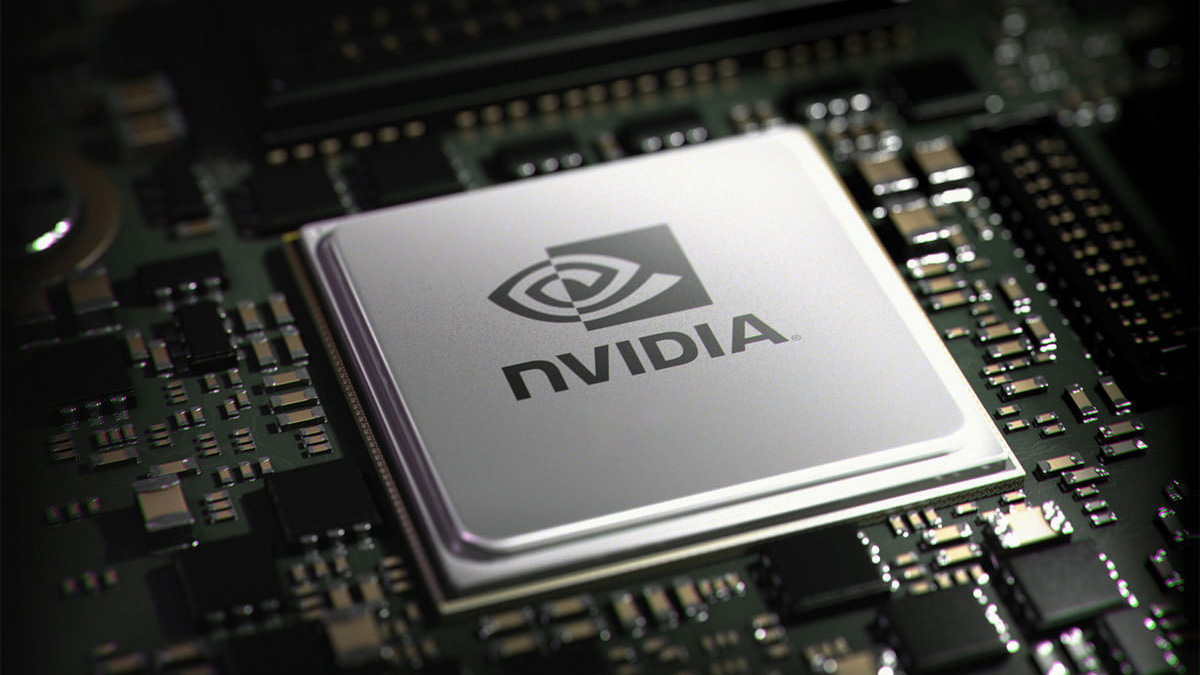
Rank 70155Security researchers from University of Toronto warn on Rowhammer flawOlder GPUs seem to be vulnerableNvidia urges users to update as soon as possibleNvidia is urging users to apply mitigations it provided against so-called Rowhammer attacks after new research confirmed their potential to cause serious and stealthy hardware-level compromises.Rowhammer is an exploit of a vulnerability in dynamic RAM (DRAM), where repeatedly accessing (or "hammering") a row of memory can cause bit flips in adjacent rows. As a result, threat actors could bypass security boundaries, triggering privilege escalations, data tampering, or even denial-of-service states.Although this is a hardware-level issue, software-based techniques can trigger and weaponize the flaw remotely.Newer GPUs are safeAlthough known for more than a decade, Rowhammer attacks have first been exploited in 2018, and even then - very rarely and in limited capacity - mostly due to their complexity and hardware dependencies.However security researchers Chris (Shaopeng) Lin, Joyce Qu, and Gururaj Saileshwar, from the University of Toronto recently published new research demonstrating the practical use of the flaw:"We ran GPUHammer on an NVIDIA RTX A6000 (48 GB GDDR6) across four DRAM banks and observed 8 distinct single-bit flips, and bit-flips across all tested banks," the researchers said. "The minimum activation count (TRH) to induce a flip was ~12K, consistent with prior DDR4 findings.""Using these flips, we performed the first ML accuracy degradation attack using Rowhammer on a GPU."The “ML accuracy degradation attack” means Rowhammer was used to degrade machine-learning model accuracy, from the usual 80% down to a depressing 1%, using a single bit flip.Nvidia has urged users to activate the System Level Error-Correcting Code mitigation, which protects against Rowhammer on GDDR6 devices. The mitigation works by adding redundant bits and correcting single-bit errors, maintaining data reliability and accuracy.The list of affected GPUs is rather extensive, and besides the RTX A6000, includes multiple Blackwell, Volta, and Turing products.The full list can be found on this link - but newer GPUs come with built-in protection, Nvidia said.Via BleepingComputerYou might also likeModern memory chips increasingly vulnerable to this physical hacking techniqueTake a look at our guide to the best authenticator appWe've rounded up the best password managers
-

Picture from static.independent.co.uk
Rank 70156 -

Picture from static.independent.co.uk
Rank 70157 -

Picture from cdn.mos.cms.futurecdn.net
Rank 70158Iran's Information Technology Organization is seeking new cloud computing providersBidders will be evaluated, graded and then tanked for suitabilityOther regions are also modernizing tech stacksThe Iranian government is apparently seeking cloud computing suppliers as it bids to rebuild its tech stack.The nation has announced plans to evaluate, grade and rank cloud providers to determine which would be the best suit for hosting key government services, with plans to form a panel of at least three qualified cloud operators deemed fit for purpose.The Information Technology Organization of Iran (ITOI) is now set to assess potential cloud providers based on three different standards – ISO 27017 (cloud security controls), ISO 27018 (protection of personally identifiable information), and NIST SP 900-145, which relates to US cloud computing definition.Iran is welcoming bids for its next big cloud providerIran's adoption of NIST standards might be surprising given the country's ongoing tensions with the US, but its recognition of these well-regarded standards is good news for the security of citizens' data.ITOI is now inviting providers offering IaaS, PaaS or SaaS, as well as private, public, hybrid or community cloud models.Services like security, monitoring, support and cloud migration are also being welcomed under the new scheme, with successful candidates to be awarded a cloud service rating certificate, ultimately leading them to be listed as authorized providers that could be in for a chance of major Iranian government contracts.However, the process might not be so simple for the Iran – many countries have made it illegal to do business with Iran, or have imposed major restrictions.Nevertheless, Iran's efforts to modernize its tech stack reflects an ongoing trend across the world, with many other regions looking to diversify. European countries are beginning to seek local or open-source alternatives to the likes of Microsoft, while the US government continues to drive forward a scheme designed to save considerable cash on IT contracts via centralized, mass purchasing.Via The RegisterYou might also likeWe've listed the best free office softwareGoogle Cloud set to offer US Government some major discountsSupport your workers by giving them access to the best productivity tools
-

Picture from static.independent.co.uk
Rank 70159 -

Picture from assets3.cbsnewsstatic.com
Rank 70160 -

Picture from image.cnbcfm.com
Rank 70161 -

Picture from static.independent.co.uk
Rank 70162 -

Picture from static.independent.co.uk
Rank 70163 -

Picture from ichef.bbci.co.uk
Rank 70164 -

Picture from static.independent.co.uk
Rank 70165 -

Picture from static.independent.co.uk
Rank 70166 -

Picture from static.independent.co.uk
Rank 70167 -

Picture from ichef.bbci.co.uk
Rank 70168 -

Picture from static.independent.co.uk
Rank 70169 -

Picture from static.independent.co.uk
Rank 70170 -

Picture from static.independent.co.uk
Rank 70171 -

Picture from static.independent.co.uk
Rank 70172 -

Picture from static.independent.co.uk
Rank 70173 -

Picture from static.independent.co.uk
Rank 70174 -

Picture from static.independent.co.uk
Rank 70175 -

Picture from sc.cnbcfm.com
Rank 70176 -

Picture from image.cnbcfm.com
Rank 70177 -
Picture from o.aolcdn.com
Rank 70178Google is taking another step toward unifying its ecosystem by merging Android and ChromeOS. Sameer Samat, the president of Google’s Android ecosystem, confirmed this shift in an interview with TechRadar.
Samat was curious how the publication's Lance Ulanoff manages things across several Apple devices, namely a MacBook, iPhone and Apple Watch. "I asked because we’re going to be combining ChromeOS and Android into a single platform, and I am very interested in how people are using their laptops these days and what they’re getting done," Samat said.
It's a logical move for Google to make devices running on its operating systems (including third-party products) work more cohesively together, in a similar fashion to how Apple products function in harmony. It may have made more sense for Google to have ChromeOS and Android unified from the jump, but it's better late than never. We'll likely see more of this shift toward a unified platform in the coming months when Android XR devices start arriving.
We've seen Google planting the seeds for this transition for some time. Last year, Google said that it would start basing ChromeOS more on the same tech that powers Android. In addition, ChromeOS has long been able to run Android apps, many of which also have desktop modes. Android 16 also has a Samsung DeX-style desktop interface.This article originally appeared on Engadget at https://www.engadget.com/mobile/google-exec-says-the-company-will-unify-android-and-chromeos-120053895.html?src=rss
-
Picture from o.aolcdn.com
Rank 70179When you’re living the college life, every penny counts. Thankfully, there’s a plethora of free software, services and tools you can use to get through your day-to-day on campus, whether you’re doing coursework, trying to better manage your time or just finding some entertainment. Our job at Engadget is to figure out which of these things are actually good, so below we’ve recommended a few of our favorite apps and services that are totally free. Each should help you save cash for extracurricular fun, and all of them are significantly better than the main thing you get for free when attending college in America: debt.
Google Docs
Engadget
You’re probably going to need a productivity suite at school. Thankfully, the days of having to buy an expensive software bundle are long gone. Google Docs can handle the document creation you’ll need over a semester, whether it’s writing term papers, crunching data in spreadsheets or whipping up group presentations. Automatic cloud saves can spare you the heartache of losing progress.
You may want to subscribe to a Google One plan if the free 15GB of Drive storage proves too limiting. And as capable as Docs may be, there may be some classes where professors insist on paid services like Microsoft 365. If you’re free to choose your work tools, however, Docs is an easy choice — particularly if you already rely on Calendar, Meet and other parts of the Google ecosystem. — Jon Fingas, Former Reporter
Todoist
Engadget
Student life is defined by time management. You’ll likely have to juggle multiple assignments, study sessions and a personal life (remember that?) without missing a beat. Todoist is our pick for keeping yourself on track. You can not only create the usual to-do lists, but set up task boards, set priorities and even delegate items to others — helpful if it’s a roommate’s turn to buy dinner.
The free Todoist plan will likely be enough for school with support for five active projects, five collaborators and 5MB file uploads. You’ll only want to shell out $48 per year (or $5 per month) for a Pro account if you have many on-the-go projects (up to 300), need to upload large files or want to set reminder alerts. Whatever you need, this might be key to getting it all done on time. — Jeff Dunn, Senior Reporter, Buying Advice
Photopea
Photopea
It used to be that free image editors were underpowered or ungainly, and you could generally forget about web versions. That’s not the case with Photopea, which is more or less an unofficial, online Photoshop clone. Can it fully replace that ultra-popular app? No, it’s slower to process many tasks and it’s missing some of Adobe’s more advanced features. But just about all of the essentials are here, and its web-based interface should immediately feel familiar to anyone who’s used Photoshop before. (It’s much simpler to grok than other free alternatives like GIMP, for one.) For spot heals, crops, light and color touch-ups, background removals, adding text and graphics, layering or most other common edits you might need for a presentation or photography class, it should be enough. It’s compatible with a host of file formats, too, including Photoshop’s PSD, PDF, AI and various RAW camera files. The whole thing is ad-supported by default, with a $5-per-month Premium tier available to remove those and increase online storage from 0.5GB to 5GB. You can also connect to cloud storage services like Google Drive, Microsoft OneDrive and Dropbox. — J.D.
Blackmagic DaVinci Resolve
Blackmagic
You might not have to pay for a costly video editing package to make it through film school. Blackmagic’s DaVinci Resolve provides an in-depth bundle of editing, color correction, audio and effects tools at no cost. You could make a short film for class using the same core tools used to produce Hollywood blockbusters, complete with multi-user collaboration.
In fact, you’ll likely have little need for paid editing products unless your coursework has very specific requirements. You’ll only want to think about spending $295 for DaVinci Resolve Studio if you want to edit footage beyond 4K at 60 frames per second, work with more video formats or rely on advanced 3D, AI and HDR tools. Unless your professors demand that you use a rival tool like Final Cut Pro or Premiere Pro, this should be enough to learn the fundamentals. — J.F.
Blender
Engadget
If you’re creating 3D artwork for games or videos at school, you’ll want a strong modeling suite — and one of the more capable packages happens to be free. Blender provides a wide range of modeling, animation and sculpting tools for 3D content, while budding movie producers can take advantage of built-in compositing, motion tracking, story art drawing and simple video editing. You might have everything you need to create a CG short film.
You’ll want to be sure that Blender can fulfill your class requirements, and you might want more focused software like Natron (an equally free compositing tool) to supplement your work. With that said, Blender’s open source code and extensible design work in its favor. It’s easy to find a bevy of free or low-cost add-ons that can meet your needs, and you can even write your own extensions if you’re comfortable with scripting. — J.F.
Audacity
Engadget
Some courses may need an audio editor, whether it’s to create a podcast, tweak game sound effects or finesse a song. If you’re in that boat, Audacity can sometimes do the trick. The free, open source editor gives you the essentials for capturing and editing multi-track recordings, including support for effects and plugins.
Audacity won’t replace heavy-duty digital audio workstations like Audition, Logic Pro, Pro Tools or Reason. Those offer non-destructive editing, and often include a slew of effects generators and other tools aimed at music and video production. This is a good place to learn some basics, though, and may well be all you need if a class isn’t particularly demanding. — J.F.
Evernote Scannable
Engadget
Paper is still a reality in the classroom, whether it comes in the form of a handout, a sketched diagram or a friend’s handwritten notes. But you won’t have to worry about how you’ll digitize them. There are a number of free document scanning apps available, and Evernote Scannable is one of the best. You just have to point your camera at documents to produce easily readable PDF and JPEG files you can share with the rest of the class. While you can sync content with Evernote (which is clearly the intended idea), it’s not required.
That said, Scannable is limited to iPads and iPhones as of this writing, so you’ll want to look to alternatives like Microsoft Lens or Adobe Scan if you prefer Android or use devices across platforms. Microsoft’s app is a particularly nice pick if you want to export scans in Office formats or convert handwritten text. Either way, you might not have to worry about lugging a binder around campus. — J.D.
Spotify
Engadget
Let’s be frank: you’re going to need some study music, and Spotify still provides the best free soundtrack for those lengthy learning sessions. The no-charge tier will periodically interrupt your listening with ads, but you can create playlists, follow podcasts and enjoy much of the core Spotify experience. You can stream songs on mobile and smart speakers, too, so the music won’t stop when you leave your desk.
You may still want to pay for service, as Spotify’s mobile app makes you listen to all but a handful of playlists in shuffle mode and gives you a limited number of skips per hour unless you use the desktop app. For paid users, Apple Music is the top pick in our guide to the best music streaming services: It offers higher-quality audio (if you have a good set of headphones), a generally cleaner interface and a greater emphasis on curation, with a handful of live radio stations hosted by actual people. It’s reportedly better about paying artists, too, though it’ll work best if you own an iPhone. Mercifully, Apple sells a student plan for $6 per month, the same as Spotify, so you’ll still get a nifty discount. — J.D.
PDF Candy
Engadget
There’s a distinct possibility you’ll encounter PDF documents at school, whether it’s a research paper or the class syllabus. You won’t have to pay for apps like Adobe Acrobat to edit those files, at least. PDF Candy offers a free web-based editor. You can modify PDFs, convert to and from common formats (including Word and PowerPoint), extract images and otherwise take control. This might do the job if you need to flesh out scanned class notes or extract a quote from a scientific study.
There are time and size limits for the free version (up to 500MB per task), and you should also consider the $48 yearly or $99 lifetime plans if you want faster web processing or the Windows app’s offline editing. Alternatives like Acrobat are also better if you need commenting, mobile editing and other advanced features. Still, the free web tool is difficult to beat for basic utilities. — J.F.
Amazon Freevee (and other free video streaming services)
Amazon
There’s no real way around it: If you want to keep up with the films and shows in the current zeitgeist, you need to pay for a streaming service or two. (Or utilize less scrupulous methods we can’t recommend here.) Given that new apps and price hikes seem to pop up every other week, that sucks. Still, there are a number of free services you can use to cobble together some decent entertainment on the cheap, including Amazon Freevee, Tubi, Pluto TV, The Roku Channel, Crackle, and Sling Freestream, among others.
All of these force you to sit through ads, most have pretty sloppy UIs and each is absolutely loaded with trash content. But think of them like the old Blockbuster bargain bin — you may have to do some digging, but every now and then you’ll find a gem. If we had to pick one, Freevee is probably the standout: Shows like Schitt’s Creek, The Good Wife and The Twilight Zone are still great, while the original mockumentary Jury Duty is one of the funniest things in recent memory. You can catch up on older seasons of The Boys — but not the latest one, natch — and the more people we can get to appreciate Columbo, the better. But it’s worth digging through the others noted above if you’re really strapped for cash and can’t hawk a login. We’ll direct you to our guide to the best live TV streaming services for more details. — J.D.
Libby
Libby
Not enough people, college students or otherwise, take full advantage of their local library. Libby is an easy way to change that. So long as you have a library card, this clean little app lets you check out ebooks, audiobooks and magazines to your phone, tablet, computer or ereader at no cost. It works across iOS, Android and web browsers, and you can sync your progress between multiple devices. You’re still at the mercy of the selection your library actually has available, and you’ll still have to finish your rentals within a set period. But if you like to read for pleasure between classes, Libby will ensure you never run out of material. — J.D.This article originally appeared on Engadget at https://www.engadget.com/free-stuff-for-college-students-143051840.html?src=rss
-

Picture from ichef.bbci.co.uk
Rank 70180 -

Picture from static.independent.co.uk
Rank 70181 -

Picture from static.independent.co.uk
Rank 70182 -

Picture from static.independent.co.uk
Rank 70183 -

Picture from image.cnbcfm.com
Rank 70184 -

Picture from cdn.mos.cms.futurecdn.net
Rank 70185AI job losses are inevitable, but new innovations will curb the effects, Nvidia CEO Jensen Huang saysHuang has been warned by senators before an upcoming trip to ChinaUS tech should 'set the global standard' Huang arguesIt’s long been prophesied AI will lead to mass unemployment, with several CEOs and tech leaders warning AI will wipe out millions of jobs, and firms such as Microsoft laying off thousands of workers whilst bringing in new AI productivity tools.Now, Jensen Huang, CEO of chip manufacturer and AI firm Nvidia, offered his (slightly stale) perspective. In an interview with CNN, Huang essentially passes job protection responsibilities over to business leaders, claiming; “If the world runs out of ideas, then productivity gains translates to job loss.”“Everybody’s jobs will be affected. Some jobs will be lost. Many jobs will be created and what I hope is that the productivity gains that we see in all the industries will lift society,” Huang said.Bipartisan warningsHuang’s authority on AI is significant too, thanks to Nvidia's power in the market. The company's GPUs remain one of the most influential tech products in the world, and are largely powering AI development across the world - including in China, which is spooking some US politicians.Huang recently received a warning written by Republican Senator Jim Banks and Democratic Senator Elizabeth Warren, Reuters reports, which advised against meeting with Chinese companies, arguing this could, “legitimize companies that cooperate closely with the Chinese military or involve discussing exploitable gaps in U.S. export controls”.A Nvidia spokesperson saidUS technology will ‘set the global standard’ and that ‘America wins’ - with China being one of the largest software markets in the world, adding that AI software "should run best on the U.S. technology stack, encouraging nations worldwide to choose America”.That being said, Huang has recently argued Chinese military branches will avoid using US technology because of the associated risk; “it could be, of course, limited at any time” he argued, “they simply can’t rely on it”.He added how Chinese military services, which are already developing powerful tools, “don’t need Nvidia’s chips, certainly, or American tech stacks in order to build their military.”This comes in response to growing concerns that Chinese companies and military agencies will use US tech to enhance capabilities.Increasingly harsh restrictions have limited China’s access to top AI technologies, aimed at curbing China’s tech and AI advancement - but concerns remain about the threat to US national security should China use US companies to develop its capabilities.You might also likeTake a look at our picks for the best AI tools aroundCheck out our choice for best antivirus softwareChina has spent billions of dollars building far too many data centers for AI and compute
-

Picture from cdn.mos.cms.futurecdn.net
Rank 70186Huawei has won a contract to provide digital storage for the Spanish GovernmentThe Chinese tech giant will store and classify court-ordered wiretaps This contrasts other western states that now largely avoid Huawei, and Chinese techAny Spanish government wiretaps carried out by law enforcement agencies will soon be managed by Chinese telecom giant Huawei thanks to a recently-won contract.The €12.3 million contract was awarded to Huawei after a standard public procurement procedure - and the contract includes digital storage of judicially-ordered wiretaps, reports The Objective.Huawei will supply its own high performance storage servers, OceanStor 6800 V5 for the project, which will store and classify intercepted communications and data collected through state agencies.Mixed messagesSectors of the National Police in Spain have grown uneasy with Huawei’s involvement in sensitive systems, with sources expressing concern over strategic inconsistencies regarding China and the state’s access to data and a potential threat to national security.Huawei points out that no backdoor has ever been identified within its telecommunications equipment, and the company asserts that it would not answer CCP requests for intelligence, nor would its equipment be used to spy (unless you count government wiretapping contracts).Spain’s PM Pedro Sánchez has been one of the least combative towards Huawei’s presence, with Spain remaining a close partner within the EU for the company - holding several contracts with public administrations.Interestingly enough though, the recent procurement comes in contrast to Spain’s de facto banishment of the Chinese telecom giant from all critical infrastructure, having reduced Huawei’s presence in the 5G cores of the largest three Spanish operators to 0%, according to Euronews.European and American governments have been increasingly distancing themselves from Chinese technology firms in recent months, primarily citing national security concerns and the threat of exfiltrated data.An ongoing trade war between the US and China has seen firms on both sides cut off from the opposing market, with market leaders like chipmaker Nvidia saying US tariffs mean it faces a multi-billion dollar hit.You might also likeTake a look at our picks for the best malware removal software aroundCheck out our choice for the best antivirus software Spyware combing for data 'of use to China' hidden inside religious and cultural apps
-

Picture from static.independent.co.uk
Rank 70187 -

Picture from image.cnbcfm.com
Rank 70188 -

Picture from ichef.bbci.co.uk
Rank 70189 -

Picture from static.independent.co.uk
Rank 70190 -

Picture from image.cnbcfm.com
Rank 70191 -

Picture from static.independent.co.uk
Rank 70192 -
Picture from o.aolcdn.com
Rank 70193Another day, another app from Jack Dorsey. The Twitter co-founder has announced an app called Sun Day just one week after releasing the peer-to-peer messaging app Bitchat.
While Bitchat is an internet-free app for communicating with friends over Bluetooth, Sun Day is all about, well, the sun. The latest app tracks your UV exposure and how much Vitamin D you get. It does this using a few personal details, including your location. Sun Day also asks you to share what kind of clothing you're wearing, such as "light (shorts & t-shirt)." There's an additional space for you to share your skin type, choosing from one of six options.
From there, it shows you the current UV index, high for the day, sunrise, sunset and burn limit — or the time you can be outside before your skin starts to burn. You can get your supposed vitamin D intake while outdoors by clicking "track UV exposure."
track your (vitamin) Da Sun Day app for Sunday.https://t.co/KKsq3LkLEj— jack (@jack) July 13, 2025
Like its week-old sibling, Sun Day is currently available in beta on TestFlight. You can download the service through Apple's App Store and see if there are spots available to try out Sun Day. This article originally appeared on Engadget at https://www.engadget.com/apps/jack-dorseys-new-app-tracks-your-sun-exposure-123306124.html?src=rss
-

Picture from ichef.bbci.co.uk
Rank 70194 -

Picture from static.independent.co.uk
Rank 70195 -

Picture from static.independent.co.uk
Rank 70196 -

Picture from static.independent.co.uk
Rank 70197 -

Picture from ichef.bbci.co.uk
Rank 70198 -

Picture from static.independent.co.uk
Rank 70199 -

Picture from static.independent.co.uk
Rank 70200


