News
This constantly updated list features the latest and most important news articles, ranked in order of significance. The top stories highlight major developments, breaking news, and critical updates across various topics, ensuring you stay informed about the most pressing issues. As new articles are added, the list adapts to reflect the latest priorities, keeping the most impactful stories at the forefront. Whether it’s global events, technology breakthroughs, or industry trends, this dynamic list ensures you always have access to the most relevant and timely information.
-

Picture from cdn.mos.cms.futurecdn.net
Rank 70051The upcoming Donkey Kong Bananza has been criticized for occasional performance issuesThe game's director is aware of said problems, but claimed the team "prioritized fun and playability" first and foremostThe game launches this week, on July 17As many previews for the game have pointed out, Donkey Kong Bananza seems to have some performance issues thanks to its modular environment destruction system. However, it appears that the development team at Nintendo is well aware.In an interview with La Vanguardia (thanks VGC), Donkey Kong Bananza director Kazuya Takahashi responded as such when asked about the game's occasionally rocky performance:“There are several factors to consider. First, we intentionally used effects like hit-stop and slow motion to emphasize impacts. Second, because we use voxel technology, there are times when there are major changes and destruction in the environment.“We’re aware that performance may drop slightly at these times. However, as you say, overall the game is smooth, and at points where large-scale changes occur, we prioritized fun and playability.”Takahashi doesn't state whether or not we can expect the Nintendo Switch 2 title to receive performance patches after launch, but given he has now spoken openly about Bananza's performance, it's certainly not something I'd say is off the table.For me personally, I don't think the performance issues are going to drag down my experience that much. During my initial Nintendo Switch 2 hands-on earlier this year, I had the chance to play a small portion of Donkey Kong Bananza, and found the game to be a ton of fun in spite of the occasional frame drops.The game launches this week exclusively for Nintendo Switch 2, on July 17, 2025.You might also like...Marvel Rivals Season 3 update: our coverage of the new season's launch as it happenedFortnite's popular Blitz Royale could become a permanent game mode as Epic Games extends it by four more weeksPlayStation, Square Enix, and more big studios have been confirmed for Tokyo Game Show 2025 - here's what to expect
-

Picture from ichef.bbci.co.uk
Rank 70052 -

Picture from static.independent.co.uk
Rank 70053 -

Picture from static.independent.co.uk
Rank 70054 -

Picture from static.independent.co.uk
Rank 70055 -

Picture from ichef.bbci.co.uk
Rank 70056 -

Picture from techcrunch.com
Rank 70057 -

Picture from ichef.bbci.co.uk
Rank 70058 -

Picture from ichef.bbci.co.uk
Rank 70059 -

Picture from static.independent.co.uk
Rank 70060 -

Picture from static.independent.co.uk
Rank 70061 -

Picture from static.independent.co.uk
Rank 70062 -

Picture from static.independent.co.uk
Rank 70063 -

Picture from static.independent.co.uk
Rank 70064 -

Picture from static.independent.co.uk
Rank 70065 -

Picture from assets3.cbsnewsstatic.com
Rank 70066 -

Picture from assets2.cbsnewsstatic.com
Rank 70067 -

Picture from cdn.mos.cms.futurecdn.net
Rank 70068Microsoft missed a deadline to settle part of its European cloud sagaA new proposal has been received by CISPE and is under reviewECCO says Microsoft is an 'amber' companyMicrosoft has presented new commercial terms to CISPE following previous antitrust complaints as the latest part of its bid to settle disagreements and continue to operate at scale across Europe, new reports from The Registerhave found.In November 2022, CISPE alleged Microsoft imposed higher charges for running its software on rival clouds, with the company already having reached a settlement with the European group of cloud providers.In 2023, Microsoft agreed to develop a European-specific version of Azure, but then later on it missed a deadline to deliver Azure Local within the agreed timeframe, prompting further negotiations.Microsoft's European cloud battle continuesThe European body noted: "CISPE confirms that it has received a proposal from Microsoft within the deadline demanded by the memorandum of understanding signed in July 2024."CISPE is currently reviewing Microsoft's proposal, with plans to communicate its response within the coming weeks.It's believed the offer will center around reduced Service Provider License Agreement (SPLA) fees, after a previous 10% increase. Service providers might not have to share customer lists with Microsoft, either.The development follows a damning report issued by the European Cloud Competition Observatory (ECCO) in May 2025, which placed Microsoft on an Amber rating. It was the second report published for the company's ongoing cloud battle, and the second to have an Amber rating.At the time, CISPE Secretary General Francisco Mingorance said: "It is disappointing that the proposed product did not deliver, but this is in not the end of the Agreement."Despite Microsoft's failure to meet its previous deadline, ECCO's report said that it maintained a "cooperative working relationship" with the company.TechRadar Pro reached out to Microsoft for a comment on ongoing developments, but we did not receive a response.You might also likeCheck out the best cloud hosting providersWe've listed the best cloud storage and best cloud backup tools"We're done" - major government organization slams Microsoft Teams as it drops Windows for good
-

Picture from static.independent.co.uk
Rank 70069 -

Picture from ichef.bbci.co.uk
Rank 70070 -

Picture from static.independent.co.uk
Rank 70071 -

Picture from static.independent.co.uk
Rank 70072 -

Picture from static.independent.co.uk
Rank 70073 -

Picture from static.independent.co.uk
Rank 70074 -

Picture from ichef.bbci.co.uk
Rank 70075 -

Picture from static.independent.co.uk
Rank 70076 -

Picture from image.cnbcfm.com
Rank 70077 -
Picture from cdn.mos.cms.futurecdn.net
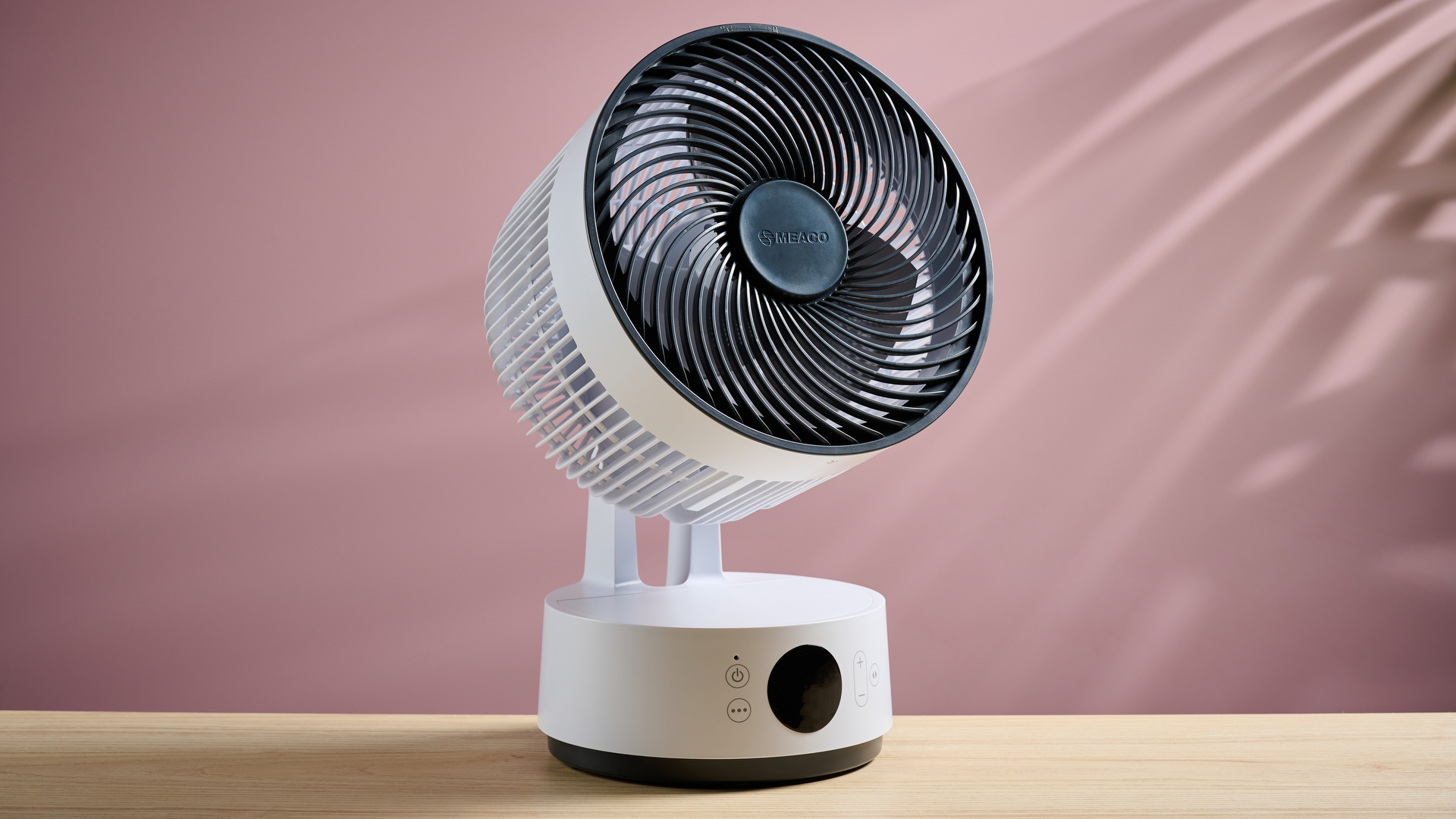
Rank 70078When temperatures start to rise, most people start searching for a ways to stay cool. If you're struggling in the heat, the best fan to help make things more bearable might not be a traditional fan at all – it might be an air circulator.When comparing fans vs air circulators, the main difference is that while most fans are designed to blast air a long way in one direction, air circulators are built to shift air widely around a larger space. However, the beauty of the setup is that many air circulators can also operate like regular fans, making them a versatile solution to keeping cool this summer."You can either have personal cooling or whole-room air distribution. You get the best of both worlds," says Chris Michael, Managing Director of leading aircare brand Meaco.In this article I'll explain more about what air circulators are, the different ways you can use them, and why they might be the superior choice when searching for a solution to your hot weather woes.How do air circulators work?Primarily, air circulators are designed to amplify the effects of a cool air source – like an an air conditioner unit – by quickly and evenly distributing the chilled air efficiently around a large space.They often look like pedestal fans or tabletop fans, but with a far deeper fan head. Air is sucked in through the back of the fan and pushed out though a spiral grill, at which point it bounces off the walls and ceiling and around the whole room. Some air circulators operate with the fan head in a fixed position, but others will oscillate, not just just side-to-side but up-and-down, too. In this case, if you switch off or limit the oscillation, you could use the circulator like a regular fan.How can you use an air circulator?If you're using the fan in air circulator mode, combining it with an AC unit will deliver very powerful cooling – as one of my regular reviewers found when she tested the Dreo TurboPoly Fan 508S with her struggling air-con.However, you can also use it without air con. Chris Michael suggests "placing a bowl of ice in front of the fan to blow the air across the ice for a cooling effect".(Image credit: Future)Many air circulators can also be used like a regular fan. Rather than actually lowering the temperature in a room, a normal fan works by encouraging evaporation of sweat from the surface of your skin, making you feel cooler.So if you fix the air from a circulator so it's pointing directly at you, it'll have the same effect. Theoretically, the design might mean it won't blast air with quite as much power as a regular fan, but my experience with my own air circulator is that it's plenty strong enough to keep me cool. This added versatility means an air circulator might be your best choice for battling hot temperatures.You might also like...Pedestal fan vs tower fan: which should I buy?MeacoFan Sefte 8in Portable Air Circulator review: a convenient and quiet cooling companion that won’t break the bank
-

Picture from cdn.mos.cms.futurecdn.net
Rank 70079In recent years, Large Language Models (LLMs) have dominated mainstream attention for their ability to generate human-like responses, and complete tasks ranging from summarizing documents to coding applications. But now, enterprises are beginning to question if these general-purpose AI models can actually support their specific business goals.A recent McKinsey survey found almost three quarters of organizations regularly use generative AI in at least one business function, up from 65% in early 2024. Despite this rising popularity, there is still a need for greater control and understanding of how AI models work. Nearly two-thirds (62%) of business leaders cite model explainability and data management among common challenges with AI adoption. If organizations are to keep pace and bring their ambitions for AI to fruition, they need to act quickly to overcome these issues.Small solutions for large problemsPurpose-built Small Language Models (SLMs) can offer significant advantages in enabling AI to drive more targeted use cases. SLMs are designed for depth, not breadth – unlike LLMs that aim to ‘know everything’. This means they can deliver more relevant, cost-effective and accurate outcomes when trained on focused datasets that are tailored to specific business needs.Here are four key reasons why enterprises are opting for SLMs over LLMs:1. Fewer parameters, more efficient functions Although smaller in size, the more focused nature of SLMs can make them more effective. There are two main forms - either open-source models like TinyLlama and Phi-2, or propriety models that are fine-tuned for specific industries such as law, healthcare or finance.In finance, for example, by training SLMs exclusively on regulatory filings, internal data and earnings transcripts, they can assist with valuable tasks such as risk assessment and financial reporting. Meanwhile in healthcare, SLMs can assist doctors with diagnostics based on insights from medical journals and clinical records, using terminology and recommendations that are relevant to real-world practice and regulatory compliance.By prioritizing quality over quantity, SLMs can equip enterprises with a toolkit that accounts for all industry-specific niches far better than any generalist LLM model.2. Accuracy through context Almost all companies are investing in AI, yet only 1% believe their models have reached a mature state. AI models often lack the accuracy, scalability or reliability needed to make them viable for use in business applications, preventing organizations from generating real value from their investments. To overcome this, AI models need to be trained more effectively, with richer context that enables them to understand the challenges they have been built to solve.Because of their general-purpose capabilities, LLMs often get things wrong. For instance, we’ve seen lawyers mistakenly using ChatGPT to cite non-existent judicial cases, and being sanctioned after using false information provided by the AI model. The need to thoroughly validate AI-generated outputs from LLMs to ensure reliability and accuracy adds a step to legal workflows, rather than speeding things up.SLMs, on the other hand, significantly reduce the risk of this type of hallucination because they are trained on organizational or domain-specific data. By remaining grounded in relevant context, SLMs are more likely to improve accuracy and avoid ambiguity.Reducing the risk of misleading outputs is particularly crucial for highly regulated industries, like finance. For instance, an LLM could think ‘AP refers to ‘Accounts Payable’, when analysing a networking whitepaper about ‘Access Points’ – leading to confusing or inaccurate outputs.In addition, SLMs dramatically improve the experience for the end user. Employees will be able to interact with the AI using the terminology they’re used to, without spending excessive time ‘translating’ their intent, or watching out for hallucinations.3. Reduced cost and infrastructure needs Facilitating state-of-the-art LLMs requires significant IT infrastructure and is often incredibly costly. This cost remains a critical concern to enterprises, with recent reports revealing that 96.9% of business leaders say high computational costs are a major limitation for their organization's ability to leverage AI and ML successfully. For enterprises that require repeatable, domain-specific outputs from AI, these costs associated with LLMs simply aren’t worth it.Meanwhile, many SLMs can run on consumer-grade hardware like NVIDIA Jetson, Mac Mini, or AI-enabled laptops which can cost under $1,000. This enables enterprises to invest in AI to suit their needs, without paying excessive prices.A recent example is NVIDIA’s ‘Spark’ – the world’s smallest AI supercomputer, capable of running models with up to 200 billion parameters. Innovations like Spark open the door to high-performance AI without incurring huge costs.4. Improved privacy, control and customization Finally, one of the greatest concerns with LLMs is their ‘black box’ nature. Enterprises have no control over the amount or details of the open web datasets LLMs have been trained on, and in turn, it is difficult to guarantee their sensitive data is not being shared or used by third parties. SLMs allow enterprises to overcome this risk by maintaining control of the data that is available to their AI.This enables organizations to fine-tune AI models in-house, creating a ‘knowledge moat’ of unique data that competitors don’t have access to. In addition, SLMs can allow organizations to build in compliance with frameworks like GDPR more effectively and reduce the risk of bias or errors – which is especially crucial for businesses in regulated industries.Taking the hybrid approach SLMs aren’t going to replace LLMs: they both work for different scenarios. Going forward, hybrid AI ecosystems with agentic frameworks will determine which model to use based on context, sensitivity and user intent.This rise of modular AI stacks, combining edge-based SLMs, secure data layers and cloud-scale LLMs will unlock a new era of enterprise intelligence. As all industries mature their approach to AI, it’s important to remember that precision matters just as much as power.We list the best Large Language Models (LLMs) for coding.This article was produced as part of TechRadarPro's Expert Insights channel where we feature the best and brightest minds in the technology industry today. The views expressed here are those of the author and are not necessarily those of TechRadarPro or Future plc. If you are interested in contributing find out more here: https://www.techradar.com/news/submit-your-story-to-techradar-pro
-

Picture from ichef.bbci.co.uk
Rank 70080 -

Picture from static.independent.co.uk
Rank 70081 -

Picture from static.independent.co.uk
Rank 70082 -

Picture from static.independent.co.uk
Rank 70083 -

Picture from static.independent.co.uk
Rank 70084 -

Picture from static.independent.co.uk
Rank 70085 -

Picture from image.cnbcfm.com
Rank 70086 -

Picture from static.independent.co.uk
Rank 70087 -

Picture from static.independent.co.uk
Rank 70088 -

Picture from static.independent.co.uk
Rank 70089 -

Picture from static.independent.co.uk
Rank 70090 -

Picture from static.independent.co.uk
Rank 70091 -

Picture from assets1.cbsnewsstatic.com
Rank 70092 -

Picture from static.independent.co.uk
Rank 70093 -

Picture from static.independent.co.uk
Rank 70094 -

Picture from static.independent.co.uk
Rank 70095 -

Picture from assets2.cbsnewsstatic.com
Rank 70096 -

Picture from image.cnbcfm.com
Rank 70097 -

Picture from cdn.mos.cms.futurecdn.net
Rank 70098Another budget CMF watch is on the waySome design changes look likelyThe smartwatch might launch this monthHave a read through our CMF Watch Pro 2 review, and you'll see we were impressed – and maybe a little confused – by the affordable wearable from Nothing's sub-brand, and now we have fresh evidence that a successor is on the way.Pictures posted to Reddit (via Notebookcheck) show what appears to be packaging for the Nothing CMF Watch Pro 3. The boxes have images of the smartwatch on them, as well as some key specs about the upcoming device.According to these images, the CMF Watch Pro 3 comes with a 1.43-inch display, with an auto-brightness feature – so a little larger than the 1.32-inch screen on the current version. GPS is built in, as it is with the CMF Watch Pro 2.There's a mention of more than 130 sports modes (up from 120) and around 13 days of typical battery life (up from 11). Of course we'll have to wait and see how long the smartwatch actually lasts between charges, but that's the manufacturer's estimate.Launch date and pricingCMF watch 3 pro is leaked in China??? from r/CMFTechIt's difficult to tell from these images, but it looks as though the new smartwatch is going to come with a more rounded casing, as well as a larger screen. We can see there's a digital crown button on the right, as there is on the current model.The next question is when we might see the Nothing CMF Watch 3 Pro break cover. The CMF Watch 2 Pro launched in July 2024, so we're just about due for a follow-up – something this leak would seem to confirm.Pricing is going to be interesting too. The current model originally went on sale for a mere $69 / £69 / AU$99, and we're hoping the Nothing CMF Watch 3 Pro is just as cheap – making it a real value-for-money proposition, even if it doesn't come with top-tier specs.We've only just seen the unveiling of the Nothing Phone 3, which largely impressed us during our hands-on time with the handset, but it appears that Nothing hasn't forgotten about its budget CMF brand.You might also likeNothing's AI chief explains some Phone 3 decisionsOur review of the CMF by Nothing BudsNothing has launched its first over ear headphones
-

Picture from cdn.mos.cms.futurecdn.net
Rank 70099A new update for Windows 11 24H2 is failing to install for someWhile this has happened before, reports seem more prevalent with the July updateThere are also other concerns such as overheating issues and buggy mouse behaviorWindows 11's latest update (for version 24H2) is refusing to install for some folks – which isn't a new problem – and there are scattered reports of other concerning issues with the July update.Windows Latest reports that it suffered an installation failure itself, whereby the update appeared to work, but upon rebooting to finish, Windows 11 ending up rolling back the upgrade (with an error).Numerous readers of the tech site have echoed that experience, with the July update either failing completely for them (not even reaching the reboot phase) or getting stuck before hitting 100%. There are other reports of the update actually freezing the PC, requiring a hard reset, too.On top of that, there are multiple complaints on Reddit about installation failures, all of which are happening with the usual weird and unhelpful error codes (such as '0x8007371b' to pick an example, which means precisely nothing – and Googling won't help either).In that Reddit thread, there are also various reports of all kinds of issues, some of which may only be affecting individual users – and which may be outliers with their system – but there are a few notable bugs that pop up repeatedly.They include a user's mouse stuttering after applying the update – or the "mouse blinking the loading icon every two seconds" – as well as general performance issues, and crackling audio in a couple of cases.Some folks are also encountering heat-related issues, with one complaint that the update made a Snapdragon X Plus laptop run hotter. Another person said their notebook is also struggling with heat and high GPU usage, with others observed high CPU temperatures.There are also a fair few problems reported with USB peripherals and docks.Finally, Microsoft said an issue with the Windows 11 firewall whereby it's logging errors that are actually false, has been resolved with the July update, but a lot of users are stating that it hasn't.So, if you see firewall-related errors at all, just ignore them. The good thing is this is a completely harmless bug, and nothing is actually amiss with the system firewall. The error messages themselves are the errors, ironically.Analysis: keep a watchful eye on these bugs(Image credit: Future/Jacob Krol)While complaints about updates failing aren't uncommon, there appear to be more than normal with this most recent update for Windows 11. Okay, so the odds are very much that you won't run into this bug, and these are likely still relatively isolated incidents in the bigger picture. However, the fact that these issues seem more prevalent than usual is still a red flag.If you encounter such an installation failure, you can try to manually install the July update instead (from the Microsoft Update Catalog). I wouldn’t recommend that for anybody but more tech-savvy Windows 11 users, mind – for most folks, I would just suggest you wait until the installation problems are ironed out by Microsoft. Yes, you will be without the latest security patches for a while, which isn't ideal – so bear that in mind and be extra safe in terms of your browsing (or other computing) habits.(There's no guarantee a manual install will work, either, it's worth remembering – some on Reddit have observed that only a full reinstallation of Windows 11 did the trick for them, which is obviously a very drastic step to take. An in-place upgrade is another option explained in that post, though again this is only for the more technically confident).The promised firewall solution – which doesn't work – is an odd one, though a fix failing to actually resolve a bug as intended is hardly a first for Microsoft. Still, it isn't an actual problem, as noted.Some of the overheating issues are far more worrying, but as reports are still relatively thin on the ground, we can't jump to conclusions just yet. These are definitely worth monitoring, though, to see if more complaints along these lines pop up. Ditto with the erratic mouse behavior and glitches with USB peripherals.You might also like...No, Windows 11 PCs aren't 'up to 2.3x faster' than Windows 10 devices, as Microsoft suggests – here's why that's an outlandish claimWindows 11 desktop PCs could soon get Copilot+ AI powers, as Intel might radically switch tactics with next-gen CPUsmacOS Tahoe 26: here's everything you need to know about all the new features
-

Picture from ichef.bbci.co.uk
Rank 70100