News
This constantly updated list features the latest and most important news articles, ranked in order of significance. The top stories highlight major developments, breaking news, and critical updates across various topics, ensuring you stay informed about the most pressing issues. As new articles are added, the list adapts to reflect the latest priorities, keeping the most impactful stories at the forefront. Whether it’s global events, technology breakthroughs, or industry trends, this dynamic list ensures you always have access to the most relevant and timely information.
-

Picture from static.independent.co.uk
Rank 68101 -

Picture from static.independent.co.uk
Rank 68102 -

Picture from static.independent.co.uk
Rank 68103 -

Picture from ichef.bbci.co.uk
Rank 68104 -

Picture from static.independent.co.uk
Rank 68105 -
Rank 68106
-

Picture from static.independent.co.uk
Rank 68107 -

Picture from static.independent.co.uk
Rank 68108 -

Picture from static.independent.co.uk
Rank 68109 -

Picture from static.independent.co.uk
Rank 68110 -

Picture from static.independent.co.uk
Rank 68111 -
Picture from cdn.mos.cms.futurecdn.net
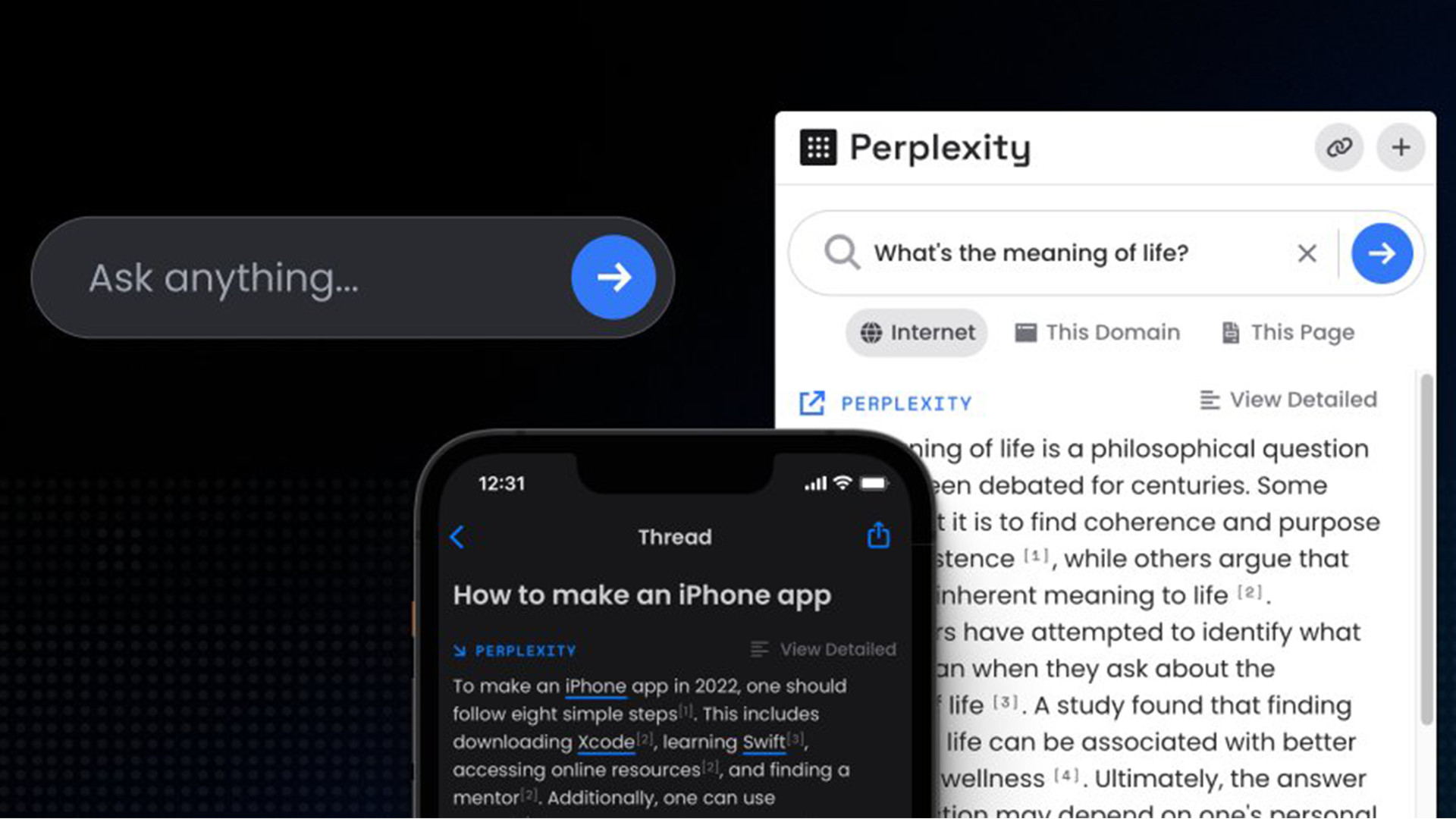
Rank 68112Perplexity’s new Comet browser promises an AI assistant that travels the web for youComet joins other AI browsers aiming to beat Chrome and other popular platforms.Though AI companies are betting on their browser's enticing users, their mainstream appeal is uncertain. Perplexity has officially made the move to web browsers, embedding its AI tools into Comet, its new Chromium browser.It’s available now, initially only to some subscribers of Perplexity’s $200-a-month Max plan. At first glance, Comet is like most browsers, but Comet has a unique sidebar. You can highlight a word, sentence, or image, and Comet will discuss it with you. You can get a summary of an article, write an RSVP, or organize the itinerary of your next vacation. There's also a privacy benefit. Perplexity says all of the AI processing stays local and that it won’t train its AI using your site visits.It makes sense. Browsers are central to modern work and life. If AI models can latch onto our browsing flow, then we will be using them all the time. But will it stick?The browser space has seen a lot of failed Chrome clones, from Yahoo Browser to Internet Explorer 6. Chrome and Safari claim over 90% market share globally. The subscription price alone might be the biggest deterrent. Perplexity’s Comet is $200 a month. Compared to the price of 'free,' it would take a lot more than an occasional paper summary to make people pay up.And while Comet shows how it might be useful as a way for Perplexity to meld its AI with a web browser, it's hardly alone in pursuing the idea of augmenting web browsers with AI. OpenAI is building a ChatGPT-native Operator browser. Currently, The Browser Company, Opera's Aria, Microsoft's Edge with Copilot, and others are all providing similar services. And Google is continuously adding AI to Chrome, offering quick overviews, summaries, and image explanations.AI browsing futurePerplexity, OpenAI, and any other contender face the same challenge of getting people to switch. And while it's possible that Perplexity breaks through to a new group of users with the idea of an AI browser, they will then have to face off against each other as well as the AI-enhanced versions of Chrome, Safari, and the others on the rise from Brave to Firefox, each with their own pitch for a better AI, more privacy, or another appealing feature.Or, maybe the concerns about technical issues and user privacy will keep the AI browser a niche product with limited appeal for hardcore users, a bit like Linux. AI might be the future of browsing, a brief fad, or something in between.The question of what makes it worth the effort will need to be answered. If Comet and others can streamline the online experience and save us a lot of time, they'll be popping up everywhere, but for now, they’re novelties priced at a premium. We'll have to see if the AI-enhanced browser can find the users it needs to last.You might also likePerplexity AI's Comet browser will streak across the web this monthPerplexity's voice assistant offers a Siri alternative for iPhonesAI comes to the URL with a new web browser that answers you back
-

Picture from ichef.bbci.co.uk
Rank 68113 -

Picture from static.independent.co.uk
Rank 68114 -

Picture from cdn.mos.cms.futurecdn.net
Rank 68115NCA arrests four people suspected of participating in recent attacksM&S, Co-op and Harrods all hit by cyberattacksArrested group are accused of organized crime, money laundering, and moreThe UK National Crime Agency (NCA) has arrested four people suspected of taking part in recent cyberattacks against M&S, Co-op, and Harrods.An NCA press release said the police apprehended two 19-year-old males, one 17-year-old, and a 20-year-old female in the West Midlands and London, all of whom had their electronic equipment seized.They are suspected of Computer Misuse Act offenses, as well as blackmail, money laundering, and participating in the activities of an organized crime group.DragonForce"Since these attacks took place, specialist NCA cybercrime investigators have been working at pace and the investigation remains one of the Agency's highest priorities,” commented Deputy Director Paul Foster, head of the NCA's National Cyber Crime Unit. "Today's arrests are a significant step in that investigation but our work continues, alongside partners in the UK and overseas, to ensure those responsible are identified and brought to justice.”In late April and early May 2025, three major UK retailers, M&S, Co-op, and Harrods, all suffered major cyberattacks.The hit on Marks and Spencer affected stores nationwide, and resulted in “small changes” to store operations in order to protect customers “and the business." The retailer confirmed Click and Collect services were impacted by technical issues as a result, and some stores were unable to process contactless payments.Co-op suffered differently, as threat actors (who named themselves “DragonForce”) walked away with a hefty archive of sensitive company data, including customer information."This data includes Co-op Group members' personal data such as names and contact details, and did not include members' passwords, bank or credit card details, transactions or information relating to any members' or customers' products or services with the Co-op Group," the company said at the time."Cyber attacks can be hugely disruptive for businesses and I'd like to thank M&S, Co-op and Harrods for their support to our investigations. Hopefully this signals to future victims the importance of seeking support and engaging with law enforcement as part of the reporting process. The NCA and policing are here to help."You might also likeM&S, Co-Op and Harrods got hit by a cyberattack: here's what retailers need to do to stop thisTake a look at our guide to the best authenticator appWe've rounded up the best password managers
-

Picture from ichef.bbci.co.uk
Rank 68116 -

Picture from static.independent.co.uk
Rank 68117 -

Picture from ichef.bbci.co.uk
Rank 68118 -

Picture from static.independent.co.uk
Rank 68119 -

Picture from static.independent.co.uk
Rank 68120 -

Picture from cdn.mos.cms.futurecdn.net
Rank 68121Marvel Rivals Season 3 launches later today (July 11), adding Phoenix as a brand new Duelist. So far, we've gotten an in-depth look at the new Heroe's moveset, a deep dive into the changes to Team Ups and Daily Missions, and an extended peek at Klyntar: Celestial Husk, the game's new Domination map.Now that we're in the build-up of Marvel Rivals' next season, I'll be providing you with up-to-date information on what's set to change, what you'll want to be focusing on before the end of Season 2.5, and some impressions from my time playing the new season as part of my early access preview opportunity, provided by NetEase.Marvel Rivals Season 3 key infoRelease date and time DowntimePhoenix info Patch notesNew mapRanked changes Jump to our live coverage as it happensNetEase has now unveiled the next season of Marvel Rivals, revealing Phoenix's kit and a deep dive into the latest patch notes and balance changes. There's a new Domination map to look at, too: the dark and mysterious lair of the villainous Knull. If my early impressions are correct, Season 3 seriously shakes up the meta, especially with its new Team Ups for Heroes like Spider-Man and Wolverine.Having covered Season 2.5's launch and the subsequent balancing changes to the Hero roster, I'm excited to see what this new era of Marvel Rivals has in store. I'm especially interested to see how the new release schedule - NetEase is planning a new Season, and two new Heroes every two months - will change the pace of the meta.I've now spent hundreds of hours playing Marvel Rivals Competitive Mode since launch, mostly focusing on Vanguard Heroes like Venom and Magneto, but I'm really liking how Phoenix is shaping up pre-release. Here's the launch of Marvel Rivals Season 3 as it happens. I'll be covering today's launch live, focusing on downtime, and the early hours of Season 3.Marvel Rivals Season 3 - cut to the chaseLooking for a quick overview? Here are the most important parts of Season 3 to know about:Start time: July 11 at 7AM EDT / 4AM PDT / 12PM BST (after estimated downtime)New Hero: PhoenixNew map: Klyntar - Celestial Husk (Domination)Season event: Milano Repair LogsHero balancingNew Rank Rewards: Phoenix - Emerald FlamesMarvel Rivals Season 3 release date and estimated release time(Image credit: NetEase)Marvel Rivals Season 3 will launch on July 11, 2025. Downtime is set for 5AM EDT / 2AM PDT / 10AM BST, and based on previous season launches, I expect it to last for two hours. Given this estimate, here's when I'd expect Season 3 to launch in your timezone:4am PDT7am EDT12pm BST1pm CEST8pm JST9pm AESTMarvel Rivals Season 3 downtime is estimated to be 1-2 hours, though this is subject to change. I'll be keeping this part of our live coverage updated during downtime, and will bring you the news when servers go back online. You can also look out for intel over on the Marvel Rivals Twitter account.Marvel Rivals Season 3 downtime(Image credit: NetEase)Marvel Rivals Season 3 will arrive after a period of downtime. This is scheduled to kick in at the following time (depending on your timezone):2am PDT5am EDT10am BST11am CEST6pm JST7pm AESTDowntime has typically lasted two hours for major seasonal updates to Marvel Rivals. I expect it to be the same this time around, but stay tuned on the live section of this blog for updates on when the game is back online.Marvel Rivals Phoenix(Image credit: NetEase Games)Phoenix is the new Hero being added to Marvel Rivals Season 3. I've spent some time trying her out, and she's primarily a ranged Duelist who works best at off-angles. She plays very similarly to Hela, though she has a passive that stacks damage on enemies with each hit. Every third hit triggers an explosion, dealing extra damage, hitting any nearby enemies, and tagging them with a Phoenix mark. As such, Phoenix is extremely powerful when teams are grouped together.As a Duelist, Phoenix is mostly about dealing huge amounts of damage, though she's also great at removing enemy support passives, like Loki clones and Peni Parker mines. Her Ultimate is a dive bomb attack that deals massive area of effect damage, before returning Phoenix back to where she triggered the ability. She has a new Team Up called Primal Flame, which buffs Wolverine with flame damage with his Primal Leap. She also applies life steal to Wolverine's attacks once the Team Up is triggered.Marvel Rivals Season 3 patch notes(Image credit: NetEase)NetEase has now released the full patch notes for Marvel Rivals Season 3. It outlines loads of bug fixes for Heroes like The Thing, as well as some adjustments to in-game audio. There's a new Accessory system too, allowing players to add small trinkets onto Heroes for an extra bit of visual flair. You can read the full patch notes here.Marvel Rivals Season 3 new map(Image credit: NetEase)Klyntar: Celestial Husk is a brand new Domination map set to be added in Marvel Rivals Season 3. It's the setting for Knull's seasonal debut, and it's appropriately menacing. Having spent some time with the new map, I can say it's one of the best released so far. There are tight corridors, perfect for the new Hero Phoenix to unleash AoE attacks in. There are a lot of possibilities for flanking and off-angle play, too. You can check out a deep dive on the new map in the video below:Marvel Rivals Ranked changes(Image credit: NetEase)In addition to the new map, there's going to be a rank reset for Competitive Mode players. If you've reached the higher tiers in Marvel Rivals, expect to be demoted by seven tiers upon the launch of Season 3. This means that if you hit Diamond I in Season 2.5, you'll go down to Gold II. There's a Phoenix skin to earn by reaching Gold by the end of this season, and several nameplates and banners corresponding to Grandmaster, Celestial, and Eternity ranks.Marvel Rivals Season 3 live coverage
-

Picture from static.independent.co.uk
Rank 68122 -

Picture from static.independent.co.uk
Rank 68123 -

Picture from static.independent.co.uk
Rank 68124 -

Picture from static.independent.co.uk
Rank 68125 -

Picture from static.independent.co.uk
Rank 68126 -

Picture from image.cnbcfm.com
Rank 68127 -

Picture from static.independent.co.uk
Rank 68128 -

Picture from static.independent.co.uk
Rank 68129 -

Picture from cdn.mos.cms.futurecdn.net
Rank 68130Artificial Intelligence (AI) is being adopted across industries at remarkable speed. From finance to healthcare, AI is driving new services and unlocking new business models – fundamentally changing the way we all live, learn and work. But with progress comes challenges, and in the case of AI, fast adoption means that the infrastructure supporting it is under increasing pressure.Data centers, once optimized for traditional enterprise workloads, are being pushed to accommodate entirely new operating patterns. The rise in high-performance computing means more power, more heat, and more volatility. Established systems are struggling to keep up.AI workloads don’t just demand scale. They require IT infrastructure that can react to dynamic, unpredictable demand. And as organizations expand their use of AI, the supporting environment must evolve too.Rack density is climbing quicklyOne of the clearest shifts data center operators are experiencing is in rack density. Standard deployments have typically operated at around 10 kilowatts to 15 kilowatts per rack. But AI hardware - especially clusters of Graphics Processing Units (GPUs) - consumes much more power and generates far more heat.In many AI deployments, racks now draw 40 kilowatts or more. Some experimental training environments exceed 100 kilowatts. This isn’t just about energy consumption. It’s a challenge for every part of the power chain, from uninterruptible power supply (UPS) systems to power distribution units (PDUs), to the facility’s own switchgear.Older data centers may not be able to support these loads without major upgrades. For those expanding into AI, the layout, redundancy, and zoning of rack space needs careful planning to avoid creating thermal or electrical bottlenecks.Cooling is reaching its limitsConventional air cooling was never designed for today’s thermal loads. Even with hot aisle containment and optimized airflow, facilities are finding it hard to remove heat fast enough in high-density zones.This is why liquid cooling is gaining ground. Direct-to-chip cooling systems, already common in high-performance cloud computing environments, are being adapted for data centers supporting AI and where densities exceed 50kW/rack. Immersion cooling is also being explored where space is tight or where energy efficiency is a priority where densities exceed 150kW/rack.Installing liquid cooling involves significant changes - from plumbing and pumping systems to maintenance protocols and leak prevention. It’s a major shift, but one that is becoming necessary as traditional cooling approaches run out of headroom.Load volatility is forcing a rethinkAI workloads behave differently from legacy compute. Training cycles can move from idle to peak and back in a matter of seconds. And inference jobs often run continuously, putting steady pressure on electrical and cooling infrastructure.That variability puts systems under stress; power systems need to be fast and responsive and cooling systems must avoid overshooting or lagging behind, sensors and controls need to act in real time, not based on average load assumptions.This is driving investment in smarter infrastructure. Software-based power management, predictive analytics, and environmental telemetry are no longer add-ons. They are becoming essential for resilience and efficiency.Commissioning is getting more involvedDesigning infrastructure for AI is one thing. Proving that it works under pressure is something else.Commissioning teams are having to simulate conditions that didn’t exist just a few years ago. That includes sudden spikes in compute load, failure scenarios under high thermal pressure, and mixed environments where air and liquid cooling run side by side.This means that simulation tools are being used earlier in the design process, with digital twins helping to test airflow and thermal modelling before equipment is installed. On-site commissioning now includes more functional testing, and more collaboration between electrical, mechanical and IT teams.Power constraints are slowing progressIn some parts of the UK and Europe, getting access to the grid has become a significant barrier. Long connection times and limited capacity are delaying new builds and expansion projects.This real and growing challenge is leading some operators to turn to on-site energy generation, energy storage systems, and modular buildouts that can grow in stages. Others are prioritizing regions with better access to power - even if they aren’t the original target location.Cooling strategies are also directly affected. Liquid cooling systems require consistent energy supply to maintain stable operation. Any power disruption can quickly become a cooling issue, especially when workloads can’t be paused. And, in high-density environments, even brief interruptions to power can have thermal consequences within seconds - leaving no room for infrastructure to catch up after the fact.Heat reuse is being taken seriouslyAI workloads generate a lot of heat- and more than ever, operators are exploring ways to efficiently reuse waste heat.In the past, heat recovery was often seen as too complex or not cost-effective. But with higher temperatures and more concentrated thermal output from liquid cooling systems, the picture is changing.Some new facilities are being designed with heat export capabilities. Others are considering connections to local district heating systems. Where planning authorities are involved, expectations around environmental performance are rising, and heat reuse can be a strong point in a project’s favor.Infrastructure is becoming more adaptiveAI is creating new expectations for data centre infrastructure. It needs to be fast, scalable and adaptable. Standardization helps, but flexibility is becoming more important - particularly as AI workloads evolve and spread from central hubs to the edge.The next generation of data centers will need to manage high loads with minimal waste. They will need to recover energy where possible, stay efficient under pressure, and respond in real time to shifting demand.This isn’t just about capacity. It’s about designing flexible systems that stay effective as conditions change.We list the best IT Automation software.This article was produced as part of TechRadarPro's Expert Insights channel where we feature the best and brightest minds in the technology industry today. The views expressed here are those of the author and are not necessarily those of TechRadarPro or Future plc. If you are interested in contributing find out more here: https://www.techradar.com/news/submit-your-story-to-techradar-pro
-

Picture from static.independent.co.uk
Rank 68131 -
Picture from static.independent.co.uk
Rank 68132 -

Picture from static.independent.co.uk
Rank 68133 -

Picture from static.independent.co.uk
Rank 68134 -

Picture from ichef.bbci.co.uk
Rank 68135 -
Picture from static.independent.co.uk
Rank 68136 -

Picture from static.independent.co.uk
Rank 68137 -

Picture from ichef.bbci.co.uk
Rank 68138 -

Picture from ichef.bbci.co.uk
Rank 68139 -

Picture from assets2.cbsnewsstatic.com
Rank 68140 -

Picture from static.independent.co.uk
Rank 68141 -

Picture from static.independent.co.uk
Rank 68142 -

Picture from static.independent.co.uk
Rank 68143 -

Picture from static.independent.co.uk
Rank 68144 -

Picture from cdn.mos.cms.futurecdn.net
Rank 68145Experienced developers actually spent 19% more time on tasks when using AI, report claimsOnly 44% of AI-generated code was accepted by experienced devsDevelopers still feel that work is easier when using AIArtificial intelligence might not be as beneficial to experienced developers as it can be to new starters and those who are yet to develop the right skills, new research has claimed.A new study conducted by Model Evaluation & Threat Research (METR) has suggested not only were the developers less optimistic following the study, but the real results suggest that artificial intelligence actually ended up costing them time.The study found that, with AI, devs spent less time coding and searching, and more time prompting, waiting for and more important, reviewing, AI output. An estimated 9% of the time went on reviewing and cleaning up AI-generated code, with AI suggestions generally on the right tracks but lacking in detail.AI doesn't actually same these developers any timeObserving 16 experienced developers across 246 real tasks on mature open-source projects that they were already familiar with, the researchers analyzed how the developers interacted with popular tools from Cursor Pro and Claude 3.5/3.7.Before the study, the 16 experienced developers in question expected to reduce task time by 24% when combining their expertise with artificial intelligence. After the study, they reduced their expectations to just 20%, however post-study analysis reveals that AI actually increased task completion time by 19%.Fewer than 44% of the suggestions were accepted, with a lack of contextual knowledge and large, complex repositories highlighted as contributing factors to developer slowdown. The study also noted that the experienced developers already had high familiarity with the codebases, leaving little room for AI to add any meaningful value.However, despite the slowdown, many developers continued to use AI tools because the work felt less effortful, making work feel more pleasant even if it wasn't faster."AI capabilities in the wild may be lower than results on commonly used benchmarks may suggest," the research paper concludes.You might also likeWe've listed the best productivity toolsFancy an upgrade? Ask your boss for the best laptops for programmingAI coding assistants are getting ever more popular - especially in this country
-

Picture from ichef.bbci.co.uk
Rank 68146 -

Picture from static.independent.co.uk
Rank 68147 -

Picture from static.independent.co.uk
Rank 68148 -
Picture from o.aolcdn.com
Rank 68149Blink sales are pretty reliable during Amazon Prime Day, and this year is no different. The security camera company owned by the retail giant has discounted a number of its devices, and one of the best deals is on two-packs of the Blink Mini 2 camera. For the last day of the sale, you can grab a duo for only $35, which is a record low.
Blink released this version of the wired security camera last year. It has a built-in LED spotlight, color night vision capabilities and a low-light sensor. It'll record video in 1080p and it has a live view in the Blink mobile app that lets you check in on your home whenever you want. You're also getting a wider field of view with this updated model.
Being an Amazon product, it's no surprise that it works with Alexa. The camera has two-way audio, so you can chat with your pooch while you're out. It also supports person detection, but you'll need a subscription for that. (They start at $3 per month or $30 per year for one device.)
Although it's primarily an indoor camera, you can also use the Blink Mini 2 outdoors. However, that requires a $10 weather-resistant power adapter. The camera is available in black and white. Both colors are available for the $35 deal.This article originally appeared on Engadget at https://www.engadget.com/deals/its-the-last-day-to-get-a-bundle-of-two-blink-mini-2-cameras-for-only-35-for-prime-day-201819913.html?src=rss
-

Picture from ichef.bbci.co.uk
Rank 68150
