News
This constantly updated list features the latest and most important news articles, ranked in order of significance. The top stories highlight major developments, breaking news, and critical updates across various topics, ensuring you stay informed about the most pressing issues. As new articles are added, the list adapts to reflect the latest priorities, keeping the most impactful stories at the forefront. Whether it’s global events, technology breakthroughs, or industry trends, this dynamic list ensures you always have access to the most relevant and timely information.
-
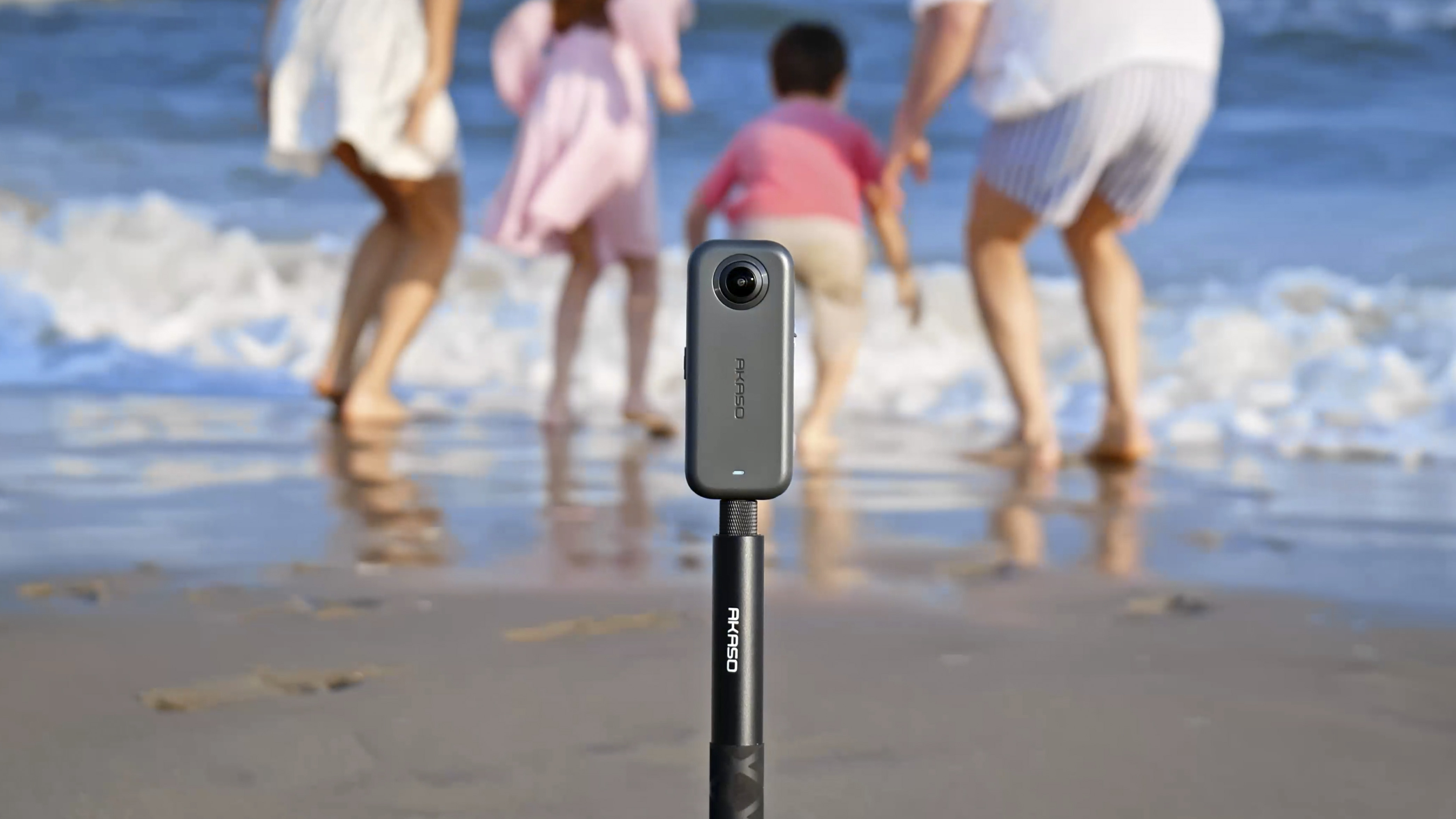
Picture from cdn.mos.cms.futurecdn.net
Rank 64101Akaso 360 price starts at $199.99 / £199.99 / AUS329.99 – a record low for 360 camerasIt was launched worldwide on July 7, 2025Prime Day deals for rival models crash the partyInsta360 may have cornered the 360 camera market in recent times, but it's under threat from a rumored DJI Osmo 360 and now a surprise entry to the market, the new Akaso 360.Akaso is a proven alternative to leading action camera brands such as GoPro, Insta360 and DJI, with an impressive lineup of low-cost models. Now it has entered the 360 camera space with the Akaso 360, and it's super impressive for the money – check out our in-depth Akaso 360 review.The all-new 360 camera shoots crisp 5.7K video with total 360 degree coverage through its twin lenses, complete with the software smarts we've come to expect from the best 360 cameras, such as seamless stitching and selfie stick removal.Perhaps what's most impressive, though, is the price point at which the Akaso 360 enters the market – it's so much cheaper than any other current model.Image 1 of 2(Image credit: Akaso)Image 2 of 2(Image credit: Akaso)Lowering the bar for 360 camera prices, but is the Akaso 360 the best value? The launch price for the Akaso 360 starts at just $199.99 / £199.99 / AUS329.99 for the Standard Combo, or $249.99 / £249.99 / AU$399.99 for the Creator Combo, which adds two additional batteries, a battery charging case and a 120cm selfie stick.For price, no other 360 camera comes close – the Insta360 X5 is well over double, while the GoPro Max (2025) is around $150 / £150 / AU$200 more (and that's following a new price point from the original Max model from 2019, which was a similar price to the X5).But just because the Akaso 360 is the cheapest model available, should you get it?The comparison between the Akaso 360 and Insta360 X5 is hardly fair – the latter is the best 360 camera on the market, and it beats Akaso's model in almost every respect, including its 8K video and low light image quality.The X5's twin lenses can be swapped out in case of damage too, with cheap replacement lenses available. In the long run, this feature alone could make it better value than any other 360 camera. After all, break a lens while recording with any other model, which is a likely eventuality for filming outdoor pursuits, and the whole camera needs a pricey repair or replacing. Not so with the X5.For features and performance, however, I think the older Insta360 X3 is the closest Akaso 360 rival.It doesn't help Akaso's cause that it unveiled its first 360 camera during Prime Day week, at a time when there are huge price cuts for the X3. You can get the Insta360 X3 for $249.99 at Amazon US (original price $449.99), or £259.99 at Amazon UK (original price £459.99) or at the Insta360 store for the same price, with other bundles available.The X3 is still a little pricier, then, but I think it has the edge over the Akaso 360 in two ways. First, it's waterproof up to 33ft / 10m, while Akaso's model is not, and second, the X3 also shoots HDR video.If your wallet stretches that little bit further, the X3 deal is superb value. Otherwise, the cameras are pretty similar, and if the two points above don't put you off Akaso's new model, then a full-price Akaso 360 is still excellent value. It's a super impressive 360 camera for the money.You might also likeDon’t buy a 360 camera – the new DJI Osmo 360 just leaked again, and it’s expected to launch imminentlyInsta360 X5 vs Insta360 X4: which 8K 360-degree action camera is best for you?Best 360 camera 2025: our top rated choices for capturing every angle
-

Picture from static.independent.co.uk
Rank 64102 -

Picture from static.independent.co.uk
Rank 64103 -

Picture from static.independent.co.uk
Rank 64104 -

Picture from image.cnbcfm.com
Rank 64105 -

Picture from static.independent.co.uk
Rank 64106 -

Picture from static.independent.co.uk
Rank 64107 -

Picture from static.independent.co.uk
Rank 64108 -

Picture from static.independent.co.uk
Rank 64109 -

Picture from assets3.cbsnewsstatic.com
Rank 64110 -

Picture from static.independent.co.uk
Rank 64111 -

Picture from static.independent.co.uk
Rank 64112 -

Picture from static.independent.co.uk
Rank 64113 -

Picture from cdn.mos.cms.futurecdn.net
Rank 64114Data centers are the backbone of the digital age; however, many are stuck in the past. Legacy facilities, which were built for a different era, are now struggling under the weight of modern computing demands. With ageing infrastructure, poor energy performance and rising operational costs, these outdated environments are quickly becoming a liability in a world that demands speed, scalability and sustainability.In light of this, forward-thinking organizations are taking action and migrating their core applications from traditional on-premise infrastructure to the cloud. Such a move achieves modernization of a bank’s IT environment whilst also positioning it to be more agile and cost-efficient when it comes to customer-centric innovation in an ever-evolving digital economy.Despite this, transforming legacy data centers is not the undemanding cure-all that banks and other financial organizations might be vying for, or even economically viable for that matter. For some, the path forward means shutting down outdated facilities altogether. For example, Singaporean telco Singtel announced last year the closure of five of its legacy data centers in Singapore as part of its plans to pivot towards sustainable, AI-focused facilities, reflecting a wider shift to a more measured and strategic approach to IT infrastructure investment.The growing need for data agility and cloud-native platformsOrganizations are therefore under growing pressure to respond at speed, often forced to relocate critical data with little notice when closures or capacity shifts occur. It's a logistical challenge, but one that underscores a broader truth, which is that data agility is no longer optional. Rather, it has become a critical need for financial organizations to be able to access, process and act on data, especially in an era where the priorities for technology in an organization can shift overnight.With ESG standards now central to the tech industry’s agenda, traditional data centers that overheat, guzzle energy and leave a heavy environmental footprint are increasingly out of step with where the sector is headed. But the challenges go far beyond sustainability. Legacy infrastructures create operational drag given the fragmented systems, inconsistent data quality and rigid architectures that hinder fast, informed decision-making.Cloud-native models provide real-time insights and the ability to scale on demand, which in itself stands as a sharp contrast to outdated data infrastructures that require significant upfront investment based on predicted needs. This often leaves businesses stuck with inflexible systems and delays whilst waiting for hardware. Security is another growing concern.Whilst cloud providers constantly update and strengthen their defenses, many on-premises teams struggle to keep up. Add to that the rising pressure of data sovereignty regulations and escalating energy costs, and the need to modernize becomes not just compelling, but critical.A smart migration starts with a clear strategyGiven its elastic scalability, precise cost controls and robust, built-in security, it is certainly no surprise that many organizations are turning to the cloud. However, whilst the benefits are clear, the journey isn’t instantaneous. Successful cloud adoption requires a well-thought-out roadmap. The first step is crafting a strategy that’s tightly aligned with business objectives.This translates to assessing workloads based on their impact, prioritizing mission-critical applications and selecting the right deployment model, whether it is public, private, or a combination of the two. Multicloud is increasingly gaining traction as it helps avoid vendor lock-in and gives businesses the freedom to leverage the unique strengths of different providers.But moving to the cloud must be done with precision, especially in complex, legacy-heavy environments such as those that can be found in traditional banks. A rushed migration can have the opposite effect of what financial organizations may hope for when undertaking mass data migration to cloud-native platforms.Cloud adoption affects multiple parts, if not every part of the business, be it applications and data architectures or operating models and governance frameworks. Missteps in timing or execution can lead to budgets being stretched too tight, unplanned downtimes and costly inefficiencies. Mitigating this risk requires financial organizations to approach migration as a deliberate, end-to-end transformation that reshapes how banks operate, innovate and ultimately deliver value to their customers, instead of a quick fix or a reactive measure.At the same time, integration of robust governance at every stage of the journey is critical, with security, compliance and data protection ensured from the very outset. With cloud environments demanding continuous optimization, it is a key consideration that the work does not stop at the point of migration. Performance and cost efficiency must be reviewed regularly to ensure systems are running as expected and delivering value.Recent advances with generative AI and AI tools can also help to accelerate the migration from on-premises legacy data centers to cloud environments by automating discovery, dependency mapping and workload classification. These tools analyze infrastructure and application behavior to identify optimal cloud targets and architectures. AI coding products also assist in refactoring legacy code, creation of testing and documentation, predicting migration risks, and simulating performance in the cloud, reducing migration time and enhancing planning accuracy.The symptoms of ageing infrastructure in bankingThis imperative for cloud migration is especially acute in the banking sector, where traditional institutions are locked in a race against digital-first challengers that can deploy new features in a matter of weeks, whilst legacy banks remain reliant on ageing mainframes. The cost of inaction is no longer hypothetical.Earlier this year, more than 1.2 million UK customers were hit by banking disruptions on payday, marking a critical moment for individuals and businesses alike. Major high-street banks reported service failures ranging from login delays to hours-long customer service waits.These outages weren’t isolated incidents, but symptoms of deeper systemic fragility tied to ageing IT systems. In contrast, cloud-native organizations are built for resilience, scalability and real-time responsiveness, which are qualities that legacy setups struggle to emulate.These failures were not just unfortunate, but predictable and more importantly, preventable, further highlighting the point that embracing cloud-native infrastructure is no longer a long-term goal, rather an urgent priority for maintaining customer trust and securing future competitiveness for incumbent banks.Data agility as a means of being future-readyUltimately, data agility is the engine of faster decision-making, operational flexibility and innovation, whilst cloud-native platforms make that agility possible. By using a fully cloud-native core, financial institutions can sidestep the constraints of traditional infrastructure allowing them to focus squarely on customer needs and accelerate time to market in ways that legacy banks simply would not be able to through traditional channels.Achieving these results requires organizations to invest not just in modern cloud platforms, but in a data-driven culture that treats information as a strategic asset. Real-time data streaming paves the way to immediate insights, rather than lagging by hours or days. And as market demands continue to evolve, success depends on ongoing integration and innovation.Cloud transformation isn’t a one-off milestone; it’s a continuous journey of aligning strategy, technology and execution to stay ahead of what’s next.We've listed the best cloud storage.This article was produced as part of TechRadarPro's Expert Insights channel where we feature the best and brightest minds in the technology industry today. The views expressed here are those of the author and are not necessarily those of TechRadarPro or Future plc. If you are interested in contributing find out more here: https://www.techradar.com/news/submit-your-story-to-techradar-pro
-

Picture from static.independent.co.uk
Rank 64115 -

Picture from static.independent.co.uk
Rank 64116 -

Picture from static.independent.co.uk
Rank 64117 -

Picture from static.independent.co.uk
Rank 64118 -

Picture from static.independent.co.uk
Rank 64119 -

Picture from static.independent.co.uk
Rank 64120 -

Picture from static.independent.co.uk
Rank 64121 -

Picture from static.independent.co.uk
Rank 64122 -

Picture from static.independent.co.uk
Rank 64123 -

Picture from static.independent.co.uk
Rank 64124 -

Picture from cdn.mos.cms.futurecdn.net
Rank 64125An Xbox executive suggested that laid-off employees use AI for emotional support and career guidanceThe suggestion sparked backlash and led the executive to delete their LinkedIn postMicrosoft has laid off 9,000 employees in recent months while investing heavily in AI.Microsoft has been hyping up its AI ambitions for the last several years, but one executive's pitch about the power of AI to former employees who were recently let go has landed with an awkward thud.Amid the largest round of layoffs in over two years, about 9,000 people, Matt Turnbull, Executive Producer at Xbox Game Studios Publishing, suggested that AI chatbots could help those affected process their grief, craft resumes, and rebuild their confidence.The gesture was meant for support, but it left many game developers feeling outraged.Turnbull took his possibly well-meaning but definitely poorly phrased and timed message to LinkedIn. He shared ideas for prompts to give an AI chatbot that he claimed might help laid-off colleagues navigate career uncertainty and emotional turbulence.The backlash was swift and angry, leading him to delete the post, but you can still read it thanks to Brandon Sheffield's Bluesky post below.Matt Turnbull, Executive Producer at Xbox Game Studios Publishing - after the Microsoft layoffs - suggesting on Linkedin that may maybe people who have been let go should turn to AI for help. He seriously thought posting this would be a good idea.— @brandon.insertcredit.com (@brandon.insertcredit.com.bsky.social) 2025-07-07T07:54:06.534ZTurnbull urged colleagues to lean on AI to reduce the “emotional and cognitive load” of job loss in his post, along with the prompt ideas for 30-day recovery plans and LinkedIn messages. Probably the most eyebrow-raising suggestion was suggesting a prompt to help reframe impostor syndrome after being laid off.“No AI tool is a replacement for your voice or lived experience," Turnbull wrote. "But in times when mental energy is scarce, these tools can help you get unstuck faster, calmer, and with more clarity.”Even the most charitable interpretation of his post can't overlook just how condescending and poorly timed the advice is. And angry game developers flooded the comments, likely leading to the deletion of the post.To put it mildly, they don't agree that being laid off is an emotional puzzle best solved with an algorithm. Instead, perhaps a human might understand the career and life upheaval it represents, and how that requires human compassion, support networks, and tangible help, like, say, an introduction to someone who can help you get a new job.AI therapyThis incident is even worse in the context of Microsoft spending billions building AI infrastructure while dramatically shrinking its gaming teams. Urging laid-off developers to lean on AI right after losing their jobs is more than hypocritical; it's telling people to use the very technology that may have caused their job loss.To be scrupulously and overly fair to Turnbull, using AI could help with some mental health concerns and might be useful in improving a resume or preparing for a job interview. Making AI part of outplacement services isn't a horrible idea. It could boost the internal coaching and career-transition arm Microsoft offers already, adding to the recruiters, résumé workshops, and counselling it offers. But it can't and shouldn't replace those human services. And having one of the people who let you go tell you to use AI to find a new job is the opposite of supportive. It's just an insult on top of injury.Microsoft’s dual approach of laying people off and doubling down on AI infrastructure is a test of its company culture as much as its technical ability. Will we see a new standard where layoffs come with AI prompt packages instead of counseling and severance? If the message is, “Feel free to use chatbots to help you after we fire you,” expect plenty more outrageous, tone-deaf nonsense from executives.Perhaps they should ask those chatbots how to interact with human beings without angering them, since it's a lesson they haven't learned well.You might also likeHow to use ChatGPT to prepare for a job interviewI tested OpenAI's o1 model in Microsoft Copilot and it's a little overwhelmingMicrosoft Paint brushes up on AI
-

Picture from ichef.bbci.co.uk
Rank 64126 -

Picture from ichef.bbci.co.uk
Rank 64127 -

Picture from ichef.bbci.co.uk
Rank 64128 -

Picture from static.independent.co.uk
Rank 64129 -

Picture from static.independent.co.uk
Rank 64130 -

Picture from static.independent.co.uk
Rank 64131 -

Picture from static.independent.co.uk
Rank 64132 -

Picture from cdn.mos.cms.futurecdn.net
Rank 64133Dull office design is now a reason to resign, not just a minor complaintMental health issues are being linked to poor visual and ergonomic workspace conditionsRemote work offers freedom, but bad tech setups kill creativity and focus fastThe modern workplace is undergoing a silent crisis which isn’t solely about productivity, but also the mental well-being of employees, new research has warned - and it could be due to boring office design.The latest Art of Productivity report from Kinly has found uninspiring and dull workplaces are not just hurting morale, but also making employees question their long-term futures with employers.Among UK workers aged 24 to 35, nearly half (46%) said they would consider leaving their jobs due to unattractive or poorly designed office spaces - and more worryingly, 21% said such environments are actively harming their mental health.Mental health takes a backseat to design flawsThis growing concern is prompting a new wave of collaboration between AV and HR departments, the report found, with over two-thirds (69%) of AV teams now working closely with HR to support employee well-being through the smarter use of technology.Over half of businesses surveyed already use digital signage and visual tools to improve the day-to-day office experience, showing a shift in how workplaces are being designed and managed.Rather than relying on generic perks or policy changes, companies are turning to creative AV-driven design strategies.Tom Martin, CEO at Kinly, noted, “office design is no longer just an aesthetic choice, it’s a strategic one,” stressing modern office environments should empower and inspire.“The office has become a second-choice experience for many employees, but implementing technology creatively can and will make a difference,” he said.This view is shared by visual artist Ben Sheppee, who warns that remote work, while flexible, can stifle creativity if not properly supported.“It’s vital that businesses provide the technology to help ideas flow freely, no matter where their teams are.”These solutions are not just about visual appeal; they focus on inclusivity, with 31% of enterprises actively using AV to support neurodiverse staff.Sensory-friendly features and accessibility-focused tools are becoming part of the broader toolkit for creating healthier workspaces.Also, 71% of AV professionals believe these technologies play an essential role in maintaining a sense of community across hybrid work environments.That said, digital displays and emotion-sensitive design may offer novelty, but their long-term impact remains uncertain.Some people argue that no amount of immersive AV can substitute for ergonomic essentials such as standing desks.Many believe workspace tools like one of the best office chairs or best office desks are fundamentals that directly affect comfort or focus, and these should be the priority.You might also likeCheck out the best 3D modeling software for 3D printing and moreWe've rounded up the best portable monitors available nowBritish startup claims to have developed tech that can deliver 65% lossless file compression
-

Picture from ichef.bbci.co.uk
Rank 64134 -

Picture from static.independent.co.uk
Rank 64135 -
Picture from static.independent.co.uk
Rank 64136 -

Picture from static.independent.co.uk
Rank 64137 -

Picture from static.independent.co.uk
Rank 64138 -

Picture from ichef.bbci.co.uk
Rank 64139 -

Picture from static.independent.co.uk
Rank 64140 -

Picture from static.independent.co.uk
Rank 64141 -

Picture from image.cnbcfm.com
Rank 64142 -
Picture from o.aolcdn.com
Rank 64143For many, summer means it's time to grill outdoors. But cooking inside does at least mean you’re likely to deal with fewer bugs. It also makes it easier to try out new kitchen equipment, such as a Ninja air fryer that’s on sale ahead of Prime Day. The Ninja Foodi Dual-Zone 10-quart air fryer is $50 off and down to $180.
This is not a record low price for this model. However, it’s still a good price for this time of year, some five months away from Black Friday.
The DZ401 is one of our favorite air fryers. In fact, it's our pick for the best dual-zone air fryer. It heats up quickly and runs quietly, but the real selling point here is the dual-basket setup. If you cook a lot or make meals for several people on a regular basis, the Ninja Foodi DZ401 could be a game changer.
It's possible to use the two baskets to prepare entirely different foods at the same time with distinct cooking modes — you can't do that on a grill. You can also prepare food in both baskets in the same way with the Match Cook feature.
A very useful feature called Smart Finish can adjust cooking times automatically so that the food in both baskets (perhaps you have a protein in one and vegetables in the other) will be ready at the same time. That should help you avoid waiting for one basket to be down while the other gets cold.
On the downside, this is a machine that will take up a considerable proportion of counter space, so it won't be ideal for small kitchens. If you can make room for it, though, the Ninja Foodi DZ401 could be a valuable addition to your setup.This article originally appeared on Engadget at https://www.engadget.com/deals/prime-day-deals-include-50-off-one-of-our-favorite-ninja-air-fryers-131214723.html?src=rss
-

Picture from static.independent.co.uk
Rank 64144 -

Picture from static.independent.co.uk
Rank 64145 -

Picture from static.independent.co.uk
Rank 64146 -

Picture from static.independent.co.uk
Rank 64147 -

Picture from static.independent.co.uk
Rank 64148 -

Picture from static.independent.co.uk
Rank 64149 -

Picture from ichef.bbci.co.uk
Rank 64150