News
This constantly updated list features the latest and most important news articles, ranked in order of significance. The top stories highlight major developments, breaking news, and critical updates across various topics, ensuring you stay informed about the most pressing issues. As new articles are added, the list adapts to reflect the latest priorities, keeping the most impactful stories at the forefront. Whether it’s global events, technology breakthroughs, or industry trends, this dynamic list ensures you always have access to the most relevant and timely information.
-

Picture from ichef.bbci.co.uk
Rank 62551 -

Picture from ichef.bbci.co.uk
Rank 62552 -

Picture from static.independent.co.uk
Rank 62553 -

Picture from image.cnbcfm.com
Rank 62554 -

Picture from static.independent.co.uk
Rank 62555 -

Picture from ichef.bbci.co.uk
Rank 62556 -

Picture from ichef.bbci.co.uk
Rank 62557 -

Picture from static.independent.co.uk
Rank 62558 -

Picture from ichef.bbci.co.uk
Rank 62559 -

Picture from static.independent.co.uk
Rank 62560 -

Picture from image.cnbcfm.com
Rank 62561 -

Picture from ichef.bbci.co.uk
Rank 62562 -

Picture from ichef.bbci.co.uk
Rank 62563 -

Picture from ichef.bbci.co.uk
Rank 62564 -

Picture from static.independent.co.uk
Rank 62565 -

Picture from static.independent.co.uk
Rank 62566 -

Picture from ichef.bbci.co.uk
Rank 62567 -

Picture from static.independent.co.uk
Rank 62568 -

Picture from image.cnbcfm.com
Rank 62569 -

Picture from ichef.bbci.co.uk
Rank 62570 -

Picture from static.independent.co.uk
Rank 62571 -

Picture from static.independent.co.uk
Rank 62572 -

Picture from static.independent.co.uk
Rank 62573 -

Picture from static.independent.co.uk
Rank 62574 -

Picture from image.cnbcfm.com
Rank 62575 -

Picture from image.cnbcfm.com
Rank 62576 -
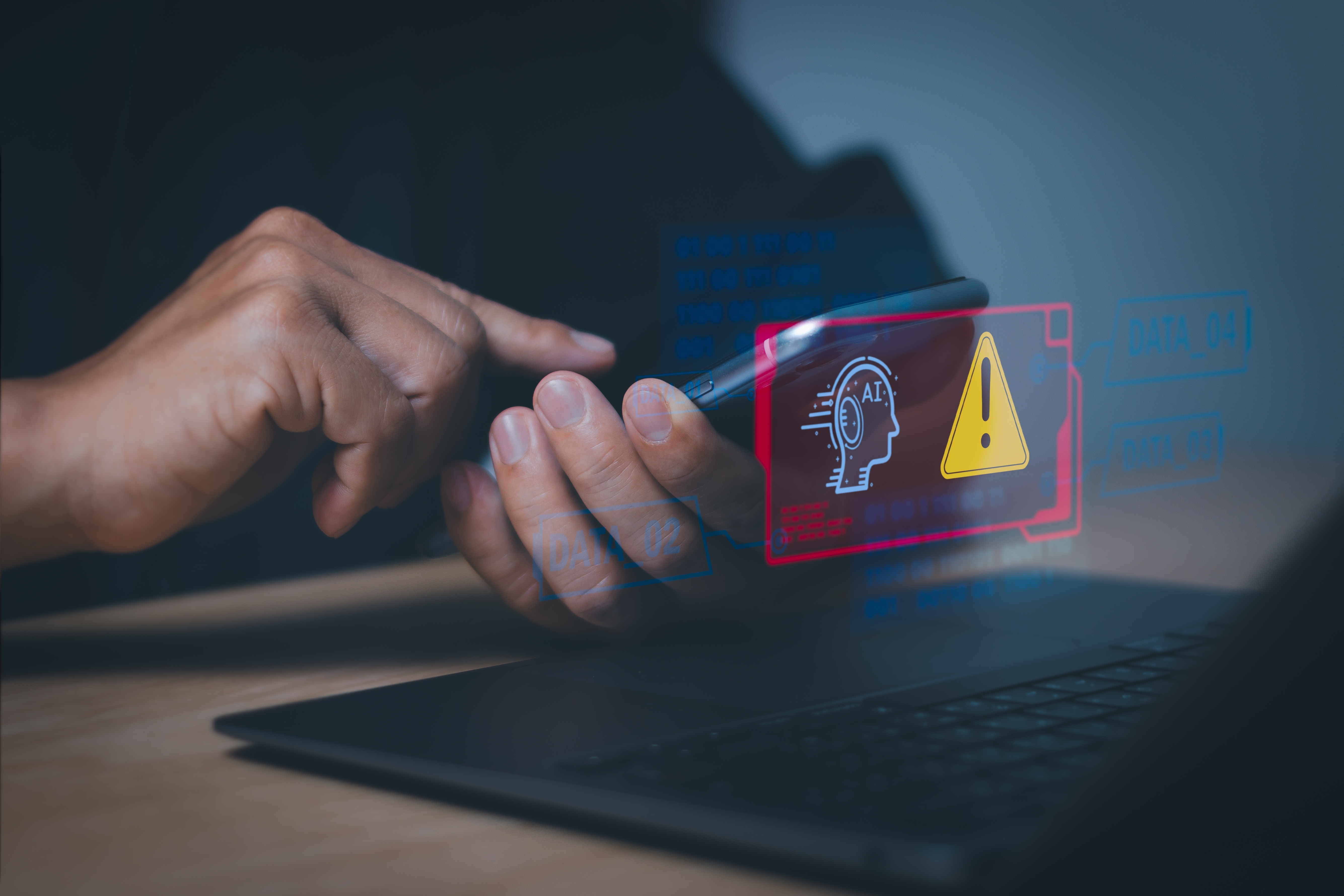
Picture from cdn.mos.cms.futurecdn.net
Rank 62577Most businesses have a strong focus on maintaining a clean and safe working environment, especially in critical sectors. No medical practitioner who values the lives of their patients would take a shortcut on handwashing and surface sterilization protocols. No one working with hazardous materials who values their own life would skip out on protective equipment. Even in sectors like education and retail, hygiene is still a top priority.Yet in the same environments where clinical hygiene is maintained, cyber hygiene is often left to chance, especially when it comes to mobile device security.Mobile devices are no longer just simple communication tools, they are now seen as essential to frontline operations. This means they are also a priority target for cybercriminals searching for weak points to breach corporate networks.As the mobile threat grows, cybersecurity hygiene needs to be held to the same standard as physical workplace hygiene. It must be routine, deeply embedded, and intolerant of shortcuts - not an afterthought.An expanding threat landscape, but too often poorly defended Mobile devices such as smartphones, tablets and wearables are considered mission-critical in many sectors. From healthcare to education to energy, workers are increasingly relying on mobile for core operations.Healthcare clinicians access patient health records via mobile apps, teachers engage their classes through interactive displays, and field engineers manage critical infrastructure through connected devices.However, while this raft of mobile devices brings more agility and efficiency, it’s also greatly expanding the attack surface of these sectors – and cybercriminals have noticed. The risk facing mobile devices has grown dramatically in recent years, both in volume and sophistication.Over 33.8 million mobile-specific attacks were detected globally in a single year - a figure that continues to rise as threat actors capitalize on mobile’s expanding footprint in enterprise environments.These attacks exploit the lapses in cyber hygiene that persist across mobile fleets. Devices are frequently assumed to be safe by default or dismissed as low risk. Mobile devices running outdated operating systems, unpatched applications or lacking endpoint protection are commonplace. Password reuse and the absence of multi-factor authentication (MFA) further elevate the risk.In many cases, mobile endpoints have become the soft underbelly of the corporate network - widely used, minimally monitored, and inconsistently secured. Just as unwashed hands can carry invisible pathogens, mobile devices can harbor unseen threats. And when routine protections are skipped, exposure becomes inevitable.Why we still treat mobile differently — and why that’s dangerous Despite their ubiquity, mobile devices are still perceived as fundamentally different from traditional endpoints.Most workers have internalized a cautious approach to browsing, installing apps, and clicking incoming files and links when using their desktop and laptop devices, perhaps due to their association with a formal working environment.However, for many users, mobile is seen as a more personal experience. This encourages a more relaxed attitude, adding to the idea that they’re somehow less “exploitable” than other endpoints.This perception encourages complacency, with less consideration about potential threats like malicious attachments and applications. Further, mobile devices are often used interchangeably for personal and business tasks, blurring the lines between secure and vulnerable environments.Threat actors actively exploit this mindset, especially with phishing, which remains the most common and effective method of compromise.Mobile-specific variants, such as smishing (SMS phishing) and malicious app prompts, are particularly successful due to shortened URLs, limited screen space, and the absence of familiar desktop visual cues. These tactics are often paired with spyware, adware and data-harvesting malware that can linger undetected for long periods.Organizations can inadvertently reinforce this risky mindset by failing to include mobile in core security strategies. Policies and protections that are standard on other endpoints, from patch management to access controls, may be absent or inconsistently applied on mobile.This operational divide would never be tolerated in physical settings where protective measures are standardized and enforced across every tool and surface. It’s time for mobile cybersecurity to adopt the same attitude - no exceptions, no assumptions.Why cyber hygiene must be as routine as handwashing Many of the vulnerabilities exploited in mobile attacks stem from lapses in basic cyber hygiene - failures entirely preventable with consistent, well-enforced practices. Addressing these gaps doesn’t require breakthrough technology, but rather a disciplined approach to configuration, maintenance, and user behavior.Mobile devices should be fully integrated into enterprise risk management frameworks, with the same diligence applied to laptops, and servers. That includes vulnerability assessments, asset inventory, incident response planning, and compliance checks.At a minimum, all mobile devices should be kept up to date with the latest operating system and application patches. This is frequently overlooked, particularly in BYOD environments, where IT has limited visibility or control.Mobile device management (MDM) or unified endpoint management (UEM) platforms can help organizations enforce policies around software updates, encryption and app whitelisting across every device.Credential hygiene is equally critical. Strong passwords, enforced MFA, and discouraging reuse across services, all help reduce account-based compromise. Endpoint protection tools that scan for malicious links or payloads should extend beyond desktops and laptops to mobile devices as standard.User education is an essential component alongside the right tools and policies. Employees must understand how to recognize phishing attempts, avoid unauthorized app installations, and report suspicious activity. Organizations can dramatically reduce their mobile risk exposure when people and policy align.A strategic reset: treating mobile security as mission-critical Physical hygiene is upheld as a system-wide discipline in the workplace. It is embedded in training, processes and culture, because the alternative is unacceptable risk. That same principle should govern how we approach mobile security.Mobile devices now sit at the intersection of convenience and criticality, and treating their security as secondary is no longer viable. These devices are full-fledged endpoints, with access to sensitive systems and information, and they deserve to be treated accordingly.Like any surgical instrument or critical tool, mobile assets must be kept clean, controlled, and protected, without exception.We list the best small and medium business (SMB) firewall software.This article was produced as part of TechRadarPro's Expert Insights channel where we feature the best and brightest minds in the technology industry today. The views expressed here are those of the author and are not necessarily those of TechRadarPro or Future plc. If you are interested in contributing find out more here: https://www.techradar.com/news/submit-your-story-to-techradar-pro
-

Picture from static.independent.co.uk
Rank 62578 -

Picture from static.independent.co.uk
Rank 62579 -

Picture from static.independent.co.uk
Rank 62580 -

Picture from static.independent.co.uk
Rank 62581 -

Picture from static.independent.co.uk
Rank 62582 -

Picture from image.cnbcfm.com
Rank 62583 -
Picture from o.aolcdn.com
Rank 62584Apple has just three smartwatches in its current lineup. We think the flagship Apple Watch Series 10 is the best for most people, but athletes and outdoor enthusiasts might be happier with the Apple Watch Ultra 2. The budget model, the Apple Watch SE, offers a surprising array of features for the price. All three are excellent companions for your iPhone and all do a great job of tracking health and fitness stats. This guide to the best Apple Watch breaks down the differences in sensors, case design and more to help you decide which model makes the most sense for you.
Table of contents
Best Apple Watch in 2025
What to look for in an Apple Watch
How we tested Apple Watches
Apple Watch comparison chart
Best Apple Watch in 2025
What to look for in an Apple Watch
Like all Apple products, Apple Watches will only work with other devices from the brand's ecosystem. You won't be able to pair any Apple Watch to your Android phone. Note that you can pair other wearables (like a Garmin tracker or a Fitbit band) with your iPhone. There are some more features that are specific to Apple Watches and that set each of the three models apart from one another.
Chips and sensors
The new Apple Watch Series 10 has an S10 SiP (system in a package) chip with a four-core Neural Engine. The Ultra 2 was updated last September with Apple’s S9 SiP. Both chips allow for on-device processing of Siri requests as well as dictation, translation, automatic workout detection and the Double Tap gesture that lets you answer calls or stop an alarm by tapping your thumb and forefinger together twice. It also enables faster machine learning performance for interpreting sensor data, speech recognition and performing other “thinking” tasks. The Apple Watch SE still relies on the S8 SiP, which was also used in the Series 8 and the original Ultra.
Both the Series 10 and Ultra 2 can measure certain vital signs like heart rate, and both have an ECG app. Temperature sensors can help track ovulation, while underwater temperature sensors may come in handy while swimming and snorkeling. Both also support fall-detection and crash-detection as a safety feature. All three models have a compass and altimeter. The Apple Watch Ultra 2 has an onboard SOS siren, as well as dive features like a depth gauge. Water features were added to the Apple Watch Series 10, but with a shallower depth rating (just six meters, as compared to 40 meters on the Ultra). The Ultra includes blood oxygen sensors, but a patent dispute has forced Apple to disable that health feature on new models sold in the US and the hardware isn’t present in the new flagship model.
All three models support near field communication (NFC), the chip that enables Apple Pay. Once you set it up using the Apple Watch app on your iPhone, you can pay for stuff at any store that accepts Apple Pay, even if you don't have your phone with you.
Displays and case sizes
The wide-angle OLED display on the Apple Watch 10 lets you see the always-on display from more angles. The Ultra 2 also has an always-on display, but you’ll have to lift your wrist to tell time or read notifications on the SE. The SE can reach a maximum brightness of 1,000 nits, the Series 10 can get as bright as 2,000 and the Ultra 2 hits 3,000 nits. Both higher-end screens can dim to a single nit, making them less distracting in the dark.
The Apple Watch Series 10 came with a new finish and case material — a glossy anodized jet black finish on the aluminum model and the option for a titanium case. The Ultra 2 also got a new finish, satin black, that utilizes a PVD (physical vapor deposition) process to apply the color.
As for case sizes, the SE is available in 40 or 44mm. The Series 10 increased in size from the prior generation and now has a choice of a 42 or 46mm case. The Ultra 2 comes in just one size measuring 49mm. You also get the opportunity to pick the length and style for watch bands. The SE and Series 10 come in small/medium or medium/large and the Ultra 2 gives you the choice of small, medium or large.
The Series 10 (left) and Series 9 (right).
Cherlynn Low for Engadget
Battery life
Since it’s the largest wearable, the Apple Watch Ultra 2 sports the biggest battery and can last for a claimed 36 hours on a charge. That number jumps up to 72 hours if you turn on low power mode. Both the Apple Watch 10 and the SE are rated by Apple to go for 18 hours before they need a visit to the charger, and longer when using battery saver mode. That means if you want to use either of those models regularly for sleep tracking, you may need to recharge them a bit before bed.
Fitness and wellness features
Believe it or not, all three Apple Watches have similar fitness tracker chops. The Activity app uses three “rings” to keep tabs on how much you’re moving in a day: The Move ring tracks your active calories; the Exercise ring monitors the minutes you’ve spent walking, running, doing yoga and so on; and the Stand ring tells you how many hours in a day you’ve stood up and moved around for at least one minute.
Different internal sensors detect those activities, for example the accelerometer senses when you’re moving versus sitting still, and the optical heart rate sensor judges how hard you're working out and how many calories you’ve burned. You can set your goals for each ring and you’ll earn badges and animations when you hit them.
The Workout app lets you start and track an exercise session. The sensors can even auto-detect when you’re working out, tapping your wrist to suggest you track the activity. Apple Watches will integrate with Apple’s Fitness+ subscription, displaying real time heart rate and calorie burn data on your iPhone, iPad or even Apple TV 4K as you take a class. Fitness+ also includes audio-guided walks and runs with just your watch and Bluetooth earbuds. All three models support the Activity and Workout apps for free. The Fitness+ app also works with all Apple Watches, but costs $10 per month.
New features enabled with watchOS 11 include Training Load that gauges your body’s response to workouts over time, which could help athletes better prepare for events like marathons. Users can also now skip a day (or more) from fitness tracking metrics when they need to rest or aren’t feeling up to the challenge of closing their rings. The new OS also supports offline maps, which could prove useful when hiking far from cellular coverage. Upcoming features of the next operating system (watchOS 26) will include an AI Workout Buddy to coach you through your next run via your connected Airpods.
Siri
You can get the weather, start a workout, identify a song and dictate a text just by asking Siri. All Apple Watch models support the Raise to Speak feature that bypasses the need to say “Hey Siri” and will instead listen for your request when you lift your wrist near your mouth.
Both the Series 10 and the Ultra 2 utilize onboard processing of Siri requests. That means executing simple requests like starting workouts and timers are quicker, as they won’t need to access external networks. However, requests like sending texts or getting weather forecasts still need to communicate with Wi-Fi or cellular, so you’ll need to have your phone nearby if you have a GPS-only model.
Carbon neutral options
The Apple Watch Series 9 with the aluminum case was the company's first carbon neutral product. Apple defines its carbon neutral products as those that use "100 percent clean electricity for manufacturing and product use, 30 percent recycled or renewable material by weight and 50 percent of shipping without the use of air transportation." Combined, Apple says those changes reduced the emissions by around 75 percent, and the company will use credits so make up for the remaining emissions.
Currently, the Apple Watch Series 10 in either aluminum or titanium with the sport loop band, braided solo loop or Milanese loop, and the Apple Watch Ultra 2 with the trail loop or alpine loop bands are designated as carbon neutral products.
Price
There’s a $550 difference between the cheapest and most expensive Apple Watches. For $250 (and often on sale for less), you can get the 40mm Apple Watch SE with GPS-only connectivity; adding cellular connectivity ups the price by $50. The Apple Watch Series 10 starts at $399 for the 42mm, non-cellular model in aluminum and goes as high as $749 for the 46mm titanium case (which is only available with GPS and cellular). The Apple Watch Ultra 2 has just one price: $799 for a titanium 49mm case with both GPS and cellular power — though if you want the titanium Apple Watch Band, the price goes up. For any model you pick, you'll probably also want a few Apple Watch accessories, so you may want to factor that into your purchasing decision.
How we tested Apple Watches
Engadget has been reviewing Apple Watches since the first one came out in 2015. Since then, we’ve tested every subsequent model Apple has released, including the Ultra and SE models, spending at least a few days or even a couple weeks with one strapped to our wrists. During that time, we run, hit the gym, go on hikes and wear it while sleeping, all the while gauging how it tracks various metrics, integrates with the iPhone and performs every other trick Apple claims its smartwatches can do.
Since we also review smartwatches from other companies, such as Samsung and Google, our editors can compare Apple Watches not just to previous generations, but also to other wearables on the market. Our buying guides and recommendations rely on first-hand testing by Engadget staff.
Apple Watch comparison chart
Product
Apple Watch Series 10
Apple Watch Ultra 2
Apple Watch SE (Gen 2)
Release date
September 2024
September 2023
September 2022
Case sizes
42mm or 46mm
49mm
40mm or 44mm
Case material
Aluminum or titanium
Titanium
Aluminum
Display
LTPO3 OLED Always-On
LTPO2 OLED Always-On
LTPO OLED
Max brightness
2,000 nits
3,000 nits
1,000 nits
Chip
S10 SiP
S9 SiP
S8 SiP
Max battery life
18 h./36 h. low power
36 h./72 h. low power
18 h.
Water resistance
50 m.
100 m.
50 m.
Featured sensors
ECG, electrical heart rate, optical heart rate, water temp, altimeter, compass, gyroscope, sleep tracking, sleep apnea, wrist temp
ECG, electrical heart rate, optical heart rate, water temp, expanded-range altimeter, compass, gyroscope, sleep tracking, sleep apnea, wrist temp
ECG, optical heart rate, altimeter, compass, gyroscope, sleep tracking
This article originally appeared on Engadget at https://www.engadget.com/wearables/best-apple-watch-160005462.html?src=rss
-

Picture from static.independent.co.uk
Rank 62585 -

Picture from static.independent.co.uk
Rank 62586 -

Picture from static.independent.co.uk
Rank 62587 -

Picture from static.independent.co.uk
Rank 62588 -

Picture from static.independent.co.uk
Rank 62589 -

Picture from image.cnbcfm.com
Rank 62590 -

Picture from ichef.bbci.co.uk
Rank 62591 -

Picture from static.independent.co.uk
Rank 62592 -

Picture from static.independent.co.uk
Rank 62593 -

Picture from static.independent.co.uk
Rank 62594 -

Picture from static.independent.co.uk
Rank 62595 -

Picture from static.independent.co.uk
Rank 62596 -

Picture from static.independent.co.uk
Rank 62597 -

Picture from static.independent.co.uk
Rank 62598 -

Picture from static.independent.co.uk
Rank 62599 -

Picture from static.independent.co.uk
Rank 62600
