News
This constantly updated list features the latest and most important news articles, ranked in order of significance. The top stories highlight major developments, breaking news, and critical updates across various topics, ensuring you stay informed about the most pressing issues. As new articles are added, the list adapts to reflect the latest priorities, keeping the most impactful stories at the forefront. Whether it’s global events, technology breakthroughs, or industry trends, this dynamic list ensures you always have access to the most relevant and timely information.
-

Picture from static.independent.co.uk
Rank 61351 -

Picture from static.independent.co.uk
Rank 61352 -

Picture from static.independent.co.uk
Rank 61353 -

Picture from static.independent.co.uk
Rank 61354 -

Picture from assets1.cbsnewsstatic.com
Rank 61355 -

Picture from assets1.cbsnewsstatic.com
Rank 61356 -

Picture from image.cnbcfm.com
Rank 61357 -

Picture from assets1.cbsnewsstatic.com
Rank 61358 -

Picture from assets1.cbsnewsstatic.com
Rank 61359 -

Picture from assets1.cbsnewsstatic.com
Rank 61360 -
Picture from static.independent.co.uk
Rank 61361 -
Picture from o.aolcdn.com
Rank 61362President Trump's "Big Beautiful Bill" has squeaked through the Senate in time for this weekend's pyrotechnic celebrations. The bill festively shoots down a long list of environmental protection measures of all shapes and sizes, with the red glare of those rockets looking set to burn all current federal EV rebates in particular.
While the exact timing is still in flux, as things stand the $7,500 federal rebate for electric vehicles would expire not in 2032 as originally specified, but as soon as the end of September. It's an abrupt, ignominious end to a series of incentives that, in some form or another, dates back to the George W. Bush administration.
This change doesn't just cover new consumer vehicles, like the Kia EV9 or Volkswagen ID.Buzz. It also eliminates the $4,000 federal credit on used EVs, and even stands to kill rebates for commercial vehicles of the sort that inspired a whole new and weird generation of electric vans like those from Rivian and Arrival (RIP).
All those initiatives were meant to drive down the environmental impact of a transport industry that, combined, makes up 29 percent of total US greenhouse gas emissions. While that unfortunate environmental impact might not be immediately felt, for anyone considering buying an EV, some pain in the wallet is coming much sooner.
But it could have been worse.
A proposed annual EV tax
Earlier versions of the bill imposed a $250 annual fee for EV owners, and a still-spiteful $100 for hybrid owners. That fee would go into effect regardless of when you bought your wheels, so even if you were doing the electric thing before it was cool, you'd have been stuck with a substantial annual premium.
That fee was to be directed to the Highway Trust Fund, ostensibly ensuring that EV owners are paying their fair share for federal transportation infrastructure maintenance. The bulk of that funding comes from an 18.4 cents per-gallon tax on gasoline, which imprecisely ensures that drivers are paying roughly their fair share for highway use.
This supposed attempt at EV equivalence, however, was structured in a wildly disproportionate way. The average American drives 11,318 miles per year, according to the Department of Energy, which works out to just under $100 annually in taxes on gasoline. That's less than half the proposed annual fee for EVs. Yes, electric cars and their heavy batteries do indeed wear out roads more quickly, but not to that degree.
That felt more than a little unfair, but lawmakers faced an even bigger roadblock: They literally couldn't make such a fee structure work. "There is no mechanism today for the federal government to collect an annual fee," Ohio Republican Senator Bernie Moreno told Politico.
Regardless of the reasoning, for now at least, this fee is no longer part of the bill.
The industry impact
American EV sales haven't exactly been following the hockey stick growth that most industry experts had formerly been projecting. Still, it has been steadily trending upward. American EV sales in the first quarter of this year were up 10 percent, according to Cox Automotive, and that's despite Tesla's precipitous slide of late.
Considering the average cost of a new car in the US is $48,799, and the average cost of a new EV is $57,734, that $7,500 federal EV tax credit clearly makes a substantial difference in bridging that gap. Assuming the Big Bill passes, that bridge will be demolished in just a few months time.
While it's impossible to say how much the American EV market's growth has been driven by those incentives, we can look at the impact such cuts have had in other markets. Germany's Climate and Transformation Fund paid out €10 billion between 2016 and 2023, chipping in towards the purchase of 2.1 million EVs.
EV sales declined in Germany by 16.4 percent through the first half of 2024 after that program ended. Meanwhile, elsewhere in Europe, EV sales continued to grow by nearly 10 percent. It's looking like it was only a temporary setback, though. In the first five months of this year, German EV registrations are up more than 40 percent. That, again, is despite Tesla's particularly steep decline there.
Brands and chargers
As to which manufacturers will be most impacted, it stands to reason that buyers looking for with lower-priced EV offerings — cars from brands like Hyundai, Kia and Nissan — will take this change the hardest; buyers of premium brands — like Mercedes-Benz, BMW and Porsche — will be a little less dissuaded. Regardless, it should come as no surprise that not a single vehicle manufacturer is found in the list of endorsements for the "Big Beautiful Bill."
You will, however, find a who's who of players in the petrochemical world, like the American Petroleum Institute, Chevron, ConocoPhillips and Coterra.
The bill won't just kill incentives for EV buyers or leasers. America's charging infrastructure is also set to take a hit thanks to the repeal of the Alternative Fuel Vehicle Refueling Property Credit. This covered up to 30 percent of the cost of EV charger installation, encouraging more businesses to put more chargers in more places.
Deleting that credit certainly won't help the stubbornly slow buildout of America's charging infrastructure.
Silver lining
Critics of the American federal credit program have long said that it was too frequently used by wealthy buyers to chip a little off the cost of their next luxury EV. That, at least, is being addressed in one of the bill's other transportation-related changes, something that could actually be a positive for many Americans.
The bill includes a new tax deduction that could help modern shoppers saddled with debt after a car purchase. If passed, the bill would allow buyers with car or motorcycle loans to claim up to $10,000 in interest per year on their taxes.
This applies to vehicles regardless of propulsion type, meaning EVs and hybrids qualify, but there are plenty of other criteria, including that the vehicle must be for personal use, cannot have a salvage title, and must have undergone final assembly in the United States. Beyond that, to claim the full deduction, individuals must have an adjusted gross income (AGI) of less than $150,000 if filing as an individual, or $250,000 for a married couple filing jointly.
What now?
If you're a shopper who's been on the fence about buying an EV, it's safe to say that now would be a very good time to pull the trigger. And I do mean now. The federal rebate may carry through September, but extra dealer incentives will be drying up quicker than crocodile tears.
If, on the other hand, you're a manufacturer of EVs, chances are there's not a lot you can do right now. The auto industry was not designed to react to the whims of our current presidential administration and the gasoline-loving special interests that fuel it. Hopefully, the success of your business wasn't tied to the continued existence of federal incentives — or, indeed, a lack of import tariffs.
Going forward, American EV offerings will need to be one of two things: Priced on par with the internal combustion competition, or so fundamentally compelling that they're worth the extra cost. If your vehicles don't meet that criteria, come October you might have a problem.This article originally appeared on Engadget at https://www.engadget.com/transportation/evs/trumps-big-beautiful-bill-is-bad-for-american-evs-but-it-could-have-been-worse-210155196.html?src=rss
-

Picture from static.independent.co.uk
Rank 61363 -

Picture from static.independent.co.uk
Rank 61364 -
Picture from static.independent.co.uk
Rank 61365 -

Picture from static.independent.co.uk
Rank 61366 -

Picture from static.independent.co.uk
Rank 61367 -

Picture from static.independent.co.uk
Rank 61368 -

Picture from static.independent.co.uk
Rank 61369 -

Picture from static.independent.co.uk
Rank 61370 -

Picture from assets2.cbsnewsstatic.com
Rank 61371 -

Picture from assets1.cbsnewsstatic.com
Rank 61372 -

Picture from ichef.bbci.co.uk
Rank 61373 -

Picture from ichef.bbci.co.uk
Rank 61374 -

Picture from ichef.bbci.co.uk
Rank 61375 -

Picture from static.independent.co.uk
Rank 61376 -

Picture from static.independent.co.uk
Rank 61377 -

Picture from static.independent.co.uk
Rank 61378 -

Picture from assets3.cbsnewsstatic.com
Rank 61379 -

Picture from assets1.cbsnewsstatic.com
Rank 61380 -

Picture from static.independent.co.uk
Rank 61381 -
Picture from cdn.mos.cms.futurecdn.net
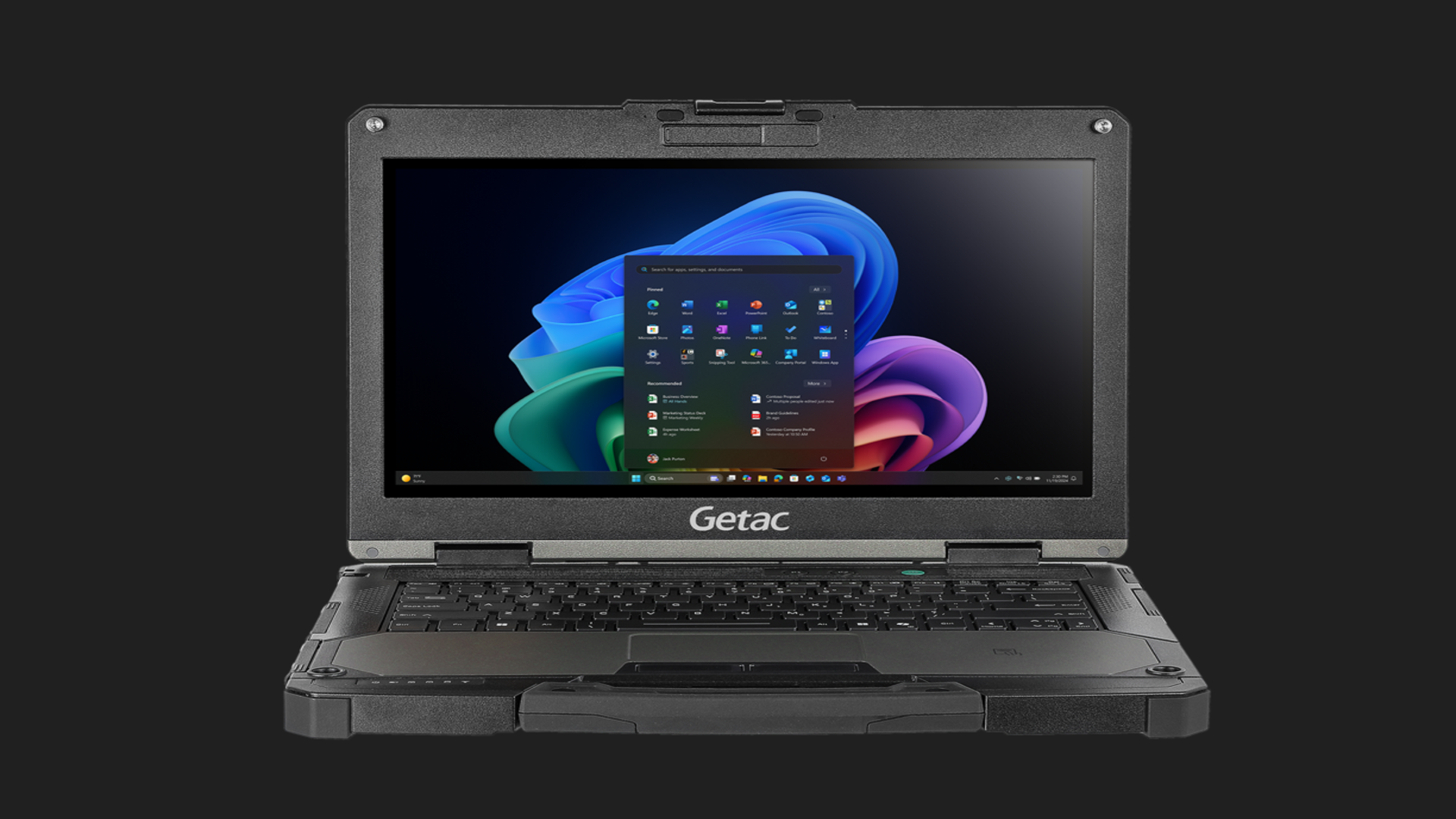
Rank 61382This is probably the most powerful rugged laptop ever built - and you can even add a barcode scannerGetac B360 Plus uses Intel Core Ultra processors, up to 32GB RAM, and Arc integrated graphicsIncludes built-in AI acceleration with Intel AI Boost delivering up to 48 TOPS performanceFeatures a 13.3-inch 1400-nit touchscreen with sunlight-readable technology and capacitive inputRugged devices are typically defined by their ability to survive harsh conditions, not their computing power.The Getac B360 Plus attempts to challenge this expectation by introducing AI acceleration and high-end specs into a fully rugged form factor, but the practical benefits of this combination may not be as clear-cut as the branding suggests.At the core of the B360 Plus is Intel’s new Core Ultra series, with options ranging from Ultra 5 to Ultra 7 and up to 32GB of LPDDR5X memory.AI capabilities meet rugged expectationsBuilt-in AI acceleration through Intel AI Boost claims up to 48 TOPS of performance, paired with Arc integrated graphics.While these specs may appear impressive, how well such AI capabilities translate to real-world edge computing tasks in harsh field environments remains an open question.Engineered for physical resilience, this laptop meets MIL-STD-810H, MIL-STD-461G, and IP66 standards, meaning it can handle drops, salt fog, and wide temperature swings.Getac also offers optional ANSI/UL 121201 certification for hazardous areas, meaning it fits squarely within expectations for a best rugged laptop candidate.The Getac B360 Plus comes with a 13.3-inch display that supports 1400 nits of brightness and is optimized for outdoor use.It also features a LifeSupport dual-battery system, which allows hot-swapping without shutting the device down.Connectivity options include Wi-Fi 7, Bluetooth 5.4, optional 4G and 5G, GPS, and a variety of physical ports including Thunderbolt 4, HDMI 2.0, and even legacy connectors like VGA and serial.The laptop also comes with dual SIM support and a 1D/2D barcode reader, backed by Getac’s Barcode Manager software.While the barcode scanner may be convenient, regular rugged tablet users may still prefer dedicated devices with simpler, more focused roles.Getac also added security features such as TPM 2.0, optional biometric authentication, and enterprise software such as Absolute Persistence and Secure Endpoint.These additions suggest an IT-centric use case, but again, may be overkill for users who simply need a machine that doesn’t fail in the rain or dust.The B360 Plus is an ambitious attempt to bridge rugged hardware and high-performance computing, but whether the two belong together remains to be seen.At the time of writing, there is no word on pricing, but hopefully a unit will be available for review in the coming months.You might also likeFor more durable tech, we tested the best rugged phonesAnd these are the best rugged tablets you can buy right nowDell didn't launch an Alienware mini PC but this Ryzen AI Max+ 395-powered PC looks like one
-

Picture from static.independent.co.uk
Rank 61383 -

Picture from static.independent.co.uk
Rank 61384 -

Picture from static.independent.co.uk
Rank 61385 -

Picture from static.independent.co.uk
Rank 61386 -

Picture from static.independent.co.uk
Rank 61387 -

Picture from static.independent.co.uk
Rank 61388 -

Picture from static.independent.co.uk
Rank 61389 -

Picture from ichef.bbci.co.uk
Rank 61390 -

Picture from static.independent.co.uk
Rank 61391 -

Picture from assets3.cbsnewsstatic.com
Rank 61392 -

Picture from techcrunch.com
Rank 61393 -

Picture from image.cnbcfm.com
Rank 61394 -
Picture from o.aolcdn.com
Rank 61395It's nearly the end of the road for Warcraft Rumble. Blizzard has announced that it will no longer be developing new content for the free-to-play mobile strategy game, and instead focus on "regular, systemic in-game events and bug fixes." The change comes as the rest of Microsoft's business is in upheaval: The company is laying off as many as 9,000 employees across its global workforce.
Blizzard's statement doesn't get into the details of what motivated the decision, but is clear that Warcraft Rumble hasn't been living up to expectations. The game "struggled to find its footing" relative to Blizzard's ambitions, prompting the studio to explore different options to improve it over the last few years. "Some of that work showed signs of progress, but ultimately wasn’t enough to put the game on a path to sustainability," Blizzard writes.
Warcraft Rumble was announced in 2019 as Warcraft Arclight Rumble. Much like Hearthstone, the game was a high-profile attempt to translate a popular Blizzard franchise into something that works on smartphones and tablets. Warcraft Rumble plays like a more flexible version of Clash Royale, where miniaturized armies face off in PVP or singe-player challenges, and the biggest strategic choices are when and where characters are placed.
Aftermath reports that winding down Warcraft Rumble is a direct result of the wider Microsoft layoffs effecting Blizzard. While some of the team who created new content for Rumble will be given new roles at the studio, others will be let go, according to a staff email sent by Blizzard president Johanna Fairies that Aftermath viewed. Blizzard's public statement doesn't acknowledge these layoffs beyond a mention that the studio is "focused on supporting [its] teammates," which is telling in context.
While Warcraft Rumble will live on for now in a diminished state, some future Xbox games have been outright cancelled as a result of Microsoft's restructuring, including Everwild and Perfect Dark. The bigger damage is the loss of talent. Greg Mayles, the lead designer on Donkey Kong Country and creative director of Sea of Thieves, is leaving Rare, according to Video Game Chronicle. ZeniMax Online Studios shared on X that director Matt Firor is also making an exit following the cancellation of the studio's next MMO.This article originally appeared on Engadget at https://www.engadget.com/gaming/blizzard-is-giving-up-on-its-warcraft-mobile-game-amid-layoffs-215021940.html?src=rss
-

Picture from ichef.bbci.co.uk
Rank 61396 -
Picture from assets2.cbsnewsstatic.com
Rank 61397 -
Picture from static.independent.co.uk
Rank 61398 -

Picture from static.independent.co.uk
Rank 61399 -

Picture from assets3.cbsnewsstatic.com
Rank 61400