News
This constantly updated list features the latest and most important news articles, ranked in order of significance. The top stories highlight major developments, breaking news, and critical updates across various topics, ensuring you stay informed about the most pressing issues. As new articles are added, the list adapts to reflect the latest priorities, keeping the most impactful stories at the forefront. Whether it’s global events, technology breakthroughs, or industry trends, this dynamic list ensures you always have access to the most relevant and timely information.
-

Picture from image.cnbcfm.com
Rank 60251 -

Picture from image.cnbcfm.com
Rank 60252 -

Picture from cdn.mos.cms.futurecdn.net
Rank 60253Anker just issued two separate recalls for some of its best power banks, spanning a total of six modelsSome of the power banks might pose a fire hazardIf you qualify, you might be able to get a brand new power bank for freeAnker has just announced its second product recall this year – and while it's bad news for the brand, there could be a silver lining for you. If you own one of Anker's power banks, you might be eligible for a free replacement.The company is recalling six different power bank models, citing issues with the lithium-ion battery inside. This includes models from Anker's Power Core, MagGo, and Zolo series, among others.Below, we'll tell you everything you need to know about Anker's power bank recalls and what to do next.Which Anker power banks are affected by the recall?Anker has launched two separate recalls. One in early June included a single power bank model, while the more recent second expanded the list by an additional five models across a couple of Anker's product lines.The power bank that was recalled first was the Anker PowerCore 10000 (A1263). If you bought the power bank through Amazon, you'd have received an email like the one we received below. The subject line would have been 'Attention: Important Safety Notice about your Past Amazon Order'.(Image credit: Anker)Not every PowerCore 10000 power bank was recalled. The recalled units only include the A1263 model, manufactured between January 1, 2016, and October 30, 2019. All of the recalled units were sold in the United States between June 1, 2016, and December 31, 2022.The second recall was more comprehensive and included the following models:Anker Zolo Model A1681 (20K, 30-watt, with built-in USB-C and Lightning cables)Anker Zolo Model A1689 (20K, 30-watt, with built-in USB-C cable)Anker MagGo Model A1652 (7.5-watt, 10,000mAh)Anker Power Bank Model A1257 (10K, 22.5-watt)Anker Power Bank Model A1647 (22.5-watt, 20,000mAh, with built-in USB-C cable)In these cases, Anker hasn't specified a manufacturing or sale date for the affected power banks. But in its 'voluntary recall' notice referring the above models, it stated that "while the likelihood of malfunction is considered minimal, out of an abundance of caution, we have decided to initiate a voluntary global recall of several Anker power bank models."How to check if your Anker power bank has been recalled(Image credit: Anker)No matter which of the affected models you own, your first step will be to check the model and the serial number on the back or side of your power bank.Not every unit from each model is being recalled, so even if you own one of these, it may not be eligible for replacement.Next, you will have to input the serial number, along with a few other key details, on Anker's online recall form in order to check eligibility.If it's confirmed to be one of the models affected, you should stop using it immediately and submit a product recall form. This contains information on how to request a gift card or replacement.What can you get if your power bank qualifies?If your power bank is affected by one of the recalls, Anker will either offer you a replacement or a gift card. Folks in the U.S. won't be receiving refunds, although Anker is offering refunds in China.(Image credit: Anker)In the case of the Power Core 10000, Anker says that you'll be offered a replacement power bank. If it's on back order, you can either choose a $30 gift card instead (to be used at Anker's store) or wait for the Power Core 10000 to be available again.The second recall is slightly more vague, but Anker says that you'll be able to choose between a gift card or a replacement unit.How to submit a recall claimOnce you're sure that you own one of the models listed above, submit your recall claim to Anker for verification.If you have the Anker Power Core 1000 (A1263), head to Anker's recall form for that modelIf you have one of the other power banks (A1257, A1647, A1652, A1681, A1689), go to this recall form instead.In both cases, you may be asked for the serial number, proof of purchase, order number, and photos of the power bank.If this fails, but you still think you're eligible for replacement, contact Anker's Support over live chat, email or phone.Why are Anker power banks being recalled?Anker hasn't gone into a whole lot of detail as to the cause of the recall, but in both cases, it seems that the problem lies with the battery.When announcing the first recall, Anker said that these power banks could be a fire hazard due to a "potential issue with the lithium-ion battery." Reportedly, the battery can overheat, and if that happens, some of the plastic components might melt, resulting in smoke or even a fire.In the case of the second recall, Anker revealed that it identified a potential issue with lithium-ion battery cells made by one of its vendors. The company admits that problems are unlikely, but it's being cautious and recalling all five of the affected models.Can you still use your old power bank?Once it's confirmed that your power bank is affected by the recall, you should stop using it immediately. Even if it seems to be working just fine, it poses a fire risk, so you should dispose of it as soon as possible.Anker says that you shouldn't dispose of the battery "in the trash, general recycling streams (e.g., street-level or curbside recycling bins), or in used battery drop-off boxes commonly found at retail or home improvement stores".Instead, Anker recommends discarding it at a local electronics disposal facility that accepts recalled devices powered by lithium-ion batteries. That's because recalled batteries need to be treated differently to regular ones due to their higher fire risk.You might also likeWorld's first personal 3D texture printer from Anker just smashed the record for biggest Kickstarter campaign ever – and it's now topped over $46.5 million in pledgesDisappointed by the Nintendo Switch 2's battery life? I quadrupled it with this cheap accessoryI tested the Anker 20,000mAh 87W Power Bank and it has plenty of power, but it might be too much for some
-

Picture from static.independent.co.uk
Rank 60254 -

Picture from techcrunch.com
Rank 60255 -

Picture from static.independent.co.uk
Rank 60256 -

Picture from static.independent.co.uk
Rank 60257 -

Picture from static.independent.co.uk
Rank 60258 -
Picture from ichef.bbci.co.uk
Rank 60259 -

Picture from static.independent.co.uk
Rank 60260 -

Picture from static.independent.co.uk
Rank 60261 -

Picture from techcrunch.com
Rank 60262 -

Picture from static.independent.co.uk
Rank 60263 -

Picture from static.independent.co.uk
Rank 60264 -

Picture from static.independent.co.uk
Rank 60265 -
Picture from static.independent.co.uk
Rank 60266 -

Picture from static.independent.co.uk
Rank 60267 -
Picture from cdn.mos.cms.futurecdn.net
Rank 60268Google Gemini can more easily access your Phone and Messages appsPreviously, you had to allow Gemini Apps Activity, reducing your privacyThat's no longer the case, and comes as Gemini RCS support leaks tooGoogle looks set to give Google Gemini some serious upgrades by allowing it greater access to your apps without forcing you to tweak your privacy settings, and giving it new abilities within those apps.You might have seen an email that Google sent to Android phone users stating that Gemini will be able to interact with the Phone, Messages, WhatsApp, and Utilities apps, even if you have Gemini Apps Activity switched off.The immediate reaction was one of concern, but this is actually a huge privacy win.(Image credit: Philip Berne / Future)With Gemini Apps Activity switched on, Google can see an activity log of how you use Gemini – personal data it can then use to develop its products further. If you want to keep this data more private, you had to lose out on Gemini being able to access extensions, which allow it to perform actions using other apps, such as texting someone if you ask it to.This change means you can keep your activity log private while still not losing out on these basic smart assistant features, which Google’s Assistant has had for years.Though that’s not to say Google won’t store any of your Gemini activity even if this setting is off. Google admits it will store some activity data for at most 72 hours. It’s stored for 24 hours within Gemini so that the AI can respond to your conversations contextually. The longer limit is for security and safety reasons, which you can find out more about on Google’s support page.RCS support incoming?Perhaps in preparation for Gemini having easy access to Messages – and so presumably more people using the app – Gemini is getting an RCS upgrade too, apparently.(Image credit: Apple)That’s based on Android Authority’s analysis of the latest Google app files, which hints at RCS coming to Gemini because the AI can fetch the device’s RCS capabilities. This would only be necessary if the AI were RCS compatible.This is significant because currently, Gemini’s inability to use RCS means it’s unable to send or play audio, images, or video through the Google Messages app. With access to this messaging standard, that could very quickly change.As with similar leaks, there’s no guarantee that Gemini will get RCS support any time soon (or at all), but it certainly makes plenty of sense as an upgrade, so it’s one we’ll be keeping our eye out for.You might also likeThis simple trick gets you 3 months of Google Gemini Veo 3 for freeI tried Google’s new Gemini-powered clothing app – here’s how you can use AI to find the perfect outfitI've been using Google's new AI mode for Search – here's how to master it
-
Picture from static.independent.co.uk
Rank 60269 -

Picture from static.independent.co.uk
Rank 60270 -

Picture from static.independent.co.uk
Rank 60271 -

Picture from static.independent.co.uk
Rank 60272 -

Picture from static.independent.co.uk
Rank 60273 -

Picture from assets2.cbsnewsstatic.com
Rank 60274 -

Picture from image.cnbcfm.com
Rank 60275 -

Picture from assets2.cbsnewsstatic.com
Rank 60276 -

Picture from techcrunch.com
Rank 60277 -
Picture from static.independent.co.uk
Rank 60278 -

Picture from static.independent.co.uk
Rank 60279 -

Picture from static.independent.co.uk
Rank 60280 -

Picture from static.independent.co.uk
Rank 60281 -

Picture from static.independent.co.uk
Rank 60282 -

Picture from image.cnbcfm.com
Rank 60283 -

Picture from assets3.cbsnewsstatic.com
Rank 60284 -
Picture from cdn.mos.cms.futurecdn.net
Rank 60285If you're getting impatient waiting for Apple to release its long-promised AI upgrade for Siri, well, Apple might agree. There have been reports that Apple is talking with OpenAI and Anthropic about letting one of them power the next generation of Siri.This would be truly surprising considering how close Apple usually keeps its tech development. If AI plays as big a role as Apple has implied it will in the future, this could be the foundation for a very different company.And that is something I hope happens. It's not about cheering for the downfall of Apple’s in-house pride. I want this to happen not because I think Apple is incapable of building something great, but because I’ve been living with Siri for over a decade, and at this point, it feels like an ancient Dictaphone compared to communicating with today's AI chatbots.Even with all the Apple Intelligence announcements this year, Siri still feels more like a feature than a full personality. You can ask her to set timers, maybe control your lights, but be careful how you speak or how conversational you get if you want it to still carry out your requests. By comparison, ChatGPT and Claude seem far quicker, more adaptable, and better at both understanding what people say and communicating back.If Apple wants to finally make Siri feel like an assistant and not just a vaguely robotic concierge, borrowing someone else’s brain is a smart move. Apple and its Foundation Models group have been working on large language models for a while now, but progress has been mostly invisible to the average consumer. Breakthrough AI features, like contextual awareness and multi-step reasoning, just aren’t there yet.While Apple is famous for taking its time to get it right (except for the Apple Maps fiasco), the rest of the world isn’t waiting. Google is stuffing Gemini into everything, while Microsoft has ChatGPT running in Office. Even Meta has Meta AI chat available on Instagram. Siri is still not where you go if you have follow-up questions about anything.Siri AISometimes, the smart thing is to stop fiddling with your own blueprint and just lease the engine. And these engine options are both pretty powerful. OpenAI’s GPT-4o can carry on fluent conversations, understand tone, and juggle complex context. Anthropic’s Claude is similarly capable, albeit with a reputation for more caution and focus on safety concerns, something Apple reportedly likes. Both companies are at the top of the field. Either one would instantly give Siri a massive IQ boost.Of course, there are trade-offs. Apple loves control. Letting someone else power Siri means giving up a little bit of that control. What happens if OpenAI changes its pricing model? What if Anthropic gets cozy with Amazon, their big investor? What if there’s a data breach?These are valid concerns. But Apple’s already shown it can integrate external AI in a way that keeps user data private. Their recent Apple Intelligence rollout uses something called Private Cloud Compute, which lets your data get processed on Apple’s own secure servers. Even when they do use ChatGPT for certain features, you have to opt in, and your requests aren’t stored.Rumor has it Anthropic wants several billion dollars a year to license its tech. That’s not pocket change, even for Apple.Rumor has it Anthropic wants several billion dollars a year to license its tech. That’s not pocket change, even for Apple. But it’s a lot cheaper than spending the next five years playing catch-up, especially if your catch-up product still doesn’t do what people expect from AI in 2025.Apple could still develop its own AI models behind the scenes. It could roll them out when they are ready, while giving Siri a much-needed upgrade now. But, for most people, it doesn't matter who built the AI brain, just that it works. If Siri can maintain a conversation and respond to different ways of phrasing something, that would be a big step up. If most people ask Siri to make a reservation at a restaurant and it happens without any stumbles, they're not going to say, “Wait, was this answer generated by Anthropic or OpenAI?” They’ll simply accept that it worked and move on.So yes, let Siri team up with a working AI model. All these iPhones could use the IQ boost. I don’t need Siri to be uniquely Apple or unique at all. I just need it to be useful.You might also likeApple is about to make Personal Voice faster and better, and update almost all of its other accessibility featuresThe ultimate AI search face-off - I pitted Claude's new search tool against ChatGPT Search, Perplexity, and Gemini, the results might surprise you4 ChatGPT features I hope Apple adds to SiriApple Intelligence feels like the HomePod all over again
-

Picture from techcrunch.com
Rank 60286 -

Picture from static.independent.co.uk
Rank 60287 -
Picture from static.independent.co.uk
Rank 60288 -

Picture from image.cnbcfm.com
Rank 60289 -

Picture from assets3.cbsnewsstatic.com
Rank 60290 -

Picture from image.cnbcfm.com
Rank 60291 -

Picture from image.cnbcfm.com
Rank 60292 -

Picture from static.independent.co.uk
Rank 60293 -
Picture from assets2.cbsnewsstatic.com
Rank 60294 -

Picture from static.independent.co.uk
Rank 60295 -

Picture from techcrunch.com
Rank 60296 -

Picture from static.independent.co.uk
Rank 60297 -
Picture from cdn.mos.cms.futurecdn.net
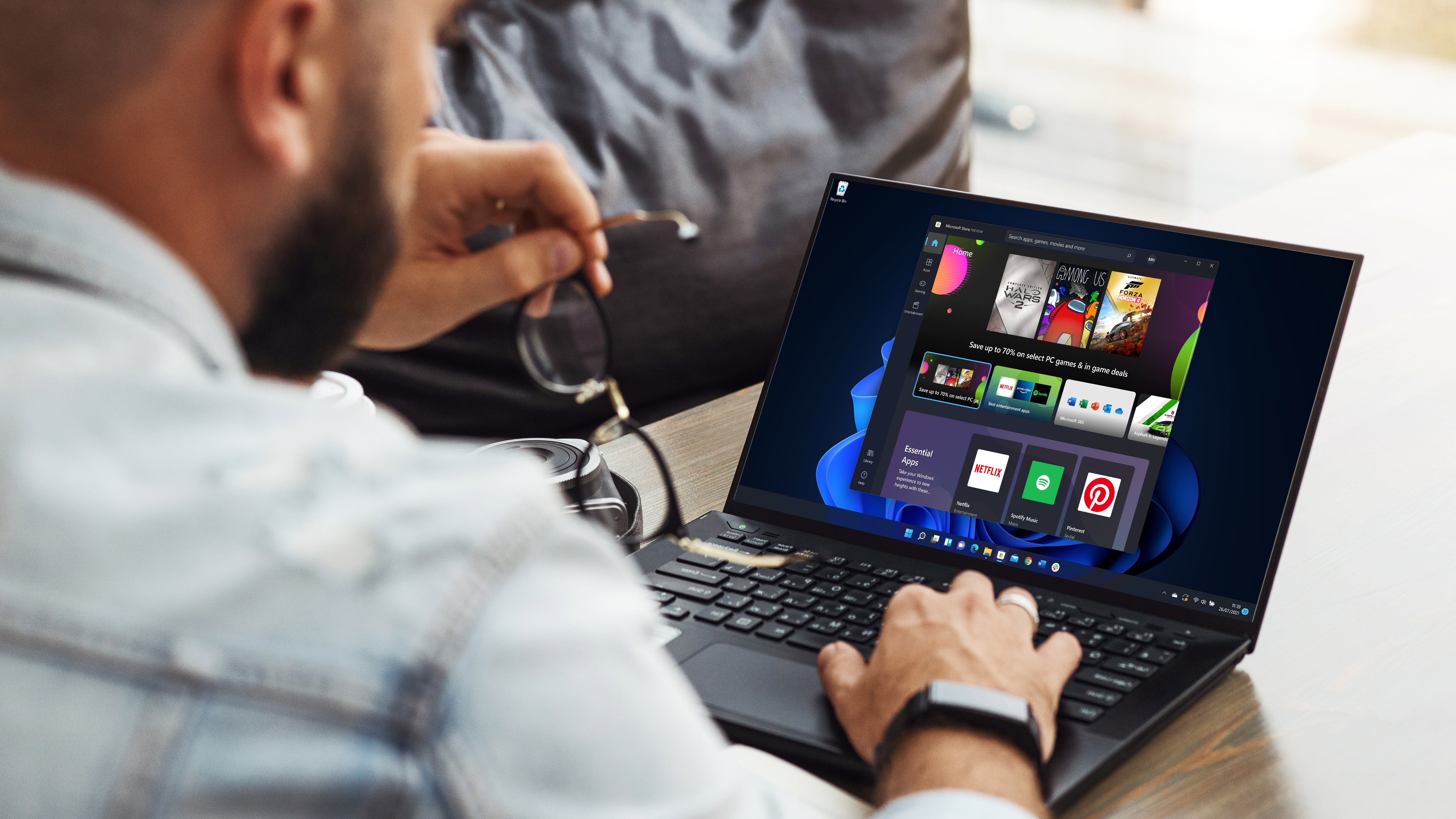
Rank 60298Experts warn emails sent with sensitive data are still getting delivered unencrypted, and no one gets notifiedMicrosoft 365 sends email in plain text when encryption fails, without alerting the user at allGoogle Workspace still uses insecure TLS 1.0 and 1.1 without warning senders or rejecting messagesMost users assume that emails sent through cloud services are encrypted and secure by default, but this might not always be the case, new research has claimed.A report from Paubox found Microsoft 365 and Google Workspace both mishandle these failures in ways that leave messages exposed, without notifying the sender or logging the failure.“Using obsolete encryption provides a false sense of security because it seems as though sensitive data is protected, even though it really is not,” Paubox said.Default settings quietly undermine encryptionThe problem isn’t just a technical edge case; it stems from how these platforms are designed to operate under common conditions.Google Workspace, the report found, will fall back to delivering messages using TLS 1.0 or 1.1 if the receiving server only supports those outdated protocols.Microsoft 365 refuses to use deprecated TLS, but instead of bouncing the email or alerting the sender, it sends the message in plain text.In both cases, the email is delivered, and no warning is issued.These behaviors pose serious compliance risks, as in 2024, Microsoft 365 accounted for 43% of healthcare-related email breaches.Meanwhile, 31.1% of breached healthcare entities had TLS misconfigurations, despite many of these organizations using “force TLS” settings to meet compliance requirements.But as Paubox notes, forcing TLS does not guarantee encryption using secure versions like TLS 1.2 or 1.3, and fails silently when those conditions are not met.The consequences of silent encryption failures are far-reaching - healthcare providers routinely send Protected Health Information (PHI) over email, assuming tools like Microsoft 365 and Google Workspace offer strong protections.In reality, neither platform enforces modern encryption when failures occur, and both risk violating HIPAA safeguards without detection.Federal guidelines, including those from the NSA in the US, have long warned against TLS 1.0 and 1.1 due to vulnerabilities and downgrade risks.Yet Google still allows delivery over those protocols, while Microsoft sends unencrypted emails without flagging the issue.Both paths lead to invisible compliance failures - in one documented breach, Solara Medical Supplies paid more than $12 million after unencrypted emails exposed over 114,000 patient records.Cases like this show why even the best FWAAS or ZTNA solution must work in concert with visible, enforceable encryption policies across all communication channels.“Confidence without clarity is what gets organizations breached,” Paubox concluded.You might also likeThese are the best VPNs with antivirus that you can use right nowTake a look at our pick of the best internet security suites availableChina-backed "LapDogs" hackers hijacked hundreds of devices
-

Picture from techcrunch.com
Rank 60299 -
Picture from static.independent.co.uk
Rank 60300