News
This constantly updated list features the latest and most important news articles, ranked in order of significance. The top stories highlight major developments, breaking news, and critical updates across various topics, ensuring you stay informed about the most pressing issues. As new articles are added, the list adapts to reflect the latest priorities, keeping the most impactful stories at the forefront. Whether it’s global events, technology breakthroughs, or industry trends, this dynamic list ensures you always have access to the most relevant and timely information.
-

Picture from static.independent.co.uk
Rank 54901 -

Picture from assets3.cbsnewsstatic.com
Rank 54902 -

Picture from image.cnbcfm.com
Rank 54903 -
Picture from cdn.mos.cms.futurecdn.net
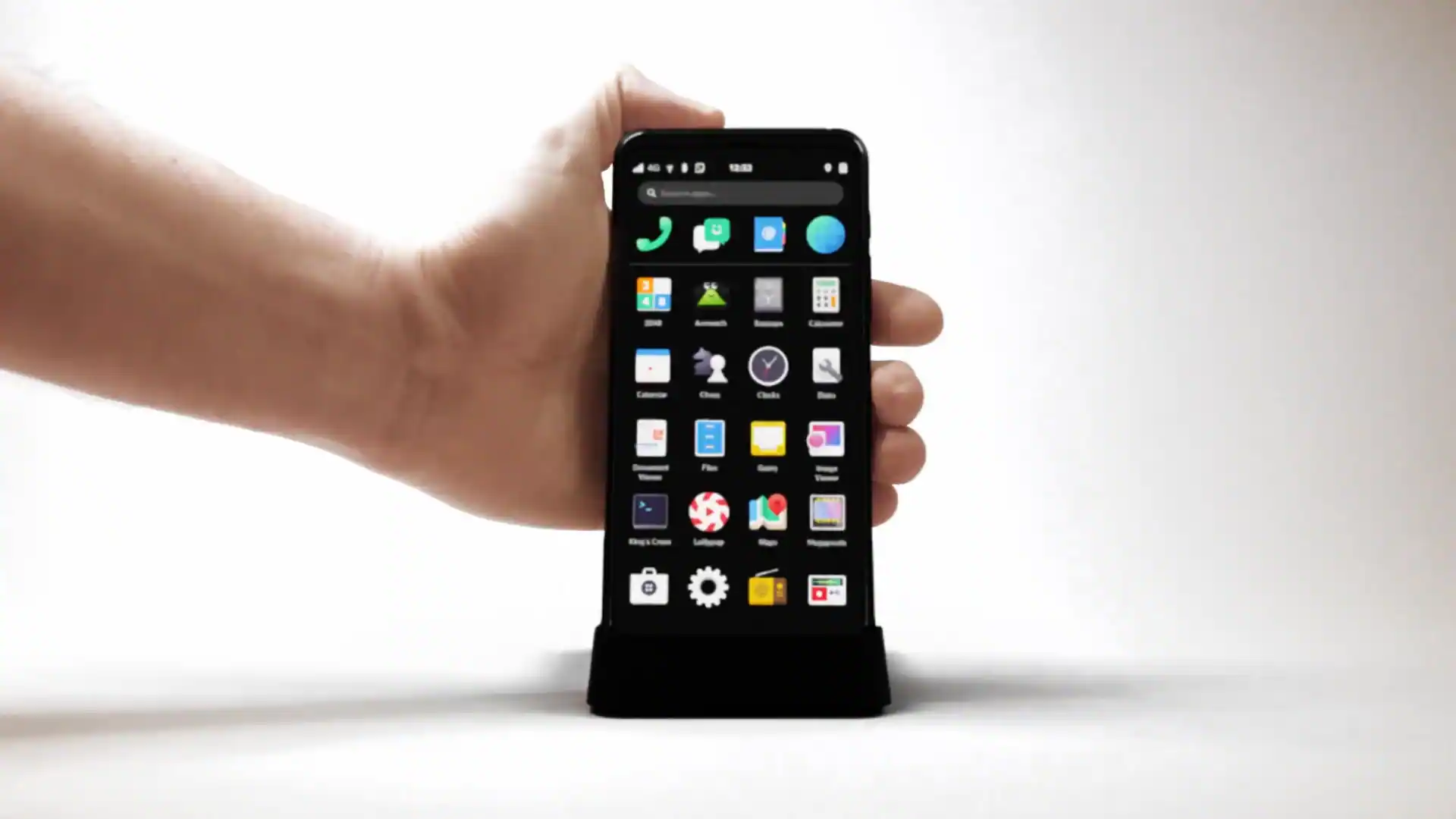
Rank 54904Built in California, powered by Linux, the Liberty Phone says no to tech giantsWith no Android or iOS, it’s the loneliest smartphone on the market todayIt costs more, does less, and still claims to be the best smartphone for privacyDespite rising political pressure to bring tech manufacturing back to the US, building a premium smartphone domestically remains a costly and technically difficult challenge.The Liberty Phone by Purism, priced at $1,999, offers a rare example of how close a company can get to building an America-made device, but it comes with significant trade-offs in performance and practicality.Unlike the widely promoted but questionable $499 Trump Phone, the Liberty Phone is at least verifiably assembled in the US, although it lacks flagship-level features.Still not 100% "Made In USA!"Todd Weaver, Purism’s founder, is upfront about the limitations, noting, “Someone who needs a wicked-strong camera is not our audience.”Weaver estimates the Liberty Phone costs around $650 to produce, higher than the iPhone 16 Pro Max, which TechInsights says costs about $550 to build in China.This discrepancy is driven largely by US labor costs, with savings made by using lower-spec components such as a basic camera and a low-resolution screen.This may suit its core user base, including security geeks, older users, kids, and those who want to distance themselves from major tech brands, but it is nowhere near mainstream Android alternatives - for anyone expecting the best smartphone for business or multimedia tasks, the Liberty Phone is unlikely to compete.Part of Purism’s appeal lies in its transparent and partially domestic supply chain - the motherboard is built at the company's California site, the chip is sourced from NXP’s Austin, Texas, facility, and the final assembly is local.But some critical components, like the camera from South Korea and the display and battery from China, still depend on global sourcing.“There are just some parts that don’t yet have a supply chain,” says Weaver. “We’re gonna keep incrementing there until we can get to that point.”It runs PureOS, a Linux-based operating system that supports basic tasks like calling, texting, and web browsing, but without support for Android or iOS apps, it’s a hard sell for anyone needing a broad app ecosystem or high-end performance.Nonetheless, Weaver believes a niche market exists and claims that about half of Purism’s customers are US government agencies.Even though tariffs might someday narrow the cost gap, the continuity of this project is not certain.“We don’t have factories here building application processors, high-end displays or most of the other things in your smartphone,” said Jeff Fieldhack of Counterpoint Research, showing his skepticism.At the moment, the Liberty Phone is more of a philosophical gesture than a practical solution, and only Americans or those loyal to the US will give it a second look.Via Wall Street JournalYou might also likeWe’ve also listed the best business tablets aroundCheck out the best Raspberry Pi distros available right nowI almost always say thanks to ChatGPT - but most people have sworn at AI chatbots at least once
-

Picture from static.independent.co.uk
Rank 54905 -

Picture from static.independent.co.uk
Rank 54906 -

Picture from static.independent.co.uk
Rank 54907 -

Picture from static.files.bbci.co.uk
Rank 54908 -

Picture from static.independent.co.uk
Rank 54909 -

Picture from image.cnbcfm.com
Rank 54910 -

Picture from image.cnbcfm.com
Rank 54911 -

Picture from assets1.cbsnewsstatic.com
Rank 54912 -

Picture from static.independent.co.uk
Rank 54913 -

Picture from assets3.cbsnewsstatic.com
Rank 54914 -

Picture from static.independent.co.uk
Rank 54915 -

Picture from static.independent.co.uk
Rank 54916 -

Picture from static.independent.co.uk
Rank 54917 -

Picture from static.independent.co.uk
Rank 54918 -

Picture from static.independent.co.uk
Rank 54919 -
Rank 54920
-

Picture from ichef.bbci.co.uk
Rank 54921 -

Picture from static.independent.co.uk
Rank 54922 -

Picture from assets1.cbsnewsstatic.com
Rank 54923 -

Picture from assets1.cbsnewsstatic.com
Rank 54924 -

Picture from image.cnbcfm.com
Rank 54925 -

Picture from static.independent.co.uk
Rank 54926 -
Picture from ichef.bbci.co.uk
Rank 54927 -

Picture from static.independent.co.uk
Rank 54928 -

Picture from assets2.cbsnewsstatic.com
Rank 54929 -

Picture from cdn.mos.cms.futurecdn.net
Rank 54930A team of Chinese researchers has achieved a 1Gbps data transmission from a satelliteThe satellite operates 22,807 miles above Earth, while Starlink satellites are at around 341 milesThis kind of speed could be revolutionary for internet connections in remote areas on Earth, but also in spaceIt's no secret that getting a stable, reasonably fast internet connection in non-urban areas is still a challenge (and even those of us living in cities sometimes struggle). Elon Musk's satellite internet service, Starlink, goes a long way toward making internet more accessible all around the globe – but it just got majorly overshadowed by a small team of Chinese scientists.This new breakthrough in satellite internet technology (via Interesting Engineering) was achieved by Liu Chao from the Chinese Academy of Sciences and Professor Wu Jian of Peking University of Posts and Telecommunications. The scientists developed a new method of combating the biggest hurdle faced by satellite laser connections: atmospheric turbulence.Combining two already established technologies and using them in synergy resulted in shockingly fast data transmission. But this isn't just about speed (although that's arguably the best part for us, internet users). It's also about the distance to the satellite and the laughably low wattage of the laser used by the Chinese researchers.Super-fast satellite speeds with a surprisingly low error rateA key benefit of this method lies in the relatively low error rate during data transmission, increasing the chance of achieving usable signals by nearly 20% (previously 72%, now 91.1%). As we all know, speeds are just one part of the equation when it comes to internet connections, and anyone who's ever had to deal with an unreliable ISP knows that stable is often better than faster.Still, the Chinese researchers were reportedly able to achieve both through a mix of Adaptive Optics (AO) and Mode Diversity Reception (MDR). The former sharpens distorted light, and the latter captures scattered signals. Only when combined did these two separate methods achieve 1Gbps in data transmission, though, and the scientists praise this method for successfully avoiding drops in communication quality.(Image credit: T-Mobile)They carried out the test at the Lijiang observatory in China, using a 5.9-foot telescope that contains hundreds of tiny mirrors – that's the adaptive optics system in play. These mirrors reshape incoming laser light to account for atmospheric turbulence. Speaking of lasers: the team used a two-watt laser for this experiment, which can be compared to a nightlight. Of course, this refers to laser power and not the satellite’s total energy use.Once processed and extracted, the light splits into eight base-mode channels, and finally, a special algorithm decides which of these channels is the most promising, in real-time. Choosing the top three signals out of eight gave the researchers a major boost in signal strength, all the while dramatically outpacing Starlink’s downlink speeds – especially impressive given the much greater orbital distance.This could be good news for internet users worldwide (and beyond)(Image credit: Unsplash / Evgeny Opanasenko)Comparing this new breakthrough to Starlink reveals a few key differences. First, data transmission speeds reaching up to 1Gbps are not something that Starlink can currently achieve; in our Starlink review, we found that the average for downloads sat at 71Mbps, and Starlink itself promises to deliver between 25 to 100 Mbps on the Standard plan. Second, signal strength and reduced errors in data transmission, despite the massive distance to the satellite, are both promising.Cutting back on errors and snags in the connection is crucial for users who want to stream videos or send larger files. If this technology is ever made mainstream, we might be able to use the internet even in remote areas without having to compromise on what we can or cannot do. Goodbye, waiting for five minutes for that text to come through – we really wouldn't miss you.But the implications here are huge, even if you think bigger than just having a reliable connection everywhere. Boosting signal speed, distance, and strength through this method of laser communication could spell great news for satellite navigation. It could even impact the ability to connect with space missions, such as with the ISS, more seamlessly and without delays.Right now, this is just a proof of concept – an interesting achievement described in the Acta Optica Sinica journal. Let's hope that this picks up and gives Starlink a serious run for its money.You might also likeWhat is Starlink? How to get the satellite service for free on your phone with T-Mobile, plus everything you need to knowStarlink is now offering its satellite internet kit for free on a new plan – but not everyone can get itWhat is Amazon's Project Kuiper? The Starlink rival explained as its first internet satellites launch
-
Picture from cdn.mos.cms.futurecdn.net
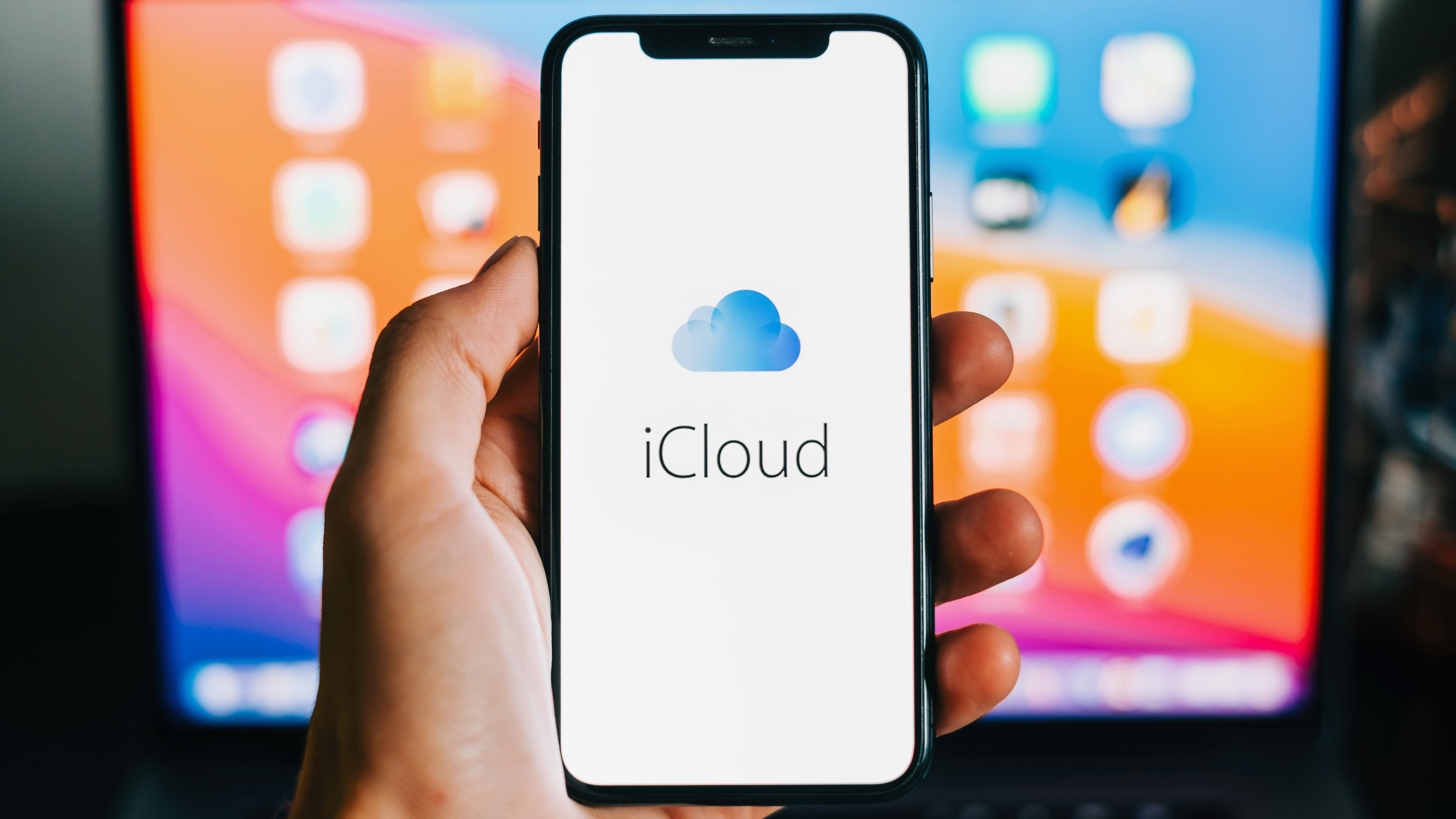
Rank 54931If you’re having issues using iCloud.com and the various apps like Photos or Mail on the web, you’re not alone. Apple’s iCloud Status page is officially showing an outage for both ‘iCloud Web Apps’ and ‘iWork for iCloud’, as well as issues for two other facets of the wide-ranging service.Apple officially notes the issues as starting at 2:36PM ET and TechRadar noticed that Down Detector is showing a spike nearing 1,000 reported outages as of 3:35PM ET. As of right now, I can sign into iCloud.com, though it’s a bit slow going.Stick with us as we cover the issues hitting Apple’s iCloud right now with live reporting down below.Additionally, we’ve reached out to Apple to request insight into this outage, but it’s reassuring that the status page at least acknowledges that something is wrong.As of 2:36PM ET, Apple's iCloud status page shows an outage for 'iCloud Web Apps (iCloud.com)' and 'iWork for iCloud', noting that some users are affected with issues accessing or using parts of these services.(Image credit: Apple)While I was able to sign into iCloud.com just minutes ago, when I load it now nothing is appearing other than the logo in the top left.(Image credit: Future/Jacob Krol)
-

Picture from static.independent.co.uk
Rank 54932 -

Picture from static.independent.co.uk
Rank 54933 -

Picture from image.cnbcfm.com
Rank 54934 -

Picture from techcrunch.com
Rank 54935 -

Picture from ichef.bbci.co.uk
Rank 54936 -

Picture from static.independent.co.uk
Rank 54937 -

Picture from techcrunch.com
Rank 54938 -

Picture from static.independent.co.uk
Rank 54939 -

Picture from assets2.cbsnewsstatic.com
Rank 54940 -

Picture from static.independent.co.uk
Rank 54941 -

Picture from static.independent.co.uk
Rank 54942 -

Picture from static.independent.co.uk
Rank 54943 -

Picture from assets3.cbsnewsstatic.com
Rank 54944 -

Picture from static.independent.co.uk
Rank 54945 -

Picture from static.independent.co.uk
Rank 54946 -

Picture from techcrunch.com
Rank 54947 -
Picture from o.aolcdn.com
Rank 54948Diablo IV has been demonically chugging along since the release of the major Vessel of Hatred expansion last fall. The seasonal model usually brings temporary gameplay updates and storylines, but when Season 9 hits on July 1, it will add a couple of useful permanent changes. First, console players are getting support for mouse and keyboard controls. Second, there will be new additions to Nightmare Dungeons.
The endgame of Diablo IV involves a lot of grinding Nightmare Dungeons, so even with a healthy dose of procedural generation, the landscape of those challenges starts to feel overly familiar. Season 9 will add some new wrinkles to the tile sets. Horadric Strongrooms are micro-dungeons within the Nightmare Dungeon that offer big potential rewards as well as a buff for the remainder of the main dungeon. Escalating Nightmares are a trio of dungeons in increasing challenges, and when tackled at Torment difficulty, they conclude with a riff on the Astaroth boss fight.
It'll be a while yet before the developers bring another expansion on the scale of Vessel of Hatred, but Blizzard has been providing new twists on the game each season for the players who log hundreds of hours in Diablo IV. The Season 9 permanent additions, which also include some brand new dungeon affixes, could help keep things challenging and interesting for the game's hardcore fans.This article originally appeared on Engadget at https://www.engadget.com/gaming/the-next-season-of-diablo-iv-adds-extra-challenges-to-the-endgame-203832761.html?src=rss
-

Picture from static.independent.co.uk
Rank 54949 -

Picture from cdn.mos.cms.futurecdn.net
Rank 54950AI tools are reshaping how we live, from morning chores to late-night adminTime isn’t just money anymore - it’s a function of how much tech you can manageAI promises more free time, but the wealth gap decides who gets to enjoy itAs AI continues to reshape how we work and live, the promise of regaining time is attracting growing interest.New research from Lloyds Bank has claimed emerging technologies could help people reclaim up to 110 minutes of free time per day.A focus on automating daily routines, such as chores, shopping, and travel, could help free up time, but the benefits appear skewed toward high earners. AI tools, including AI assistants, autonomous drones, and driverless vehicles, are framed as part of this shift toward a more efficient daily life, but these are not cheap.AI tools free up time, but at a costThe bank found in the UK, 86% of adults say having more time is important, rising to 99% among those earning over £100,000.While 60% of the wider population is open to using new technologies to save time, this jumps sharply among affluent individuals, with nearly all saying they are willing to adopt such tools.“We know life is hectic, with work, family, and personal commitments all vying for attention,” said Adam Rainey, Director of Mass Affluent at Lloyds.“But our research shows people are becoming more comfortable with using technology to handle daily tasks.”The most time-consuming responsibilities, according to the study, are cleaning, cooking, and managing finances.Almost half (47%) of respondents identified household chores as their primary time drain, while 31% pointed to financial admin.AI is being promoted as the solution through smart home devices or personal AI agents. These tools promise to handle repetitive work.Yet many of the best AI tools come with steep costs or require a level of digital skill that remains out of reach for some.Banking apps continue to lead among accessible time-saving tech, with 48% of adults relying on them. However, the gap widens when it comes to advanced tools; 49% of high earners are now using AI assistants, and 92% agree that wealth enables more free time.It’s a compelling idea that could integrate everyone, but also one that raises the question - who has the means to work smarter?As with the story of the Mexican fisherman, it’s worth asking whether we’re overengineering the pursuit of a simpler life some may already have, just without the premium subscription.You might also likeMicrosoft Teams is finally fixing one of its most annoying pop-ups - so I might be more productive at work at lastCheck out the best productivity tools to speed up your dayWe've rounded up the best portable monitors available now
