News
This constantly updated list features the latest and most important news articles, ranked in order of significance. The top stories highlight major developments, breaking news, and critical updates across various topics, ensuring you stay informed about the most pressing issues. As new articles are added, the list adapts to reflect the latest priorities, keeping the most impactful stories at the forefront. Whether it’s global events, technology breakthroughs, or industry trends, this dynamic list ensures you always have access to the most relevant and timely information.
-
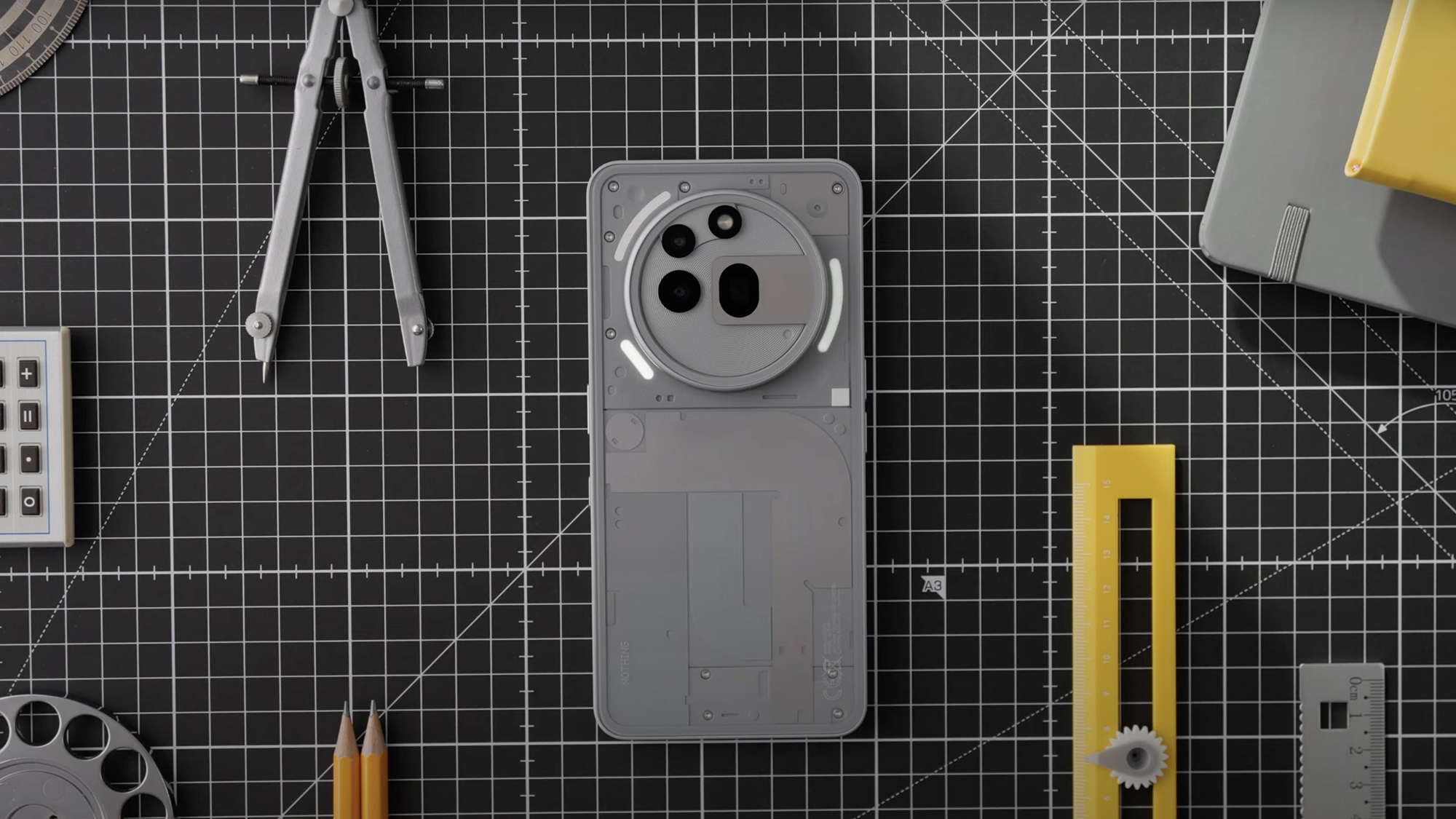
Picture from cdn.mos.cms.futurecdn.net
Rank 53151More details of the Nothing Phone 3 have appeared onlineIt looks like a significant upgrade over the Nothing Phone 2The processor running the phone has already been made officialThe extended wait for the Nothing Phone 3 will be over sometime in July, when the handset gets its official unveiling, but ahead of time we've got a batch of leaked specs telling us what to expect from the upcoming device.According to tipster @gadget_bits (via Notebookcheck), the Nothing Phone 3 is going to come with a 6.7-inch, 1.5k resolution OLED display, matching the Nothing Phone 2, and a 5,150 mAh capacity battery – up from 4,700 mAh.Wired charging speeds are said to be getting a bump from 45W to 100W. A launch date of July 1 is also listed, which matches what Nothing has previously said about a July launch window. That would be a week on Tuesday from today, so if that is accurate, Nothing should make the date official soon.The phone is apparently going to have a 50MP front-facing camera, and a triple-lens 50MP + 50MP + 50MP camera around the back, with 3x optical zoom via a periscope lens, and an ultrawide lens included in the mix. The Nothing Phone 2, by comparison, has a 32MP selfie camera and a dual-lens 50MP + 50MP camera on the back.Price and software🚨 ExclusiveNothing Phone (3)- 6.7" 1.5k OLED LTPO display- 50mp + 50mp 3x periscope + 50mp UW- 50mp front- 5150mAh battery (typ) + 100W charging- Wireless + reverse wireless charging- NFC, eSIM- Nothing OS 3.5 on Android 15- Snapdragon 8s Gen 4Launching on July 1st pic.twitter.com/GB3TaeekT6June 21, 2025We get a few more bits from the same leak, which are all pretty much as you would expect, including support for NFC and eSIMs. The phone is tipped to come with Nothing OS 3.5 based on Android 15 out of the box.Nothing has already confirmed that the upcoming Phone 3 is going to be powered by a Snapdragon 8s Gen 4 chipset, so it's no surprise that this is mentioned in the leak too. It's not the best mobile Snapdragon CPU around right now, but it's well up there.The rest of the specs match the processor in being very good, if not best in class. It's going to be interesting to see how the Nothing Phone 3 is priced: the rumors are that it could start at $799 in the US, which would make it pricier than its predecessor, which launched in 2023 for $599 / £579 / AU$1,049.We know that Nothing skipped a year between launches because it wanted to make sure the on-board software and AI was exactly right, so it's going to be interesting to see what happens in this department too. We've previously heard that there are going to be some "breakthrough innovations" in terms of the user interface.You might also likeWe reviewed the Nothing Phone 3a ProHere are the best Android phones you can buy right nowThe Nothing Phone 3 could get a camera upgrade
-

Picture from static.independent.co.uk
Rank 53152 -

Picture from assets2.cbsnewsstatic.com
Rank 53153 -

Picture from static.independent.co.uk
Rank 53154 -

Picture from ichef.bbci.co.uk
Rank 53155 -

Picture from static.independent.co.uk
Rank 53156 -
Picture from o.aolcdn.com
Rank 53157Starting September 1, fully autonomous cars will require a permit to operate in Texas. This new restriction comes after the state's governor, Greg Abbott, signed into law the SB 2807 bill that requires authorization from the state's Department of Motor Vehicles for self-driving cars on public streets without human interaction.
The signing of the new law coincides with Tesla's launch of its robotaxi service in Austin today where invited guests got to ride in fully autonomous Model Ys. While the law doesn't go into effect until a few months later, Tesla's robotaxi launch could have skirted this new regulation since all rides are accompanied by a human "safety monitor" in the front passenger seat.
Tesla Robotaxi in Quicksilver 📷 @AdanGuajardo pic.twitter.com/f87yRW9NWP— Adan Guajardo (@AdanGuajardo) June 21, 2025
In the coming months, Texas' new law may prove to be more than just a headache for Tesla. Besides the permits, the upcoming regulation allows state authorities the ability to revoke permits and requires companies to provide methods of dealing with self-driving cars in emergency situations to police and first responders. While this could become a serious hurdle for Tesla, it's also likely to affect Waymo, since it currently operates an autonomous ride-hailing service in Austin.This article originally appeared on Engadget at https://www.engadget.com/ai/texas-will-require-permits-for-self-driving-cars-starting-in-september-164755457.html?src=rss
-

Picture from ichef.bbci.co.uk
Rank 53158 -

Picture from ichef.bbci.co.uk
Rank 53159 -

Picture from ichef.bbci.co.uk
Rank 53160 -

Picture from static.independent.co.uk
Rank 53161 -

Picture from static.independent.co.uk
Rank 53162 -

Picture from techcrunch.com
Rank 53163 -

Picture from ichef.bbci.co.uk
Rank 53164 -

Picture from ichef.bbci.co.uk
Rank 53165 -

Picture from static.independent.co.uk
Rank 53166 -

Picture from static.independent.co.uk
Rank 53167 -

Picture from static.independent.co.uk
Rank 53168 -

Picture from ichef.bbci.co.uk
Rank 53169 -

Picture from assets3.cbsnewsstatic.com
Rank 53170 -

Picture from assets1.cbsnewsstatic.com
Rank 53171 -

Picture from assets1.cbsnewsstatic.com
Rank 53172 -

Picture from assets3.cbsnewsstatic.com
Rank 53173 -

Picture from ichef.bbci.co.uk
Rank 53174 -

Picture from static.independent.co.uk
Rank 53175 -

Picture from assets1.cbsnewsstatic.com
Rank 53176 -

Picture from cdn.mos.cms.futurecdn.net
Rank 53177iSoftStone grows fast, edging closer to becoming China’s number two PC vendorFocus on B2B and gaming powers its rise in challenging home market Global expansion could follow if this growth momentum continues unabatedThere’s a fast-growing PC brand in China that you’ve likely never even heard of, but is on track to become the second-largest PC vendor in the country, edging past both HP and Apple.iSoftStone, a name more familiar in China’s enterprise circles, has seen explosive, triple-digit growth, with a fast-expanding gaming portfolio menaing it has begun to attract attention from outside its home market - even though it doesn’t sell to consumers overseas.According to the latest report from Canalys, iSoftStone shipped 0.89 million PCs in Q1 2025, up from 0.42 million in Q1 2024 - that’s a 111% increase in just one year. In Q1 2024, iSoftStone held a 5% market share. It’s now at 10%, just 2% behind Huawei, 2% ahead of Apple, and 3% ahead of HP.111% year-on-year increaseMuch of iSoftStone’s rapid success comes from its business background. The company is deeply involved in China’s education and public sectors, areas which have benefited from steady government support and subsidies, even as large enterprise spending has stayed mostly flat.iSoftStone is also gaining traction in gaming PCs, a category that continues to grow - up 24% year-on-year - especially at the high-performance end.The overall PC market in Mainland China is forecast to remain flat this year, as the effect of consumer subsidies begins to fade. The SMB and public sectors are expected to grow however, by 4% and 1%, respectively.“Mainland China’s PC landscape has evolved significantly over the past two years, shaped by a more competitive landscape for domestic brands,” said Emma Xu, Senior Analyst at Canalys.“Consumer-focused Chinese vendors such as iSoftStone, Huawei, Honor, and Xiaomi all reported growth in Q1 2025, gaining share at the expense of traditional commercial heavyweights like Lenovo, HP, and Dell.”iSoftStone might not have an easy job claiming the number two spot, however. As Xu noted, “The recent announcement of Huawei’s HarmonyOS PCs in May could mark another potential inflection point. While it faces an uphill battle to drive consumer and developer adoption, Huawei’s long-standing strength in mobile devices and emerging AI differentiation could see HarmonyOS redefine the competitive landscape for PCs in the mid to long term.”As it stands now, iSoftStone is focused on China. But with past involvement in global projects, like a data center in Singapore, it may not stay local for long. If, buoyed by domestic success, it expands internationally, the global PC market could be in for a seismic shakeup.You might also likeThese are the best business laptops you can buy right nowAnd these are the best workstations for any budgetMysterious tech firm set to become one of the biggest PC vendors in China
-

Picture from static.independent.co.uk
Rank 53178 -

Picture from static.independent.co.uk
Rank 53179 -

Picture from image.cnbcfm.com
Rank 53180 -

Picture from static.independent.co.uk
Rank 53181 -

Picture from ichef.bbci.co.uk
Rank 53182 -

Picture from static.independent.co.uk
Rank 53183 -

Picture from static.independent.co.uk
Rank 53184 -

Picture from assets3.cbsnewsstatic.com
Rank 53185 -

Picture from assets3.cbsnewsstatic.com
Rank 53186 -

Picture from assets3.cbsnewsstatic.com
Rank 53187 -
Picture from o.aolcdn.com
Rank 53188Perplexity is planning to open up its Comet browser that's powered by "agentic search" to Windows users, according to the company's CEO. Aravind Srinivas posted on X that the Windows build of Comet is ready and has sent out invites to early testers already. Perplexity's CEO also hinted at a potential release for Android devices, adding that it was "moving at a crazy pace and moving ahead of schedule."
In May, Perplexity launched a beta version of its AI-powered Comet browser, only available to Mac users running Apple Silicon. The intelligent browser comes with AI features baked in, like the ability to ask it questions, check shopping carts for discounts and dig up unanswered emails. The beta version even showcases a "Try on" feature where users can upload a photo of themselves and Comet will generate an image of them wearing a selected piece of clothing.
There's still no official debut set, but Srinivas previously hinted at an upcoming release in an X post earlier this month. Comet is still only offering a waitlist for those interested, but the browser has already stirred up controversy. The company's CEO previously made comments during a podcast interview that Perplexity would use Comet "to get data even outside the app to better understand you." Srinivas later clarified on X that the comment was taken out of context, adding that "every user will be given the option to not be part of the personalization" when it comes to targeted ads. When Comet is released, the agentic browser will face competition from Opera Neon and similar offerings from Google and OpenAI.This article originally appeared on Engadget at https://www.engadget.com/ai/perplexitys-ai-powered-browser-opens-up-to-select-windows-users-180629870.html?src=rss
-

Picture from static.independent.co.uk
Rank 53189 -

Picture from assets3.cbsnewsstatic.com
Rank 53190 -

Picture from static.independent.co.uk
Rank 53191 -

Picture from static.independent.co.uk
Rank 53192 -

Picture from static.independent.co.uk
Rank 53193 -

Picture from cdn.mos.cms.futurecdn.net
Rank 53194AI can now reconstruct speech through concrete using just a laptop’s unshielded microphone wiringLaptop mic cables double as antennas, leaking audio through radio harmonicsMEMS microphones emit signals that betray private conversations without any system compromise or malwareA new form of eavesdropping uses artificial intelligence to recover speech from devices through walls.A report by eeNews outline how it exploits a vulnerability in widely used MEMS (microelectromechanical systems) microphones, and the most affected devices are laptops, due in part to their internal wiring design.Researchers from the University of Florida and Japan’s University of Electro-Communications demonstrated even through a 25 cm concrete barrier, attackers can accurately reconstruct speech using nothing more than an FM receiver, a copper antenna, and machine learning tools.So, why laptops?(Image credit: eeNews)The microphones in many laptops are connected via long, unshielded wires, effectively turning them into antennas, the researchers note.“With an FM radio receiver and a copper antenna, you can eavesdrop on these microphones. That’s how easy this can be…It costs maybe a hundred dollars, or even less,” said Prof. Sara Rampazzi at the University of Florida.The research revealed an accuracy of up to 94.2% in recognizing spoken digits, while OpenAI’s generative models achieved a transcription error rate as low as 6.5%.The researchers examined several MEMS microphones, including the MP34DT01-M from STMicroelectronics, Knowles SPM0405 (now Synaptics), TDK InvenSense CS-41350 and T3902, and Vesper’s VM3000 (now part of Qualcomm).These microphones emit electromagnetic signals that can leak acoustic data through radio harmonics.According to STMicroelectronics, “this is an intrinsic behavior of Digital PDM MEMS microphones,” and the design used in laptops often lacks shielding, turning flat cables into ideal antennas.To mitigate this risk, experts recommend relocating microphones within laptops to reduce cable length and shielding the wires. They also propose using spread spectrum clocking to reduce the intelligibility of emissions without affecting performance.These fixes are relatively simple, but they are relevant for newer devices moving forward. What about pre-existing devices, then?Regular users need to invest in the best antivirus or endpoint protection solutions, which offer some protection even though they are not explicitly listed to defend against this new threat.These tools typically operate at the software level and may not detect passive attacks that don’t involve code execution or system compromise.For individuals seeking the best identity theft protection, this research shows that even conversations assumed to be private may be within reach of sophisticated, low-cost surveillance.You might also likeThese are the best VPNs with antivirus that you can use right nowTake a look at our pick of the best internet security suites availableI’m an AI expert and this is why strong ethical standards are the only way to make AI successful
-

Picture from ichef.bbci.co.uk
Rank 53195 -

Picture from image.cnbcfm.com
Rank 53196 -

Picture from techcrunch.com
Rank 53197 -

Picture from static.independent.co.uk
Rank 53198 -

Picture from static.independent.co.uk
Rank 53199 -

Picture from ichef.bbci.co.uk
Rank 53200

