News
This constantly updated list features the latest and most important news articles, ranked in order of significance. The top stories highlight major developments, breaking news, and critical updates across various topics, ensuring you stay informed about the most pressing issues. As new articles are added, the list adapts to reflect the latest priorities, keeping the most impactful stories at the forefront. Whether it’s global events, technology breakthroughs, or industry trends, this dynamic list ensures you always have access to the most relevant and timely information.
-

Picture from static.independent.co.uk
Rank 50651 -
Picture from cdn.mos.cms.futurecdn.net
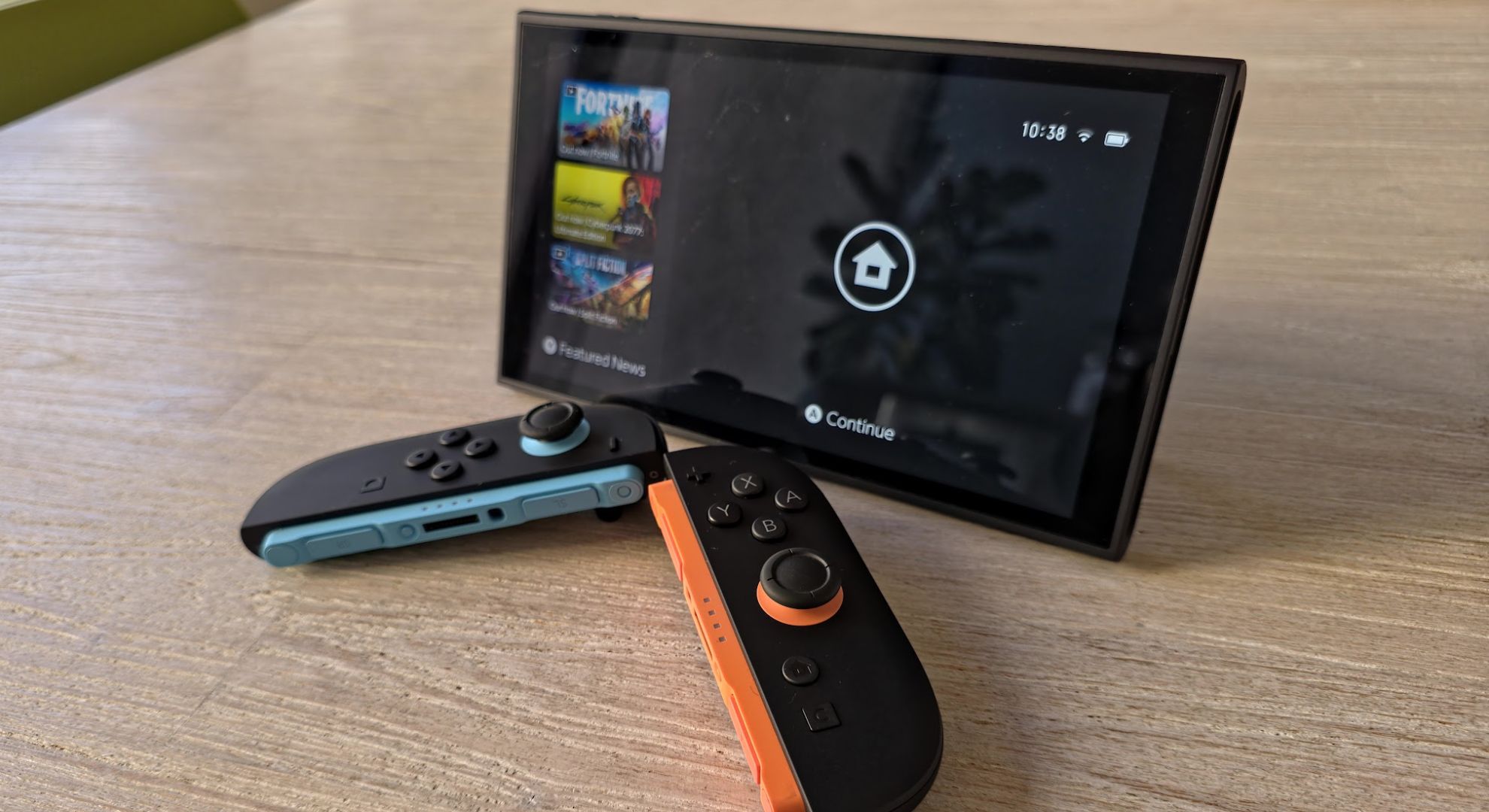
Rank 50652There's nothing quite like the excitement of a new console; feverishly whipping off the packaging, setting up your user account, and loading up your games to settle in for an hours-long induction to your new system.Thrilling though the process may be, there's a fundamental step all too often skipped: adjusting your settings. From Display and Audio settings to User, Lock, and software settings, there's plenty to tweak in your Switch 2.I've spent a week with the console, and there are some must-change settings you should adjust before getting started; here are my recommendations.1. HDR settings(Image credit: Future / Nintendo)Nintendo’s latest console supports HDR, and you can easily toggle this on and off within the settings. Simply head to Settings > Display > HDR Output and make sure this setting is on by default.Don’t stop there, though, because there’s a second setting which allows you to choose which games it’s enabled for. Scroll down in the Display menu, and you'll see (confusingly) another HDR Output option. Select this, and you can choose between 'Always Enabled', 'Compatible Software Only', and 'Disabled'.I’d recommend switching it on for compatible games instead of the default always-on setting to make sure non-compatible games look as good as ever.2. Preserve the battery life(Image credit: Future / Nintendo)If you’ve suffered from battery degradation on your first-generation Nintendo Switch, you’ll be delighted to know that the Switch 2 offers a setting that caps your battery life at around 90 percent while it's on charge, which should help your battery long-term. Simply head to Settings > System > Stop Charging Around 90%. You can easily toggle this on and off any time, so if you want a full charge every now and then for a long day of gaming in handheld mode, it’s just a matter of a quick trip to the settings. Alternatively, you can simply outsource the load and try a portable battery for your Nintendo Switch 2.3. TV resolution(Image credit: Future / Nintendo)Gamers, rejoice - the Nintendo Switch 2 can support screen resolutions up to 4K, albeit at a 60Hz refresh rate and 60fps for most titles, but you might have different ideas for your new console. Again, head to Settings > Display > TV Resolution.Within the settings, you can toggle automatic resolution detection or manually set the resolution for your TV, especially handy if you would prefer the higher refresh rates available in 1440p or 1080p resolutions.4. Change your lock settings(Image credit: Future / Nintendo)(Image credit: Future / Nintendo)Depending on who else will be using your Switch, you may want to change your Lock Screen settings with the system lock menu.Head to Settings > User, where you can select to Skip Selection Screen if you're the only one using the console regularly. Alertanitlvey, head to Settings > System > Console Lock. Here, you can set a PIN to keep prying eyes and grubby hands off your new console, but you can also opt to add parental controls using the dedicated Nintendo Switch Parental Controls app. 5. Activate Dark ModeSure, this one is a preference-based tip, but personally, I don’t see why you’d prefer to use the standard white theme over dark. Especially if you play mostly in handheld, it’s a great way to conserve power and give your eyes some rest.Once again, navigate to Settings > Themes and select between Basic White and Basic Black.You Might Also Like...3 chargers I’ve tested and recommend for giving your Nintendo Switch 2’s battery life a boostMissed out on a Nintendo Switch 2? Here's why the original Switch console might still be worth a look insteadUpcoming Switch 2 games to play in 2025
-

Picture from techcrunch.com
Rank 50653 -

Picture from ichef.bbci.co.uk
Rank 50654 -

Picture from static.independent.co.uk
Rank 50655 -

Picture from static.independent.co.uk
Rank 50656 -

Picture from static.independent.co.uk
Rank 50657 -

Picture from static.independent.co.uk
Rank 50658 -

Picture from static.independent.co.uk
Rank 50659 -

Picture from static.independent.co.uk
Rank 50660 -

Picture from static.independent.co.uk
Rank 50661 -
Picture from o.aolcdn.com
Rank 50662Adobe launched its own take on how smartphone cameras should work this week with Project Indigo, a new iPhone camera app from some of the team behind the Pixel camera. The project combines the computational photography techniques that engineers Marc Levoy and Florian Kainz popularized at Google, with pro controls and new AI-powered features.
In their announcement of the new app, Levoy and Kainz style Project Indigo as the better answer to typical smartphone camera complaints of limited controls and over-processing. Rather than using aggressive tone mapping and sharpening, Project Indigo is supposed to use "only mild tone mapping, boosting of color saturation, and sharpening." That's intentionally not the same as the "zero-processing" approach some third-party apps are taking. "Based on our conversations with photographers, what they really want is not zero-process but a more natural look — more like what an SLR might produce," Levoy and Kainz write.
Adobe
The new app also has fully manual controls, "and the highest image quality that computational photography can provide," whether you want a JPEG or a RAW file at the end. Project Indigo achieves that by dramatically under-exposing the shots it combines together, and relying on a larger number of shots to combine — up to 32 frames, according to Levoy and Kainz. The app also includes some of Adobe's more experimental photo features, like "Remove Reflections," which uses AI to eliminate reflections from photos.
Levoy left Google in 2020, and joined Adobe a few months later to form a team with the express goal of building a "universal camera app". Based on his LinkedIn, Kainz joined Adobe that same year. At Google, Kainz and Levoy were often credited with popularizing the concept of computational photography, where camera apps rely more on software than hardware to produce quality smartphone photos. Google's success in that arena kicked off a camera arms race that's raised the bar everywhere, but also led to some pretty over-the-top photos. Project Indigo is a bit of a corrective, and also an interesting test whether a third-party app that might produce better photos is enough to beat the default.
Project Indigo is available to download for free now, and runs on either the iPhone 12 Pro and up, or the iPhone 14 and up. An Android version of the app is coming at some point in the future.This article originally appeared on Engadget at https://www.engadget.com/apps/adobe-project-indigo-is-a-new-photo-app-from-former-pixel-camera-engineers-213453207.html?src=rss
-

Picture from static.independent.co.uk
Rank 50663 -

Picture from static.independent.co.uk
Rank 50664 -

Picture from static.independent.co.uk
Rank 50665 -

Picture from static.independent.co.uk
Rank 50666 -

Picture from ichef.bbci.co.uk
Rank 50667 -

Picture from static.independent.co.uk
Rank 50668 -

Picture from assets1.cbsnewsstatic.com
Rank 50669 -

Picture from image.cnbcfm.com
Rank 50670 -

Picture from static.independent.co.uk
Rank 50671 -

Picture from static.independent.co.uk
Rank 50672 -

Picture from static.independent.co.uk
Rank 50673 -

Picture from ichef.bbci.co.uk
Rank 50674 -

Picture from static.independent.co.uk
Rank 50675 -

Picture from static.independent.co.uk
Rank 50676 -

Picture from static.independent.co.uk
Rank 50677 -

Picture from static.independent.co.uk
Rank 50678 -
Rank 50679
-

Picture from techcrunch.com
Rank 50680 -

Picture from static.independent.co.uk
Rank 50681 -

Picture from assets2.cbsnewsstatic.com
Rank 50682 -
Picture from o.aolcdn.com
Rank 50683Photo modes are a pretty common feature for video games where players go bounding around an interesting open world. Today, Minecraft joined their ranks, making an in-game camera available in the Minecraft Marketplace as a free add-on called Vibrant Memories. The feature requires a copy of Minecraft's Bedrock Edition on any platform; the Java version doesn't appear to support the camera.
As well as capturing the moment as-is and saving particular camera angles to reuse later, Vibrant Memories will let a player decide whether or not to appear in the image. It will also let them set whether the weather is sunny or rainy and if the time is sunrise, sunset, day or night.
That's a pared-back take on photo mode, but then in many ways, Minecraft is a pared-back game. Sure, it's gotten loads of new features and creatures over the past 15 years, but at heart, it's just about mining and crafting.This article originally appeared on Engadget at https://www.engadget.com/gaming/minecraft-now-has-a-photo-mode-with-vibrant-memories-215948221.html?src=rss
-

Picture from ichef.bbci.co.uk
Rank 50684 -

Picture from static.independent.co.uk
Rank 50685 -

Picture from static.independent.co.uk
Rank 50686 -

Picture from static.independent.co.uk
Rank 50687 -

Picture from image.cnbcfm.com
Rank 50688 -

Picture from assets3.cbsnewsstatic.com
Rank 50689 -

Picture from static.independent.co.uk
Rank 50690 -

Picture from static.independent.co.uk
Rank 50691 -

Picture from static.independent.co.uk
Rank 50692 -

Picture from static.independent.co.uk
Rank 50693 -
Picture from cdn.mos.cms.futurecdn.net
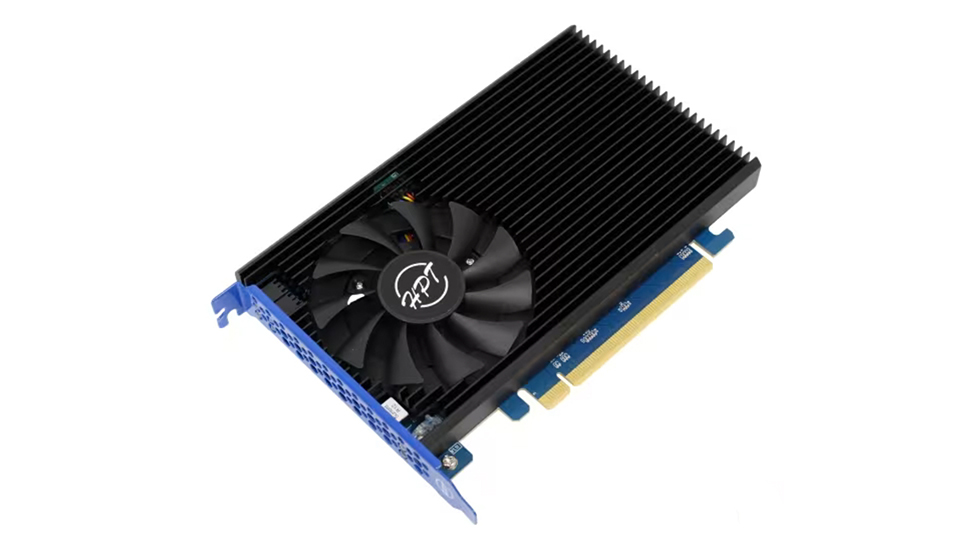
Rank 50694HighPoint Rocket 7604A RAID card is half the size of the previous iterationDelivers nearly 60GBps using four Gen5 SSDs with no power cableFirst review shows it offers strong performance across both Intel and AMD platformsThe HighPoint Rocket 7604A is a PCIe Gen5 RAID card which targets professionals needing extreme sequential throughput in compact workstations.While it builds on the legacy of the larger Rocket 1608A model, it manages to shrink the form factor by nearly half while maintaining similar performance.The 7604A fits into a single-slot, half-length configuration and is powered entirely by the PCIe bus, with no external power required.Eclipses previous record-holding modelsTweakTown recently reviewed the card, describing it as “a masterpiece of engineering” that delivers 59.8GB/s sequential throughput using just four M.2 Gen5 SSDs.This performance eclipses even the company's own previous record-holding models. It achieves this with a Broadcom PEX89048A RAID controller and four Gen5 x4 M.2 slots.Testing spanned both Intel and AMD platforms. Intel systems had the edge in benchmarks like Anvil and Blackmagic, while AMD took the lead in certain file transfer scenarios.Paired with four Samsung 9100 Pro drives (TweakTown notes that the drives must be bare to fit the card), the Rocket 7604A achieved nearly 60GB/s sequential throughput in CrystalDiskMark. "Better than any AIC we’ve ever encountered,” the site’s Senior Hardware Editor, Jon Coulter, observed.On ATTO, it delivered up to 54GB/s, more than twice the throughput achieved with the 1608A using eight Crucial T705 drives.TweakTown also reported that the 7604A broke multiple lab records, scoring 93,000 points in Anvil’s benchmark, far surpassing any previous flash-based AICs.Users can configure software RAID via Windows, which supports RAID 0 and RAID 1, or use HighPoint’s own configuration utility to unlock additional options like RAID 10. The card also supports PCIe Gen4 SSDs, though throughput is reduced when used in that mode.At $999, down from its original asking price of $1999, the Rocket 7604A is less expensive than its predecessor and many competitive solutions. It clearly isn’t made for casual users, but for anyone needing peak throughput in a constrained space, this card definitely delivers.TweakTown awarded it 98% (dropping a few points for performance and value, but scoring the maximum for quality and features) and and named it Editor’s Choice.You might also likeThese are the fastest SSDs you can buy right nowWhat is RAID and JBOD?Build your own superfast virtual 32TB Gen5 SSD with this RAID PCIe Gen5 card
-
Picture from static.independent.co.uk
Rank 50695 -

Picture from assets1.cbsnewsstatic.com
Rank 50696 -

Picture from image.cnbcfm.com
Rank 50697 -

Picture from static.independent.co.uk
Rank 50698 -

Picture from assets2.cbsnewsstatic.com
Rank 50699 -

Picture from image.cnbcfm.com
Rank 50700

