News
This constantly updated list features the latest and most important news articles, ranked in order of significance. The top stories highlight major developments, breaking news, and critical updates across various topics, ensuring you stay informed about the most pressing issues. As new articles are added, the list adapts to reflect the latest priorities, keeping the most impactful stories at the forefront. Whether it’s global events, technology breakthroughs, or industry trends, this dynamic list ensures you always have access to the most relevant and timely information.
-

Picture from assets3.cbsnewsstatic.com
Rank 50251 -

Picture from assets1.cbsnewsstatic.com
Rank 50252 -

Picture from image.cnbcfm.com
Rank 50253 -
Picture from o.aolcdn.com
Rank 50254Sleep tracking is nothing new in Garmin’s fitness watches, but the company’s latest wearable is a dedicated smart sleep band. The Index Sleep Monitor offers week-long battery life with continuous pulse ox tracking for monitoring your blood oxygen saturation while you sleep.
Garmin’s tracker is worn on the upper arm — which should hopefully make it more comfortable — where it tracks a variety of metrics: skin temperature; light, deep and REM sleep stages; and variations in your heart rate and breathing. The data is then combined to provide an overall personalized daily sleep score that can be viewed in the Garmin Connect app. If you already use a Garmin smartwatch but don’t sleep with it on your wrist, the Index Sleep Monitor is designed to add the missing metrics to the insights you’re already getting from the watch.
Skin temperature tracking gives you a better idea of how your sleep environment affects the quality of your sleep, while flagging potential illnesses indicated by temperature changes. This metric also extends to menstrual health tracking, with skin temperature changes useful for tracking cycles, past ovulation estimates and offering what Garmin describes as “improved period predictions.”
Garmin’s Index Sleep Monitor will also monitor your energy levels, providing you with its “Body Battery” measurements that advise you to take more rest when the reading is coming in low. Again, these insights should be more accurate and reliable when combined with a compatible smartwatch worn during the day. The sleep band will also track your stress throughout the night, and features a smart alarm that attempts to wake you gently during lighter sleep stages so you’ll feel less tired.
The Index Sleep Monitor is available in S-M and L-XL sizes and costs $170.This article originally appeared on Engadget at https://www.engadget.com/wearables/garmins-new-sleep-tracker-offers-a-week-of-battery-life-142350473.html?src=rss
-

Picture from ichef.bbci.co.uk
Rank 50255 -

Picture from static.independent.co.uk
Rank 50256 -

Picture from static.independent.co.uk
Rank 50257 -

Picture from assets1.cbsnewsstatic.com
Rank 50258 -

Picture from assets3.cbsnewsstatic.com
Rank 50259 -

Picture from assets2.cbsnewsstatic.com
Rank 50260 -

Picture from cdn.mos.cms.futurecdn.net
Rank 50261When my AirPods Max broke at the beginning of the year, I was faced with a difficult decision: double down and spend another $549 / £499 / AU$899 on headphones that certainly haven't dropped in price since their December 2020 release (and might let me down again) or find a pair that I could count on.Swapping them for a pair of headphones that cost half as much has made me realize there’s something better out there for me. And I’d argue there’s something better out there for you, too.It’s hard to overstate how much I loved my AirPods Max when I first got them and they still absolutely merit a mention as some of the best headphones out there. Their sound is exquisite, both dynamic and detailed yet bassy and zealous. And spatial audio was still a bit of a rarity back then, making them a real game-changer for watching movies and TV on the go. Even their noise cancelling – oft placed in a distant third place after that of Bose and Sony – was a revelation, still offering blissful silence on busy streets and public transport.Sure, they’re a bit on the old side now and despite adding wired USB-C lossless audio earlier this year have been been sorely in need of some quality-of-life updates for a while. Their cheaper stablemates, the AirPods 4 and AirPods Pro, include a bunch of features they don’t, such as Conversation Awareness, more powerful chips and weatherproofing, despite their much cheaper price. But I was willing to put up with their occasional quirks, given that they were always so dependable – it was easy to fool myself into believing they’d always be there for me.Until they weren’t. After just over two years of use, my AirPods Max started to act up. In contrast to their previous rock solid connectivity, they developed the Memento-esque habit of forgetting their connection every time they slept, even though my Macbook and iPhone’s OS still showed them as paired. Attempting to reconnect would fail; performing a soft reset did nothing. Worse, whenever I pressed their pairing button, I was greeted with a slow blinking orange light, a distress signal I’d never witnessed before.The only solution I eventually did hit on was to perform a full restore to factory settings and set them up from scratch. They would then stay connected until the next time they were switched off or left idle for 15 minutes, at which point they’d lose the connection again.(Image credit: Future)I dealt with this the same way I diagnose any mystery malady – I turned to Dr Google, which helped me diagnose the likely culprit as a faulty Bluetooth module. Unfortunately, as Apple Care+ only lasts two years, the cost of repair was likely to be expensive; Apple’s repair prices are frustratingly opaque but users online who’ve undergone similar repairs have said they’ve been billed up to half the cost of the device.This left me with a bit of a dilemma. Paying the repair cost would have undoubtedly given my headphones more life. But how long would it be before the next issue arose, like the battery reaching the end of its lifespan? Even if Apple replaced the whole unit – as it’s often wont to do, to save on the hassle of repair – where was the guarantee I wouldn’t just get a further two years of life, followed by another hardware fault?Mentally totting up the cost of several hundreds pounds of repairs or buying a whole new pair every two years, I started to wonder if I was really willing to burn potentially thousands of pounds to feed my headphone habit for the next decade.Typically, I’m not one to make a decision today that I can instead procrastinate over tomorrow, so I wanted to pick up a stopgap pair of cans I could use until I’d made my mind up. As TechRadar’s review editor, I’m lucky enough to have access to a library of the best noise cancelling headphones for testing, so I borrowed a loaner pair for using in the office: the Cambridge Audio Melomania P100. And, boy, was this an eye-opener (read: ear-opener) and a half.Starting with audio quality, the P100 sounded way better than I’d expected for a mid-range pair of noise cancelling headphones – they lack the whomp of some of their bassier rivals but they’re also seriously expressive and don’t neglect certain frequencies just to artificially boost the low end. I can’t work without music playing so I wear headphones for easily eight hours straight, yet at no point did they start to feel uncomfortable. And at a list price of $239 / £199, I wouldn’t find it quite so galling even if they gave up the ghost in just a couple of years. And that won't happen, since Cambridge Audio tells us the battery module can be replaced (although for how much, I'm not sure).For me, that really drove home something that often gets overlooked with modern wireless headphones – we’re increasingly paying more for lower longevity. And maybe you’d actually be better off spending a bit less.(Image credit: Future)Most headphones aren't built to lastLook, I appreciate in some ways two years is quite a long time. Twenty-four months ago, I didn’t even write for TechRadar. Elon Musk was in charge of the dumpster fire that was Twitter rather than the dumpster inferno that is X. And the phrase ‘Brat summer’ would have attracted mystified looks, rather than weary eyerolls.But in the world of audio equipment, two years is not a long time. Most audio equipment doesn’t tend to be a biennial purchase; instead it’s built to last. I bought my budget pair of KEF Cresta 3 floorstanding speakers and Cambridge Audio A5 amplifier when I was 20 years old. Terrifyingly, I’m almost double that now and yet both gadgets work as well as the day I bought them. Even wired headphones, properly taken care of, can last years – especially given they’re often repairable and have replaceable parts.I don’t need to be a soothsayer of snark to know that some will likely write off this whole episode as being unique to Apple products, given they’re notoriously hard to repair and often tied to short product cycles. But I’d argue the issue runs far deeper than that: across many of the major headphone brands, premium prices have become a guarantee of fancier features, not necessarily increased reliability. And part of that is down to their evolution from a predominantly analog product to what amounts to a sophisticated computer in their own right.(Image credit: Future)As wireless headphones have become smarter, they’re increasingly reliant on chipsets and firmware that aren’t necessarily designed with longevity in mind. The CPUs and modules required to apply sophisticated audio processing or drive connectivity are incredibly sophisticated components and each introduces an extra point of failure. Meanwhile, firmware updates can be abandoned at a brand’s discretion when shinier products become their new priority. Just like our smartphones, which many of us throw out on a three-year upgrade cycle, we’re increasingly sacrificing audio gadgets’ Methuselah-like longevity and sustainability for something that burns much brighter but for a fraction as long.Clearly we shouldn’t abandon all the great features offered by noise cancelling headphones just because they have the life expectancy of a butterfly entering a jet engine's air intake. I’m not going back to the dark days of having to untangle a bramble of wires every morning or hear other human beings’ conversations on the subway. But it has all made me wonder whether I’m willing to commit myself to spending $549 / £499 / AU$899 every two or three years, just to gain relatively modest improvements in terms of features and sound quality.This feeling has been compounded the more I’ve tried out some of the excellent competitors available at the lower end of the market. For example, the aforementioned Cambridge Audio Melomania P100 have expressive spacious sound, decent – if not exactly silent – noise cancelling and a battery life that puts most rivals to shame, lasting a ludicrous 60 hours with ANC on and up to 100 hours without.Inevitably, the P100 lack certain features: you don’t get proprietary spatial audio (Cambridge Audio doesn't dig that kind of thing), nor the sumptuous bass of Apple’s cans but, even if they did die after a couple of years, their $239 / £199 price means I could get 2.5 times as long a period of use before I’d spent as much as I would on another pair of AirPods Max. And the fact that elements like the battery are user-replaceable with standard tools means that they shouldn’t cost anywhere near as much if you’d rather opt for the sustainable option of repairing them, rather than handing them in at my local recycling center.So while I’ve loved all the premium, audiophile-grade noise cancelling headphones I’ve owned in the past, I think those days are behind me. Sorry, AirPods Max: I’m not coming back.You might also likeHungry for info on next-gen Apple cans? See our AirPods Max Gen 2 rumors hubNot sure either pair is for you? Check our guide to the best over-ear headphones
-

Picture from ichef.bbci.co.uk
Rank 50262 -

Picture from ichef.bbci.co.uk
Rank 50263 -

Picture from ichef.bbci.co.uk
Rank 50264 -

Picture from static.independent.co.uk
Rank 50265 -

Picture from static.independent.co.uk
Rank 50266 -

Picture from static.independent.co.uk
Rank 50267 -

Picture from cdn.mos.cms.futurecdn.net
Rank 50268There’s a lot of noise in enterprise AI right now. Under mounting pressure to deliver faster, safer digital services, businesses are turning to the next evolution in automation: Agentic AI.No, this isn’t bolting on a chatbot and calling it digital transformation. AI agents are built to understand your organization, operating within your domain constraints with real autonomy. These agents operate inside your business, using your data to automate decisions, adapt to real-world problems in milliseconds, and embed themselves directly into operational workflows.They blend the general reasoning power of today’s large language models with domain- specific intelligence grounded in company data. That might be clinical records, compliance frameworks, or engineering logs - whatever your business runs on. The result? Systems that take action: surfacing insights, automating tasks, and adapting based on your company policies and workflows.Why it matters nowDemand for automation is growing, as are expectations around compliance, transparency, and data governance, especially in Europe. Agentic AI offers a response to both: scalable intelligence, designed to work inside complex regulatory frameworks.That matters in sectors like healthcare, manufacturing, and financial services, where data security, explainability, and reliability aren't negotiable. These aren’t markets where “good enough” is acceptable. Customers simply can not tolerate hallucinated responses or unreliable systems where their data hits the public domain.Agentic AI is safer. Not because it’s slower or more cautious, but because it’s built for the environment it’s deployed into.Inside the architectureAgentic systems rely on a layered approach, with different types of agents operating across an organization:Human assistance agents support real-time decisions, generating summaries, highlighting next steps, and assisting in code review or sales workflows. They keep humans in control while removing friction from day-to-day tasks.Transactional agents manage system-to-system workflows. They handle onboarding, verification, or inventory reconciliation autonomously when appropriate, with escalation when edge cases arise.Autonomous agents identify and solve problems independently. In domains like DevOps, logistics, or diagnostics, they monitor environments, anticipate failures, and act proactively rather than reactively to resolve these types of issues. These agents work in tandem rather than in isolation. Together, they form an intelligent layer across enterprise systems - learning, adapting, and coordinating actions in ways that were previously siloed or manual. True digital transformation across the enterprise.Vector-based contextKey to all of this is the use of custom vector databases. Vector databases enable AI agents to fetch relevant, security-controlled context from sensitive data without actually exposing that data in its original form to the agent. This is a game-changer for regulated industries. Rather than relying on generic training data from the public internet, this draws directly from the institutional knowledge inside your firewalls.That means better accuracy, stronger compliance, and fewer surprises. It also means outputs that reflect your standards, rather than what’s statistically likely.European inferencingAgentic systems are already transforming highly regulated sectors in Europe. In healthcare, they reduce administrative overheads, improve triage, and accelerate innovation while protecting patient privacy. In manufacturing, they’re powering predictive maintenance, supply chain optimization, and real-time field service. Within finance, these agents enhance fraud detection, refine compliance, and provide hyper- personalized services.Agentic AI adoption is particularly strong in regions with tighter data controls - namely France, Germany, and the Nordics - because these systems respect the boundaries enterprises are required to operate within.These systems increasingly rely on serverless inference, which allows businesses to scale their AI infrastructure without wedding themselves to their maximum theoretical usage. That’s critical in Europe, where innovation budgets are often tight, and sovereign infrastructure matters. Agentic AI is being built to meet those regulatory requirements from day one.Yes, Europe’s regulatory environment slows things down. But that friction forces better thinking. It pushes enterprises to build with trust, accountability, and explainability. Creating market conditions where sustainable AI can thrive.GDPR, the EU AI Act, NIS2 and other regulatory frameworks define the standards by which responsible AI can scale. As US start-ups chase MVPs and launch before the proper guardrails are in place, European enterprises may end up with AI that’s more compliant and generally more effective in the long term.The next stepAgentic AI marks a turning point in how businesses interact with their data and workflows. It moves beyond static automation to deliver systems that act, learn, and improve within the constraints enterprises define.This is not a plug-and-play future. It’s a future that demands thoughtful design, domain- specific strategy, and an unflinching focus on outcomes. The rewards will be sustainable and significant for the organizations that build smart and scale responsibly. The hype in off-the-shelf, plug-and-play solutions will fade. Agentic AI infrastructure is built for the latest ways of working. Enterprises that invest now and build with intent will lead in the next stage for what’s next.We've featured the best AI writer.This article was produced as part of TechRadarPro's Expert Insights channel where we feature the best and brightest minds in the technology industry today. The views expressed here are those of the author and are not necessarily those of TechRadarPro or Future plc. If you are interested in contributing find out more here: https://www.techradar.com/news/submit-your-story-to-techradar-pro
-

Picture from static.independent.co.uk
Rank 50269 -

Picture from static.independent.co.uk
Rank 50270 -

Picture from static.independent.co.uk
Rank 50271 -

Picture from static.independent.co.uk
Rank 50272 -

Picture from assets1.cbsnewsstatic.com
Rank 50273 -

Picture from assets3.cbsnewsstatic.com
Rank 50274 -

Picture from assets1.cbsnewsstatic.com
Rank 50275 -

Picture from assets3.cbsnewsstatic.com
Rank 50276 -
Picture from o.aolcdn.com
Rank 50277The bumper 2025 edition of Amazon's Prime Day is fast approaching and the deals are starting to emerge. While we've seen this offer pop up several times in the past, it's one that's always worth highlighting. New Audible subscribers can get three months of access to the Premium Plus plan for $3. That's a total of $42 off.
This is one of the best streaming deals around right now. It will be available until July 31, which is a few weeks after the Prime Day event ends (it could probably be called Prime Week this year since it's running for four days). If you don't cancel your Audible membership before the promotional period ends, it will automatically renew for $15 per month.
Through the Audible Premium Plus plan, you'll receive one credit each month. You can use this to claim any audiobook you like on the platform, whether it's a bestseller, new release or something else you've been meaning to get to. You'll retain access to audiobooks you claim with credits even after your subscription expires. So, you're effectively getting three audiobooks for your permanent collection for three bucks.
Audible members will be able to take advantage of exclusive discounts and sales too. They also get access to thousands of audiobooks, Audible Originals and podcasts as long as their subscription remains active.
Follow @EngadgetDeals on X for the latest tech deals and buying advice.This article originally appeared on Engadget at https://www.engadget.com/deals/prime-day-deals-include-three-months-of-audible-for-only-3-143734782.html?src=rss
-

Picture from ichef.bbci.co.uk
Rank 50278 -

Picture from ichef.bbci.co.uk
Rank 50279 -

Picture from static.independent.co.uk
Rank 50280 -

Picture from static.independent.co.uk
Rank 50281 -

Picture from assets3.cbsnewsstatic.com
Rank 50282 -

Picture from assets3.cbsnewsstatic.com
Rank 50283 -

Picture from image.cnbcfm.com
Rank 50284 -

Picture from static.independent.co.uk
Rank 50285 -

Picture from static.independent.co.uk
Rank 50286 -

Picture from static.independent.co.uk
Rank 50287 -
Picture from o.aolcdn.com
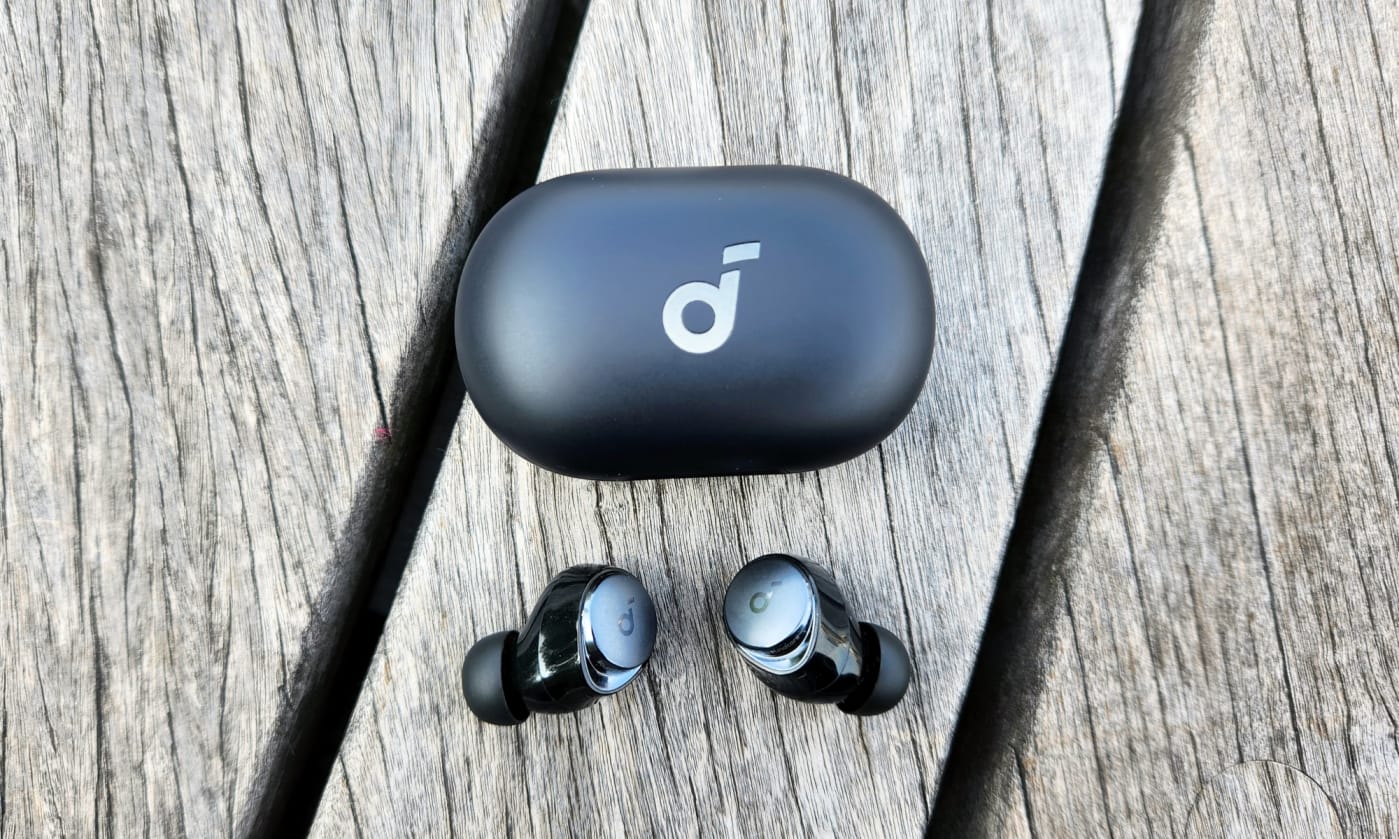
Rank 50288It’s that time of year again, and Amazon Prime Day is around the corner. There’s a lot to expect from this year’s extended event running July 8 to 11, the longest Prime Day ever. That’s not to say you have to wait until it starts to find great deals. Right now you can grab a pair of Anker Soundcore Space wireless earbuds at the lowest price we’ve ever seen them. Normally retailing for $80, they are on sale for $45.
The Anker Soundcore Space earbuds are currently our top pick for best budget wireless earbuds. While their performance doesn’t rival that of more premium products, we felt the Space A40’s feature set offered excellent value for such a budget-friendly set of earbuds.
These earbuds connect via Bluetooth, support connection to two devices at once, and come in a case that supports wireless charging. We were most impressed with the Space A40’s active noise cancellation (ANC), a feature rarely seen at this price point. While it’s not the most sophisticated ANC on the market, it does its job in blocking out the steady rumble of a train or jet engine. Battery life is solid for a budget pair of earbuds, reaching roughly eight to 10 hours depending on use, with another 40 hours or so supplied by the case.
In-ear fit is comfortable, as the round earpieces are pretty light and evenly balanced. The audio quality is impressive for its price point, offering a warm sound that can be fine-tuned with an EQ in the Soundcore app. A subpar built-in mic means the Space A40s don’t have the best transparency mode and aren’t the best for phone calls in noisy areas, but overall for $45 these are a great deal.
Follow @EngadgetDeals on X for the latest tech deals and buying advice.This article originally appeared on Engadget at https://www.engadget.com/deals/our-favorite-budget-wireless-earbuds-are-almost-half-off-ahead-of-prime-day-145248634.html?src=rss
-

Picture from ichef.bbci.co.uk
Rank 50289 -

Picture from ichef.bbci.co.uk
Rank 50290 -

Picture from ichef.bbci.co.uk
Rank 50291 -

Picture from static.independent.co.uk
Rank 50292 -

Picture from static.independent.co.uk
Rank 50293 -
Picture from static.independent.co.uk
Rank 50294 -

Picture from assets3.cbsnewsstatic.com
Rank 50295 -

Picture from assets1.cbsnewsstatic.com
Rank 50296 -

Picture from assets3.cbsnewsstatic.com
Rank 50297 -
Picture from o.aolcdn.com
Rank 50298You can finally buy the Nintendo Switch 2 in the US. The $450 console officially went up for sale on June 5, and several retailers have offered it both online and in-store in the week since. While millions of people have been able to snag the device, online inventory dried up fairly quickly at most stores last week and remains difficult to find today. Target and Best Buy restocked shortly after launch, but those didn't last long, and the latter required in-store pickup. You may also be able to grab a bundle at Costco if you’re a member there. Otherwise, it's slim pickings as of our latest sweep.
Broadly speaking, people had a bit more luck on launch week by venturing to a physical retail store. We can’t guarantee you’ll still be able to snag a Switch 2 the old-fashioned way, but it’s worth checking if a local Target, Best Buy, Walmart or GameStop — the four official retailers Nintendo lists on its store page — still has consoles in stock. Either way, if you're still on the hunt, we’ve rounded up all of the latest information we could find on how to buy the Nintendo Switch 2 and where you can pick one up.
Where to buy the Nintendo Switch 2
Walmart also began online purchases at midnight ET on June 5. Currently, the Mario Kart World bundle is out of stock, while the console alone is listed for much higher than its standard $450 price tag — with limited quantities available. We wouldn't recommend buying these; instead, wait for the console to be listed at its regular MSRP. Naturally, the world's largest retailer is also selling the console at its brick-and-mortar locations, though the company has noted that quantities are limited and inventory will vary by location.
Best Buy began selling the Switch 2 at its retail locations on June 5. It previously said it wouldn't sell the handheld at its online store during launch week, but it made additional consoles available on June 11 around 12PM ET. That restock lasted for the better part of an hour and required in-store pickup, but the device is now sold out again.
Target had the Switch 2 in stores on June 5 and restocked its online inventory for at least a couple of hours starting around 3:30AM ET on June 6. It then had another restock on June 12 around 2:30PM ET, but that appears to have died out in less than an hour. It still looks to be fully sold out as we write this, but you should see if there's any stock at the stores closest to you just to be safe.
GameStop has advertised in-store availability, though exactly how much stock your local store may have will vary by location. Online, the device has been unavailable for the past week, with the listings for the base console and Mario Kart bundle now pointing to a "Find a Store" page. We saw a $625 bundle that includes Mario Kart World, a microSD Express card and a few other accessories pop up a bit more frequently than the standard SKUs, but it's no longer listed (and it was kind of a raw deal anyway).
You may still have some luck at certain membership-based retailers. A Mario Kart World bundle at Costco that includes a 12-month Switch Online subscription has gone in and out of stock since launch day. Sam's Club has had a bundle without the Switch Online sub as well, though it's out of stock now. We also saw the console at BJ's early on June 5, but it's no longer live there.
Verizon briefly had the Switch 2 available on launch day, but that's dried up, and only those with Verizon service were able to order.
Amazon hasn't had any form of Switch 2 listing on its website, nor has it listed first-party Switch 2 games like Mario Kart World. The company didn't take pre-orders for the Switch 2 either, so it's unclear if and when it will sell the device.
Newegg has listed the Switch 2 on its site for several weeks, but it's given no indication as to when it'll begin sales. It previous showed a couple listings from a third-party seller, but at massively inflated prices.
With all of these stores, we've seen the Mario Kart World bundle available in greater quantities online than the base console, which costs $50 less. But given that Mario Kart is the Switch 2's biggest launch game and retails for $80 on its own, that may not be the worst thing.
Nintendo, meanwhile, is only offering the Switch 2 via an invite system. This requires you to have been a Switch Online member for at least 12 months and logged at least 50 hours of Switch 1 playtime as of April 2. It can't hurt to sign up if you meet the criteria, but don't expect it to bear fruit immediately — it's taken weeks for many people who registered in April to receive their invite.
You can find a list of every Switch 2 retail listing we could find below. Just be aware that this is meant to be a reference, not a rundown of everywhere the device is available right this second.
Where to buy Switch 2 + Mario Kart World bundle:
Walmart
GameStop
Best Buy
Target
Costco (membership required)
Sam's Club (membership required)
Verizon (service required)
Where to buy Switch 2:
Walmart
GameStop
Best Buy
Target
BJ's (membership required)
Verizon (service required)
Where to buy Nintendo Switch 2 games and accessories
Nintendo is selling a number of Switch 2 accessories alongside the console, from its (pricey) Pro Controller to cases to cameras for the new GameChat feature. Most of these became available on June 5. The same goes for games like Mario Kart World and the Switch 2 version of The Legend of Zelda: Tears of the Kingdom. Another big Switch 2 release, Donkey Kong Bananza, won't be available until mid-July but is still up for pre-order now.
As of Friday afternoon, just about all Switch 2 games are broadly available. Stock for the accessories remains a little spottier, but most devices are still available at multiple retailers. Nintendo's official Switch 2 carrying cases have bee the main exceptions, so you may need to look to third-party alternatives if you want some protection for your console right away.
Mario Kart World ($80)
Nintendo
Walmart
GameStop
Best Buy
Target
Donkey Kong Bananza ($70)
Nintendo
Walmart
GameStop
Best Buy
Target
Costco (membership required)
Additional Switch 2 games
Nintendo
Amazon
Walmart
GameStop
Best Buy
Target
Samsung microSD Express Card (256GB) for Nintendo Switch 2 ($60)
Nintendo
Walmart
GameStop
Best Buy
Target
Amazon
Joy-Con 2 bundle ($95)
Nintendo
Walmart
GameStop
Best Buy
Target
Switch 2 Pro Controller ($85)
Nintendo (invite required)
Walmart
GameStop
Best Buy
Target
Costco ($75, membership required)
Switch 2 Camera ($55)
Nintendo
Walmart
GameStop
Best Buy
Target
Hori Nintendo Switch 2 Piranha Plant Camera ($60)
Best Buy
Target
Amazon
Joy-Con 2 Charging Grip ($40)
Nintendo
Walmart
GameStop
Best Buy
Target
Joy-Con 2 Wheels (set of 2) ($25)
Nintendo
Walmart
GameStop
Best Buy
Target
Switch 2 All-in-One Carrying Case ($85)
Nintendo
Walmart
GameStop
Best Buy
Target
Switch 2 Carrying Case and Screen Protector ($40)
Nintendo (invite required)
Walmart
GameStop
Best Buy
Target
Nintendo Switch 2 Dock Set ($120)
Nintendo
Nintendo GameCube Controller for Switch 2 ($65)
Nintendo (Switch Online required)
This article originally appeared on Engadget at https://www.engadget.com/gaming/nintendo/how-to-buy-the-nintendo-switch-2-latest-stock-updates-at-walmart-best-buy-target-and-more-120039759.html?src=rss
-

Picture from ichef.bbci.co.uk
Rank 50299 -

Picture from static.independent.co.uk
Rank 50300